
The Legend of Daddy Hall makes music from an epic life and a neglected history
 iPhoto caption: Troy Adams image courtesy of Tarragon Theatre.
Tarragon Theatre’s final production of this season is the literal stuff of legends.
Come Home — The Legend of Daddy Hall, written by Audrey Dwyer and staged by Tarragon artistic director Mike Payette, pays tribute to the extraordinary life of John “Daddy” Hall. Hall, who was of mixed Mohawk and Black Jamaican ancestry, is thought to have been born near Amherstburg, Ontario in the 1780s. He died in Owen Sound over a century later — some say at the age of 117, others 118. (Hall being a legend, exact dates are hard to come by.)
In between, Hall fought as a Black loyalist in the War of 1812; survived capture by American forces and enslavement in Virginia and Kentucky; escaped slavery and returned north to Canada; took part in the 1837 Farmers’ Revolt against Upper Canada’s ruling class; and eventually settled in Owen Sound, where he became the town crier and the community’s first Black resident, and where he staved off ongoing attempts to steal his land. He also married up to six wives, and fathered up to 21 children. (Hence the epithet “Daddy.”)
If this epic life seems like a lot to pack into a night at the theatre, fear not. Dwyer, who was Tarragon’s 2018-19 Urjo Kareda artist-in-residence, has not crafted a linear, point-by-point biography. Come Home — The Legend of Daddy Hall, which premieres May 22 in Tarragon’s Mainspace, spirits audiences to an ancestral plane, where John Hall relives key moments in his life as a kaleidoscope of poetic text and music. Payette has called the piece an ancestral fantasia.
“It’s scary, but exciting,” said actor Troy Adams in an interview during the first day of technical rehearsals for the show.
Adams plays Billie, a present-day descendent of Daddy Hall and a new addition to the play, an earlier version of which debuted in 2021 as part of Tarragon’s Acoustic season. “Since we’ve started rehearsals, [we’ve] been workshopping the character of Billie,” said Adams. “At the beginning of the play, Billie finds himself disconnected from his ancestors. By the end of [the play], there is hope that he’s not lost. This reflects John [Hall’s] story: his journey is accepting his role as an ancestor, to be [Billie’s] guide.
“I’m getting very emotional,” Adams continued, describing Billie’s reckoning with his ancestral roots. Adams, who is from Halifax, is of Black Nova Scotian and Mi’kmaw ancestry. For him, The Legend of Daddy Hall is an opportunity to show how Black and Indigenous histories on Turtle Island — so often neglected in and of themselves — are in fact interwoven and interdependent.
“We’re resurfacing the history between Black and Indigenous communities in Canada and the U.S., and how connected we are,” Adams told me. “That history has [almost] totally been erased, whether it’s intentional or not. This resurfacing or exposing of this history is paramount to understanding who we are as Canadians: not just Black and Native people, but white people as well.”
Adams reflected on how Billie’s journey to connect with his ancestry resonates with his own. “To play Billie,” he said, “who’s asking a lot of the same questions that I’ve asked in my life and that I’m still asking, [is] very exciting.”
Adams is one member of a powerhouse cast that includes Indigenous actors Nicole Joy-Fraser (Tarragon’s My Sister’s Rage) and Brandon Oakes (CBC’s Diggstown), and Black actors Helen Belay (Soulpepper’s Queen Goneril and King Lear), Darren A. Herbert (CBC’s “Pretty Hard Cases”), and Emerjade Simms (Cahoots Theatre’s Sweeter, which also featured Herbert.)
“The environment [in rehearsal] is such a safe and non ego-based environment,” Adams shared. “I come to work and I’m like, ‘This is real. It’s not a glitch.’”
Those who have followed Adams’ work in productions like Djanet Sears’ The Adventures of a Black Girl in Search of God (a National Arts Centre co-production with Montreal’s Centaur Theatre, in association with Black Theatre Workshop) will know that he is an incredible vocalist and musician. Although this iteration of The Legend of Daddy Hall is not a musical, the creative team includes Dr. Spy Dénommé-Welch (Algonquin-Anishinaabe) and composer Catherine Magowan. The duo’s opera Canoe had its world premiere in Toronto last fall in a co-production between their company Unsettled Scores, Native Earth Performing Arts, The Toronto Consort, and Theatre Passe Muraille. Adams said that music still plays a key role in the piece.
“Billie has a leitmotif,” Adams explained. “There’s this musical line that is played, that you just know [represents] Billie. Each character is connected to a certain tone. The text is along the lines of poetry or spoken word, but it’s not delivered as such.”
Adams emphasized that the creative team is still deep in process: “We’re still exploring,” he confided. On day one of technical rehearsals, he and the other actors “were stepping onstage for the first time,” not only to play, but to honour an Afro-Indigenous legend through the power of music and theatre.
“It’s a vibrational movement that’s happening,” said Adams. “It’s a reclaiming.”
Come Home — the Legend of Daddy Hall runs May 14 until June 9 in the Tarragon Mainspace. You can purchase tickets here, or learn more about the show here.
Nathaniel Hanula-James
Nathaniel Hanula-James is a multidisciplinary theatre artist who has worked across Canada as a dramaturg, playwright, performer, and administrator.
LEARN MORE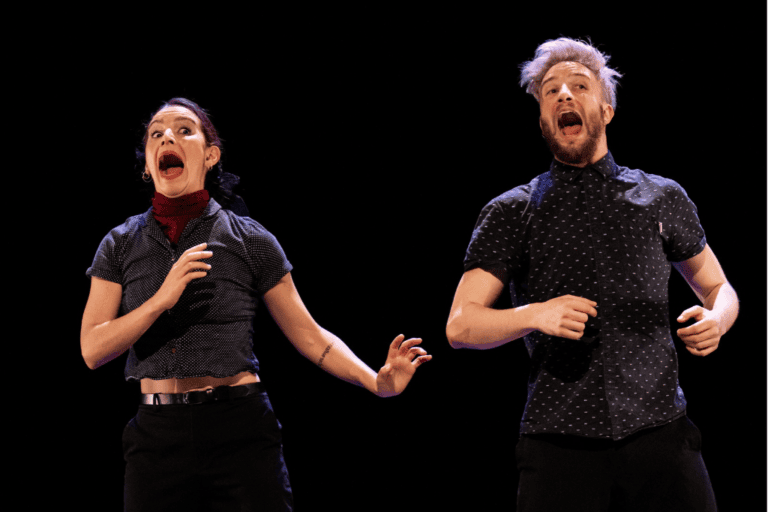 iPhoto caption: 'C'est la vida!' production photo by Julie Cherki.
C’est la vida! uses mime, dance, and electro beats to remix classic rom-com tropes
“Having endless talks with David about love, and our respective relationships, while creating and touring this show has definitely helped me grow,” says dancer Liesbeth Kiebooms. “It’s given me a more subtle understanding of love.”
 iPhoto caption: Headshots of Sophie Gee, Ray Hogg, Margot Greve, Leora Morris, and Jessica Carmichael.
Five theatre directors offer advice to the next generation — and the programs training it
The artists on this call were candid and vulnerable. They spoke openly about their professional frustrations and challenges — and they weren’t shy about pinpointing the ways that mainstream anglophone Canadian theatre practices fail directors and artists more broadly. That said, I didn’t leave our chat feeling hopeless or cynical.
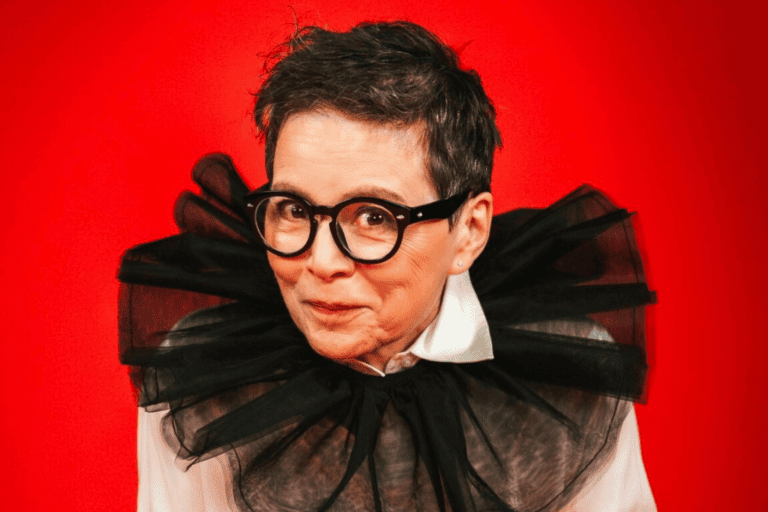 iPhoto caption: Ann-Marie MacDonald in 'Goodnight Desdemona (Good Morning Juliet).' Photo by Elana Emer.
“Sexism kept me out of hockey as a kid,” says Ann-Marie MacDonald. “But sexism also shut me out of Shakespeare."
 iPhoto caption: Headshots of Sophie Gee, Ray Hogg, Margot Greve, Leora Morris, and Jessica Carmichael.
How can theatre directors forge a sustainable career in Canada?
It’s increasingly unlikely that directors will hone their craft through formal training. Relatively few post-secondary programs devoted to directing exist, and it seems to me that directing-specific mentorship programs are less common than similar initiatives for actors or playwrights. To convene a roundtable about director training, I reached out to five very different artists on a continuum of early- to mid-career.
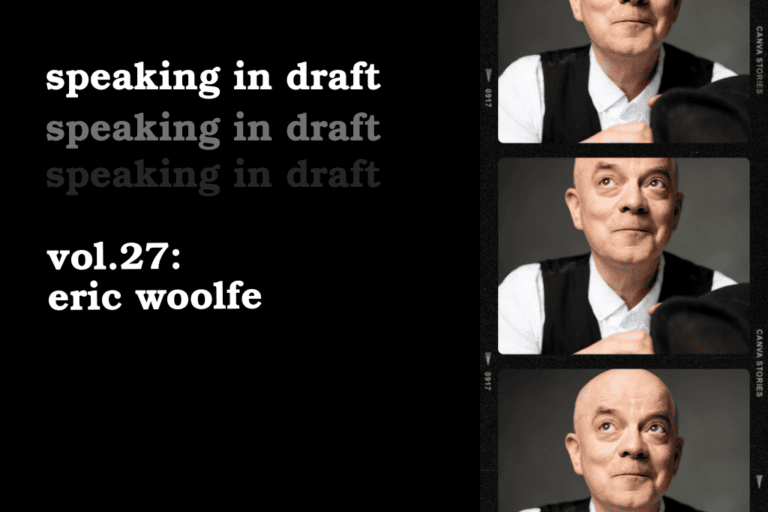 iPhoto caption: Portrait of Eric Woolfe. Photo by Dahlia Katz.
Eric Woolfe’s inventive horror theatre is a monster mash of artistic influences
For the past 26 years, Eldritch Theatre’s director of the uncanny has given ghoulies, ghosties, and long-legged beasties of all kinds a spot in the limelight, in productions that serve up puppets, magic, and a crumbling castle’s-worth of uncanny influences, including schlock-horror B-movies, Shakespeare at his bloodiest, and the fiction of H.P. Lovecraft.
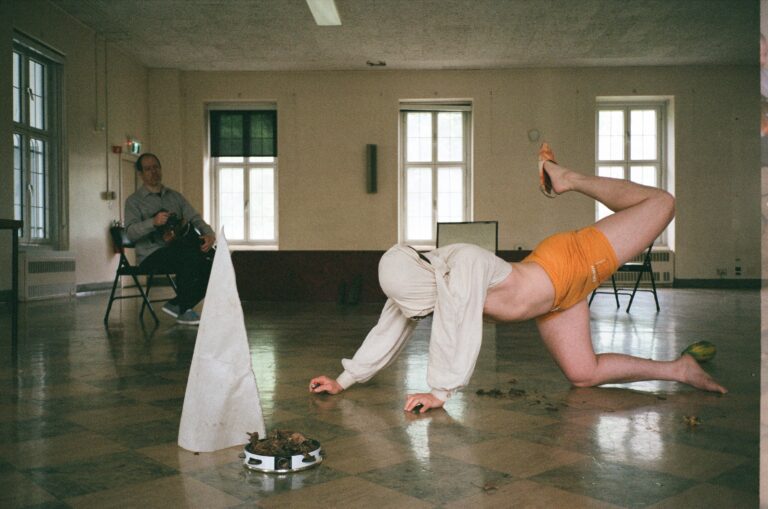 iPhoto caption: Nate Yaffe in 'Rot Hat.' Photo by Kinga Michalska.
This year’s SummerWorks Performance Festival strives to make accessibility intrinsic
The curated festival’s 36th edition features a range of works by Disabled and neurodivergent artists where the medium is very much the message.
Comments