
Reckoning is a Confrontation: In Conversation with Prairie Theatre Exchange’s Jonathan Fisher and Tara Beagan
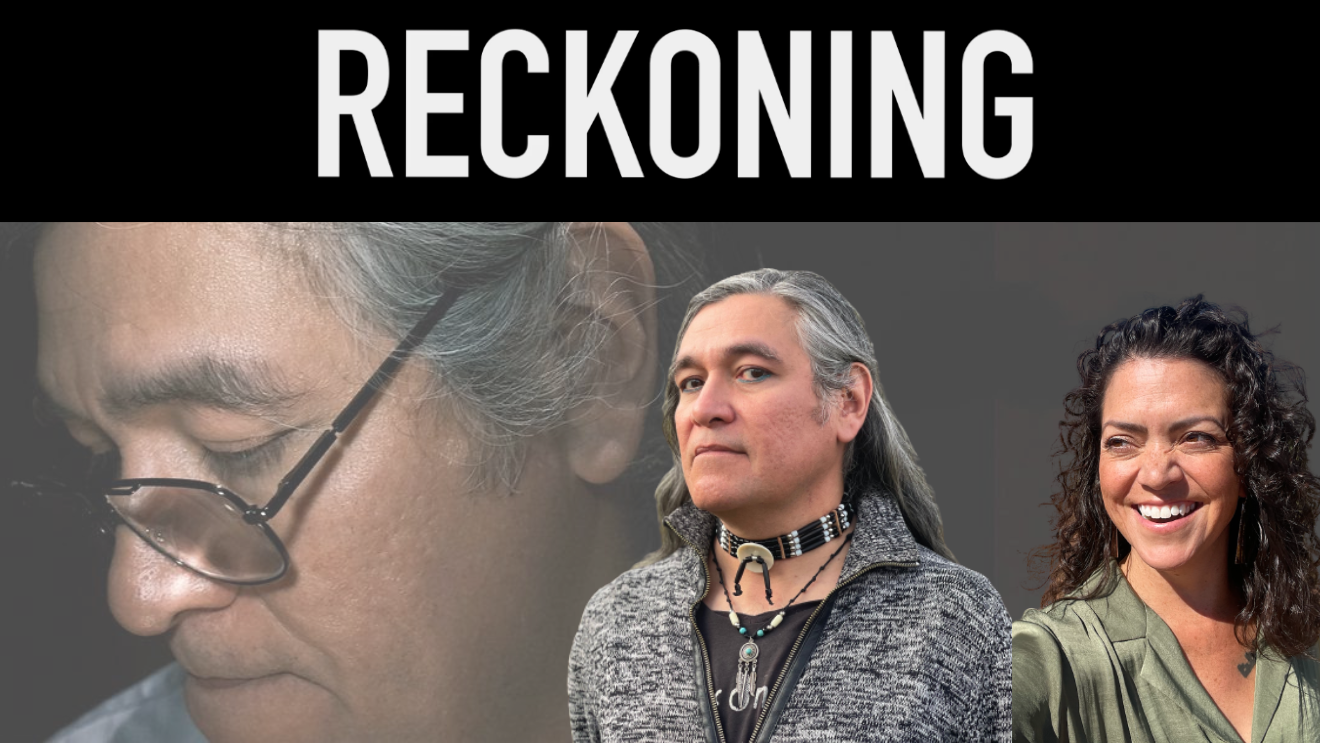
“The residential school tried to break him, maybe broke him. We don’t know. But he’s not going to go back there to be re-traumatized about this.”
Multi-talented theatre artist Jonathan Fisher joined me via Zoom to talk about Survivor, the solo piece that concludes the triptych of Reckoning, created by ARTICLE 11 and presented by Prairie Theatre Exchange from June 21–25. For Fisher, it’s the subtleties that are “the challenge in playing this character,” someone who has been through the residential school system, who perhaps has been broken but won’t show it. It was, however, a challenge Fisher was up to tackle from the beginning, when playwright Tara Beagan first reached out to him. Working with both Beagan and Andy Moro in the past, they had his trust and full support in bringing this work to life.
When I spoke with Beagan a few days prior to my conversation with Fisher, she explained the role of Survivor was written for him. “I had started writing it, but then once I knew it was him, it came much more quickly.”
“What is so brilliant about Tara’s writing is that the character doesn’t mention anything at all about what happened to him at school,” said Fisher. Beagan challenges us to look at the very human cost of such an inhumane institution without re-traumatizing characters and the actors who play them.
In both the stage and film versions of Survivor, Fisher delivers his testimony at a small desk. Limited by the confines of the proscenium, he speaks to a small camera on a tripod in front of the desk, which projects its tight shot of his face behind Fisher. Moving the production to film gave space to add a few more scenes, including some exterior shots and day-to-day moments that help to deepen the humanity of the survivor, and how the legacy of residential schools impacts every moment of his life, he said.
Fisher recalled the first workshop back in Toronto: “The script already was great. It was the way it was written, it was already broken down for me in beats. Andy Moro started pulling all the curtains, blacking everything out. All that was left was a tripod, a seat, and a small, little desk lamp over it. Once those curtains started to close, it was just like, ‘okay, here we go.’”
Moving from stage to film was exciting for Fisher, creating space for him to fine-tune his performance in ways that the stage does not permit. On the stage, everything has to be larger, but in film “you can get away with just a whisper. Even if you don’t have a line, all you have to do is just think about the thought, invest in it, feel it, and the emotion will just come off, and the camera will pick it up.” Fisher enjoyed the opportunity to add another layer of depth and nuance to his character.
I wondered if performing such a challenging role is hard on Fisher, who assured me that though he came dangerously close to going down the path of the method actor, he resisted. “It takes too much energy,” Fisher laughed.
The theatre, for Fisher, is a sacred space akin to being at church: “whether I’m onstage or in the audience, it’s a place I can always feel safe. And everything in terms of this character, whatever … comes up on stage, as an actor, an artist, you leave it there.”
Fisher was quick to point out that his role in Reckoning is extra special. He said it’s the first time a playwright has written a part specifically for him. When the play version premiered at The Theatre Centre in 2016, Fisher said he received many compliments from his peers on his performance. With a modest smile, Fisher credited his success to the power of Beagan’s artistry. “It’s all Tara’s writing. It was all there from the beginning.”
Fisher hopes that every Canadian takes the time to watch Reckoning. As for what people take from it, he said “that’s up to the audience.” Film can be watched and re-watched, but we, as people, are always changing and growing. “You can watch it now and ten to 20 years later, you’ll get something different from it. And that’s the power of stories!”
“Every work is a bid for empathy,” Beagan said. “[Reckoning] is a confrontation. It’s like, ‘fight me.’ That’s basically what we’re saying. Every collaborator who comes in understands, at least to some small degree, what the fallout from the TRC [Truth and Reconciliation Commission of Canada] was. For deniers out there, or for people who think it’s exaggerated, watch it. If nothing touches you, you’re dismissed. We’ve done our best.”
Reckoning runs digitally from June 21–25. Tickets are available here.

Robyn Grant-Moran
Robyn Grant-Moran (Métis Nation of Ontario) is a classical singer, writer, and a jack of many trades who has recently met the requirements to call herself a Bachelor of the Fine Arts (thank you, York University and Indspire!). Along with her BFA, she has also completed the Performance Criticism Training Program with Generator, has studied with some beloved Canadian classical singers, and been in a opera or two. Robyn currently resides in Toronto with her tiny adorable rat dog.
LEARN MORE iPhoto caption: Festival artwork by Mishiikenh Kwe.
Weesageechak Begins to Dance invites artists and audiences to explore newness together
Weesageechak Begins to Dance is the annual festival of new and innovative First Nations, Métis, and Inuit theatre, opening on November 6 at Native Earth Performing Arts.
 iPhoto caption: Photo by Mike McPhaden.
There is a rift in the time-space continuum at Withrow Park this summer: multiverse Richard III has met Shakespearean universe Richard III for a coronation and some Shakespearean hijinks.
REVIEW: Otîhêw at Shakespeare in Action
A volcanic eruption and violent colonial expansion has turned the world upside down. Without sun and moon, the realities of famine and smallpox unleash new fears that threaten to unravel the fabric of community.
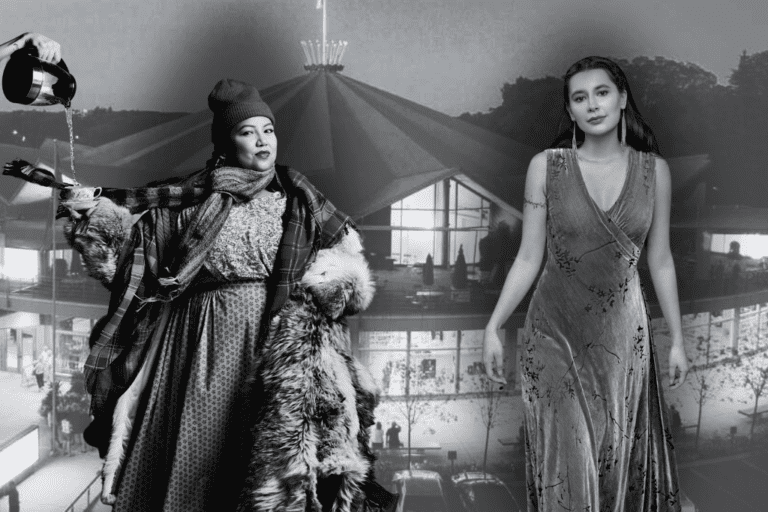 iPhoto caption: Joelle Peters (left) and Tara Sky (right). Original images of Peters and Sky by Ted Belton.
Change for the Better: On Indigeneity at the Stratford Festival
Both [Sky and Peters] want to honour the Indigenous artists who have worked with the [Stratford] festival for years, quietly carving out space for public and visual representation.
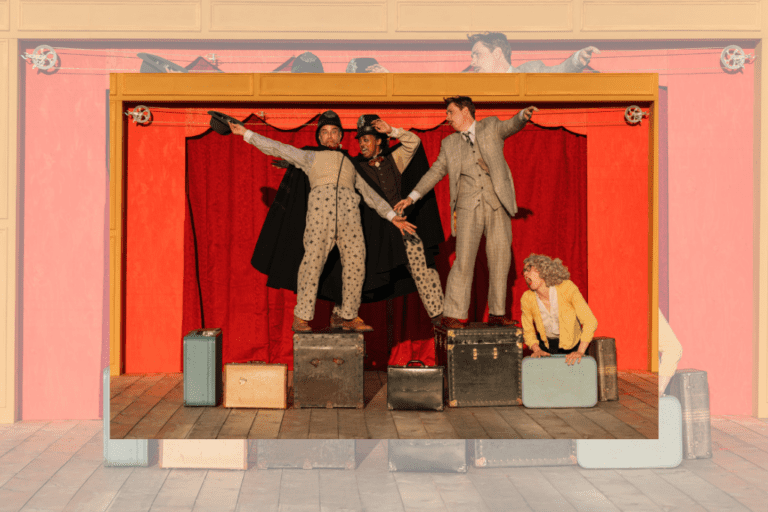 iPhoto caption: Courtenay Stevens, Helen Belay, Brandon McGibbon, Courtney Ch’ng Lancaster perform in The 39 Steps. Photo by Sarah Kirby.
REVIEW: The 39 Steps at County Stage Company
A cast of fantastic actors takes you on an equally fantastic journey through some of the silliest places and situations — it’s great fun.
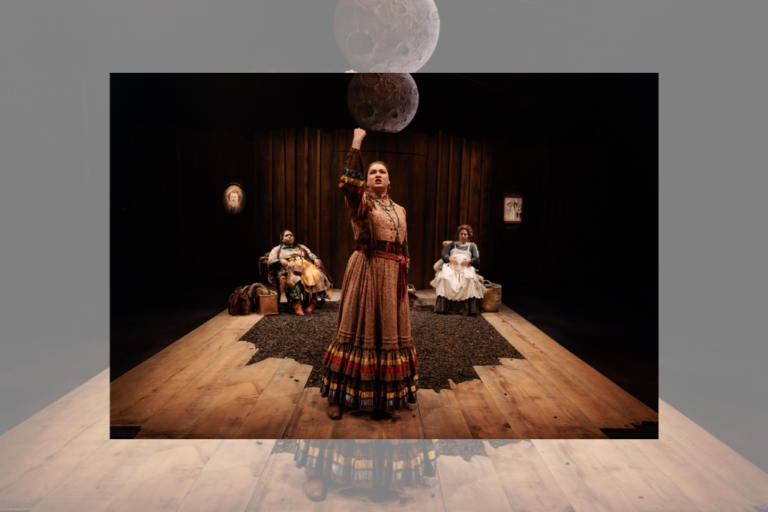 iPhoto caption: Photo by David Hou
REVIEW: Women of the Fur Trade at the Stratford Festival
Louis Riel is SO dreamy. Tall. A little disheveled and unkempt, because he’s an introspective poet who’s busy fighting for social justice. And he wears glasses. He’s the total package.
Comments