
‘It’s More Difficult to Forget Something that Exists on a Permanent Record’: In Conversation with Tara Beagan and Andy Moro
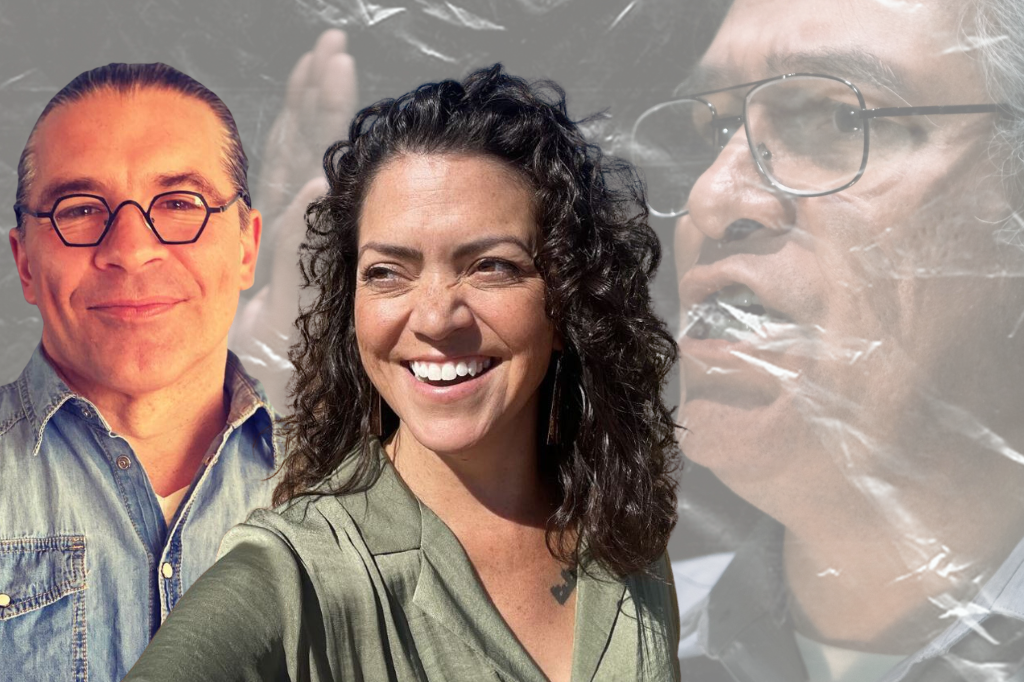
Prairie Theatre Exchange is about to close out their 50th anniversary celebration with a digital Reckoning, beginning June 21, also known as National Indigenous Peoples Day.
Not three weeks out from the film’s premiere, both Andy Moro and Tara Beagan took a break from their busy schedule of film editing to meet with me over Zoom to discuss their collaboration with PTE. For Beagan and Moro, making the jump to film is an obvious extension of their artistry, with Reckoning translating well to film. The duo already has a fluency in film and digital work; their Indigenous activist arts group ARTICLE 11 often incorporates film and cinematic techniques in their productions.
Reckoning made its stage debut in 2016 in Toronto at The Theatre Centre. It’s a triptych composed by Beagan, and though the germ of it came before, it was fully realized in response to the Truth and Reconciliation Commission. Rather than representing a comprehensive history, each movement illustrates different relationships and proximities to the commission process and its aftershocks.
“The [TRC] fallout was so varied and so widespread. The rate of attrition for these adjudicators was quite intense,” said Beagan. “They are suffering from associative post traumatic stress disorder — not all, but many. So instead of rehashing the horrific accounts of what survivors lived experiences, Reckoning examines the after-effects — what the [TRC] process does to people’s day-to-day lives.”
Witness, the first piece, is movement- and dance-based. A non-Indigenous person of colour grapples with the adjudication process of the TRC, hearing the horrors of residential schools. “It already had a cinematic feel to it from its design,” Beagan explained. “Andy wanted to stage [the dancers] in a very deliberate 16-by-nine, widescreen kind of feel.”
The second piece, Daughter, is a “naturalistic two-hander,” in Beagan’s words, featuring the daughter of a survivor, an accused abuser, and a terrible first date.
Survivor, the final monologue, written for and delivered directly to camera by Jonathan Fisher, is about a survivor going through the whole commission process and being re-traumatized by it. He finds himself feeling hopeless and wanting some kind of vengeance without causing actual harm.
Early in the pandemic, ARTICLE 11 filmed Beagan’s Deer Woman, a piece that Beagan describes as more of a “hybrid” work, filmed on-site as “theatre on video.” The foundations were then laid for adapting live performance to film, with space to explore beyond conventional theatre for streaming.
“We were hosting the first stream so we could see how many people were logging on. It was better than being in a theatre, when you get about as many people during a whole [live theatre] run!,” Beagan recalled, realizing the potential scope of digital distribution. With that realization made, Fisher’s monologue became an obvious choice for distribution to wider audiences. Eventually it would grow into a full production within Reckoning in partnership with Prairie Theatre Exchange.
“As soon as we decided we wanted to do Reckoning, the challenges became actually producing it,” said Moro.
“We built a huge soundstage in a theatrical black box, with moveable walls, and then created different universes day to day,” he added. But like all companies, Moro is quick to point out ARTICLE 11 faced challenges of physically creating the spaces with the loss of theatre sector workers during the pandemic.
Scarcity in theatre is nothing new, and is in fact a familiar mindset for Beagan and Moro. There’s a kind of scrappiness required to run an indie activist theatre company, especially when telling stories that counter a 155-plus-year narrative about a country. Finding the right companies to partner can also be a challenge, but these are exactly the kind of stories PTE artistic director Thomas Morgan Jones has said he is committed to programming. Partnering with PTE allowed ARTICLE 11 to push through the pandemic struggles, and evolve Reckoning into PTE’s season closing event. In our interview, Moro described PTE as “pandemic heroes” for allowing artists to dream big and pay their bills in these challenging times.
Beagan chuckled as she spoke of initially not being overly thrilled by the idea of theatre on video, but with time to explore and see the possibilities, she’s come around. When asking audiences to consider the impact of the TRC, she pointed out that “it’s more difficult to forget something that exists as a permanent record.”
“We acknowledge and embrace the power of theatre and still very much feel the way it can be medicine,” she said. “But also we want people who have internet access, but not access to go to live theatre, to be able to see our work. That’s really our big motivator.”
Reckoning is available to stream digitally through Prairie Theatre Exchange from June 21-25. Tickets are available here.

Robyn Grant-Moran
Robyn Grant-Moran (Métis Nation of Ontario) is a classical singer, writer, and a jack of many trades who has recently met the requirements to call herself a Bachelor of the Fine Arts (thank you, York University and Indspire!). Along with her BFA, she has also completed the Performance Criticism Training Program with Generator, has studied with some beloved Canadian classical singers, and been in a opera or two. Robyn currently resides in Toronto with her tiny adorable rat dog.
LEARN MORE iPhoto caption: Festival artwork by Mishiikenh Kwe.
Weesageechak Begins to Dance invites artists and audiences to explore newness together
Weesageechak Begins to Dance is the annual festival of new and innovative First Nations, Métis, and Inuit theatre, opening on November 6 at Native Earth Performing Arts.
 iPhoto caption: Photo by Mike McPhaden.
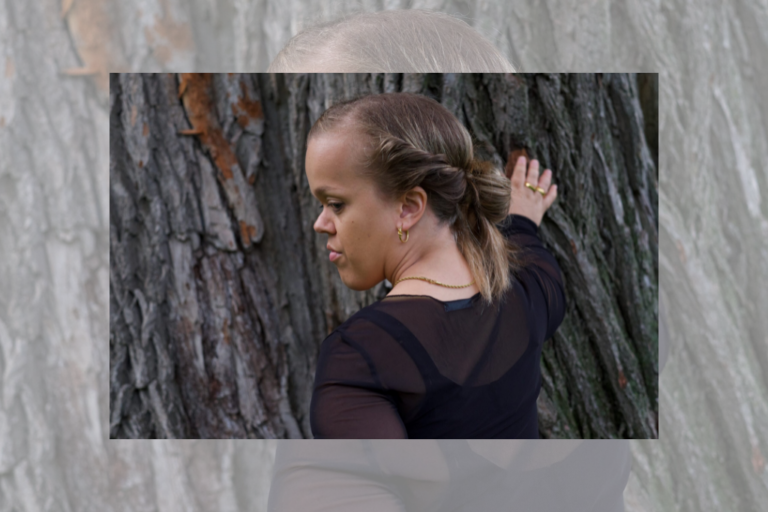
There is a rift in the time-space continuum at Withrow Park this summer: multiverse Richard III has met Shakespearean universe Richard III for a coronation and some Shakespearean hijinks.
REVIEW: Otîhêw at Shakespeare in Action
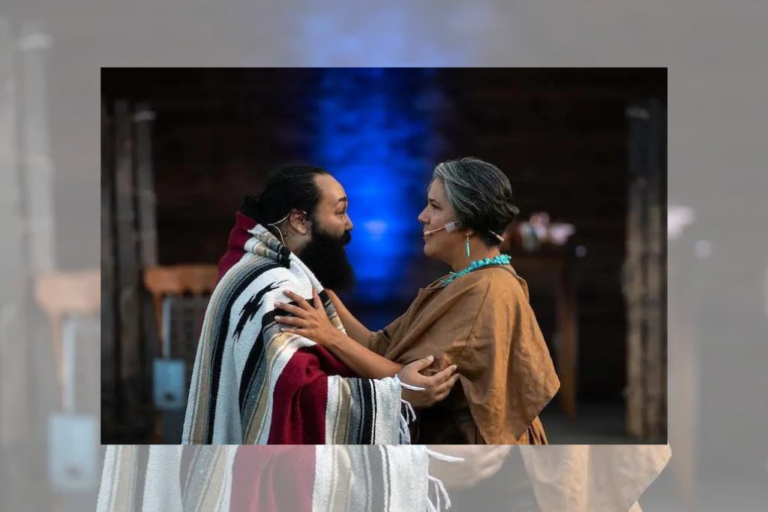
A volcanic eruption and violent colonial expansion has turned the world upside down. Without sun and moon, the realities of famine and smallpox unleash new fears that threaten to unravel the fabric of community.
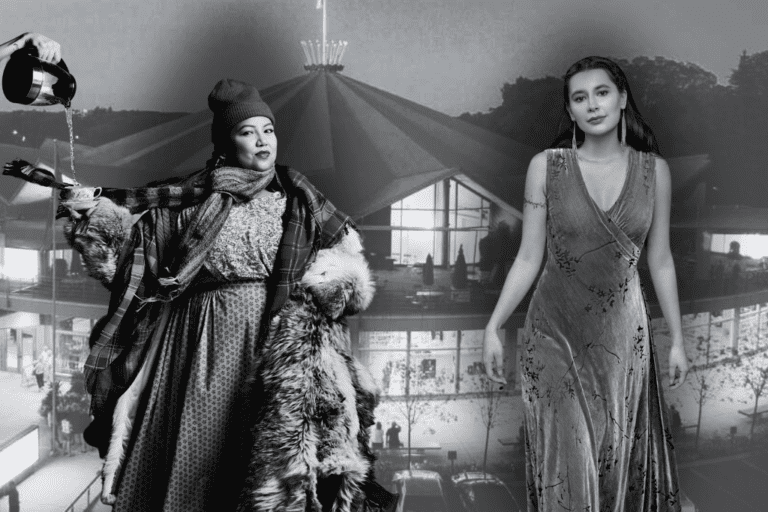 iPhoto caption: Joelle Peters (left) and Tara Sky (right). Original images of Peters and Sky by Ted Belton.
Change for the Better: On Indigeneity at the Stratford Festival
Both [Sky and Peters] want to honour the Indigenous artists who have worked with the [Stratford] festival for years, quietly carving out space for public and visual representation.
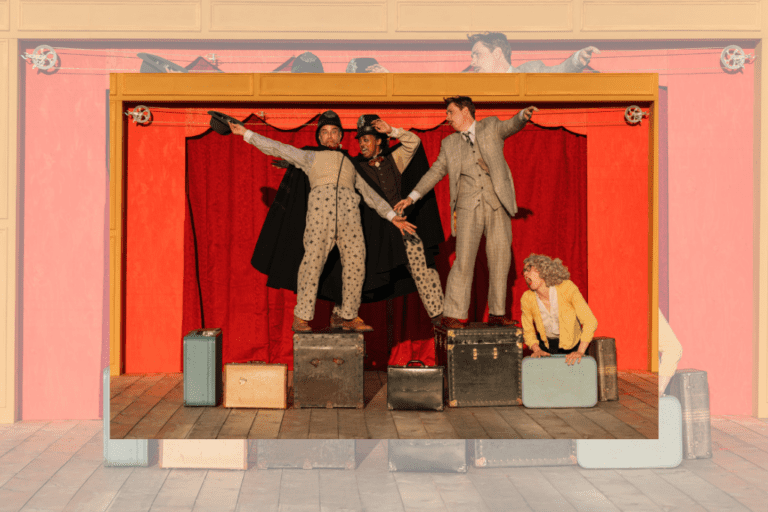 iPhoto caption: Courtenay Stevens, Helen Belay, Brandon McGibbon, Courtney Ch’ng Lancaster perform in The 39 Steps. Photo by Sarah Kirby.
REVIEW: The 39 Steps at County Stage Company
A cast of fantastic actors takes you on an equally fantastic journey through some of the silliest places and situations — it’s great fun.
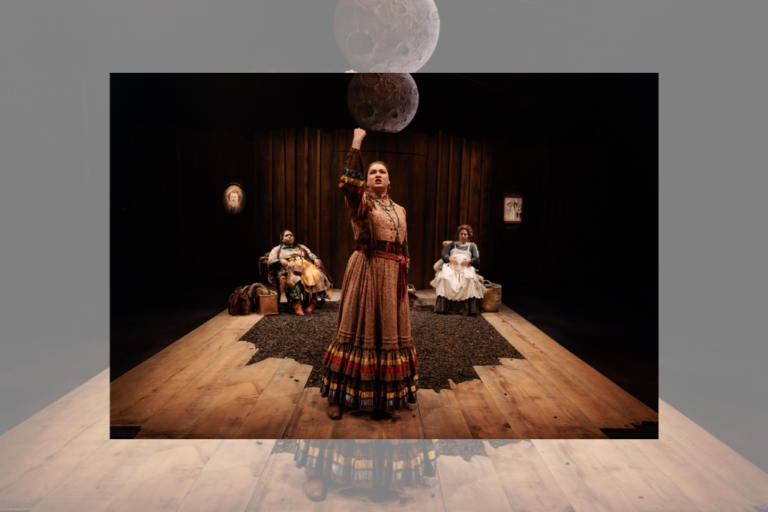 iPhoto caption: Photo by David Hou
REVIEW: Women of the Fur Trade at the Stratford Festival
Louis Riel is SO dreamy. Tall. A little disheveled and unkempt, because he’s an introspective poet who’s busy fighting for social justice. And he wears glasses. He’s the total package.
Comments