
REVIEW: DEATH: A Love Story at Dandelion Theatre
 iPhoto caption: Photo by Ally Mackenzie.
The only thing worse than being alone in purgatory: being alone in purgatory with your ex. That muddle of unresolved feelings, heartbreak, and gripes left unaired is the basis for Max Ackerman’s 45-minute play DEATH: A Love Story.
Moonie (Sophie Rivers) and Jack (Sivert Das) are exes. It also appears they are two not-really-that-dead dead people. When they awaken from their respective deaths (and presumed descent into a nebulous nothingness), they find themselves lying next to one another in some kind of ether. It is them alone, in front of a giant talking screen that one might describe as the riddle-loving Siri of the afterworld. The play spirals from Jack and Moonie’s recognition of one another, to their desperate attempts to uncover their memories of their deaths, and of course, along the way, various hidden truths about their former relationship.
Dandelion Theatre, the play’s production company, of which Ackerman also serves as artistic director, touts “oral storytelling” as its primary artistic objective. The company’s privileging of the spoken word brings a necessary context to the overall composition of DEATH: A Love Story, which offers the audience little other than the verbal divulging of past hurts between Moonie and Jack. Most of the staging is simple, and the lighting intentionally stark; this play is at its core, really just a conversation.
In the few moments that Ackerman does take risks with the staging, his more theatrical strengths shine through. Such long stretches of rumination and ex-lovers’ quarreling make scenes such as Moonie’s recounting of a romantic evening from their past feel like a much needed disruption from the constant back-and-forth dialogue. As she slips into the memory, a galactical projection overcomes the blinding whiteness of the room and the audience re-lives a re-enactment of the tenderness between Jack and Moonie. It is our only real glimpse into what was (that and Jack’s slippage into his comical alter ego “Sir Jack the Bold”), but it is the moment that makes their relationship feel the most real, or like something of value that might be missed.
DEATH: A Love Story feels like a play that wants to be in cinemas. From the nature of the plot and characters, it is clear that Ackerman has drawn significantly from a wealth of rom-coms, adhering to a certain kind of long lost lovers convention, or perhaps her has imagined what might happen if Orpheus and Euridyce got a second chance in the sci-fi realm. Various cinematic elements including overlapping monologues to a punchy beat, rolling credits on the screen, and an admirable movie-like original score, composed by Checkout Queens (a local punk band) makes the play feel like a stage adaptation of a pre-existing film. If anything, this would be an interesting avenue for the artists to further explore, as Ackerman seems to be hitting on a certain kind of nostalgia for mid-2010s young adult literature and film.
Rivers and Das put on a commendable performance for a narrative that deals with a number of heavy themes. Not only must Jack and Moonie reckon with the end of their own lives, but it seems that in their pasts, they were independently haunted by their own forms of grief. Jack’s history with mental illness and addiction is much more clearly defined than Moonie’s struggles with the loss of her parents. Her grief seems to exist more in relation to Jack’s inability to support her. At times this means that textually the story is more about Jack’s growth than Moonie’s, whose emotions are written in a way that could afford to be deepened. This aside, the intimacy between Das and Rivers feels very real and encapsulating of two individuals who once knew each other in the deepest of ways. In fact, the lovers are more concerned with their crumbled relationship than the fact that their lives have come to an abrupt end — now that’s near the definition of love.
While much of DEATH: A Love Story does not stray from convention, and occasional cliches (such as a kintsugi ceramics metaphor), it certainly succeeds in the aims that Dandelion Theatre sets out for it. The play is earnest and brutal in its commitment to loving love, and the guttural pain of missing a partner, when “it feels like someone took the light out of [my] life and replaced it with candles.” Ackerman’s production is a revisitation of soulmates, whose reconciliation and second chance at being together (forever) is ultimately endearing to witness.
DEATH: A Love Story closed on August 20. You can learn more about Dandelion Theatre here.
Intermission reviews are independent and unrelated to Intermission’s partnered content. Learn more about Intermission’s partnership model here.

Sarah Jean Abernethy
Sarah Jean Abernethy is a recent graduate of the University of Toronto with an HBA in English and Drama. Formerly an editor at The Strand, Sarah is an emerging writer, theatre artist, and academic set to pursue an MPhil in English Studies at the University of Cambridge, where her research will focus on literature, feminism, and theatrical theory.
LEARN MOREComments
Leave a Comment
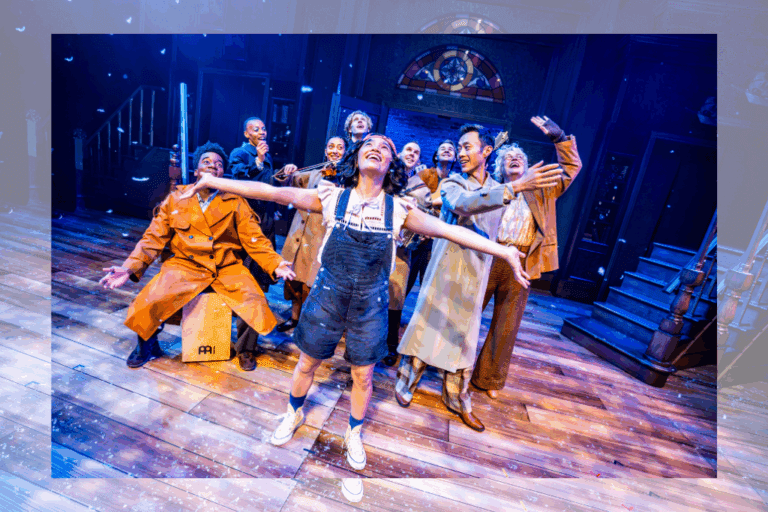 iPhoto caption: Members of the company of 'Narnia.' Photo by Dahlia Katz.
REVIEW: Bad Hats’ Narnia is a joyful, heartwarming escape
The spirit of openness and the joy of discovery rule over this Narnia. Open the wardrobe and see.
 iPhoto caption: Members of the company of 'Robin Hood.' Photo by Dahlia Katz.
REVIEW: Canadian Stage’s Robin Hood panto is anti-capitalist fun for the whole family
Following Ross Petty’s legacy of scene-stealing, Damien Atkins as the evil Prince John is easily the greatest delight of the show.
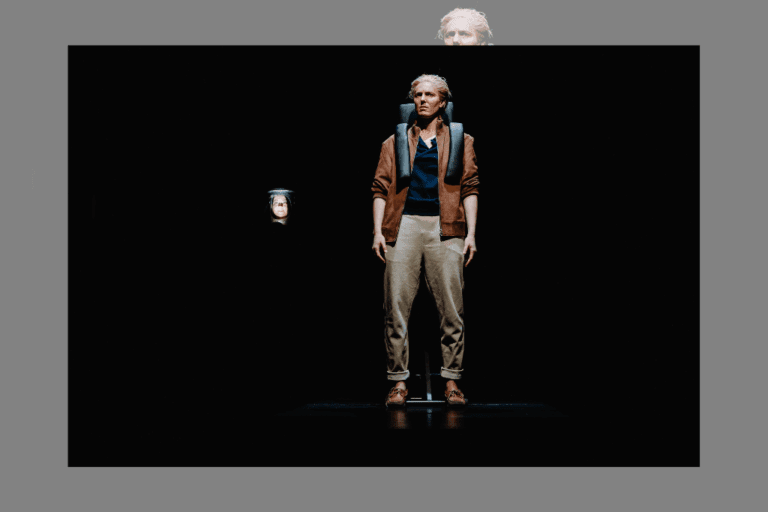 iPhoto caption: Lauren Gillis and Alaine Hutton in 'Public Consumption.' Photo by Eden Graham.
REVIEW: Lester Trips’ stylish Public Consumption captures the internet’s profound emptiness
Rather than directly representing online life, Public Consumption speculates — with virtuosity — about how the digital world affects our bodies. And the show's findings are by no means comfortable.
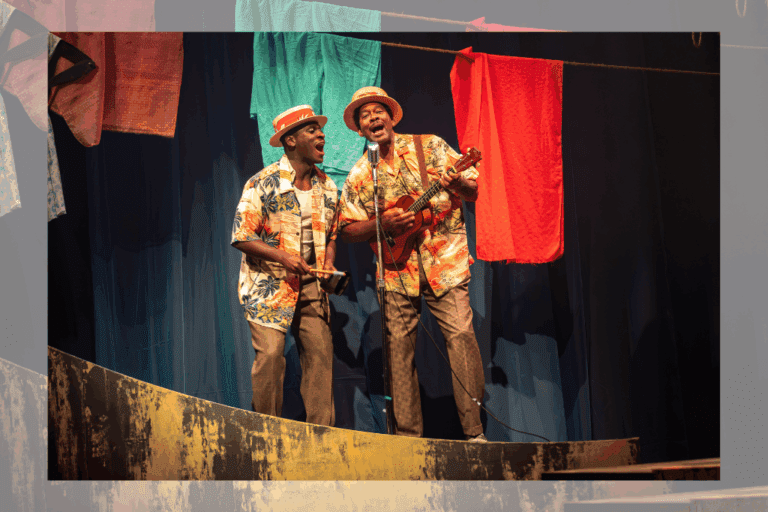 iPhoto caption: Tony Ofori and Daren A. Herbert in 'Moonlight Schooner.' Photo by Dahlia Katz.
Kanika Ambrose’s Moonlight Schooner is animated and visually stunning, but its individual pieces don’t come together as neatly as I would've expected.
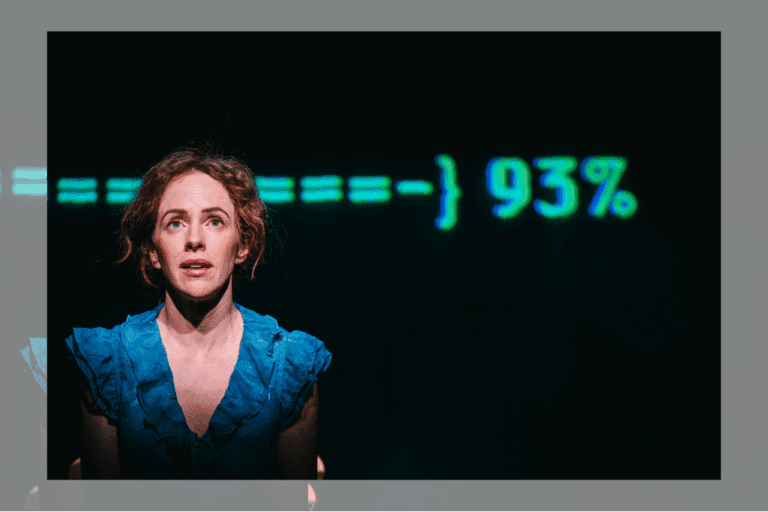 iPhoto caption: Fiona Mongillo in 'Reproduktion.' Photo by Ann Baggley.
REVIEW: Here For Now’s well-acted Reproduktion attempts to tackle too much
Amy Rutherford’s world premiere script is ambitious and the material it covers is complex — but the narrative feels disjointed.
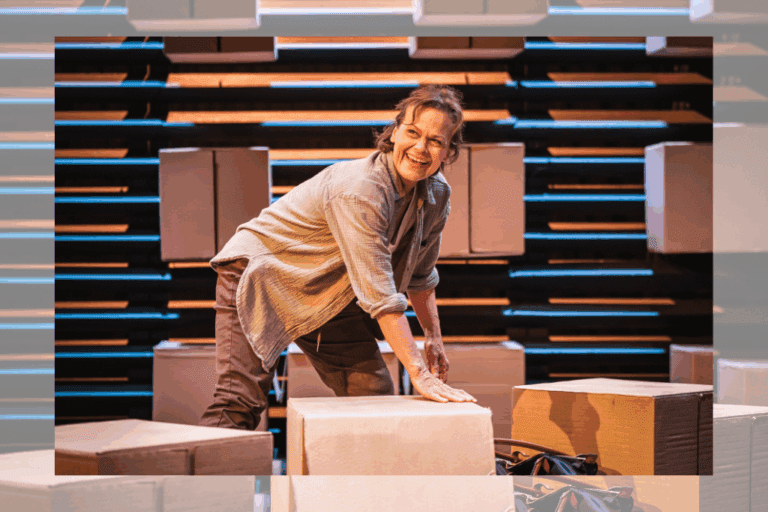 iPhoto caption: Kristen Thomson in 'Fulfillment Centre.' Photo by Elana Emer.
REVIEW: Coal Mine’s Fulfillment Centre asks how we end up alone, together
The production understands the play’s themes, yet feels limited by a script that delivers a package it never fully opens.
 iPhoto caption: Photo by Raph Nogal.
REVIEW: Three Men in a Boat at the Guild Festival Theatre
What do you get when three Englishmen and a stuffed dog walk onto a boat? You get Three Men in a Boat.
I recommend this spell caster..!!,
HAPPY TO WIN BACK MY (EX) AFTER BREAKUP,
Thanks_______DR_MA C K ( YA h o o .C om)