
REVIEW: Shifting Ground Collective’s The Drowsy Chaperone is anything but a snore
 iPhoto caption: Juliette Schroeder and the cast of 'The Drowsy Chaperone.' Photo by Taylor Long.
Twenty-seven years after The Drowsy Chaperone’s first professional run at Theatre Passe Muraille, Shifting Ground Collective has brought it back to the very same stage. Infused with infectious energy, the production is a harmony of well-crafted design elements and vivacious performances.
The Drowsy Chaperone is part guided listening and part golden age musical extravaganza. In his cosy studio apartment, the musical theatre megafan known only in the program as Man in Chair (Martin Julien) drops the needle on his favourite live recording of the 1920s smash hit musical — you guessed it — The Drowsy Chaperone. An explosion of glittering costumes, designed by Gabriel Woo, detonates along with Shannon Murtagh’s jazzy choreography as fictional actors appear onstage to illustrate the Man’s explanations.
Flitting between the sensational antics of 1920s dramedy and the nervous excitement of the Man trying to explain his love for the theatre, The Drowsy Chaperone blends parody with sincerity — and director Joshua רועי Kilimnik nails the ratio. The ensemble exudes such boundless joy in their roles that I found it impossible to not be swept along with them; like Julien’s character, we build our own emotional connection to the story.
The show within a show features big, brassy showtunes, mistaken identities, mobsters, and blindfolded rollerskating. Famed showgirl Janet Van de Graaff (Juliette Schroeder) is leaving stardom behind to marry Robert Martin (Ben Ridd). Her producer, Feldzieg (Duncan Lang), must find a way to stop the ceremony or risk losing his headliner — and maybe his kneecaps. Grandiose spectacle and swinging tunes combine in this rollicking homage to the tropey hits of Broadway’s jazz age.
Murtagh’s choreography further reflects the era with bouncy, animated movements and ragtime dance steps. “Cold Feets,” a tap number by the groomsmen, is particularly rousing, earning extended whoop-filled applause on opening night. These skillful performances and crisp stylistic elements work together to make The Drowsy Chaperone feel effortlessly cohesive.
Woo’s sparkling costume design involves four intricate outfits, complete with quick changes/reveals, all for Janet’s solo “I Don’t Wanna Show Off” (spoiler alert: she kind of does). Moreover, Woo matched the exact bright red shade of the Man’s slippers to the buttons on his brown cardigan. This small choice felt brilliant to me: we can tell exactly who the character is — a homebody with a flair for the dramatic.
Simultaneously sweet and sardonic, the Man makes his passion clear with tongue-in-cheek wit. He weaves expert commentary into the show-within-a-show, occasionally stopping or speeding through the recording to offer important context. These flips between worlds catch the cast onstage in irreverently funny moments — holding diabolically dynamic poses, or speedrunning through a dozen spit takes.
Through the Man’s commentary we encounter the third layer of the play: the historical background of the recording. Kilimnik clearly develops distinction between worlds by emphasizing little details. For example, the Man explains that the actor playing Robert Martin was Percy Hyman, an iconic toothpaste spokesman, and suddenly you notice each time he’s onstage he flashes a hammy, toothy grin. The Man further shares that Janet and her Chaperone (Heidi Michelle Thomas) were competing starlets, and in the blocking of their scenes together the Chaperone opportunistically obstructs Janet to keep herself downstage. These moments are noticeable enough to have weight, but not so overdone they become the focus.
The liveness of the recording is exactly what the Man falls in love with over and over again — it’s a slice of time preserved in vinyl that continues to dazzle regardless of how the world turns. He puts it on when he “feels blue,” he explains, to become part of the characters’ world while still stumbling along in his own. The Man struggles to reconcile a paradoxical desire to be seen with an anxious disdain for the outside world. He welcomes the audience in as a manifestation of the connection he longs for, but when faced with real interaction, he freezes; the Man can only visibly relax when he loses himself in the recording.
Julien’s sprightly energy and flamboyant attitude belie a deep sense of loneliness, making his moments of vulnerability more impactful. Onstage practically the entire show, Julien hardly has a moment to relax, and makes every minute worth it. My eyes kept drifting back to watch him move along with the choreography in his chair.
Overall, Shifting Ground Collective’s The Drowsy Chaperone is capital F-U-N. It’s an excuse to let loose and shake off anything making you feel blue. The attention to both physical and emotional detail in this production makes for a showstopping experience, using our deepening connection to the Man and the fictional musical to highlight the magic of theatre.
The Drowsy Chaperone runs at Theatre Passe Muraille until March 21. More information is available here.
Intermission reviews are independent and unrelated to Intermission’s partnered content. Learn more about Intermission’s partnership model here.

Columbia Roy
Columbia Roy is an interdisciplinary theatre artist and arts worker raised in Taiwan, now discovering life in Toronto. She’s passionate about arts philosophy, examining culture, and public transit. Columbia is drawn to work that confronts humanity with itself, warts and all, while still embracing the silliness of living. You can always find her knitting, talking to strangers, or waiting for the TTC.
LEARN MOREComments
Leave a Comment
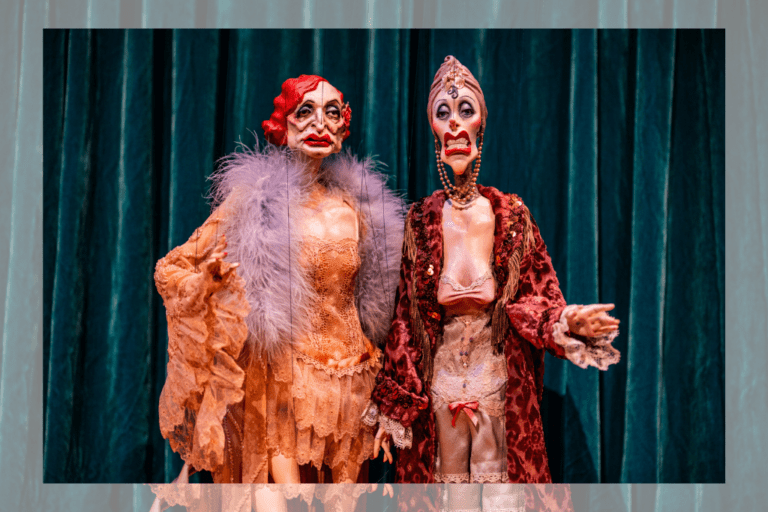 iPhoto caption: Marionette design by Ronnie Burkett. Photo by Dahlia Katz.
REVIEW: Ronnie Burkett’s Little Willy is a love letter to theatre
Ronnie Burkett and William Shakespeare agree on at least one fundamental truth: there’s no such thing as a bad dick joke.
 iPhoto caption: Members of the company of 'Pu Songling: Strange Tales.' Photo by Johnny Hockin.
REVIEW: Wet, weird, and woeful, Pu Songling: Strange Tales is a riotous trip into the mystical
One thing’s for sure — you’ve never seen a show with this much tongue.
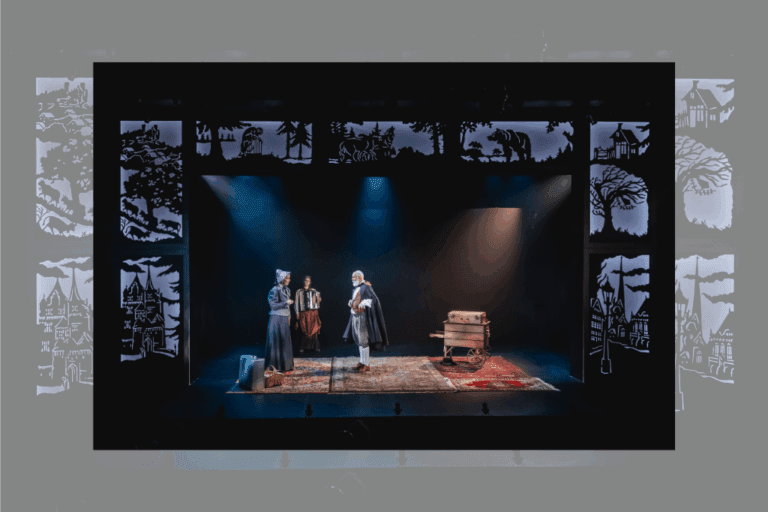 iPhoto caption: Nancy Palk, Tatjana Cornij, and Oliver Dennis in Bremen Town. Photo by Jae Yang.
REVIEW: Tarragon’s Bremen Town gives the golden years a Grimm twist
Prest’s adaptation doesn’t shy away from the darker aspects of Grimm’s fairy tales nor of life, and instead explores life's absurd humour with a sprinkling of schadenfreude. The show inspires guilt-tinged laughter as the characters cheerfully discuss the merits of turning their late mothers into candles.
 iPhoto caption: Photo by Bruce Zinger.
REVIEW: Outside the March’s Rainbow on Mars explores the future of embedded accessibility practices
Rainbow on Mars is a multisensory experience that goes beyond visual spectacle to create an all-encompassing narrative world from the moment your ticket is scanned.
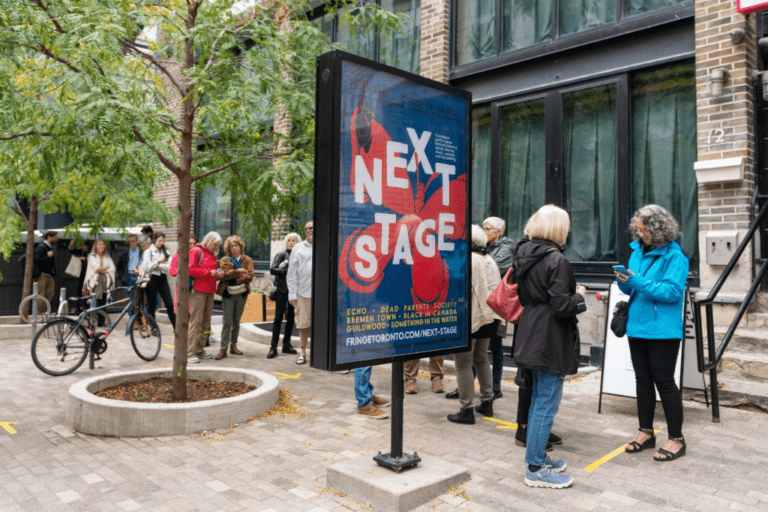 iPhoto caption: Photo by Colleen Yates.
Beyond the Fringes: Next Stage guides artists into creative control
As artists experimented with form and design, the festival compelled audiences to reconsider the boundaries of traditional performance.
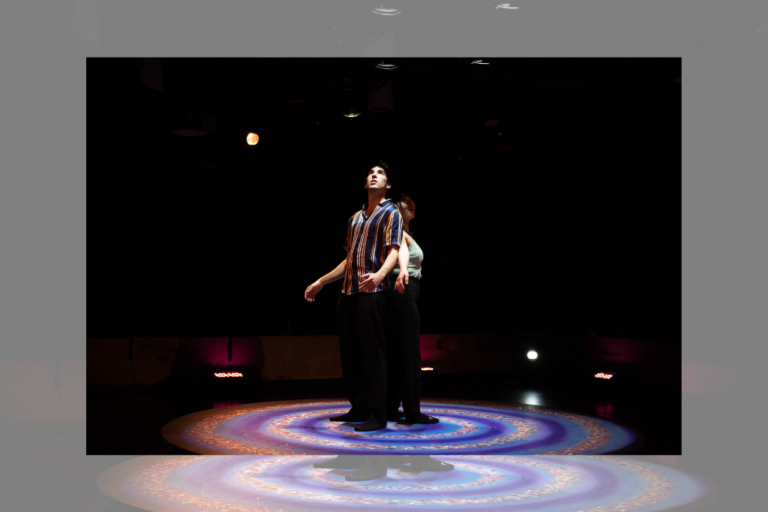 iPhoto caption: Photo by
REVIEW: ECHO is a chilling reflection of nightclub love and the pitfalls of passion
ECHO is an emotionally poignant, visually stunning story that questions our ability to nurture love and remain devoted to ourselves.
This whole show is a treat – such fun! Thanks to all involved in this production. Looking forward to more Shifting Ground Collective works!