
REVIEW: Ronnie Burkett’s Little Willy is a love letter to theatre
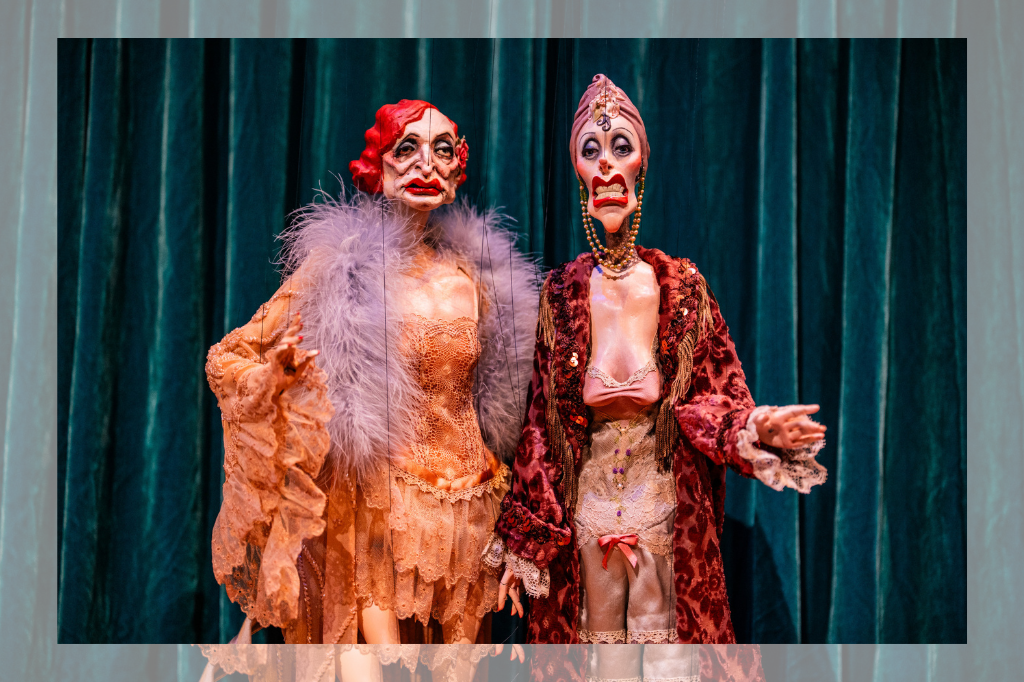 iPhoto caption: Marionette design by Ronnie Burkett. Photo by Dahlia Katz.
Ronnie Burkett and William Shakespeare agree on at least one fundamental truth: there’s no such thing as a bad dick joke.
Returning to Canadian Stage armed with his legion of exuberant characters and penchant for the perverse, Burkett breathes life and laughter into his touring production Little Willy with masterful puppet storytelling.
Though this is my first chance to attend one of his shows, Burkett’s work as a puppeteer precedes him. His troupe, the Daisy Theatre, features a revolving cast of fan-favourites, as well as new faces unique to each parody show. Acclaimed for crafting marionettes with distinctive bodies, personalities, and voices, I was expecting raunchy, melodramatic characters — but nothing could prepare me for the unrestrained energy he brings to the stage.
Burkett explains outright that this is not a scripted production. He has an arc and character interactions in mind, but the dialogue is mostly improvised. The primary plot involves his troupe of marionettes learning they’re slated to perform Shakespeare’s Romeo and Juliet instead of an original show. Rivalries reignite and artistic passions burn as the ensemble scrambles to cast, rehearse, and stage the play for an already-seated audience. Burkett explores what keeps us hooked on theatre, inviting us behind the scenes of the both absurd and heartwarming process of creation.
Little Willy opens with a tasteful striptease by the bodacious Dolly Wiggler that immediately showcases Burkett’s skills. The puppet starts wearing full Elizabethan dress, and Burkett coos a sultry tune while rhythmically maneuvering Wiggler’s hands to take off each layer. Watching Burkett multitask is captivating — there’s an easygoing confidence evidencing decades of practice, and his commitment to characterization using both sculpture and vocal performance is unstoppable.
A standout example is his rendering of Esmé Massengill, the HBIC of the Daisy Theatre. A glamorous hag draped from head to sagging breasts in vintage flapper jewels, Esmé is willing to take anyone out to claim her rightful role as Juliet (despite being old enough to have hooked up with Shakespeare himself). Her bony face is twisted in an exaggerated, lipsticked grimace perfectly matching the harsh, disdainful voice Burkett uses for her.
In addition to catfights over the casting of Juliet, the show comments directly on the backstage world of theatre.
Small-time touring Shakespeare actor Lillian Lunkhead revels in performing on what she calls a real stage — the hardwood of the raised puppet theatre — that isn’t a converted church or off-season basketball court. Burkett is keenly aware of how much performing can mean to artists, and how difficult it is to make it happen. Withered Vegas showgirl Rosemary Foccacia puts it best: “Who [do you] have to fuck to get a spotlight around here?”
Little Willy’s magic is as much about watching the strings being pulled as it is the puppets themselves. Each marionette’s facial sculpt and costume exudes personality even when they aren’t in use; they are simultaneously full of their own soul and extensions of Burkett. He flouts suspension of disbelief from the jump, keeping himself and his rigging visible. We watch each nimble hand movement translate into life onstage, and catch a glimpse at the rows of hanging characters in the wings waiting for their moment.
Burkett uses this lack of fourth wall to freely comment on his own performance choices, and also volunteer a few audience members to help him throughout the show — to play a dead Romeo lying onstage, or to puppet a few dancing wieners.
But I’m left questioning what kind of duty of care Burkett has to his audience. On opening night, three male audience participants were asked to take their shirts off, with Lillian Lunkhead’s overzealous Juliet nuzzling Dead Romeo’s crotch. Given how raunchy the show is, this isn’t out of left field, but the nature of being voluntold out of a crowd can come with social pressure to ignore your own boundaries or discomfort. It’s difficult to blur the gap between the behaviour of object (puppet) and agent (Burkett), when the show deliberately severs our suspension of disbelief. Though played for laughs, and certainly garnering some, it was patchier than the uproar of earlier scenes, I think because it’s hard not to consider participant comfort.
Because Burkett has offered meta-commentary on the show already, we’re already accustomed to him moving freely between its worlds or providing audience instructions. As such, it seems that framing participation as a request for volunteers (with a heads up about touching) would not jeopardize the gag of the show.
That being said, Little Willy is not all lascivious sex; Burkett finds moments to tug at our heartstrings too. Schnitzel — a lovable little fairy — expresses his connection to both Romeo’s and Juliet’s roles. A reminder of the possibility to be your truest, queerest self onstage, he touches on the hope for understanding and community that continues to draw generations to the theatre.
Burkett’s Little Willy is a love letter to theatre. It’s trying to remind us of what a joy it is to create experiences together — and although I wish there was more explicit care for audience participants, it’s damn captivating to watch.
Little Willy runs at the Berkeley Street Theatre until April 5. More information is available here.
Intermission reviews are independent and unrelated to Intermission’s partnered content. Learn more about Intermission’s partnership model here.

Columbia Roy
Columbia Roy is an interdisciplinary theatre artist and arts worker raised in Taiwan, now discovering life in Toronto. She’s passionate about arts philosophy, examining culture, and public transit. Columbia is drawn to work that confronts humanity with itself, warts and all, while still embracing the silliness of living. You can always find her knitting, talking to strangers, or waiting for the TTC.
LEARN MOREComments
Leave a Comment
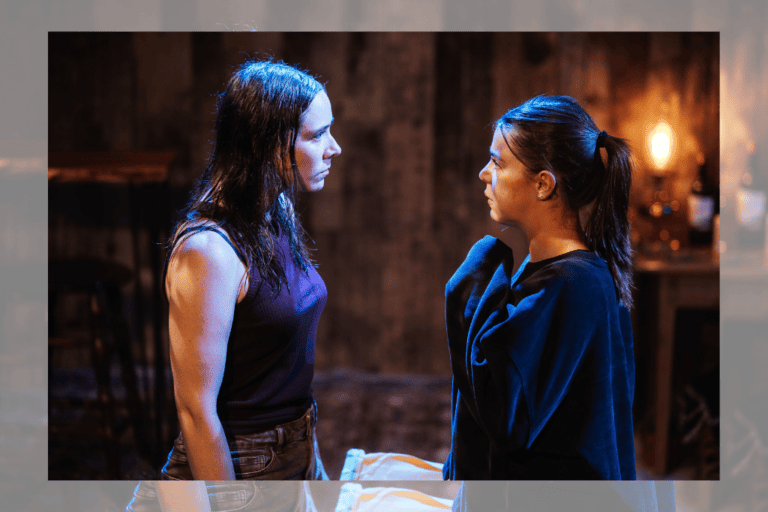 iPhoto caption: Members of the company of 'Walden.' Photo by Sandro Pehar.
Steeped in emotional and scenic intimacy, Icarus Theatre’s production probes the relationships we cultivate to duty, community, and progress in the face of climate crisis.
 iPhoto caption: Juliette Schroeder and the cast of 'The Drowsy Chaperone.' Photo by Taylor Long.
REVIEW: Shifting Ground Collective’s The Drowsy Chaperone is anything but a snore
Infused with infectious energy, the production is a harmony of well-crafted design elements and vivacious performances.
 iPhoto caption: Members of the company of 'Pu Songling: Strange Tales.' Photo by Johnny Hockin.
REVIEW: Wet, weird, and woeful, Pu Songling: Strange Tales is a riotous trip into the mystical
One thing’s for sure — you’ve never seen a show with this much tongue.
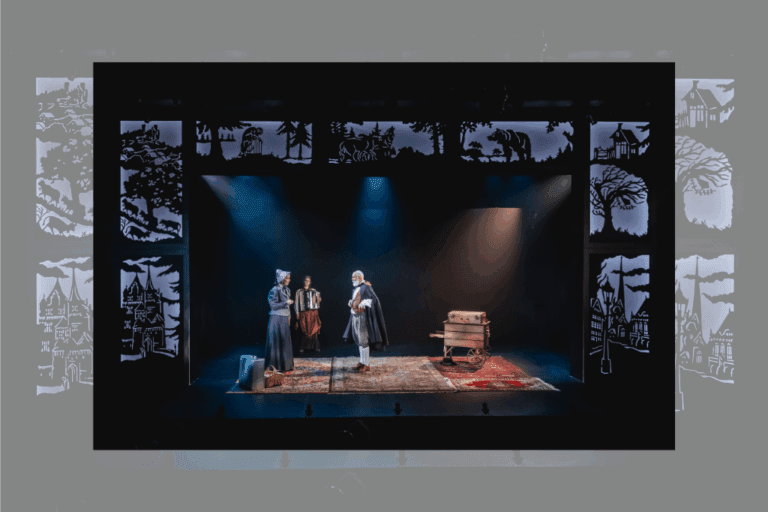 iPhoto caption: Nancy Palk, Tatjana Cornij, and Oliver Dennis in Bremen Town. Photo by Jae Yang.
REVIEW: Tarragon’s Bremen Town gives the golden years a Grimm twist
Prest’s adaptation doesn’t shy away from the darker aspects of Grimm’s fairy tales nor of life, and instead explores life's absurd humour with a sprinkling of schadenfreude. The show inspires guilt-tinged laughter as the characters cheerfully discuss the merits of turning their late mothers into candles.
 iPhoto caption: Photo by Bruce Zinger.
REVIEW: Outside the March’s Rainbow on Mars explores the future of embedded accessibility practices
Rainbow on Mars is a multisensory experience that goes beyond visual spectacle to create an all-encompassing narrative world from the moment your ticket is scanned.
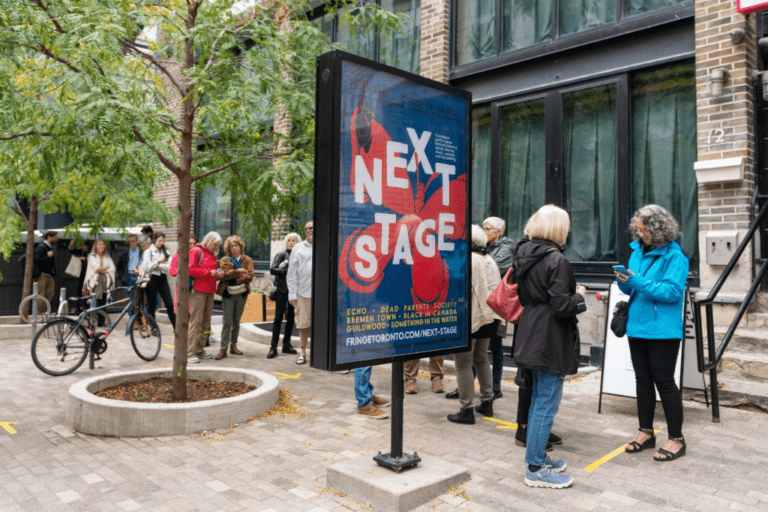 iPhoto caption: Photo by Colleen Yates.
Beyond the Fringes: Next Stage guides artists into creative control
As artists experimented with form and design, the festival compelled audiences to reconsider the boundaries of traditional performance.
I agree wholeheartedly with the ‘voluntold’ comment. The night I attended, I felt like ‘Romeo’ was goaded past his level of comfort into taking off his shirt and it made the whole scene uncomfortable to watch. The scene with the older woman in the chair, the striptease and the ones with Schnitzel were all brilliant though.