
REVIEW: An unabashedly feminist Macbeth hits all the right notes in Ottawa
 iPhoto caption: Photo by JVL Photography.
This year marks an exciting development for Ottawa’s flagship Shakespeare troupe — now at the helm of a Company of Fools is new artistic director Kate Smith. Coming from a 14-year tenure at Skeleton Key Theatre, Smith’s addition to the Fools presents thrilling possibilities for the next era of the company. For her premiere work as artistic director, the company is tackling the iconic tragedy Macbeth for the first time in its history. (Are there superstitions about writing the name? If so, I may be in for a whole lotta bad luck.)
In usual Fools fashion, this abridged adaptation runs at a brisk 90 minutes and hits all the beats of the original story — and then some. Though there aren’t any striking changes to the plot, the production’s virtuosity lies within bold casting and in turn, its contextual framing. The cast is made up entirely of non-men and the program reminds us of an important fact of the source text’s milieu: “It’s 1606 and King James VI of Scotland and I of England and Ireland has recently ascended to the throne of England, replacing the long-reigning Queen Elizabeth I. He immediately institutes The Witchcraft Act…”
And so the stage is set, and the cast transforms into a coven of witches plucking the familiar tune of the Scottish tragedy. By situating us in a time of peak female persecution, Smith’s sharp adaptation investigates the extremities of misogyny, subverts the play’s historically male-exclusive casting, and steers us into a realm of eerie femininity.
Okay, I said no plot was changed — which, in my defense, is functionally true — save for one factor: instead of a King Duncan, this production has us watch our male protagonist murder Queen Duncan to claim the throne. This shifts things; namely, some pretty important power dynamics.
The small-but-mighty gender swap makes Fools’ Macbeth a one-to-one distillation of the sociopolitical climate of its time wherein Macbeth’s crowning is a mirror of King James’. What emerges is a tale no longer just a meditation on the ill consequences of royal hunger, but one that now puts misogyny front and centre. (And with it, a response to the all-time favourite question of this theatre critic: Why this play now?)
Although a daring thematic remodeling of Macbeth, I found myself wanting more from the production’s set (Andrea Steinwand) and costuming (Bonnie Garland). The show feels tempered by minimal scenery and neutral tones, and though these aesthetic choices logically fit within the world, they veer toward understated beneath the grandness of its vision.
What is perhaps most crucial to consider about the design is that this production opts out of mic-ing its actors. While I do appreciate the technical magic of a purely acoustic performance, given the realities of outdoor theatre, it makes for a volatile playing field. For the first third of the performance I viewed, the actors were competing against the unrelenting whir of a nearby machine. Their efforts were obvious and commendable, which made the resulting dampened emotional depth of performance all the more unfortunate.
Once sound issues subsided, however, the cast settled into harmony. Each performer shines in their own right, but the ensemble’s north star is Joy Mwandemange’s untouchable Lady Macbeth. Simultaneously tumultuous and measured, Mwandemange never ceases to grip us and her performance brings incisive clarity to every scene she graces.
And for folks worried about their grasp on Shakespeare’s plume, fear not — the cast’s textual footing is steady. (Leanna Williams’ mastery of Banquo and Malcolm is particularly impressive, making us just about forget she’s speaking Early Modern English.)
The actors’ technical prowess is only elevated by their singing talent. That’s right, there’s music, and boy, are the musical elements of this production neat. Composer Angela Schleihauf’s scattered acapella hymns and verses set to song make for an irresistibly ethereal sonic landscape and a welcome contrast to the production’s bloody battle against the elements. From the opening of the show, to the scene transitions, and to the forlorn end, we are reminded that we have left the mortal realm and entered the witches’ court.
Par for the company’s course, Fools’ Macbeth offers a considerable number of laugh-out-loud moments. Audience participation in the form of knock-knock jokes and calls-and-response make for effective theatrical fun. Ananya Antony’s roster of supporting characters is of special note as necessary and sparkling comedic reliefs — her clownish interpretation of the Porter especially builds a warm rapport with the audience and serves as a delicious palate-cleanser.
All in all, the show is a bewitching jaunt into the grim. Smith’s pointed interpretation of the classic tragedy is a definite highlight and forecasts riveting things sure to be in store for Fools’ future programming. I am looking forward to what will come next from this unabashedly feminist approach and calculated refurbishing of the classics.
Macbeth runs at various parks in Ottawa throughout the summer. You can learn more about the company here.
Intermission reviews are independent and unrelated to Intermission’s partnered content. Learn more about Intermission’s partnership model here.

Eve Beauchamp
Eve Beauchamp (they/them) is an award-winning Calgary-based theatre artist, playwright, and graduate of the BFA in Acting at the University of Ottawa. They are the co-artistic director of Levity Theatre Company and primarily create work that explores queerness, capitalism, and neurodivergence through humour, poetry, and storytelling. Currently, you can find them pursuing their Master of Fine Arts in Drama at the University of Calgary.
LEARN MORE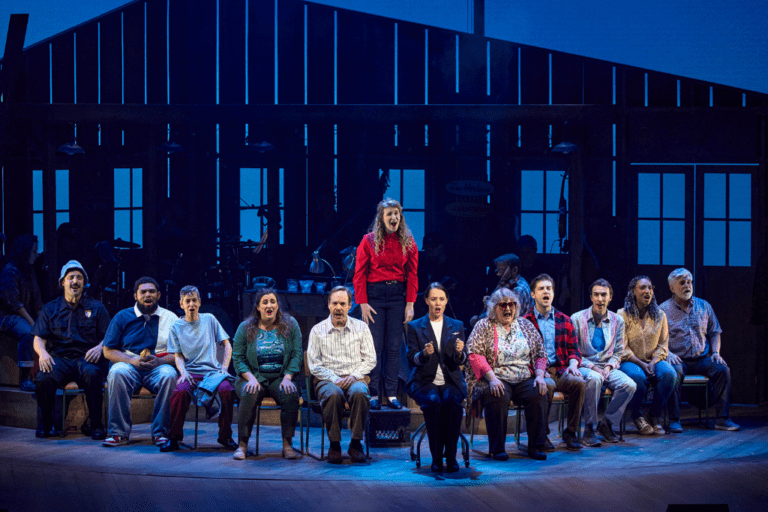 iPhoto caption: The cast of 'Come From Away.' Photo by Harder Lee.
Theatre Calgary’s new staging of Come From Away aims for the heart
“It really boils down to: ‘What are the words we're saying and how are we carrying ourselves in space?’" reflected director-choreographer Jesse Robb.
 iPhoto caption: Members of the cast of 'Appropriate.' Photo by Colin Munch.
Q&A: How a new Calgary performance venue aims to energize the city’s indie theatre scene
"Smaller venues that create independent theatre rather than the institutional spaces — I think that’s something that really enriches the city," says co-artistic director Jakob Schäefer.
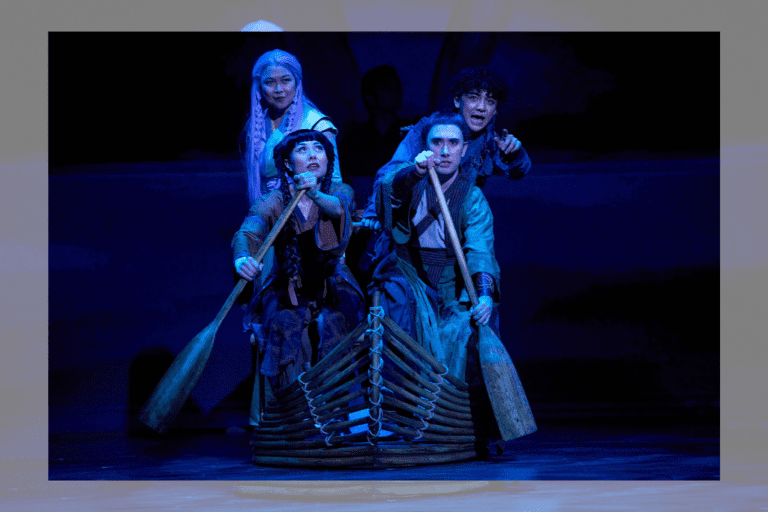 iPhoto caption: Ma-Anne Dionisio, Nikko Angelo Hinayo, Kennedy Kanagawa, and Kelsey Verzotti in 'The Tale of the Gifted Prince.' Photo by Harder Lee.
REVIEW: Theatre Calgary’s The Tale of the Gifted Prince is a dazzling new musical
The world premiere production stuns, delivering audiences a larger-than-life musical flush with Broadway splash.
 iPhoto caption: 'Dream Machine' photo by Blake Brooker.
REVIEWS: High Performance Rodeo 2026
For Calgary theatre-goers, January holds the antidote to frigid post-holiday slumps: One Yellow Rabbit’s High Performance Rodeo, the city's biggest performing arts festival. This year marks the 40th iteration of the interdisciplinary event and offers Calgarians a feast of over 30 shows across 12 venues from January 13 to 31.
 iPhoto caption: Elinor Holt and Ellen Close in 'How Patty and Joanne Won High Gold at the Grand Christmas Cup Winter Dance Competition.' Photo by Benjamin Laird.
“We’re living in a world right now where failure is not an option,” says actor Elinor Holt. “And a lot of times people would rather not try anything at all, rather than try something and risk failing at it.”
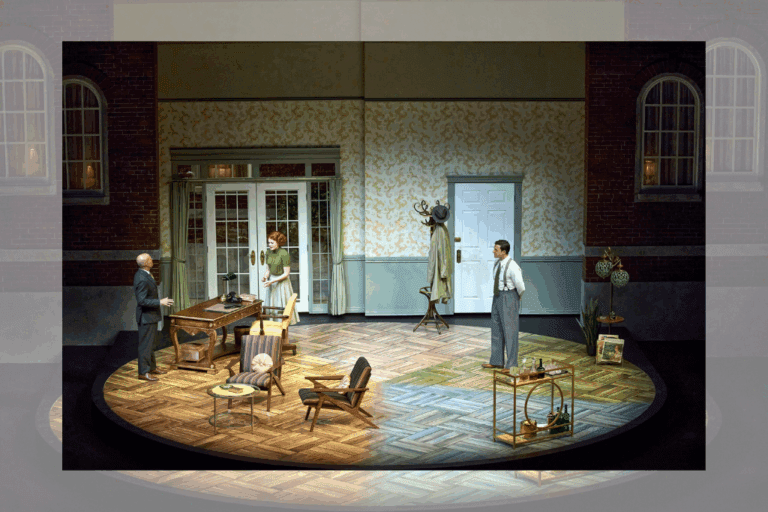 iPhoto caption: Shekhar Paleja, Emily Dallas, and Tyrell Crews in 'Dial M For Murder'. Set design by Anton deGroot. Photo by Trudie Lee.
REVIEW: Theatre Calgary’s Dial M For Murder queers the classic with style and suspense
The cloaked romance that sparks the homicidal scheme at the core of play is no longer between Margot (Emily Dallas) and a Mark, but rather a Maxine (Olivia Hutt). Yes, exactly — the original heterosexual coupling becomes refreshingly queer.
Comments