
REVIEW: At Factory Theatre, Kelly Clipperton’s new solo show transforms memory lane into a catwalk
 iPhoto caption: Photo by Olya Glotka.
In the punchy pop-rock opener of Let’s Assume I Know Nothing, and Move Forward from There, a body-glitter-bathed Kelly Clipperton asks us to “stay present” in the proceedings while letting the entertainment take us “away from it all.” Seemingly paradoxical statements, but Clipperton’s self-written and -performed cabaret goes on to explore the intertwinings of celebrative, extravagant performance with deeply private and present reflections on the pasts that got us there.
Clipperton, decked out in gender-defiant costumes of his own design (ranging from skimpy soldier to fashionista footballer), invites us on a sashay down his memory lane, constructed as a runway-esque set in Factory’s Studio Theatre. Bringing a sarcastically sincere humour to the proceedings, he blends episodic snapshots of past experiences as a teen model, theatre school student, young man embracing his homosexuality, and entertainer-at-large with riffs on present states of communication, connection, and gay identity.
Supported by Naomi Campbell’s glamorously grounded direction, which glides over the keys of sharply contrasting emotional scales, Clipperton paints a quippy, unapologetic, nostalgically referential portrait. Laden with ‘80s and ‘90s callbacks that in another show’s hands could alienate this Gen Z reviewer, I connected to Clipperton’s recognition and appreciation of the specificities of decades past. The backing of a five-piece band (Janet Whiteway, Carrie Chesnutt, Tak Arikushi, Oriana Barbato, and Karl Anderson) performing songs from Clipperton’s own catalogue provides punctuating emotional tones from memory to memory, ranging from piano ballads to sax-dripping showstoppers (Clipperton rightfully gives each member a shoutout and solo showcase at curtain).
Though the production is labelled a “one-man-lady-show,” Clipperton’s family permeates the story as characters in their own right. While the episodic format can at times feel random, he aims to highlight connections between moments in his adult life and familial memories that have influenced them. These range from an incident as a child cutting his sister’s hair, which links to a later job as a hairstylist in a Yorkville salon, or violent schoolyard bullying and his family’s reaction to it as it relates to present struggles with rising anti-LGBT rhetoric.
Clipperton is not reinventing the wheel of the autobiographical solo show, but while the format occasionally feels predictable in the monologue-song pattern it sinks into, his interpretation of the genre shines with this connection between family and self. Clipperton’s father Gary, whose penchant for entertainment greatly influenced his own, passed away in 2023 after a struggle with vascular dementia. While Clipperton expresses an initial cynicism about theatre as “therapy,” the ghost of grief adds a compelling counterpoint to his sardonic wit, his performance wearing a very real processing of this loss on its sleeve. Reflecting later in the show on his own aging and reluctance to “end,” Kelly offers this cabaret as a collective archive; of Toronto’s LGBT history, of evolving technologies of communication and art-making, of the Clipperton family, and of his own fabulous path-forging within it.
It’s a compellingly vulnerable approach that is at times let down by design choices. The show suffers from a familiar struggle with sound mixing that comes with a live onstage band, with instrumentation overpowering Clipperton’s vocals. A projection screen dominating the upstage area, cycling through animated ambient backgrounds, seems intended to add to the loud and proud vibes but instead becomes an oversaturated distraction. While ultimately justifying its existence with an incredibly poignant closing video montage, the device may have been best employed as a reserved reveal.
Let’s Assume I Know Nothing… is an example of how theatre can feel its most connected to a wider audience when it narrows in and embraces the deeply personal experiences that add up to an existence. As a fictional Berlin nightclub singer best put it, and as Clipperton echoes in his musical musings, life, after all, is a cabaret. Come, hear it play!
Let’s Assume I Know Nothing, and Move Forward from There runs at Factory Theatre until March 16. Tickets are available here.
Intermission reviews are independent and unrelated to Intermission’s partnered content. Learn more about Intermission’s partnership model here.

jonnie lombard
jonnie is a trans theatre artist / thing from the woods stumbling through sidequests of sentience. They were a participant in the 2024 New Young Reviewers Program, and will always say yes if you ask them to go dancing.
LEARN MOREComments
Leave a Comment
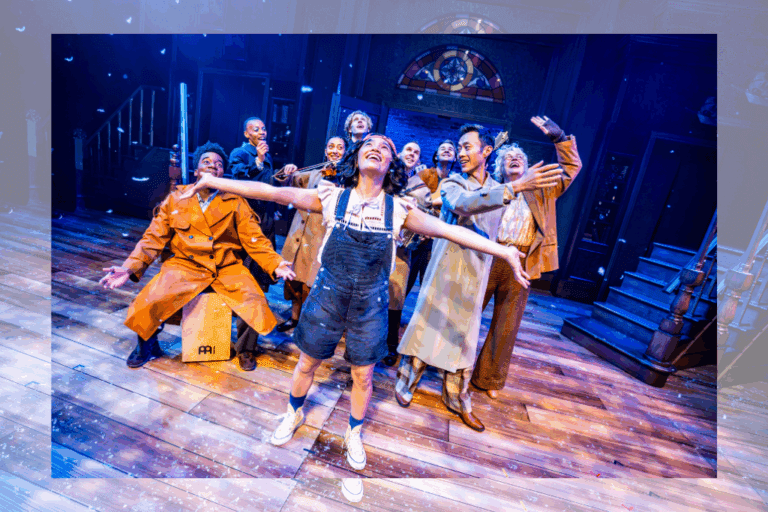 iPhoto caption: Members of the company of 'Narnia.' Photo by Dahlia Katz.
REVIEW: Bad Hats’ Narnia is a joyful, heartwarming escape
The spirit of openness and the joy of discovery rule over this Narnia. Open the wardrobe and see.
 iPhoto caption: Members of the company of 'Robin Hood.' Photo by Dahlia Katz.
REVIEW: Canadian Stage’s Robin Hood panto is anti-capitalist fun for the whole family
Following Ross Petty’s legacy of scene-stealing, Damien Atkins as the evil Prince John is easily the greatest delight of the show.
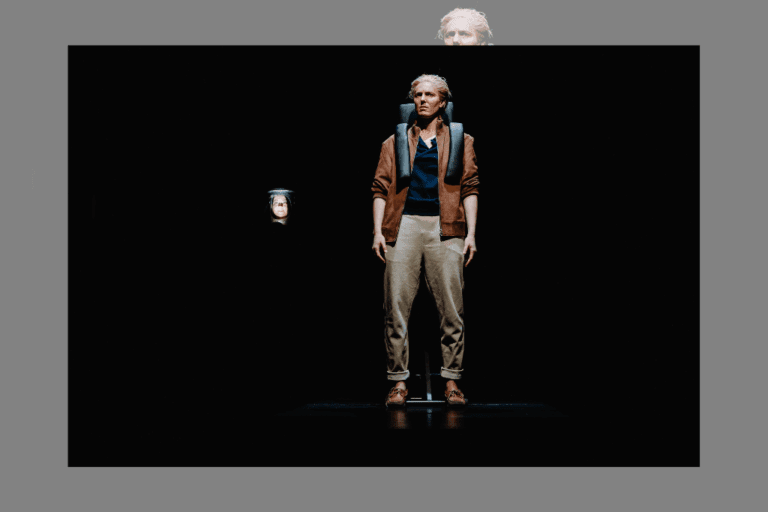 iPhoto caption: Lauren Gillis and Alaine Hutton in 'Public Consumption.' Photo by Eden Graham.
REVIEW: Lester Trips’ stylish Public Consumption captures the internet’s profound emptiness
Rather than directly representing online life, Public Consumption speculates — with virtuosity — about how the digital world affects our bodies. And the show's findings are by no means comfortable.
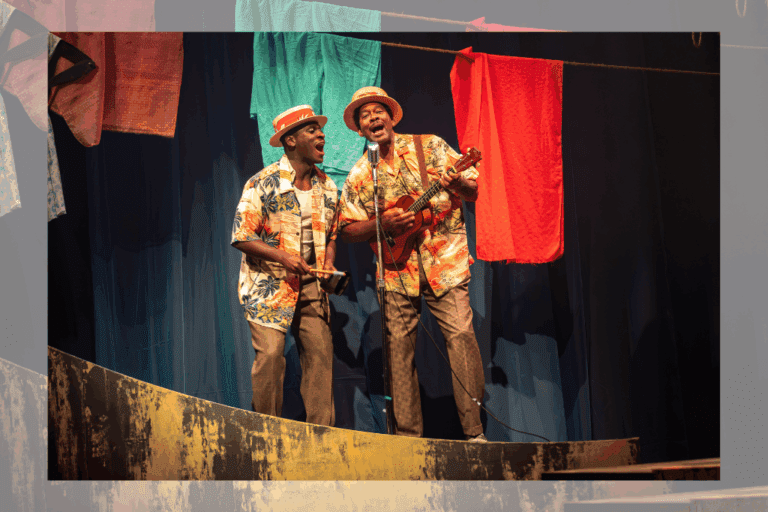 iPhoto caption: Tony Ofori and Daren A. Herbert in 'Moonlight Schooner.' Photo by Dahlia Katz.
Kanika Ambrose’s Moonlight Schooner is animated and visually stunning, but its individual pieces don’t come together as neatly as I would've expected.
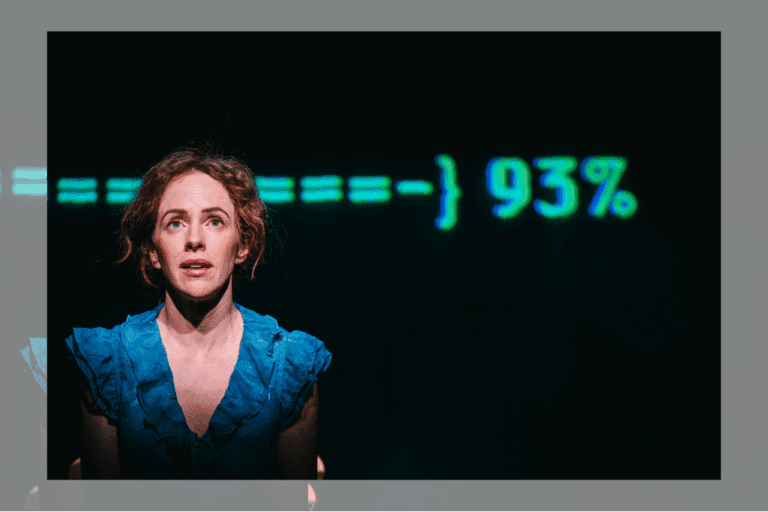 iPhoto caption: Fiona Mongillo in 'Reproduktion.' Photo by Ann Baggley.
REVIEW: Here For Now’s well-acted Reproduktion attempts to tackle too much
Amy Rutherford’s world premiere script is ambitious and the material it covers is complex — but the narrative feels disjointed.
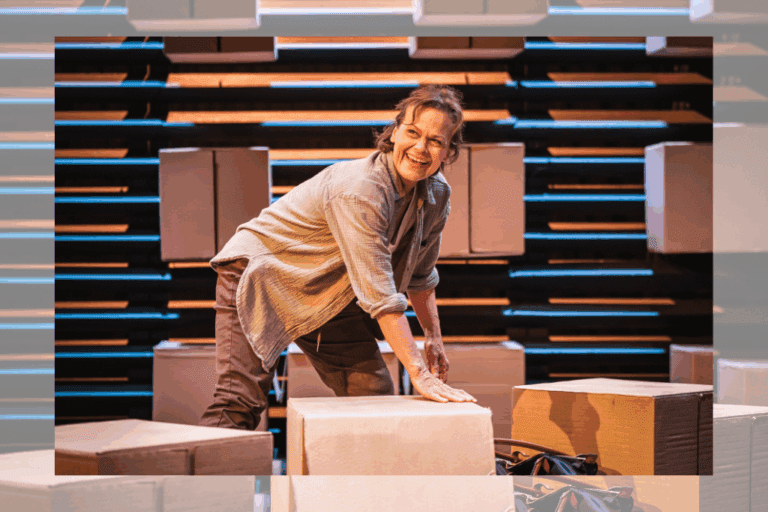 iPhoto caption: Kristen Thomson in 'Fulfillment Centre.' Photo by Elana Emer.
REVIEW: Coal Mine’s Fulfillment Centre asks how we end up alone, together
The production understands the play’s themes, yet feels limited by a script that delivers a package it never fully opens.
iPhoto caption: Kristen Thomson in 'Fulfillment Centre.' Photo by Elana Emer.
REVIEW: Coal Mine’s Fulfillment Centre asks how we end up alone, together
The production understands the play’s themes, yet feels limited by a script that delivers a package it never fully opens.
 iPhoto caption: Photo by Dahlia Katz.
REVIEW: A Strange Loop cycles between audacious spectacle and deeply personal reflection
A Strange Loop challenges the conventions of large-scale musical theatre while carving its radical place in the Broadway canon.
 iPhoto caption: Photo by Ann Baggley.
REVIEW: Here For Now’s Dinner with the Duchess is an aching étude on the cost of creative passion
Dinner with the Duchess is a tallying of an artistic life’s costs that builds a symphony out of simple presentation, resounding long past the final note.
l adeniyi adebayo omo oba l have interest to work with you in abroad