
REVIEW: Two site-specific TIFT shows flirt with nonconformity
 iPhoto caption: Photos by Dahlia Katz.
What’s all the world, if not a stage? For Talk Is Free Theatre (TIFT)’s site-specific January productions, some unusual locations indeed become their stage for plays showcasing characters who dare defy convention. Screw the proscenium: a house kitchen and a warehouse take front and centre for the company’s dual programming of intimate shows.
Over in Toronto’s west end, For Both Resting and Breeding presents a dystopia-like society that strips human emotion from its people.
As you step into a Parkdale home’s kitchen you follow traditional Canadian etiquette and take your shoes off (or put shoe covers on). TIFT presents Adam Meisner’s script, staged now thrice since its premiere in 2018, which centres two historians, ISH62 (Maja Ardal) and ISH40 (Richard Lam), in the year 2150. They find the last residence of Millenials and want to transform it into a museum for all to visit.
Oh yeah, by the way, all humans are now named “ISH” and are gender-neutral, asexual beings. The show depicts the historians and their volunteers (Amy Keating, Jamie McRoberts, and Alexander Thomas) as they prepare to reenact the traditional 1990s nuclear family unit for museum-goers. But as you might expect, messiness begins to seep through the carefully coded conventions of the ISHes.
A particularly compelling part of For Both Resting and Breeding are the speech patterns of the ISHes. Meisner cuts out all pronouns, making the characters’ sentences as plain as possible. The ISHes deliver this chopped speech in an almost opposite iambic fashion, trying their best to deprive the text of all intonation and feeling.
You might think this would make for a boring night of theatre; I assure you it’s anything but. Seeing these characters attempt to suppress their humanity, and at moments fail, is thrilling. Under the direction of Ardal, the ISHes’ culture is sharp and defined: there’s a series of codified movements for social interactions — a deep breath in and sweep of the arm says hello.
Costume design by Laura Delchiaro further works to make ISHes look uniform, creating baggy genderless blobs, with green caps to hide their hair. The ISHes eventually put on Millennial clothes, shattering this illusion of conformity: there’s a delightful 360 transformation as ISH20 (McRoberts) steps out in a bright red dress, going from genderless to vibrantly gendered garb. ISH20 is fascinated by how humans used to live and dares to crave antiquated Millennial ways of connection, like sex.
McRoberts delivers a particularly raw performance and has a female-rage-esque freak-out that is thrilling to watch from mere feet away. ISH20 must decide how they want to live their life, and if they might dare to step outside of societal convention.
The fact that you’re sitting in a kitchen to watch a show is good fun, but for this production, it feels more gimmicky than the effort may be worth. TIFT manages to fit about 20 chairs in this small kitchen area, but it’s a squeeze. Don’t get me wrong, Ardal uses the space: the cast cleans the kitchen counters, and even weaves through the audience (though even this lacks purpose at times). The site-specificity ends there; there are no lighting elements in play, just a regular kitchen light above. There’s a speaker off to the side of the kitchen for limited sound cues, but it doesn’t hugely enhance the experience. They bring a TV into the middle of the space halfway through the show, but it’s never plugged in (and creates a tripping hazard at intermission).
Really, the show could happen in an intimate black box theatre with little to no blocking changes, and have the benefits of a full lighting and sound board. Clocking in at 120 minutes with an intermission, sitting arm-to-arm in a kitchen goes from exciting to slightly uncomfortable quicker than I’d like to admit.
Playing on the opposite side of the city, Mike Bartlett’s Cock, a play where a gay man falls in love with a woman, makes incredible use of its east-end warehouse unit.
At the entrance of the Carlaw Industrial Complex (steps away from Crow’s Theatre), a front-of-house volunteer sends you up an elevator and tells you to follow an ominous red line of tape. John (Jakob Ehman) welcomes you into the playing space by yanking up a grated door — revealing a small room set up with chairs and benches in the round — and slamming it back down behind you. (The room runs cold, so be sure to keep your jacket on as the show begins.)
The 2009 British comedy that recently gained much critical acclaim in a 2022 West End run starring Jonathan Bailey plays like a boxing-ring drama in this production. John is trapped as he must choose romantically between a man (M) and a woman (W), and a series of metaphorical cockfights ensue between characters. Ehman is a sympathetic John, frozen in fear by the fact that he has to make a decision. He’s been in a relationship with M (Michael Torontow) for seven years, but while they’re on a break he falls for W (Tess Benger) and his life implodes.
Torontow, though stoic and commanding, is unfortunately under-energized as M, and on opening night seemed to stumble on some of the text, played at lightning-quick speed in Dylan Trowbridge’s production. Benger is particularly impressive as the slightly ditzy but empowered girl next door, delivering a highly physicalized performance full of comedy, poise, and aggression. Kevin Bundy plays M’s father, and the four end up at an uncomfortable dinner party in which John must determine the course of the rest of his life.
Trowbridge uses the claustrophobic space to his advantage. Most of the blocking happens on the peripheries of the playing space, with actors sitting beside audience members as they engage in their verbal cage matches. This is accentuated by the strategic use of lighting. Production designer Kathleen Black has set up lamps around the perimeter of the room, and the actors are in control of the lights, stepping on switches on the ground.
Space becomes a main character in this production, as actors talk across the room to each other. It’s almost as if the words they can’t say to each other hang in the literal space between them. This convention is especially effective in a no-touch intimacy scene, in which John and W stare at each other from across the room as they have sex for the first time. This blocking creates a fascinating task for the audience: you can’t see both characters at the same time since they’re so spread out, so you must choose who your attention is on. This results in a tennis match effect, with audience members’ heads whipping back and forth.
Both Cock and For Both Resting and Breeding capture the feeling of being on the precipice of change. They present characters who dare to connect with others at the risk of nonconformity. It’s no coincidence that TIFT uses unconventional spaces to perform these shows with characters who have the courage to make unorthodox choices.
Though the productions vary in how successfully they use their non-traditional venues, they both challenge the audience to take a chance: to feel, unabashedly.
For Both Resting and Breeding and Cock run at Talk is Free Theatre until January 31. Tickets are available here.
Intermission reviews are independent and unrelated to Intermission’s partnered content. Learn more about Intermission’s partnership model here.

Andrea Perez
Andrea Perez is an interdisciplinary theatre artist who enjoys acting, writing, directing, and producing. She is an undergraduate student at the University of Toronto studying Drama, Classical Civilizations, and Creative Writing, exploring storytelling and people in their many facets. She is a member of the 2023 cohort of the IBPOC Critics Lab, supported by Intermission Magazine and the Stratford Festival.
LEARN MORE iPhoto caption: Dead Broke production still by Calvin Petersen.
REVIEW: Comedy-horror hybrid Dead Broke successfully spooks
While the non-horror aspects of the show lean towards the more amateur, the scares are incredibly successful. This show pulls off the theatrical horror with seeming ease: That’s reason enough to check it out for yourself.
 iPhoto caption: Sara Topham in Hedda Gabler at the Stratford Festival. Photo by David Hou.
Gatekeep, gaslight, girlboss: The delight of female rage in theatre
Personally, I support women’s rights and women’s wrongs — especially when it comes to my girl Hedda. And it seems that at least two Ontario directors share my viewpoint, with Hedda Gabler opening twice in the same month at Stratford and at Coal Mine Theatre in Toronto. What makes her story so appealing?
 iPhoto caption: Photo by David Hou.
Stratford Festival review: The Goat or, Who Is Sylvia? A review in five acts
The Goat, or Who Is Sylvia? delivers an off-kilter comedy and disturbing tragedy in a fashion that would make the Ancient Greeks proud.
 iPhoto caption: Photo by Dahlia Katz.
REVIEW: The Last Timbit is a surprisingly charming commercial gem
The Last Timbit, a show of snow and sweets, had a limited run at the Elgin Theatre in June and is getting a streaming release on Crave on August 12. I, for one, am more than curious to see how a wider audience will react.
 iPhoto caption: Photo by Emily Anne Corcoran.
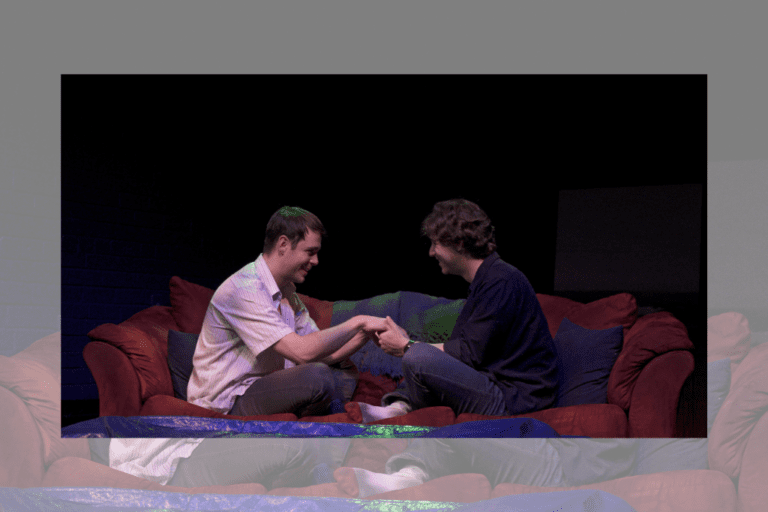
REVIEW: Icarus Theatre’s Fiji combines competing genres
If you enjoy the pitch of a rom-com true-crime mesh, this one's for you. Even if it's not perfect, it's a charming, nimble watch that tugs at the heartstrings.
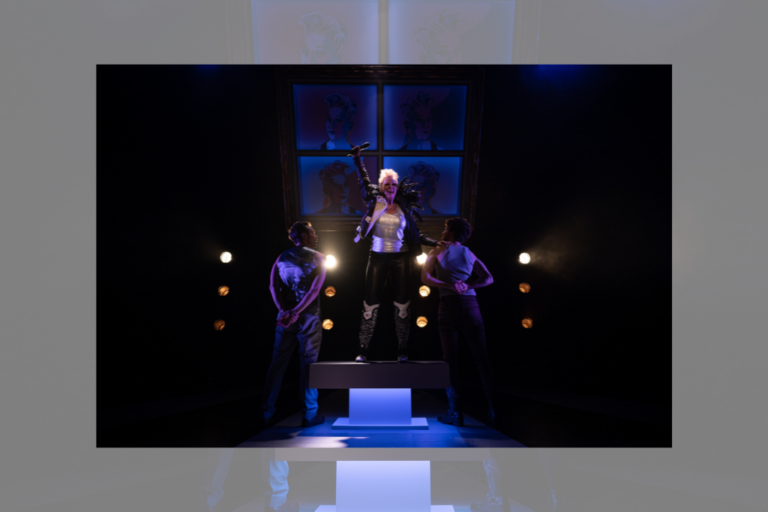
REVIEW: ARC’s Rockabye glows but over-saturates
Rockabye, though a little longer than it should be, raises many timely questions. Should real lives be valued over ideologies or the other way around? Is it ethical to let someone die for a political cause?
Comments