
REVIEW: Okay, you can stop now at Theatre Passe Muraille/Shakeil Rollock/b current

“Let’s investigate the ways in which we are complicit in the continued genocide of Indigenous people.”
I’m paraphrasing (without hyperbole) the provocative opening statement of Shakeil Rollock’s Okay, you can stop now at Theatre Passe Muraille. Does it make you uncomfortable? It did me, and that’s a great place to begin.
The stage is littered with newspapers and a handful of monitors displaying the STMP test pattern (those colour bars you’d wake up to at 4 a.m. if you dozed off watching late-night television in the 90s). Set designer Melanie McNeill has created a chaotic and tense space to begin an exploration of the psychological and physical weight of information, its manipulations, and the impact it has on racialized and under-represented people.
Originally a solo physical theatre/dance piece for Rollock, Okay, you can stop now has grown over the past few years to include four performers. This increased cast size echoes the increased sense of urgency and weight of the current news. It’s impossible not to see racist police brutality and Indigenous people having their rights violated on both sides of the border, with the news media carefully choosing words to net the most attention without regard for those being harmed. With Rollock’s frenetic choreography, which includes tension amongst the cast members, boils over into full-blown conflict, it captures the unrelenting, emotional weight so many of us feel with impressive accuracy.
The first half of the performance is focused on movement. Sound designer Miquelon Rodriguez creates a symphony of news reports and sounds of static: it’s rhythmic and unnerving and showcases the performers’ ability to work as a unit, dancing without any conventional sense of music. There’s a lot of physical theatre to the choreography: falls, digging through papers, searching for microphones — all are necessary to the plot.
But knowing how accomplished the cast is, at times the physical theatre felt mismatched to the artists’ abilities, and I would have liked to see their more conventional dance abilities explored a bit more. However, this did not interfere with communicating the feeling of being BIPOC and navigating the twenty-four-hour news cycle. There’s a brutal honesty about struggling to be seen and heard as the performers fight for a microphone, then fight to give it away, getting caught in a rapid fire of voiceover questions ostensibly from reporters and investigators.
Finally, the tension breaks when Cheryl Chan delivers a short and poignant penultimate monologue. “What will you do with this information?” she asks, and astutely points out that the audience of TPM are here because they are aware, and because they care. The people who could benefit most from this show aren’t watching, and Chan implores us to consider that frustration and futility, as well as the steps we can take to dismantle this reality.
The final monologue by Tama Martin at first felt long and interrupted the flow of the show. My knee wanted to jerk in the direction of “this is technically less than ideal,” but after sitting with it, I was appreciative of the time she was given. Speaking to her experience as a Black woman, the stereotypes and prejudices she faces, and the ways Black women are policed, I found myself wanting to police the time she took up in the name of an immediate dramatic impact, and my skin crawled from my own reaction to this sequence. Martin never escapes her melanin, slowing the conclusion and leaving the audience to marinate in her hopes and dreams as well as the reality she cannot escape. There was a power in her use of time I deeply appreciated.
For any uneven elements in the production, Rollock and team have effectively transmitted the raw emotionality of navigating and processing the news cycle while reminding us that we are all striving for joy in our lives. Okay, you can stop now did point out some of my own blindspots, as well as feeling a level of catharsis when seeing others feeling similarly. Though I wish the need for works of this nature would vanish along with police brutality and a capitalistic news cycle, I’m not optimistic. Until then, it’s a powerful piece, and I can’t help but wonder about its continued evolution.
Okay, you can stop now closed at Theatre Passe Muraille on February 11. You can find out more here.
Robyn Grant-Moran
Robyn Grant-Moran (Métis Nation of Ontario) is a classical singer, writer, and a jack of many trades who has recently met the requirements to call herself a Bachelor of the Fine Arts (thank you, York University and Indspire!). Along with her BFA, she has also completed the Performance Criticism Training Program with Generator, has studied with some beloved Canadian classical singers, and been in a opera or two. Robyn currently resides in Toronto with her tiny adorable rat dog.
LEARN MORE iPhoto caption: Festival artwork by Mishiikenh Kwe.
Weesageechak Begins to Dance invites artists and audiences to explore newness together
Weesageechak Begins to Dance is the annual festival of new and innovative First Nations, Métis, and Inuit theatre, opening on November 6 at Native Earth Performing Arts.
 iPhoto caption: Photo by Mike McPhaden.
There is a rift in the time-space continuum at Withrow Park this summer: multiverse Richard III has met Shakespearean universe Richard III for a coronation and some Shakespearean hijinks.

REVIEW: Otîhêw at Shakespeare in Action
A volcanic eruption and violent colonial expansion has turned the world upside down. Without sun and moon, the realities of famine and smallpox unleash new fears that threaten to unravel the fabric of community.
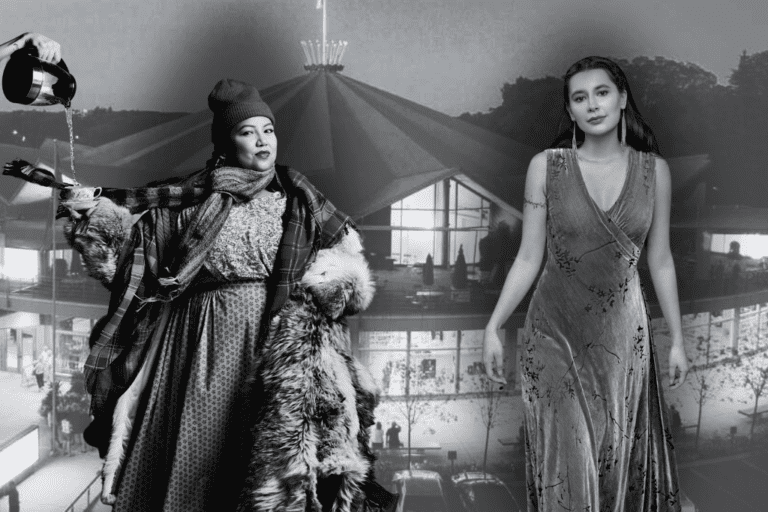 iPhoto caption: Joelle Peters (left) and Tara Sky (right). Original images of Peters and Sky by Ted Belton.
Change for the Better: On Indigeneity at the Stratford Festival
Both [Sky and Peters] want to honour the Indigenous artists who have worked with the [Stratford] festival for years, quietly carving out space for public and visual representation.
 iPhoto caption: Courtenay Stevens, Helen Belay, Brandon McGibbon, Courtney Ch’ng Lancaster perform in The 39 Steps. Photo by Sarah Kirby.
REVIEW: The 39 Steps at County Stage Company
A cast of fantastic actors takes you on an equally fantastic journey through some of the silliest places and situations — it’s great fun.
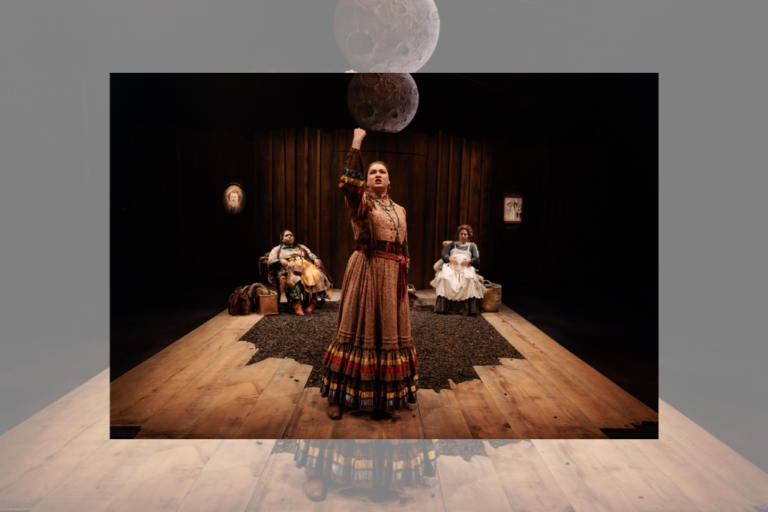 iPhoto caption: Photo by David Hou
REVIEW: Women of the Fur Trade at the Stratford Festival
Louis Riel is SO dreamy. Tall. A little disheveled and unkempt, because he’s an introspective poet who’s busy fighting for social justice. And he wears glasses. He’s the total package.
Comments