
REVIEW: Three Women of Swatow at Tarragon Theatre
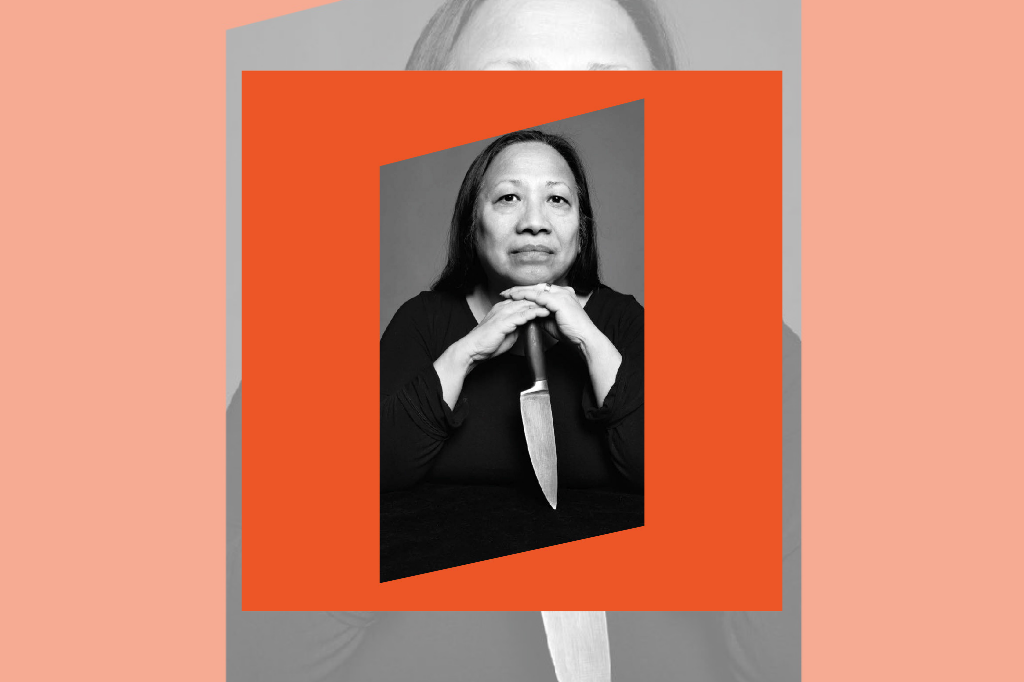
Tarragon’s Three Women of Swatow is not for the faint of heart.
“There’s blood. Lots of blood,” the house program warns. Actually, there’s a bathtub full of stewing blood, acid, and dismembered human remains.
That jarring image sets the tone for Hung’s blistering dark comedy, which follows three generations of women in a Chinese-Canadian family as they try to cover up a heinous crime. It’s How to Get Away With Murder, Chinese style.
The disintegrating body parts in the bathtub, which are flaunted to the audience like a fried lobster in a Cantonese restaurant, are those of the Mother’s (Chantria Tram) husband. (We never see him in the play. Well, not whole, at least.)
His murder, nothing short of a violent butchery at the hands of his wife, is a fait accompli. The wife’s own mother, simply known as Grandmother (Carolyn Fe), is notified about the slaughter through a cryptic voice message from her daughter. The daughter of Tram’s character (played by Diana Luong) stumbles upon the murder scene — the knife used for the slaughter half-concealed by the blood welling underneath the dining room table.
The drama unfolds as the three women clean up the (bloody) pieces and attempt to dissolve the chopped-up remains with acid in the bathroom without getting caught. Over the course of that day, they also attempt to piece together their shared intergenerational trauma, their repressed family secrets, and what it means to be “fierce Swatow women.”
As the family’s acerbic matriarch, Fe delivers a piercing performance. In one moment, her Grandmother exudes a Mrs. Lovett-esque air of nonchalance amid the chaos, calmly stirring the gory bathroom concoction as if it were chicken broth. In the next, she’s firing flippant insults toward her daughter and granddaughter — lambasting them for their lack of courage in the wake of the murder.
Tram’s Mother is the antithesis of Grandmother. She babbles and bumbles around Jareth Li’s compact, apartment-styled set after the murder, her neck still covered in the streaking bruises from her two-decades long abusive marriage. To calm her frayed nerves, she gently hums “A Whole New World,” giving the classic Disney tune a grisly new meaning that will forever be seared into my brain.
Mother undergoes the most significant transformation of all three characters, and Tram deftly handles it with aplomb. She gradually gains more confidence as the play wears on, her shoulders rolling back and her chin beginning to tilt up as she begins to realize this murder was no “accident.”
It’s Luong’s college-aged Daughter who is perhaps the least developed, a character primarily used by Hung to move the plot along. For much of the play, she is Mother and Grandmother’s subject of concern — they fear dear Daughter will turn them in to the authorities.
What we do learn about Daughter is that she’s lived with Grandmother since she was 18 to escape the abuse at the hands of her father. There, she’s kept under the close and nosy watch of her grandmother, whom she calls poh-poh. (The other characters are brusquely addressed as “Mother” or “Daughter.”) But other than that, Luong’s character is just … there. Half the time she’s just shell-shocked by the murder.
There were also moments I felt the plot meandered. Flashback scenes to Grandmother’s time in China feel muddled and confusing, despite Li’s atmospheric lighting cues and director Courtney Ch’ng Lancaster’s ingenious use of tai-chi interludes to delineate the present from the past. And the play’s opening scene — featuring Grandmother reading a Bible verse about a woman killing her husband, with a handheld fan in one hand and a glass of gin in the other — establishes character but overstays its welcome.
Despite my minor qualms with the plot, the dialogue itself is punchy and tight. It’s a testament to Hung’s strong writing, and the way she messes with our consciences, that we come to care and empathize with all three of these characters and their struggles. Objectively speaking, Mother is a coldblooded murderer, and Grandmother and Daughter are her conniving accomplices.
But that’s not the main takeaway after spending 80 minutes with this family.
Instead, it’s the love. There’s love between the three women — albeit a somewhat psychopathic, twisted one. Grandmother has waited more than two decades for Mother to murder her husband and set herself free. Now, she’s helping Mother cover it up — and she’s willing to risk jail time for it.
Hung also renders the intergenerational trauma between all three members of the family with brutal honesty. We learn of Grandmother’s own fraught marriage, the details of which are revealed in the play’s climactic scene. Despite moving halfway across the world from Swatow to Toronto, that marriage still haunts her, and she’s passed down her own ripples of trauma to generation after generation.
This all may sound overly maudlin, but this production, under the assured hand of Lancaster, is not. Hung’s dialogue is sharp and witty, and her humour cuts through like a knife, riffing on the irony and the play’s inherent absurdity.
Three Women of Swatow may be bloody. But it’s pretty bloody good.
Three Women of Swatow runs at Tarragon’s Extraspace Theatre until May 15, 2022. Tickets are available here.

Joshua Chong
Joshua Chong is reporter with the Toronto Star and a freelance performing arts critic with bylines in Intermission Magazine, The Whole Note, The Dance Current, and Opera Canada. He was previously a staff reporter and assistant features editor at The Varsity, the University of Toronto's student newspaper of record. When not in newsroom or the dark confines of the theatre, Chong enjoys cheering on Toronto’s sports teams, playing the violin, and playwriting.
LEARN MORE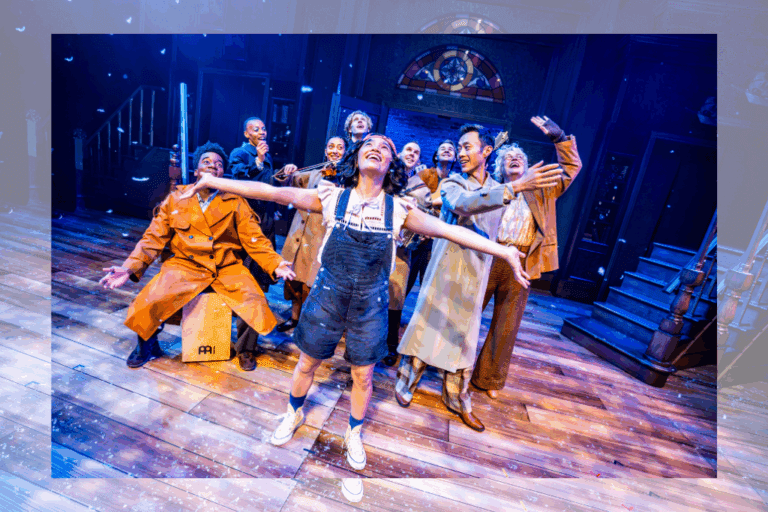 iPhoto caption: Members of the company of 'Narnia.' Photo by Dahlia Katz.
REVIEW: Bad Hats’ Narnia is a joyful, heartwarming escape
The spirit of openness and the joy of discovery rule over this Narnia. Open the wardrobe and see.
 iPhoto caption: Members of the company of 'Robin Hood.' Photo by Dahlia Katz.
REVIEW: Canadian Stage’s Robin Hood panto is anti-capitalist fun for the whole family
Following Ross Petty’s legacy of scene-stealing, Damien Atkins as the evil Prince John is easily the greatest delight of the show.
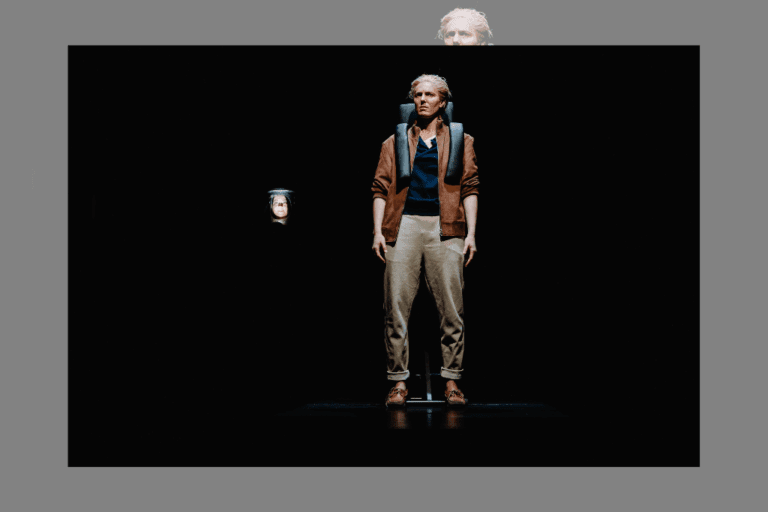 iPhoto caption: Lauren Gillis and Alaine Hutton in 'Public Consumption.' Photo by Eden Graham.
REVIEW: Lester Trips’ stylish Public Consumption captures the internet’s profound emptiness
Rather than directly representing online life, Public Consumption speculates — with virtuosity — about how the digital world affects our bodies. And the show's findings are by no means comfortable.
 iPhoto caption: Tony Ofori and Daren A. Herbert in 'Moonlight Schooner.' Photo by Dahlia Katz.
Kanika Ambrose’s Moonlight Schooner is animated and visually stunning, but its individual pieces don’t come together as neatly as I would've expected.
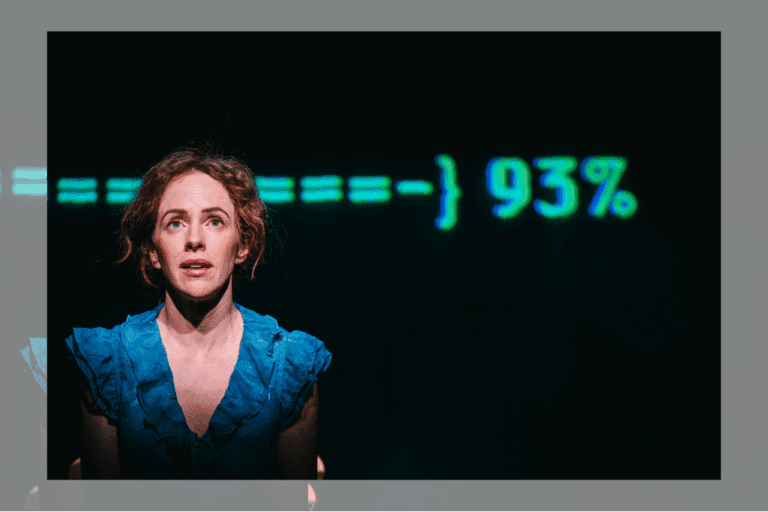 iPhoto caption: Fiona Mongillo in 'Reproduktion.' Photo by Ann Baggley.
REVIEW: Here For Now’s well-acted Reproduktion attempts to tackle too much
Amy Rutherford’s world premiere script is ambitious and the material it covers is complex — but the narrative feels disjointed.
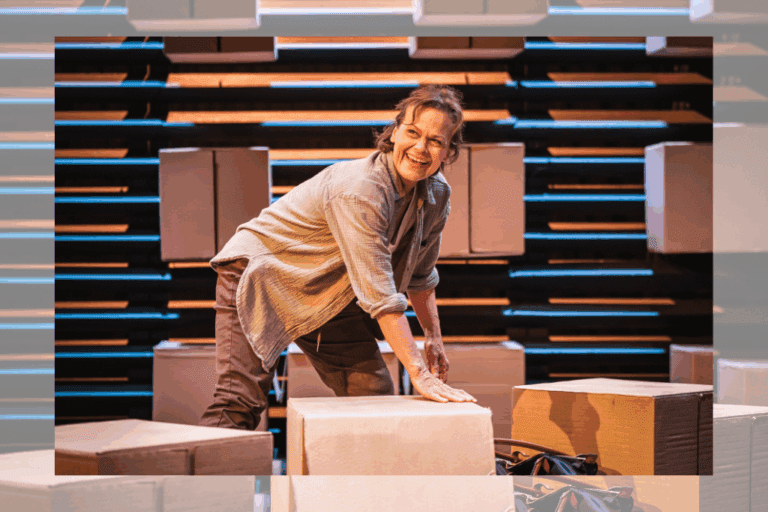 iPhoto caption: Kristen Thomson in 'Fulfillment Centre.' Photo by Elana Emer.
REVIEW: Coal Mine’s Fulfillment Centre asks how we end up alone, together
The production understands the play’s themes, yet feels limited by a script that delivers a package it never fully opens.
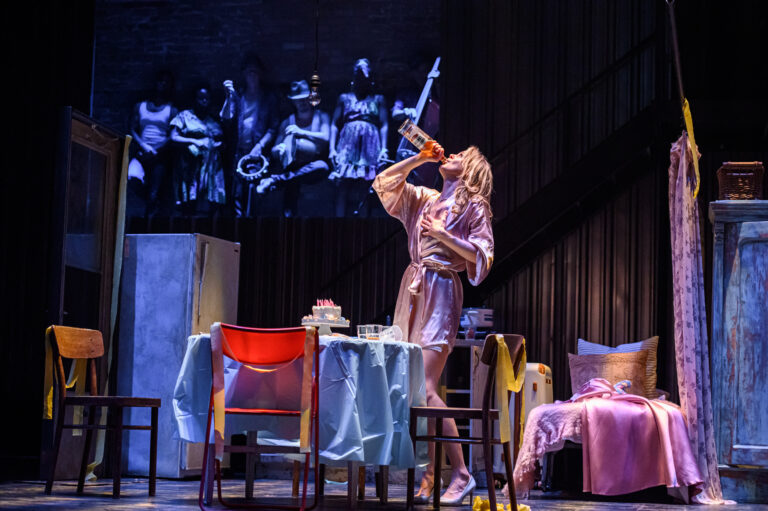 iPhoto caption: Amy Rutherford in A Streetcar Named Desire. Photo by Dahlia Katz.
REVIEW: A Streetcar Named Desire
You know from the opening picture that this production of A Streetcar Named Desire is going to be different.
Comments