
REVIEW: The Sankofa Trilogy is a passionate love letter to Jamaica and Black womanhood
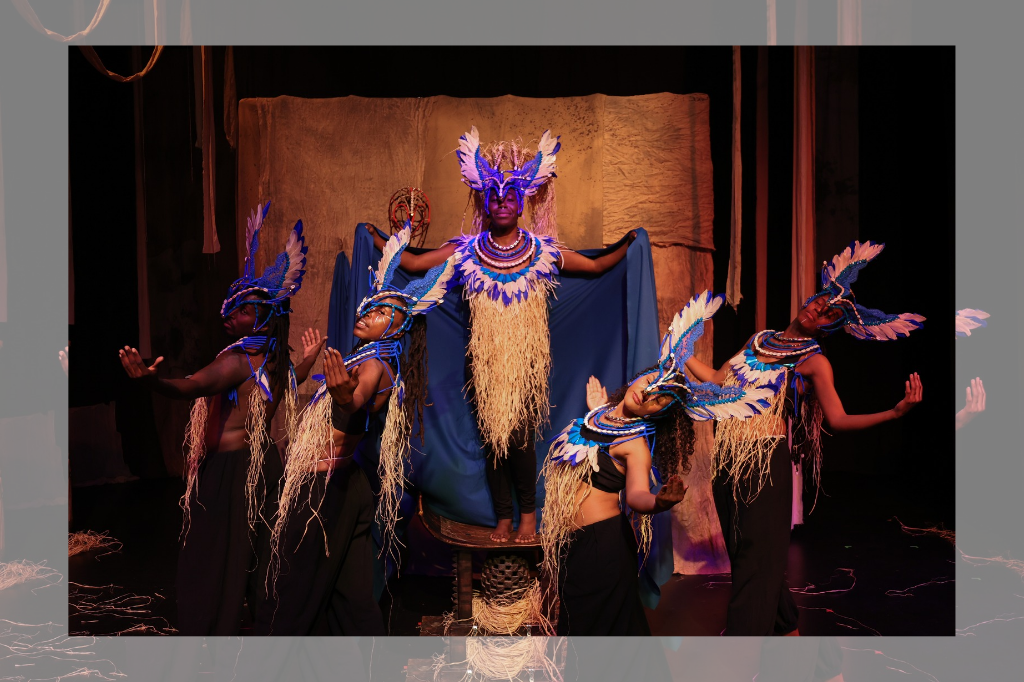 iPhoto caption: Benu. Photo by Selina McCallum.
“Politician, yuh have to listen.” “No borders on stolen land.” “No genocide inna Gaza.” These are just three of the rallying cries featured on signs held by picketers in word! sound! powah!, the final installation of d’bi young anitafrika’s Sankofa Trilogy.
After 20 years, the two-time Dora award-winning trilogy made its return to the stage — The Theatre Centre hosted a whirlwind of talkbacks, book launches, and Black Out Nights that ran from Sept. 23 to Oct. 12. The triptych’s themes of reproductive justice, mental health, Black maternity, and insurrection underscore the timeliness of blood.claat, benu, and word! sound! powah!’s return.
anitafrika grounds all of the plays in Jamaican pantomime, dub theatre, and African mythology. Patrons chose their own adventure: the shows, ranging from 60 to 90 minutes in length with no intermissions, could be seen either individually or back-to-back during the Oct. 11–12 marathon weekend. I elected to see the plays one by one with a week-long gap to allow each show’s imagery to sink in more thoroughly.
While anitafrika originally performed the trilogy as a series of monodramas, this year’s iteration featured a new ensemble of chameleon-like characters called the Griot Posse (played by Kabrena Robinson, Josemar, KayGeni, and Keira Forde) who shifted from playing the protagonist’s invisible friends to silent onlookers to Orisha (Yoruba deities) in an instant.
Each play begins with a land acknowledgment and an admonition about tucking phones away, delivered in patois that rolled off assistant director Sashoya Simpson’s tongue like warm honey — an engaging cue that, for the next hour or so, the audience would be physically seated on Turtle Island, but imaginatively transported to the island of Jamaica.
Lighting designer Christopher-Elizabeth opens blood.claat with the stage awash in crimson, complementing Rachel Forbes’ simple yet powerful set design — loose pieces of cloth drape from the rafters and cover wide, rectangular panels placed in a boxy formation. From the top of the show, the actors are visible onstage, seated in a tight circle and performing a meditation ritual. All but anitafrika have their faces masked in wire cages. Adorned in red beads and cowrie shells, the masks lend the actors an ethereal, otherworldly aura while still revealing their facial features. (Costume design is by Candice Dixon.)
blood.claat introduces its protagonist, Mudgu Sankofa, as a 15-year-old girl living with her grandmother in Whitfield Town, Jamaica. I was on Mudgu’s side immediately — her monologues, performed with skillful comedic timing, feel like intimate diary entries. anitafrika masterfully conveys a sense of whimsy and childlike wonder before switching on a dime to play Mudgu’s all-knowing grandmother with aplomb.
We are with Mudgu as she experiences her first period, rife with all the embarrassment, wonder, and disgust that comes with one’s introduction to womanhood. We are with her as she rides the bus to school, only to be traumatized when the conductor abruptly assaults a patron with a machete for refusing to pay their fare. (In the latter case, the house lights come up to allow Mudgu and the Griot Posse to parade into the crowd, swaying to the movement of the bus before disaster strikes.) “Not even bleach can get out this stain,” Mudgu laments as she attempts to scrub the blood of the slain bus rider out of her school uniform — using the same prop piece of cloth that earlier doubled as her period blood-stained sheets.
Occasional lapses in synchrony among the Griot Posse weaken blood.claat, detracting from the story and producing a cacophony of sound. Additionally, there is an abrupt tonal shift when the play veers to a tale about Ogun, the Yoruba god of iron and war, razing a village for refusing to show him proper respect before impaling himself with his own machete. While it was invigorating to see a story about my tribe’s religion, I don’t feel that there was enough of a connection made between Ogun and Mudgu’s history to justify the artistic choice, nor a smooth enough transition between the two different stories. Nevertheless, anitafrika and crew do justice to heavy themes of classism, misogynoir, and sexual assault.
benu carries the story forward with the tale of Sekusu Sankofa, Mudgu’s daughter. Brought from Jamaica to Canada as a child, she is now a mother to infant Benu and suffers from postpartum depression. Forbes’ set design for benu is similar to that of blood.claat, albeit with a cobalt blue palette. Dixon’s costume design dazzles most brilliantly here: the Posse dons masks made to resemble beaks, embellished with blue beads and shells, along with chest pieces made of feathers and straw. Their movements are gawky and twitchy, emulating birds.
benu culminates in a heartrending look into the cruelty and discrimination woven into many Black women’s interactions with the Canadian health-care system. anitafrika shines, acting through the nuances of Sekusu’s gradual breakdown with verve. They are wound up like a coil, manipulating their voice and body with abandon and connecting with the audience through piercing eye contact.
But the puzzle pieces don’t fit quite as neatly as in blood.claat. At the performance I attended, the Posse’s intermittent lack of vocal energy and lateness to cues diluted their collective impact, making me wonder what the iteration of this show, in particular, would have looked like with anitafrika as its sole performer.
word! sound! powah! rounds out the trilogy, and its title perfectly encapsulates its premise. Sekusu’s daughter, Benu, is now grown and living in Half Way Tree, Jamaica. The show oscillates between scenes of Benu meeting the Poets for Solidarity — a group of revolutionaries that wield their words as weapons — and a corrupt police officer interrogating Benu after capturing her in a raid that the Poets stage to protest the Jamaican election of 1980.
In word! sound! powah, the Posse play individual, eccentric characters, allowing the actors to showcase their talents. Josemar reveals a clear, powerful singing voice; anitafrika excels in delivering technical challenges of dub poetry (slam poetry meets rap meets reggae); Robinson brings flair and charisma to her dubbing; KayGeni croons with alluring stage presence; and Forde dances with fluidity and control. The actors create a warm, inviting melody with live instruments — including drums, rain sticks, and maracas — to accompany Stephon Smith’s soft reggae soundscape.
The play makes a point to weave in timely real-world elements. In one scene, the leader of the Poets is attempting to deter a fellow member from getting cold feet and mentions “man-made famine in Sudan” and “resource extraction in Congo.” These references deftly intertwine the emotional stakes of the play’s fictional world with the here and now, serving as a reminder that art is political, and the themes of revolution are more relevant than ever.
Bringing together live music, African storytelling traditions, dub poetry, and pantomime, anitafrika’s Sankofa Trilogy continues to resonate with urgency. Greater symmetry among the chorus would allow for more impactful imagery; nevertheless, I deeply felt the triptych’s connection to Black womanhood across the diaspora and its tribute to Jamaica from the opening of the first play to the closing of the last.
The Sankofa Trilogy ran at the Franco Boni Theatre in Toronto from September 23 to October 12.
Intermission reviews are independent and unrelated to Intermission’s partnered content. Learn more about Intermission’s partnership model here.

Abi Akinlade
Abi is a Nigerian-Canadian multidisciplinary artist based in Toronto. She holds a Bachelor of Arts degree in English Literature and Drama from the University of Toronto. Represented by AMI Talent Agency, she has performed in both film and theatre productions. She is currently a cohort member of the inaugural theatre criticism program Page Turn, as well as a journalism fellow at Inkspire. Driven by a strong passion for theatre, literature, and film, she aims to use storytelling as a means to uncover a deeper sense of identity and foster meaningful connection.
LEARN MORE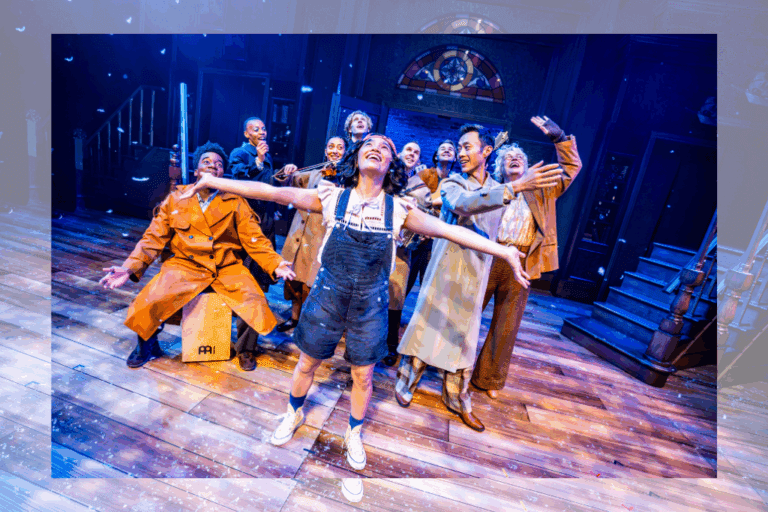 iPhoto caption: Members of the company of 'Narnia.' Photo by Dahlia Katz.
REVIEW: Bad Hats’ Narnia is a joyful, heartwarming escape
The spirit of openness and the joy of discovery rule over this Narnia. Open the wardrobe and see.
 iPhoto caption: Members of the company of 'Robin Hood.' Photo by Dahlia Katz.
REVIEW: Canadian Stage’s Robin Hood panto is anti-capitalist fun for the whole family
Following Ross Petty’s legacy of scene-stealing, Damien Atkins as the evil Prince John is easily the greatest delight of the show.
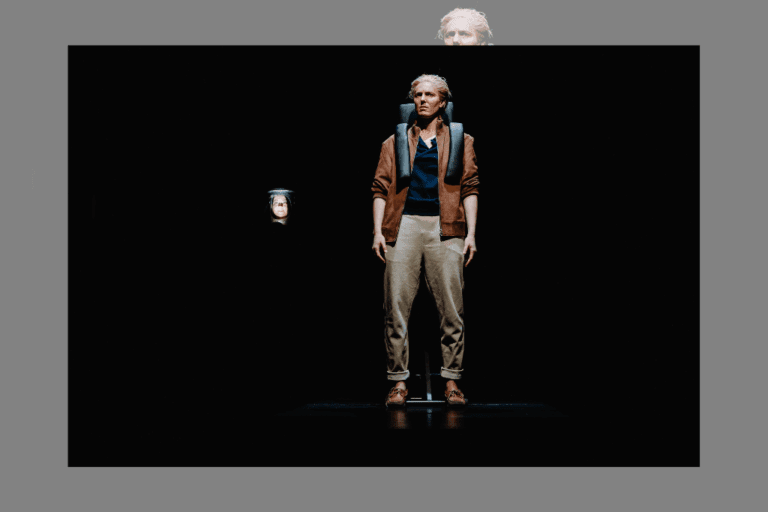 iPhoto caption: Lauren Gillis and Alaine Hutton in 'Public Consumption.' Photo by Eden Graham.
REVIEW: Lester Trips’ stylish Public Consumption captures the internet’s profound emptiness
Rather than directly representing online life, Public Consumption speculates — with virtuosity — about how the digital world affects our bodies. And the show's findings are by no means comfortable.
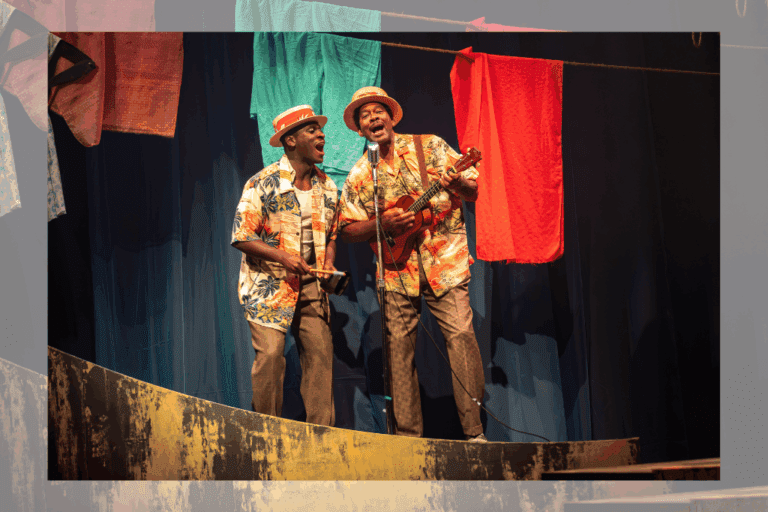 iPhoto caption: Tony Ofori and Daren A. Herbert in 'Moonlight Schooner.' Photo by Dahlia Katz.
Kanika Ambrose’s Moonlight Schooner is animated and visually stunning, but its individual pieces don’t come together as neatly as I would've expected.
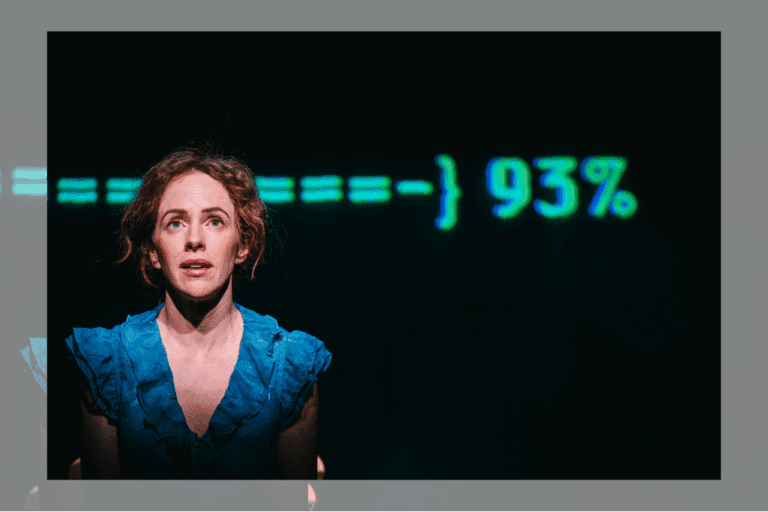 iPhoto caption: Fiona Mongillo in 'Reproduktion.' Photo by Ann Baggley.
REVIEW: Here For Now’s well-acted Reproduktion attempts to tackle too much
Amy Rutherford’s world premiere script is ambitious and the material it covers is complex — but the narrative feels disjointed.
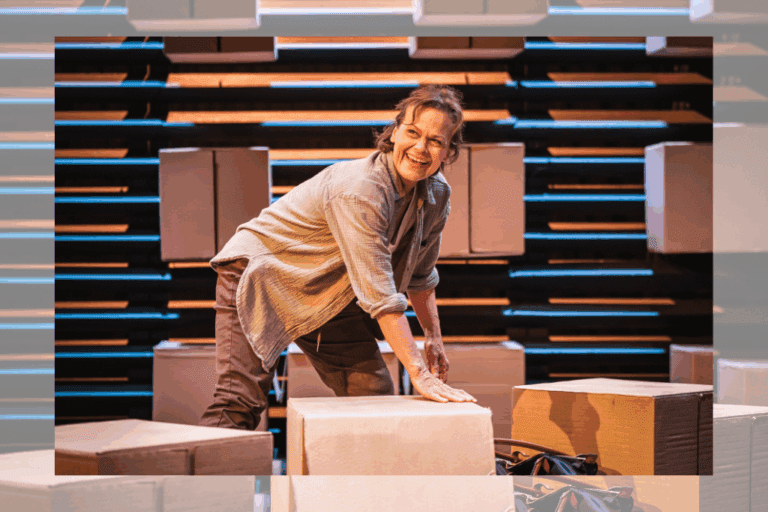 iPhoto caption: Kristen Thomson in 'Fulfillment Centre.' Photo by Elana Emer.
REVIEW: Coal Mine’s Fulfillment Centre asks how we end up alone, together
The production understands the play’s themes, yet feels limited by a script that delivers a package it never fully opens.
iPhoto caption: Tony Ofori and Daren A. Herbert in 'Moonlight Schooner.' Photo by Dahlia Katz.
Kanika Ambrose’s Moonlight Schooner is animated and visually stunning, but its individual pieces don’t come together as neatly as I would've expected.
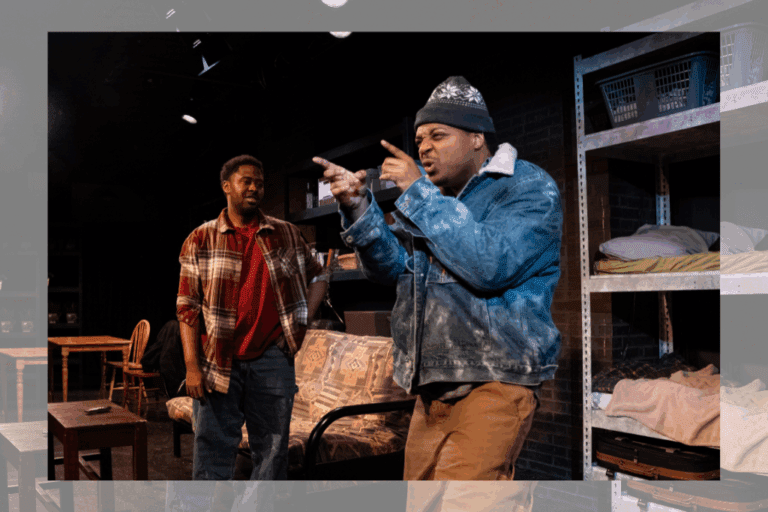 iPhoto caption: Danté Prince and Savion Roach in 'The Christmas Market.' Photo by Kenya Parsa.
Among softly falling snowflakes, dense rum cake, a tree that twirls of its own accord, and a lively soca rendition of classic carol “My Favourite Things,” The Christmas Market unfolds, gradually steering away from familiar festive comforts toward a sharper story of labour and exploitation.
Comments