
Spotlight: Robert Lepage
 iPhoto caption: Photo by V. Tony Hauser.
It’s the great mother art, theatre… there’s architecture, there’s literature, of course there’s acting, there’s movement, dance, lighting… it’s a meeting ground of all these expressions… and if it’s well done, it’s an event.
Robert Lepage
Since the 1980s, Robert Lepage has left an indelible mark on Canadian and world theatre. Works such as The Dragon’s Trilogy, Tectonic Plates, Needles and Opium, and 887 embody his poetic, innovative approach to storytelling, mixing complex and simple technologies to create theatrical events at once intimate and cosmic. Ahead of Canadian Stage’s upcoming remount of The Far Side of the Moon, I sat down with Lepage over Zoom, and we spoke about the show and his career.
When Intermission pitched me this interview, I was both excited and hesitant. First off, I am a theatre-maker myself, and Lepage was a crucial influence on my early artistic development. Seeing his work inspired my younger self with an enormous sense of theatre’s potential. I was hesitant because Lepage is someone whose position on artistic freedom has been controversial in the past, and I knew that speaking to that in a meaningful way was outside the scope of a profile touching on his entire career. I accepted because Lepage’s work has been very meaningful to me, and I believe it’s worth articulating that for others.
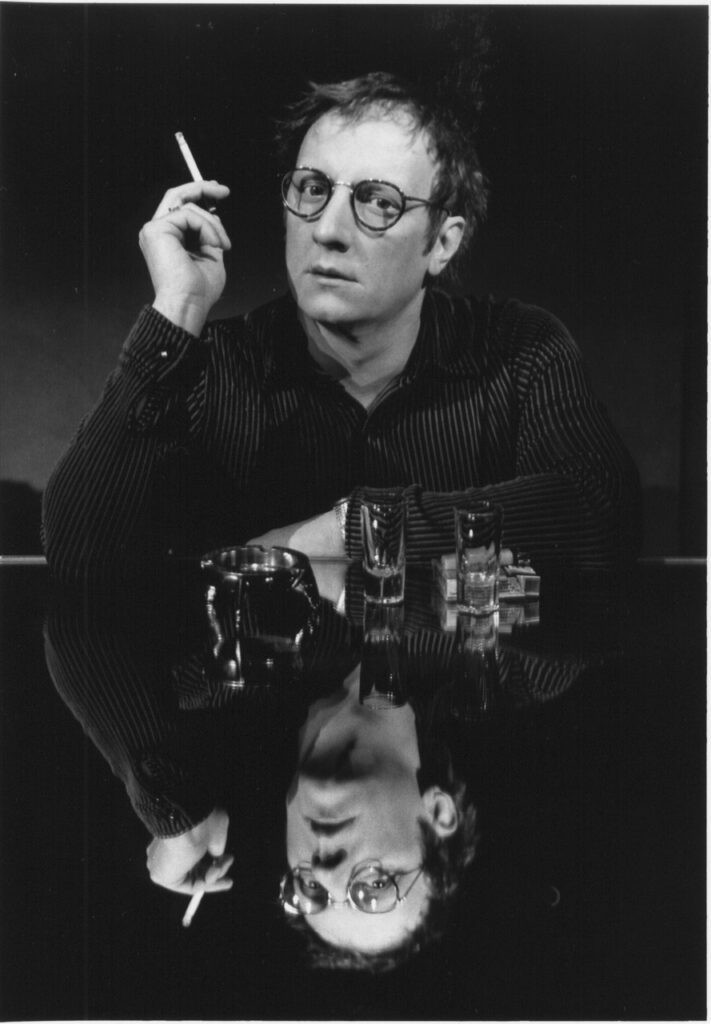
In fact, it was seeing the original production of Far Side in 2000, at Toronto’s now sadly defunct World Stage Festival, that first introduced me to Lepage. Far Side was a revelation: it transformed my idea of what the stage can do. In this, as in other Lepage works, what inspired me was his de-centring of text, coupled with a democratization of expressive stage elements. Light, movement, architecture, and objects all have enormous potential for poetic storytelling in Lepage’s world-building.
The practice of focusing on these elements — what, in Lepage’s lineage of theatre-making, are called “sensible resources” — is something he inherited from working with the experimental company Théâtre Repère in Quebec City in the early 1980s. For creators like myself, working outside of a text-based tradition, this approach to staging as writing inspired a lifelong curiosity to push the limits of formal exploration.
***
As part of crafting this article, I connected with fellow Canadian theatre artists working in non-text-based traditions to hear how Lepage’s work resonates with them. Theatre-maker Rick Miller cited Lepage as a decisive early inspiration. “In 1994 he gave a lecture at McGill’s School of Architecture, where I was studying at the time,” said Miller in an email exchange. “It was a life-changing event, and from that moment, I aspired to be a multidisciplinary creator.” Miller went on to collaborate on several Lepage productions, in addition to founding his own company and making his own work.
When I asked Lepage about his own early influences, he and I connected through a mutual love of Peter Gabriel. I told him that before Far Side, I saw Gabriel’s 1993 tour for the album Us, which Lepage had staged. His face brightened. “It’s very interesting you mention Peter Gabriel,” he said. “In ‘74, I think… I went to see Peter Gabriel and Genesis in a show… and it blew my mind.” He even had a poster of this concert on his office wall, which he attempted to show me, despite his blurred Zoom background. “Quebec City was an interesting city for progressive rock lovers,” he said.
In 1974, Lepage was in his third year of high school, more into music than theatre, and was very taken by the staging of Gabriel’s performance. “Gabriel would do a lot of narration, a lot of storytelling, a lot of costumes, visual effects; it was extremely theatrical,” Lepage said. But the real epiphany came from the spectacle of it all: “I was very intrigued by the whole idea of the staging, how it’s part of the writing without it being actual writing — how staging is a form of writing.”
Staging as writing: this was perhaps the most important concept I learned from Lepage, and it’s a shame to me this idea is still so little understood and difficult to practice in Canada, where most funding structures and creative processes are designed for the conventional playwright-driven model.
Later in high school, Lepage developed a taste for the stage, and upon graduation, he auditioned to study acting at the renowned and competitive Conservatoire d’art dramatique de Québec, despite being, at 17, a year too young to be admitted, or so the rules said. To his “great surprise,” he was accepted, and it was at the Conservatoire, he said, where “everything kind of flipped for me.”
Though the Genesis concert had piqued his curiosity, Lepage’s notion of theatre was still very much text-based before entering the Conservatoire, reinforced in no small part by the push at the time to represent a strong Quebecois identity on stage. At the Conservatoire, however, he worked with teachers coming from the Grotowski and Lecoq traditions, among others, giving him an appreciation of alternative, physical theatrical forms. “I worked with masks, commedia dell’arte, mime, clown — a lot of physical theatre, and very formal,” he said. Lepage discovered this approach to performance suited his talents well, and joked that though he was never very into sports, he “ended up doing a lot of physical theatre, and… was really good at it.”
As with many budding theatre creators, Lepage left his training with inspiration, only to be met with frustration: “When I came out, I didn’t really have a look to play the young lover or the old guy or whatever,” he said. “So I knew I had to be my own employer.”
Like so many of us, Lepage started out by founding “a small theatre group with a couple of friends.” The company was called Théâtre Hummm, based in Quebec City and named after a comic strip. Together with Richard Fréchette, Lepage wrote, directed, and performed in dynamic physical theatre pieces. “It was in the days of mainly political theatre, street theatre, that was a big thing at that time,” he said. “So that opened the door to a lot of experimentation.”
The work was raw and inventive, garnering the attention of Repère, which had been founded by Jacques Lessard and Irène Roy in 1980. Repère’s work was innovative in that it did not begin solely from text, but from what Lessard and Roy called “sensible resources”: all the concrete, physical factors, including objects as well as actors, with which one must deal during creation. Joining Repère was a formative experience for Lepage, and he acted in, devised, and directed several key works including The Dragon’s Trilogy, a massive success which catapulted him to international fame as it toured from the mid-1980s into the early 1990s.
He noted the 1980 Quebec referendum as another factor that helped launch his career. The referendum was to see if Quebec would split from Canada, with 60 per cent voting not to split. Lepage explained that before the referendum, there was a narrower vision of what it meant to be a Quebecois artist — since they were focused on defending their identity as a minority — but after the vote to stay, this attitude shifted, and artists felt freer to explore. “A lot of artists started to look elsewhere, in New York, and go to Europe. A lot of people I knew went to Japan… we got very very excited by the international scene,” Lepage said. “And because what we were doing was not always text-based, it was easier to travel, easier for us to invite the rest of the world into our work.”
In 1994, to better support the creation and development of his work, Lepage created Ex Machina, a multidisciplinary creation company based in his hometown. Three years later, Ex Machina found a home at La Caserne, a production facility designed exclusively to develop Lepage and Ex Machina’s work. In 2019, Ex Machina moved into a new space, the performing arts facility Le Diamant. Unlike La Caserne, Le Diamant has public-facing activities, and besides incubating Lepage’s work, it’s become an important cultural venue, developing work by emerging artists as well as presenting touring productions, and even professional wrestling.
Ex Machina brings together a diverse range of artists and technicians, as well as non-artists, to work with Lepage. The process is very collaborative, and, as mentioned, Lepage rarely starts from a script, but from a sensible resource. This approach is very different from directors who map out everything in advance. “I admire that, but it’s a completely different approach, and I can’t do that, I don’t have that talent,” he said. “Absolutely not.” When planning day to day rehearsals, Lepage likens himself more to an explorer guiding his collaborators into unknown territory. “I don’t have the vaguest idea where we’re going, but I have to keep the truth, the faith.”
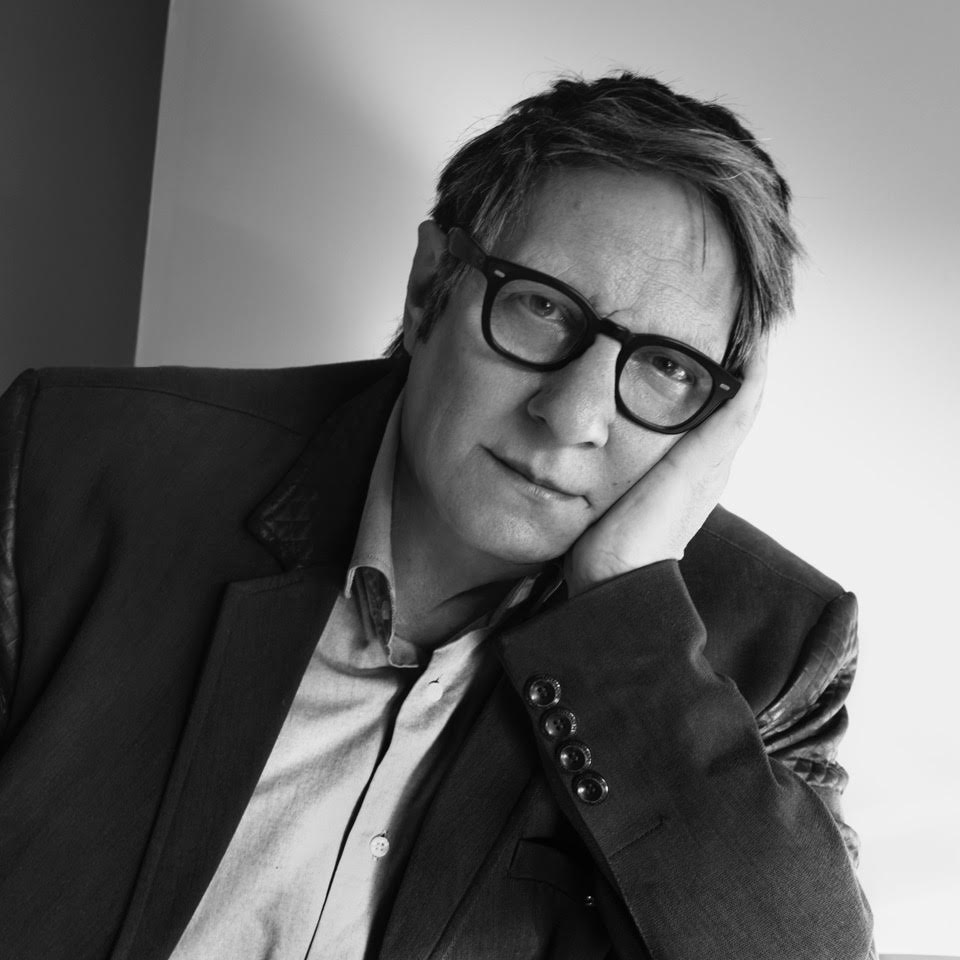
Lepage described to me how starting from a sensible resource — in this case, a deck of cards — worked during a recent creation process in Germany, where he devised a piece with the ensemble of the Schaubühne: “I don’t have any idea where we’re going… I came in with a deck of cards and I said, ‘Let’s play cards.’” This method allows images, narrative, and characters to evolve naturally from the improvisatory rehearsal process.
When developing new work, what’s important for Lepage is to “consider everything like usable material.” Lepage tries “to create a kind of a swamp, a kind of chaos,” he said. “You have to start with chaos, complete chaos, and you don’t look for meaning, you just do your thing.” This is another important practice I learned from Lepage: the patience to allow the meaning of a work to evolve organically over the rehearsal process, comprising the ideas and intelligence of many creators. For Lepage, even when it comes to solo works like Far Side, this process is “very mobilizing… you could be alone on stage, but it’s the result of a lot of people’s work coming together.”
This approach influenced the creation of Far Side, which began with a request by a Swedish theatre to make a piece about — and in collaboration with — astronaut Buzz Aldrin. “Do you know who Buzz Aldrin was?” he asked me, laughing. “I ask because you’re so young — many don’t.” We both laughed (I because I don’t see myself as particularly young anymore). “Buzz Lightyear was inspired by Buzz Aldrin.”
Aldrin, the second man on the moon during Apollo 11, struggled with lifelong addiction due to his perceived failure of not being the first. Though Lepage was fascinated by space exploration, working with Aldrin was difficult: “I kept saying, ‘We’re not doing TV — we’re doing theatre!’” The project stalled.
Months later, after his beloved mother’s death, Lepage found an old industrial washing machine in an alley. “It had a portal window. I thought, ‘Oh my god, this is Apollo 11!’” He brought it to rehearsal and said: “Let’s start here.” The washing machine resembled vintage space technology, but more importantly, it evoked a strong personal memory for Lepage: “When ours broke, Mom took me to a laundromat. That was mission control!” The object soon became a portal — not just to space, but to his mother.
This anecdote captures the best of Lepage’s creative ethos: a project stalls, a new sensible resource appears — the washing machine — and the project transforms, taking on new meaning and allowing Lepage to speak to his own sense of grief and loss in a more poetic way. “So, you just let that go, and eventually it finds its characters, and elements and objects call each other, and they stick together,” he reflected. “So you’re not really in control of the lot, you just have to allow the chaos to happen and eventually the cosmos appears: the structure and the beauty.”
For Miller, the beauty in Lepage’s work “moves beyond the obvious theatrical wizardry and technological innovation,” he told me. “What I love most is his deep interest in humanity. His best work crosses borders and breaks down walls, questioning what it means to be a global citizen in an inter-connected world.”
***
Lepage is notorious for continuing to work on shows even after opening night. “Critics hate that, because they’re used to being given the opportunity to come and judge,” he noted, “And you say, ‘No, you have to come back a few times to see the show to be able to judge it.’”
Though impractical, I agree with Lepage’s sentiment, as often you don’t know what a show is until an audience sees it. “The first performance is fantastic because you’re doing a show and you didn’t know what the show was about really,” Lepage said. “Then the audience reacts to something you hadn’t noticed… and you go, “‘Oh, OK! Is that really what we want to say?’ And then we edit, and every performance is an opportunity to re-write.” The freedom to keep working: sadly, this is another aspect of Lepage’s legacy that is difficult to practice given the lack of resources and conventional approach to theatre-making in Canada.
I asked if he was still rewriting Far Side or if this was a strict remount. Lepage described it as “a rejuvenation.” In addition to the original production’s compositions by Laurie Anderson (yes, that Laurie Anderson), as well as the beautiful puppeteering by Éric Leblanc, this production features a new actor, Olivier Normand, playing the role Lepage originated. Normand is a seasoned Lepage collaborator and a resident artist at Ex Machina.
“I performed it something like 400 times around the world, and then I was replaced by Yves Jacques, and I think he did more, maybe 600 performances, and now there’s this new guy,” said Lepage. Even when recasting a developed role, Lepage still allows the new performer to bring in something of themselves: “When you bring in new people, you can’t just say, ‘Oh, I’m stepping into somebody’s shoes and I replace him’… not with the way we work at Ex Machina,” Lepage shared. “So, a lot of Olivier’s personality also brings something, and makes it better.”
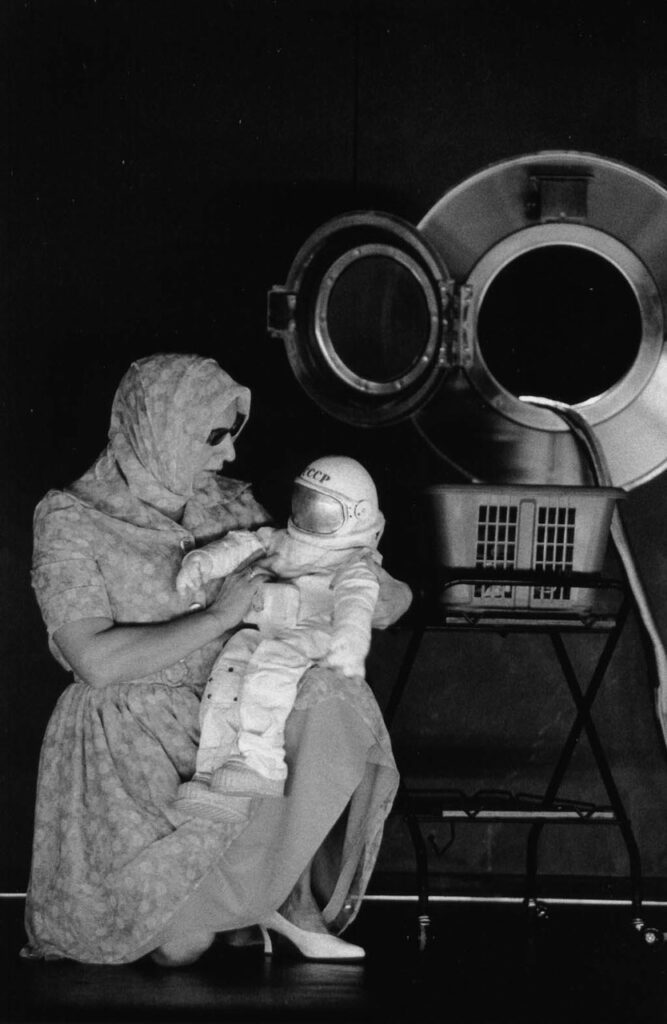
And though the show is from another time — a post-Cold War, pre-9/11 world — Lepage thinks it will still resonate. “What was important was to keep the simplicity of it,” he remarked. I laughed, mentioning that when I saw Far Side, I thought it was anything but simple, but he insists: “[Today] you might say… it was very complex, but it was so simple, an incredibly simple thing,” he said. “And the technology was very first-level, a few projections and that’s about it… at the beginning of rehearsals we were just playing around with a big mirror and a roll of masking tape!” This tension between complexity and simplicity is another theme running through Lepage’s work, and I’m curious to watch Far Side again to see if my impression changes.
Creating at the scale that Lepage does often requires international partnerships, and he’s worked with theatres all over the world, from Asia to Europe to Australia and beyond. In Toronto, Canadian Stage has been an important home for Lepage and Ex Machina’s work, having hosted the 2015 world premiere of 887 and several runs of Needles and Opium around the same time, as part of round-the-world tours for those productions. The Luminato Festival, National Ballet, and the Canadian Opera Company (COC) have also developed fruitful relationships with Lepage; in April of next year his lauded production Bluebeard’s Castle/Erwartung will return to the COC, where it first premiered in 1992.
Derek Kwan, an actor, singer, and theatre creator, singled out one of these productions in particular when I texted him asking for his take on Lepage’s work: “The audacious and elegant simplicity of his Bluebeard’s Castle was mind-blowing, and I still reference it constantly,” said Kwan. “I admire Lepage’s blend of space and story — playing with perspectives both spatial and narrative.”
(Looking just beyond the city, Lepage’s biker-themed production of Shakespeare’s Macbeth runs until November 22 at the Stratford Festival, where in 2018 he also staged Coriolanus.)
In our world of shrinking budgets and conservative programming, I asked Lepage how he still manages to support this international-scale work. It turns out the economic structure of Ex Machina, as with all things in Lepage’s world, is unusual: “80 per cent of our income comes from other countries,” he said. “It doesn’t come from Canada.”
I ask if events of recent years have affected this structure. “Of course, we’re affected by the pandemic,” he said. “It took a while for the audience to come back everywhere in Canada, and [around] the world.”
He spoke about the rising costs of touring, which make it harder for international presenters to host foreign companies, noting that co-productions and festival tours have become more difficult. While he hopes the new Liberal government will increase arts funding, he was mainly relieved the Conservatives weren’t elected, “I can’t even start to explain to you what they think culture is, and how it should be used.” He went on to evoke, with irony, the Harper-era Conservative attitude to touring: “‘Why would you send bodies, and pay for per diems, plane tickets, hotel rooms… when you can just send the CD?’”
It’s the scale and international reach of Lepage’s work that Canadian theatre-maker Leah Cherniak finds particularly significant. “I have always appreciated the idea of Robert Lepage… finding a way to make big pieces, with committed design integrated into his plays,” she told me by text. ”I always felt somehow grateful to him, for making his more or less alternative theatre attractive to a larger audience… and perhaps letting American theatre-makers and audiences know that Canadian theatre existed!”
***
As our conversation ended, I wanted to ask Lepage how he thought theatre could speak to our chaotic times. I mentioned my struggle to unite ethics and aesthetics in my work, and asked if he thought we, as storytellers, have a responsibility when representing reality. He nodded and paused, acknowledging the scope of the question, then said, “I don’t have a great personal quote where you can say Robert Lepage thinks theatre is…” — but he went on to offer ideas from other artists that influenced his thinking.
From Bertolt Brecht, one was a critique of the idea that theatre should reflect the world. “First of all, people say theatre’s a mirror, Brecht says theatre’s not a mirror, it’s a fucking hammer,” Lepage recalled. I was surprised by this because I associate Brecht with political theatre: his hammer is the alienation effect that exposes the tacit, oppressive nature of existing social systems and relations. I don’t see much overtly political in Lepage’s work, at least on the level of content. But perhaps there’s something in his poetic, formally adventurous approach to world-building that allows him to wield a different kind of hammer?
At the best of times — such as with Far Side — Lepage’s work manages to stage the drama of transformation itself. And even when not explicitly political, the transformation and invention of theatrical forms can be a very powerful tool for breaking through the spell of complacency, inviting audiences to see the world differently. This aspect of Lepage’s legacy indelibly changed my approach to theatre-making, and I think it’s incredibly valuable for artists searching for new theatrical forms that can speak with urgency to the times we live in.
“If theatre’s done well, it’s an event. And for the audience it’s very mobilizing,” he said. “Whatever the subject matter is, the people go and they’re stimulated, interested, and they feel intelligent.
“The most beautiful spectacle is always the spectacle of intelligence.”
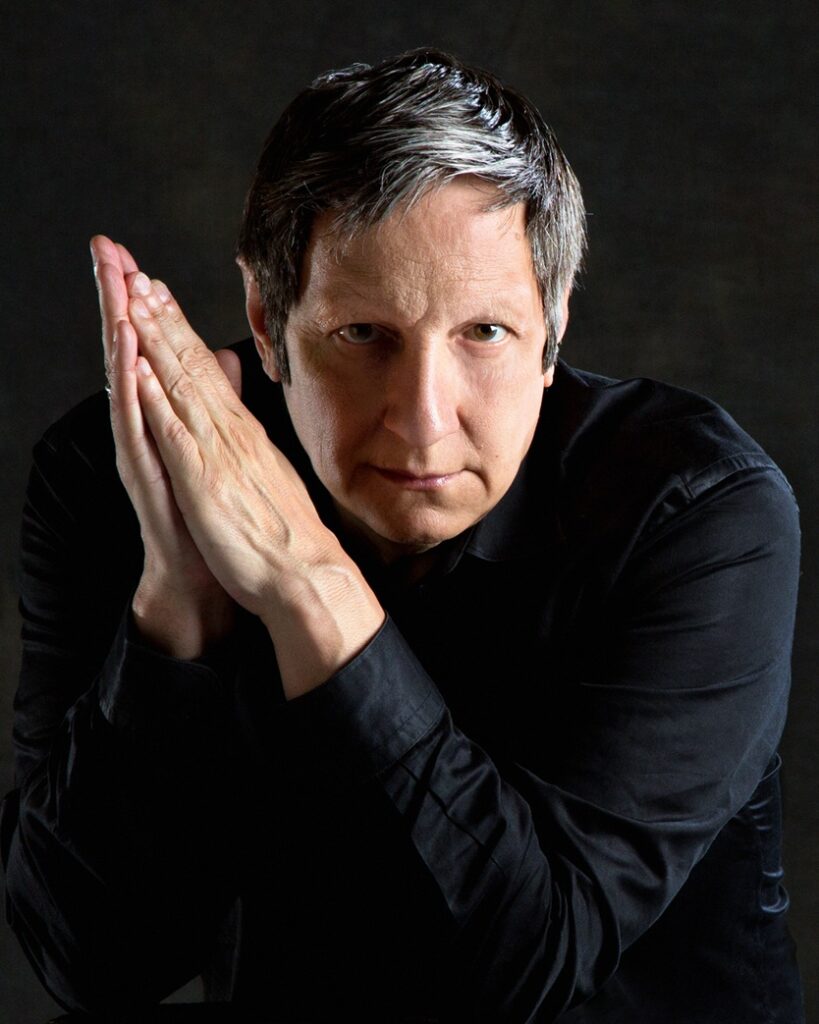
The Far Side of the Moon runs from November 1 to 16 at the Bluma Appel Theatre. More information is available here.
Canadian Stage is an Intermission partner. Learn more about Intermission’s partnership model here.
Adam Paolozza
Adam Paolozza is an award-winning performer, director, teacher, and producer. As artistic director of Bad New Days, Adam creates collaboratively devised, imagistic theatre, guided by the belief that the live experience has the potential to activate unique, empathetic ways of seeing the world. Adam is a graduate of École Jacques Lecoq, and has an MA in Performance Studies from York. He’s taught at U of T, Brock, Humber College, the Soulpepper Academy, and TMU.
LEARN MOREComments
Leave a Comment
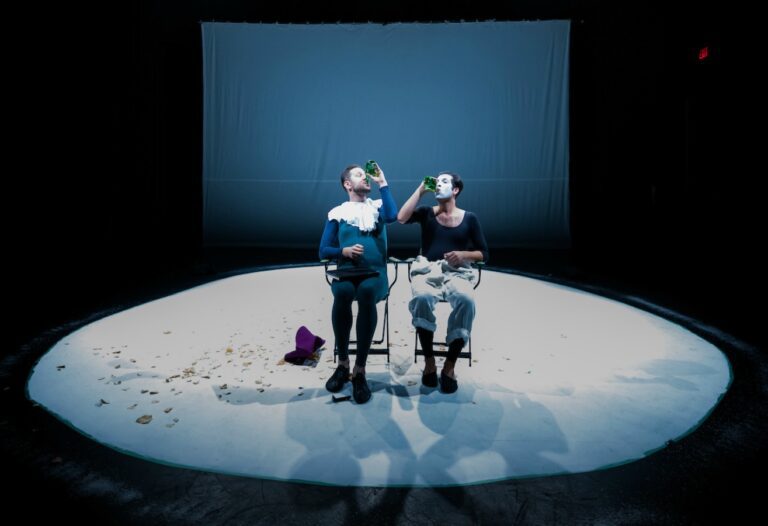 iPhoto caption: Viktor Lukawski and Adam Paolozza in Italian Mime Suicide // Three Red Days. Photo by John Gundy.
Capital (and Toronto Theatre) in the 21st Century
I'm tired of living in a city that is so expensive.
Saw Glaube, Geld,Krieg und Liebe
In der Schaubuehne, Berlin. last year.
Vissually and im Words Lepage ‘s work touches so many Levels …. which I wish I cld see it again
to catch all the Details.
this one was on german History . I am German
studied theatre in Berlin, in the late 60ties and early 70ties. Lots Was going on then . P. Stein ‘s
Peer Gynt, Peymann’s Ritt ueber den Bodensee
and in East Berlin : Benno Besson : Der Drache
inspiring as Lepage work.
Anyhow ……now I am 80 , and in Toronto , will try to see
the far side of the moon.
ja, Brecht.. ja …” how can u be good when everything is so expensive”
The 1992 COC production of the double-bill, Bluebeard’s Castle and Erwartung has never been surpassed for me and perhaps never will be in my lifetime for its astonishing theatrical virtuosity. Imagine a series of ‘zombie’ brides emerging from an actual river of water—a river that turns red!—on the stage of the Sony Centre. Interesting to see how much of this can or will be replicated in the COC’s new home! Lepage is a genius.
Wagner’s The Ring Cycle, at the Met, magical design with the moving planks, costume designs, projections, all moving together to connect the four dramas is one of the most satisfying opera creations this century.