
The Bentway’s Sand Flight asks how we might navigate a world remade by climate collapse
 iPhoto caption: Photo by Hans Ravn.
This June, a phantom desert consisting of 700 tonnes of golden sand will rise beneath the Gardiner Expressway. For four nights, the mysterious cone-shaped dune, resting in the hard shadow of the highway’s concrete canopy, will act as the stage for Sand Flight, a 60-minute contemporary dance show by Norwegian choreographer Ingri Fiksdal and Danish theatre director Jonas Corell Petersen. Featuring six dancers from Toronto Dance Theatre and two from Oslo, the work is equal parts corps performance and large-scale art installation.
Fiksdal and Corell Petersen previously collaborated on a 2016 dance called State, but the world premiere of Sand Flight marks the duo’s first site-specific collaboration. It’s a bold commission for the Bentway, a Toronto not-for-profit arts organization whose summer programming theme this year is “sun/shade” (which curiously echoes Luminato Festival’s 2025 theme, DAY:NIGHT). Inspired by Denmark’s Råbjerg Mile — Northern Europe’s largest naturally migrating dune — Fiksdal and Corell Petersen will recreate a portion of the dune in Toronto using Canadian sand slung from a slinging truck (a separate, beautiful choreography of its own) days before the show opens, with a goal of imagining a speculative future where city bricks have crumbled to dust and humans worship rare patches of shade.
“Desert landscapes are not common in Denmark, so it’s very special to have a travelling desert in the middle of the country. It moves 18 meters per year. It’s moving right now, and its movement to Toronto is the main fiction of Sand Flight,” said Fiksdal in a lunchtime Zoom interview following a morning of rehearsals. After its first installation in Toronto, the drifting desert will continue shifting internationally, incorporating different local dancers as it moves like a tumbleweed, but no firm dates and venues have been pinned down yet.

In early 2024, Fiksdal began mapping the show’s movements in the pits, hills, dunes, and even snowy slopes of Oslo, where she worked in collaboration with dancers Sudesh Adhana and Pernille Holden, who will stay with each iteration. In late May of 2025, Fiksdal further developed Sand Flight with the Toronto cast and also hosted an open workshop for the public to experience the show’s unique movement vocabulary.
Its style is loosely informed by the avant-garde Judson Dance Theater’s improvisation method and use of everyday shapes and motion, as well as contemporary floorwork, contact partnering, and acrobatics. But given the sinking quality of the sand and the lack of control over lighting and potentially distracting environmental elements, Fiksdal and the dancers have been forced to create something wholly new, creating focus through movements that are often bigger or faster than they’d usually be on a traditional proscenium stage.
Central to the show’s choreography is score-based improvisation that’s guided by tasks. “The dancers have particular trajectories in space, but then how they solve the task is closer to a live composition — improvisation,” said Fiksdal. “For example, we’re working on ‘chopping’ [in rehearsals today]. It’s a fast abrupt movement, and it travels through the sand dune in a certain relation to the other performers. But exactly when and how they move their shoulder or elbow is up to the dancer to solve.” Fiksdal and Corell Petersen are letting each dancer develop an intimate relationship with the dune, which shapes and ultimately co-authors their choices, and allows the dancers’ authentic personalities to surface and submerge in reaction to the fictional context.
Sand Flight resists a fixed plot with set characters, and doesn’t contain an overt warning about the climate crisis. Instead, it questions how bodies might behave — psychologically, physically, spiritually — in a world where the ground is unstable, the sun is too harsh, and shade is a scarce resource. Despite a lack of obvious symbols of worship, Sand Flight was partially inspired by ancient rites of Nordic sun worship from the Bronze Age, and during the performance audiences will often see dancers in devotional reverence of the sun’s absence. Shade becomes sacred, and the show asks us how we could live in deference, rather than dominion, of the climate we’ve helped destabilize.
The cone-shaped sand stage is a force in its own right. “The [sand] creates very different sightlines for the audience and exciting possibilities for us as creators,” said Corell Petersen, who joined the Zoom interview from Norway before flying to Toronto later that week. “Dancers can leap and fall into it, disappear behind it, [or] roll down or climb up it, creating a very different approach for us than when working on a flat traditional stage.” For the performers, the dune becomes terrain, prop, and partner. Depending on where they’re seated, audience members may catch only fragments of a choreographic phrase or a limb vanishing into sand, echoing how future environments may fragment our perspectives, concealing as much as they reveal.
The costumes, too, subvert the usual codes of dance. Instead of tight, technique-revealing garb, the dancers in Sand Flight wear boxy, ‘80s-motocross-inspired uniforms designed, by David Gehrt, to resist the abrasive sand. Not only do the colourful suits help the dancers pop out visually from the muted setting, but they also evoke neoteric workwear, positing that in the future, durability might become more necessary for survival.

Norwegian composer Lasse Marhaug’s dark and crackling soundscape anchors Sand Flight in dystopia, layering crunchy distortions of common city noise on top of natural disasters, like earthquakes and volcanoes. But the show will also be accompanied by 50 singers from VIVA, a multigenerational Toronto choir that will disrupt the score twice, in roughly eight minute sections. “In a way, the many ages within the choir highlight the regenerative arc of the work,” said Corell Petersen. The voices will provide a contrast to the ominous score and amplify the show’s meditation on cyclical progression.
Dystopia might suggest a world that’s no longer suited to human life, and Sand Flight will certainly conjure up unease about the future, but the creators promise an uncanny lightness, too. In the end, Sand Flight won’t be a foreboding warning, nor a mournful dirge, but a rehearsal for how we might live differently — how we might move through a world remade by collapse. Not with dominance, but with improvised rhythm.
“We’re not only conveying dystopia,” said Corell Petersen. “Yes, we die. Yes, we dry out. But that makes way for something new, and the dancers carry hopefulness in their movement.”
Sand Flight runs at the Bentway from June 12 to 15. More information is available here.
The Bentway is an Intermission partner. Learn more about Intermission’s partnership model here.

Lindsey King
Lindsey King is a Toronto-based freelance writer and editor with bylines in Toronto Life, Maclean's, Canadian Business, Intermission, and The Creative Independent.
LEARN MORE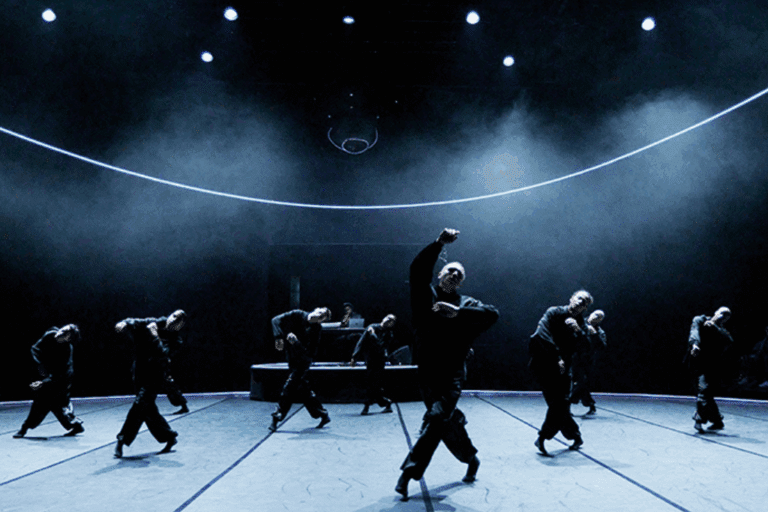 iPhoto caption: Photo by Fabian Hammerl.
In A a | a B : B E N D, choreographer Aszure Barton aims to rebuild dance from the inside out
“It’s so easy to over-intellectualize dance in general, but B E N D is about hearing and moving to cool-ass music together,” says Barton ahead of the show's run at the Bluma Appel Theatre.
 iPhoto caption: Elinor Holt and Ellen Close in 'How Patty and Joanne Won High Gold at the Grand Christmas Cup Winter Dance Competition.' Photo by Benjamin Laird.
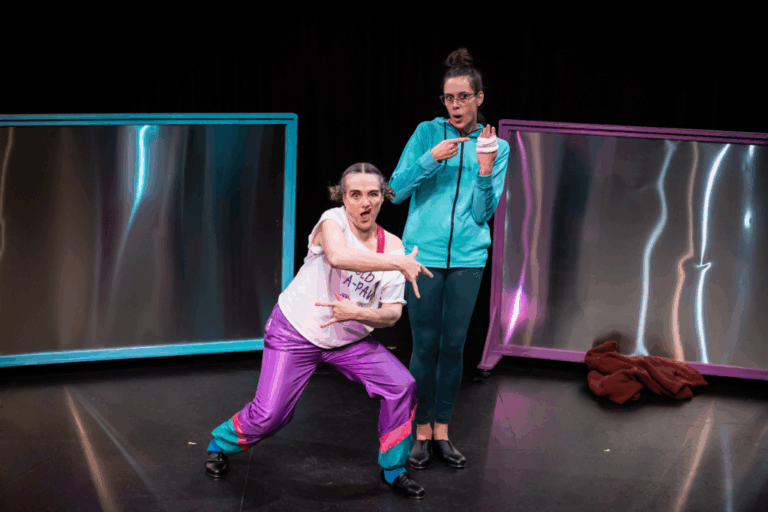
“We’re living in a world right now where failure is not an option,” says actor Elinor Holt. “And a lot of times people would rather not try anything at all, rather than try something and risk failing at it.”
 iPhoto caption: Jane Spidell as Bettye, Kevin Bundy as Jim, and Noah Beemer as Steve in 'Twelve Dinners.' Photo by Dahlia Katz.
With TIFT’s Twelve Dinners, actor Steve Ross makes the leap to playwright-director
"I love sitting with the actors before rehearsals and discussing, especially when they ask questions,” says Ross. “I love the blocking and staging. I love directing my own work, but find it challenging."
 iPhoto caption: Manus Halligan in Dan Colley's adaptation of 'A Very Old Man with Enormous Wings'. Photo by Ste Murray.
A contemporary Gabriel García Márquez adaptation touches down in Toronto
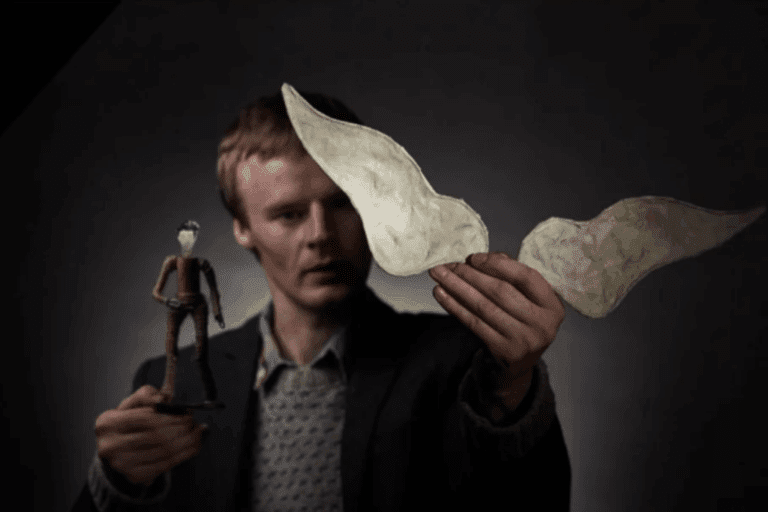
A Very Old Man with Enormous Wings has toured internationally since 2022, with a shifting cast of performers. Halligan and Beaman, the original actors and co-adaptors, will reprise their roles for the Toronto premiere.
 iPhoto caption: 'Narnia' in rehearsal. Photo by Dahlia Katz.
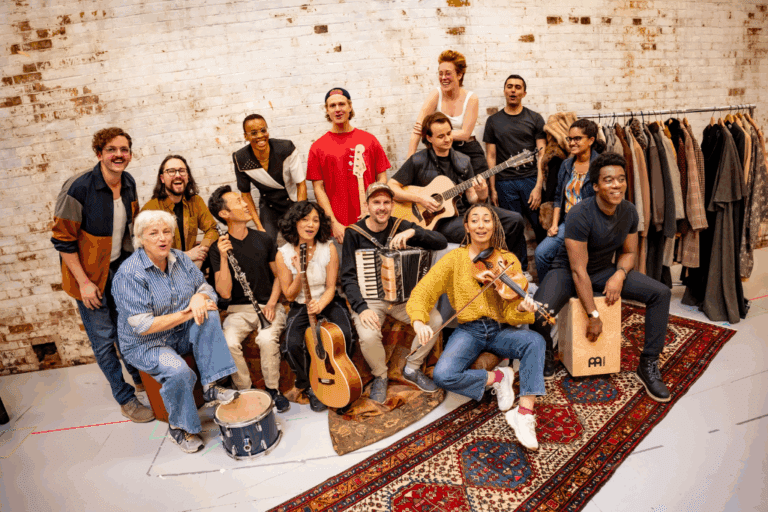
"What emerged for us was this idea of life cycles,” reflects Narnia adaptor-director Fiona Sauder. “‘What happens when you get stuck in one season [of life], and what happens when that season comes to an end? [What things] have to die and fall away in order for new things to grow?’”
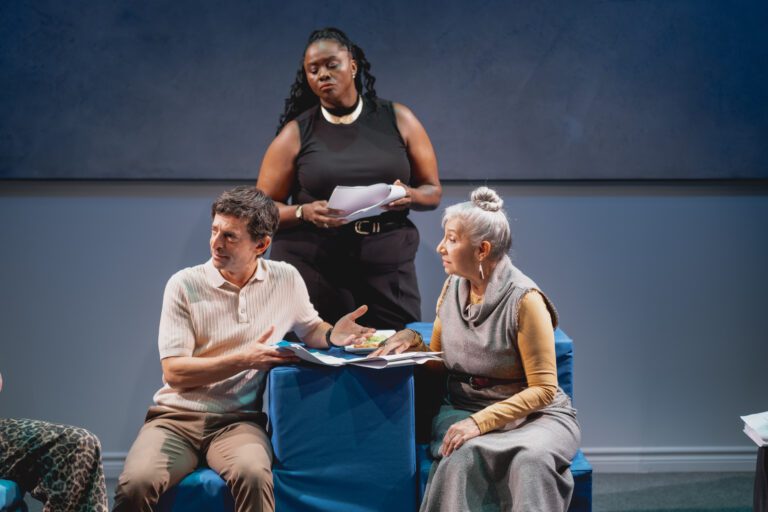 iPhoto caption: Jordan Pettle, Janelle Cooper, and Monique Mojica in CHILD-ish. Photo by Jae Yang.
Tarragon’s upcoming show gives audiences a verbatim taste of children’s wisdom, wit, and weirdness
The first inklings of CHILD-ish came to Drake in 2017. “I got to an age where I started having a lot more kids in my life,” he said. That “got me curious about what adults can learn from kids: playing with and flipping that power dynamic of who’s the learner and who’s the teacher.”
iPhoto caption: Photo by Fabian Hammerl.
In A a | a B : B E N D, choreographer Aszure Barton aims to rebuild dance from the inside out
“It’s so easy to over-intellectualize dance in general, but B E N D is about hearing and moving to cool-ass music together,” says Barton ahead of the show's run at the Bluma Appel Theatre.
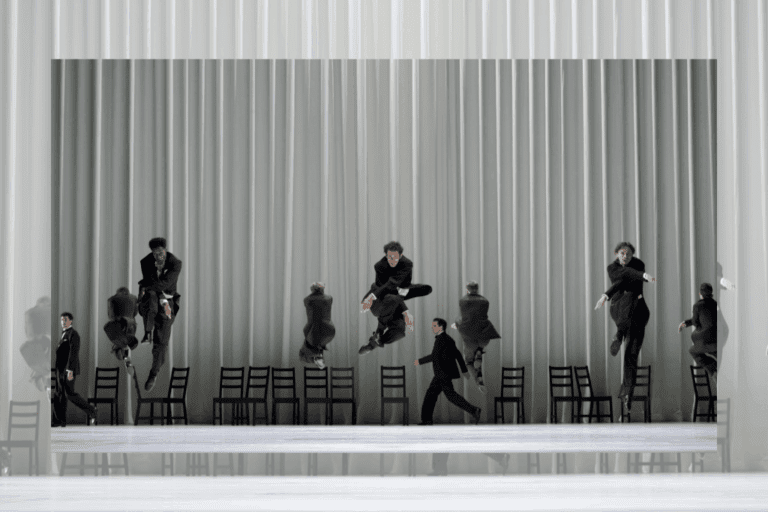 iPhoto caption: Shaakir Muhammad, Christopher Gerty, and Matthieu Pagès with artists of the National Ballet in 'Procession.' Photo by Karolina Kuras. Courtesy of the National Ballet of Canada.
REVIEW: National Ballet’s Procession tangles the lines of sorrow and sensuality
Procession, the National Ballet of Canada’s brooding and stylized world premiere ballet, rushes to the stage with startling vitality — and does so at a funeral.
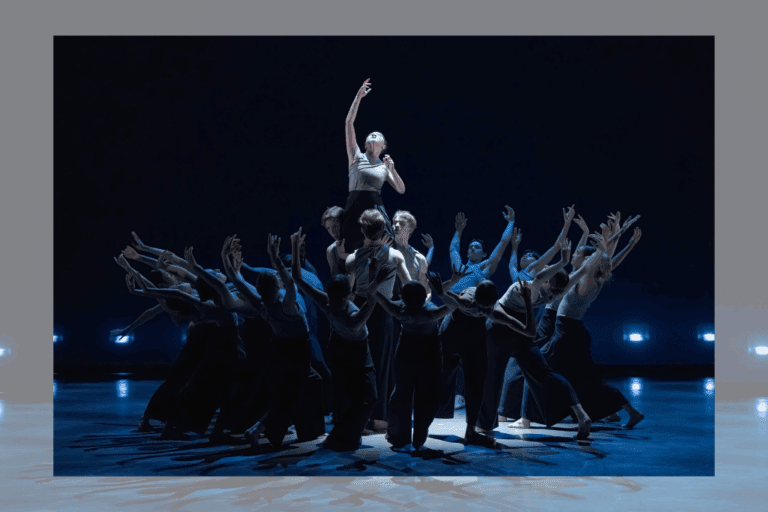 iPhoto caption: Fall for Dance North. Artist-in-residence Esie Mensah's world premiere of ESHI. Photo by Karolina Kuras.
If opening night is any indication, this year’s Fall for Dance North will deliver on its reputation for range and vitality, reaffirming how inclusive, diverse, and uncontainable dance in Toronto can be.
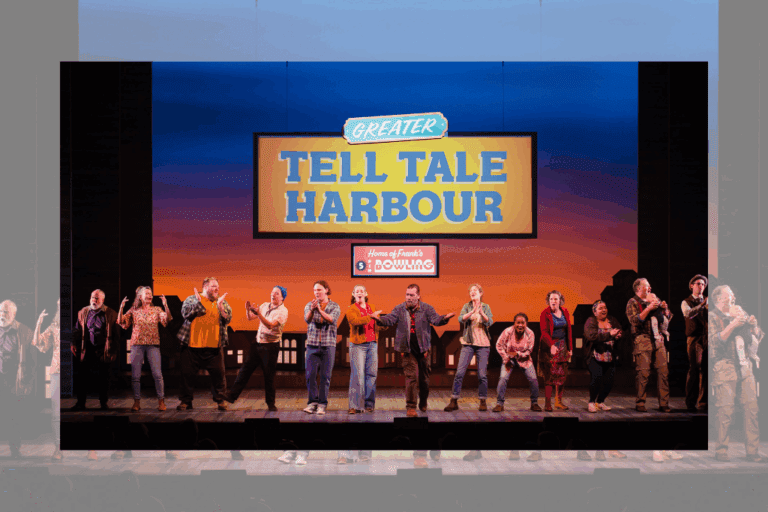 iPhoto caption: The company of 'Tell Tale Harbour.' Photo by Wade Muir.
REVIEW: Alan Doyle steers a joyful ship in Tell Tale Harbour at Mirvish
The musical makes good on spinning a yarn as warm as a mug-up with music as catchy as a fiddle reel. The asides are wry, the slapstick is generous, and the hearts are big.
 iPhoto caption: Photo by Robert Torres.
REVIEW: Two hybrid dance pieces close out this year’s SummerWorks Performance Festival
During the festival’s closing weekend, I saw two works that live side by side in my memory even as they differed in style and intention. Both Je ne vais pas inonder la mer (I Will Not Flood the Ocean) and Graveyards and Gardens explored memory, loss, and the body’s way of carrying history — one did so with devastating intimacy, the other with cerebral play.
 iPhoto caption: Photo by Marie-Andrée Lemire.
REVIEW: Cirque du Soleil’s family-friendly OVO spreads springtime glee like pollen on the breeze
OVO might not linger in the heart for long, but it’s a hell of a romp for the eyes.
Comments