
How the Calgary-based stars of Lunchbox Theatre’s new holiday comedy are learning to tap dance from scratch
 iPhoto caption: Elinor Holt and Ellen Close in 'How Patty and Joanne Won High Gold at the Grand Christmas Cup Winter Dance Competition.' Photo by Benjamin Laird.
When actor Ellen Close was tasked with learning tap dance for an upcoming role, she hoped she would stumble upon a raw talent just waiting to be channeled.
“One day,” recalled her co-star, Elinor Holt, recounting a rehearsal memory, “[Ellen] said: ‘Oh, I was secretly hoping I’d have this magical ability and that I would have always been a natural tapper. The moment I tried it, it would just be like click, click, click, click… “Oh my god, I’m Fred Astaire!”’”
Holt laughed, yet then admitted: “I kind of hoped that would be the case [for me], too.”
To the pair’s dismay, innate knacks for tap were not quite the reality for either of the Calgarian actors starring in Lunchbox Theatre’s production of How Patty and Joanne Won High Gold at the Grand Christmas Cup Winter Dance Competition. But that isn’t stopping them.
Written by Edmonton-based playwright Trevor Schmidt, the holiday comedy follows stretched-thin mother-of-five Patty and an older but ever-bubbly Joanne as they form an off-beat friendship in an unlikely place: adult beginner tap class. The play boasts concurrent world premieres, with one production by Calgary’s Lunchbox Theatre opening on November 27 and another by Edmonton’s Northern Light Theatre opening a day later on November 28.
With tap dance at the crux of this two-hander, Close and Holt have spent weeks in rehearsal learning the technique-forward style for the very first time — just like the women they’re portraying.
“It’s kind of neat to be in a similar position to the character,” said Close, who plays Patty. “Really trying this thing for the first time and how overwhelming it can feel.”
For Close, learning to tap dance has been a study in patience and letting go of perfection. “I may not look like what a professional tap dancer would look like,” she said. “[But] mastery is not the goal.”

She went on to speak about how, particularly as an actor, the pressure to perform skills at a high level has often held her back from new experiences: “Through my life, I found myself leaning into things that I’m naturally good at, and then almost immediately jumping away from anything [else].”
“We’re living in a world right now where failure is not an option,” Holt, who plays Joanne, agreed. “And a lot of times people would rather not try anything at all, rather than try something and risk failing at it.”
She noted that while a lot of us spend our lives thinking about trying something new, the difference with Patty and Joanne is that “they’re actually doing it.”
And thanks to the support of choreographer Jocelyn Hoover, Close and Holt are actually doing it, too. “Our amazing choreographer [is] a very patient teacher,” Holt said. “[She] has chosen good steps for us because they’re not completely beyond us.”
Close agreed, sharing a newfound favourite tap move: “I now like to Buffalo!” (Which she described as a step where you “leap, shuffle, leap.”)
You may be wondering, like I did, about the choice to cast two non-tappers for a show all about tap dancing. Close acknowledged that “seasoned tap dancers could do a lovely job of it,” but stressed the raw vulnerability and sincerity that comes with trying “something new, and to not just risk looking foolish, but to actually look foolish. And then persevere through that.”
Director Bronwyn Steinberg has structured a creative process that, in Close’s words, focuses “more on the journey rather than the destination.” The result is an environment that prioritizes self-compassion and -understanding — even beyond the scope of choreographic elements.
“One of my big traps as an actor is by day two of rehearsals, I start beating myself up for not being where I want to be,” Close shared. Learning to tap, however, has challenged this mindset: “[I can just be] where I’m at and not look for what I need to be afraid of or what I need to chastise myself for not knowing yet.”
Holt echoed this sentiment, playfully describing the learning experience as “opening up the can of instant forgiveness and spraying yourself.” Though first applied to dancing, the metaphorical forgiveness-spray offered Close and Holt a welcome relief as it steadily spread into other aspects of rehearsing like memorizing lines and remembering cues.
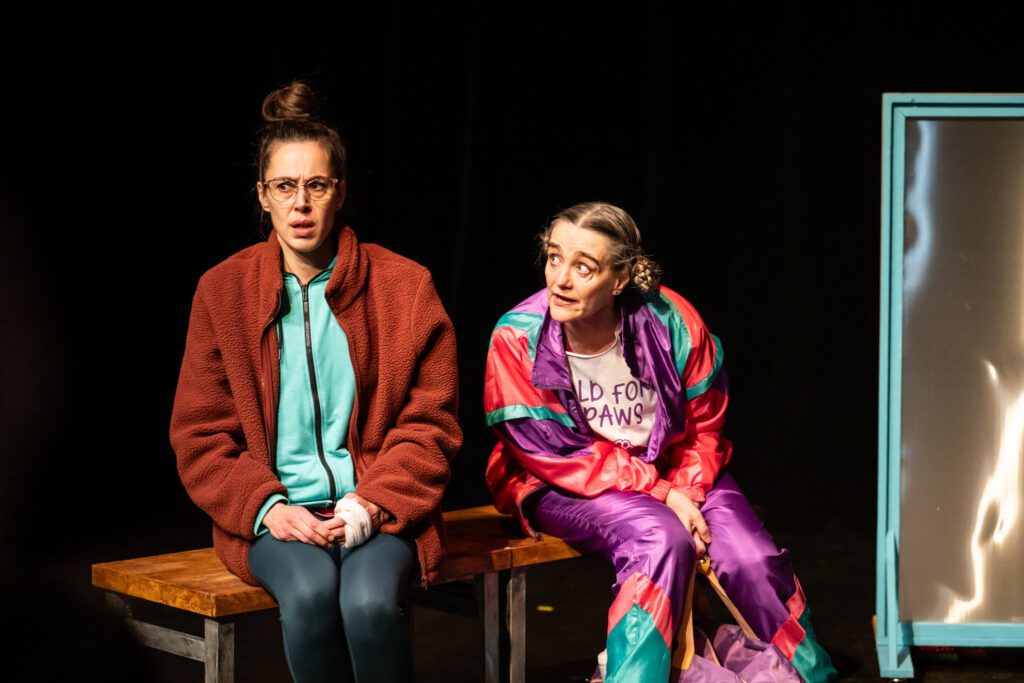
Despite many mental and physical challenges — including “several new layers” of foot skin for Close — the actors kept returning to the joy in dancing. “[It’s] a fun and wonderful thing,” Holt said. “Especially as an older person… we stop moving for the joy of moving, and tap dancing is pretty joyous.”
Though Close characterized the play as “really joyous and often goofy,” she also applauded Schmidt’s handling of complicated truths about festive melancholy and how “holidays can feel really hard.” Holt concurred, adding that “we can all relate to feelings of loneliness and sadness, especially around the holidays.
“Maybe there’s even a feeling of shame attached,” she continued, “to feeling sad or feeling lonely at this time of year.”
Close believes this tension between “how you think you’re supposed to feel and how you actually feel” is an experience that many audience members will resonate with and appreciates that Schmidt “has included those insights within what’s still a joyful, funny comedy.”
“It’s very bittersweet,” Holt added.
Amid the seasonal joys and hardships, the two performers hope that Patty and Joanne emboldens audiences to open themselves up to connection, wherever that may be. “More openness to other people… is a lovely spirit to carry all the time, but particularly during the holidays,” Close said. “There’s so much that can come into your life from being willing to branch out and feel a bit foolish.”
“There’s a lot to be gained,” added Holt, “from being kind and taking a chance on something or someone new.”
How Patty and Joanne Won High Gold at the Grand Christmas Cup Winter Dance Competition runs at Calgary’s Lunchbox Theatre until December 21. Tickets are available here.
Eve Beauchamp wrote this feature as part of Page Turn, a professional development network for emerging arts writers, funded by the Canada Council for the Arts and administered by Neworld Theatre.
Lunchbox Theatre is an Intermission partner. Learn more about Intermission’s partnership model here.

Eve Beauchamp
Eve Beauchamp (they/them) is an award-winning Calgary-based theatre artist, playwright, and graduate of the BFA in Acting at the University of Ottawa. They are the co-artistic director of Levity Theatre Company and primarily create work that explores queerness, capitalism, and neurodivergence through humour, poetry, and storytelling. Currently, you can find them pursuing their Master of Fine Arts in Drama at the University of Calgary.
LEARN MORE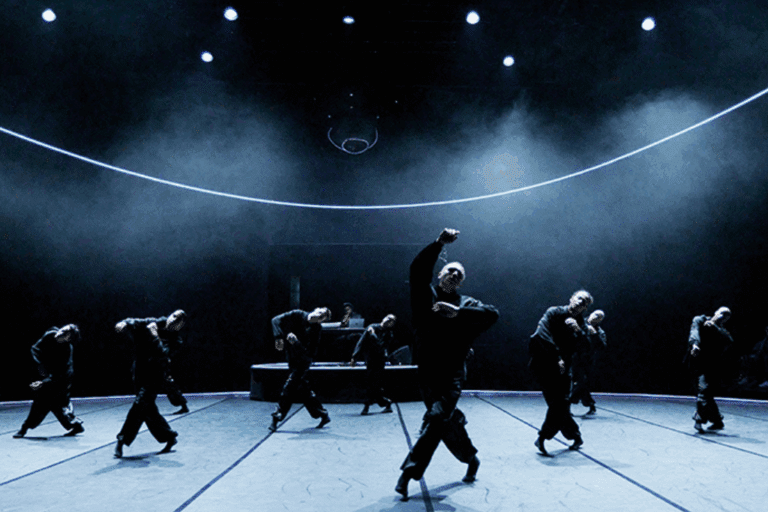 iPhoto caption: Photo by Fabian Hammerl.
In A a | a B : B E N D, choreographer Aszure Barton aims to rebuild dance from the inside out
“It’s so easy to over-intellectualize dance in general, but B E N D is about hearing and moving to cool-ass music together,” says Barton ahead of the show's run at the Bluma Appel Theatre.
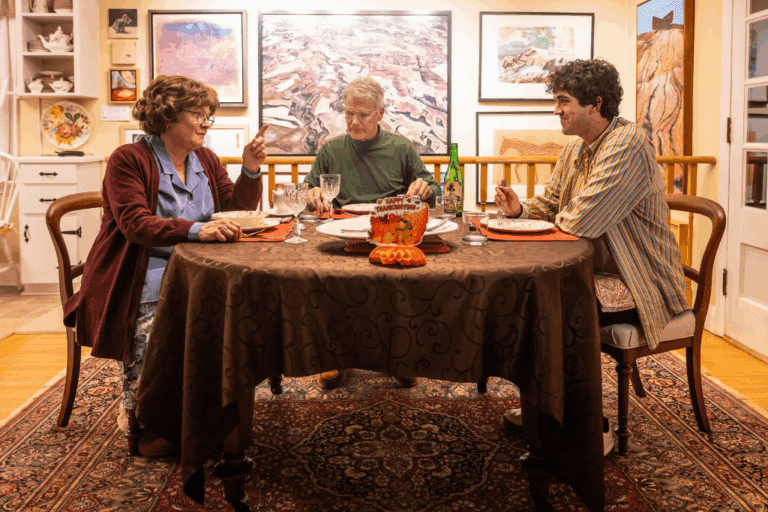 iPhoto caption: Jane Spidell as Bettye, Kevin Bundy as Jim, and Noah Beemer as Steve in 'Twelve Dinners.' Photo by Dahlia Katz.
With TIFT’s Twelve Dinners, actor Steve Ross makes the leap to playwright-director
"I love sitting with the actors before rehearsals and discussing, especially when they ask questions,” says Ross. “I love the blocking and staging. I love directing my own work, but find it challenging."
 iPhoto caption: Manus Halligan in Dan Colley's adaptation of 'A Very Old Man with Enormous Wings'. Photo by Ste Murray.
A contemporary Gabriel García Márquez adaptation touches down in Toronto
A Very Old Man with Enormous Wings has toured internationally since 2022, with a shifting cast of performers. Halligan and Beaman, the original actors and co-adaptors, will reprise their roles for the Toronto premiere.
 iPhoto caption: 'Narnia' in rehearsal. Photo by Dahlia Katz.
"What emerged for us was this idea of life cycles,” reflects Narnia adaptor-director Fiona Sauder. “‘What happens when you get stuck in one season [of life], and what happens when that season comes to an end? [What things] have to die and fall away in order for new things to grow?’”
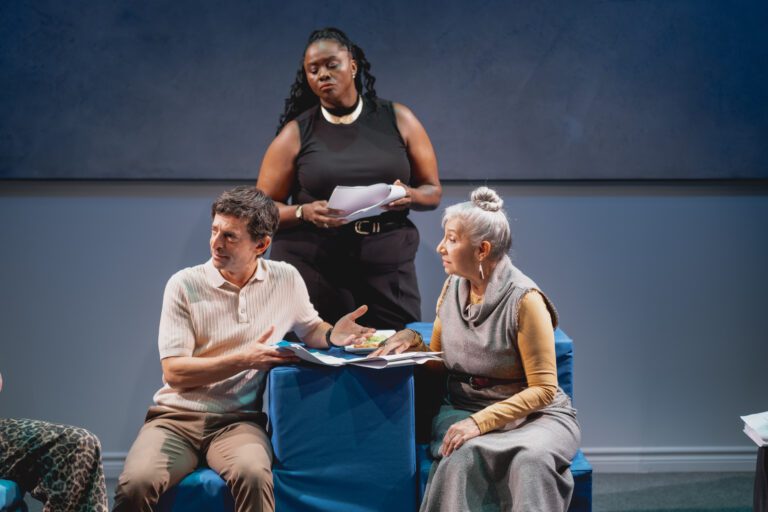 iPhoto caption: Jordan Pettle, Janelle Cooper, and Monique Mojica in CHILD-ish. Photo by Jae Yang.
Tarragon’s upcoming show gives audiences a verbatim taste of children’s wisdom, wit, and weirdness
The first inklings of CHILD-ish came to Drake in 2017. “I got to an age where I started having a lot more kids in my life,” he said. That “got me curious about what adults can learn from kids: playing with and flipping that power dynamic of who’s the learner and who’s the teacher.”
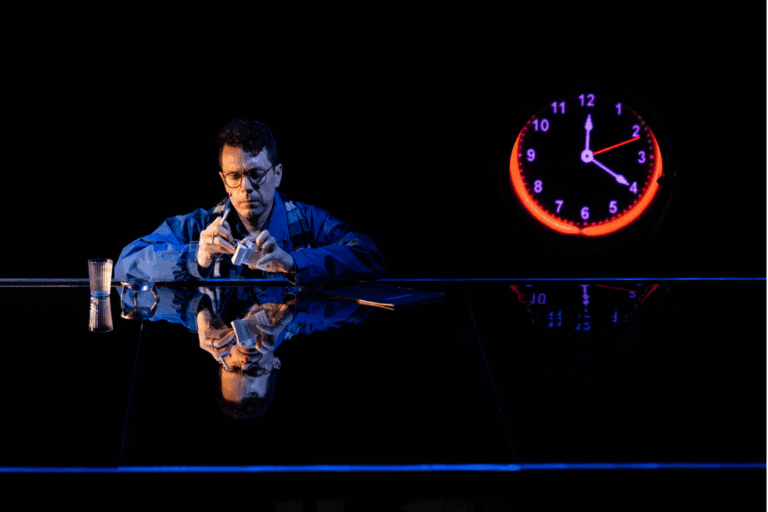 iPhoto caption: 'The Far Side of the Moon' at the Shanghai Jing'an Theatre Festival. Photo by Li Wang.
What’s happening on Canadian stages this fall? Eight emerging critics weigh in.
Autumn means it's back to school for cultural institutions on the very large campus that is Canada. But this year, it also marks the beginning of Page Turn, a professional development network for emerging arts writers. To kick things off, we invited participants to answer one question: “What performing arts event(s) are you looking forward to during the fourth quarter of 2025?”
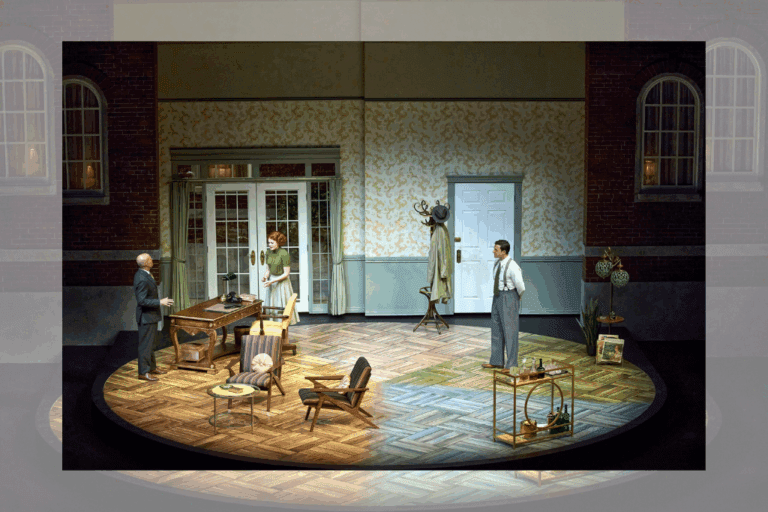 iPhoto caption: Shekhar Paleja, Emily Dallas, and Tyrell Crews in 'Dial M For Murder'. Set design by Anton deGroot. Photo by Trudie Lee.
REVIEW: Theatre Calgary’s Dial M For Murder queers the classic with style and suspense
The cloaked romance that sparks the homicidal scheme at the core of play is no longer between Margot (Emily Dallas) and a Mark, but rather a Maxine (Olivia Hutt). Yes, exactly — the original heterosexual coupling becomes refreshingly queer.
 iPhoto caption: L to R: Maya Baker, Jameela McNeil, Kelsey Verzotti, Sarah Horsman, and Jessica Jones in 'Legally Blonde.' Photo by Trudie Lee.
In 2022, Verzotti became the first Asian-Canadian to play the titular redhead in Anne of Green Gables at the Charlottetown Festival. Now, she’s set to shatter more expectations as she tackles the lead role in Theatre Calgary’s Legally Blonde.
 iPhoto caption: Photo by Nanc Price.
REVIEW: A Streetcar Named Desire pulls into Theatre Calgary for the first time in over two decades
You’ll find everything you might expect from a take on A Streetcar Named Desire: sensuality, top-notch performances, and all.
 iPhoto caption: Photo by Trudie Lee.
A Christmas Carol makes a triumphant return to Theatre Calgary
“It brings me a lot of joy to know that the generations of Calgarians who saw this show when they were a young person are now, 37 years later, bringing their sons and daughters,” says artistic director Stafford Arima.
 iPhoto caption: Photo by Ben Laird.
REVIEW: Twelve Days brings Christmas joy to lunchtime in Calgary
Watching Twelve Days is reminiscent of opening up the door to a chocolate advent calendar: yes, you know what you’re gonna get, but heck if you don’t enjoy every second of it.
 iPhoto caption: The Lehman Trilogy production still by Trudie Lee.
REVIEW: Canadian theatre has a thing for The Lehman Trilogy. Does it work at Theatre Calgary?
The real drivers of Theatre Calgary’s production are its three performers. And boy, do they ever drive. Each performance pulses with unmatched and unrelenting vivacity, made all the more impressive by the stamina required from the ambitious three-and-a-half-hour runtime.
Comments