
REVIEW: One-on-one play considers the hidden meanings behind ghost stories
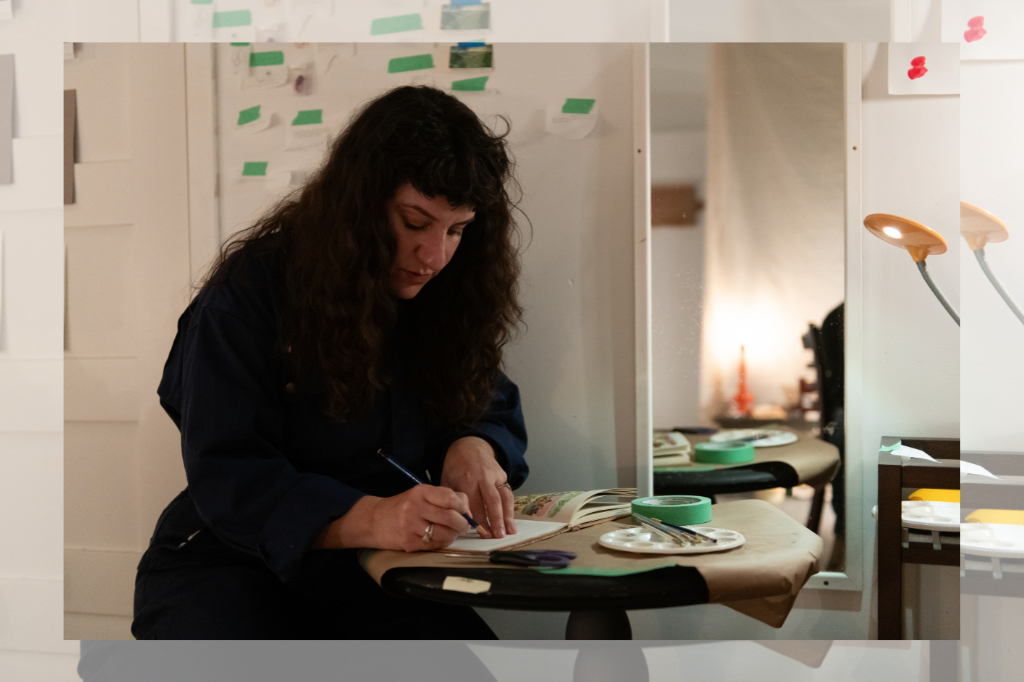 iPhoto caption: Shira Leuchter in 'The Haunting' at Tarragon's Greenhouse Festival in 2024. Photo by Matt Hertendy.
Shira Leuchter welcomes me into a Kensington Market storefront flush with objects: empty jars of jam, vintage lamps, a miniature wooden house. The theatre artist says the space, at 88 Nassau Street, used to host a consignment shop, and long ago a bakery; soon, it’ll be a community acupuncture studio. But for the month of April, it’s something beautifully improbable: the venue for a solo show with an audience capacity of one.
The Haunting — an UnSpun Theatre production, unsurprisingly sold out — begins with Leuchter’s memories of growing up during the 1990s, in a suburban Ontario house where her family often sensed a ghost’s presence. This autobiographical foundation serves as a jumping-off point for Leuchter’s broader reflections on haunting. Drawing on existing scholarship by Avery F. Gordon and Christina Sharpe, her just-under-an-hour script argues that ghost stories are manifestations of histories we’re scared to confront.
Leuchter navigates the one-on-one dynamic with great care. A pre-show email clarifies that audiences are welcome to speak as much as they’d like, and that she’s happy to accommodate a wide range of accessibility needs. Soon after I arrived, she quipped that performing the production was like hanging out with people all day — a fun notion, and accurate to the laid-back vibe that followed.
The show’s structure dials up the intimacy gradually. At first, Leuchter told me to sit at a desk, in front of an encyclopedia. Narration about her childhood played via voiceover while her physical self reenacted putting on makeup. Here, the show felt almost installation-like: it was up to me to consider how the book’s open entry on dogs related to the story, and then to pick up a toy phone, through which I listened to Leuchter interview her father about the house’s ghost. A mirror across the room reflected video design (by Chris Hanratty), offering a nostalgia-tinged rendering of Leuchter’s dreams and fading memories.
Leuchter then had me lay on a narrow bed. She monologued live, but a slideshow on the ceiling defused any pressure to return her gaze. Images of spiritualist paintings from the mid-to-late-1800s accompanied information about the movement, in which artists — usually women — based their brushstrokes on impulses from the beyond. She also discussed visiting the allegedly haunted former house of insulin co-creator Frederick Banting. Only in the piece’s final minutes, after Leuchter had built up trust and comfort, was there a scene I would qualify as unfolding between the two of us in a manner requiring genuine reciprocation.
Overall, I found The Haunting a gentle experience. Part of this stems from my own positioning as a viewer. Though it was my first one-on-one show, I’m acclimatized to audience participation, so the format didn’t inspire much awkwardness in me, as it might for less frequent theatre-goers. And because I’ve not yet gone through great personal loss, the invitation to engage with my own ghosts was interesting rather than emotional. These factors, combined with the production’s research-forward quality, resulted in The Haunting feeling less like attending a seance and more like flipping through the encyclopedia of a self. Which lines up with Leuchter’s fond memories of knowledge travelling at a more human speed: “The only way to find out about things you didn’t know was to find the right person to ask or to find the right book, so getting to know something was a slower, more linear event,” she says of growing up in the 1990s.
Yet even gentle pressure can leave an imprint. The script is in some ways straightforward, but it was highly memorable to have Leuchter deliver it directly to me, with generous warmth. And despite the often easygoing tone, Leuchter occasionally invokes high-stakes material, connecting her thesis — that ghosts are the residue of violent erasure — to colonial Canadian myth-making, as well as to Zionism.
What I keep returning to is the logistical unlikeliness of The Haunting in a city where the cost of making art continues to rise, in a neighbourhood home to the spirits of storefront theatres past. While Leuchter underlines that we’re often scared to look at our ghosts, the show’s unconventional form seems to expose another reason behind contemporary society’s aversion to spiritual confrontation: We’re short on space, time, and paint.
The Haunting runs at 88 Nassau Street until April 29. More information is available here.
Intermission reviews are independent and unrelated to Intermission’s partnered content. Learn more about Intermission’s partnership model here.
Liam Donovan
Liam is Intermission’s senior editor. He lives in Toronto. His Substack newsletter is available at loamdonovan.substack.com.
LEARN MORE iPhoto caption: Devon Michael Brown as Rusty Charlie with members of the 'Guys and Dolls' company. Stratford Festival 2026. Photo by Ann Baggley.
“It's so exhausting, but it's really rewarding when you get to dance so full-out,” says Devon Michael Brown. “You get to use your technique and your training to the fullest extent.”
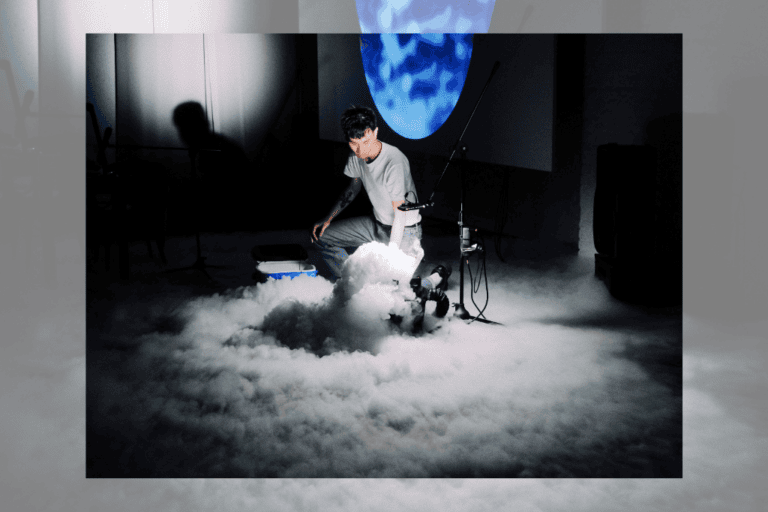 iPhoto caption: Ping-Hsiang Wang in 'Retina Maneuver.' Photo by Hang Su.
REVIEW: At this year’s SummerWorks Performance Festival, physical storytelling is central
From a dancer becoming a canine to a shy theatre director practicing his swordsmanship, the shows I’ve seen so far use performers’ bodies to dramatize defiance.
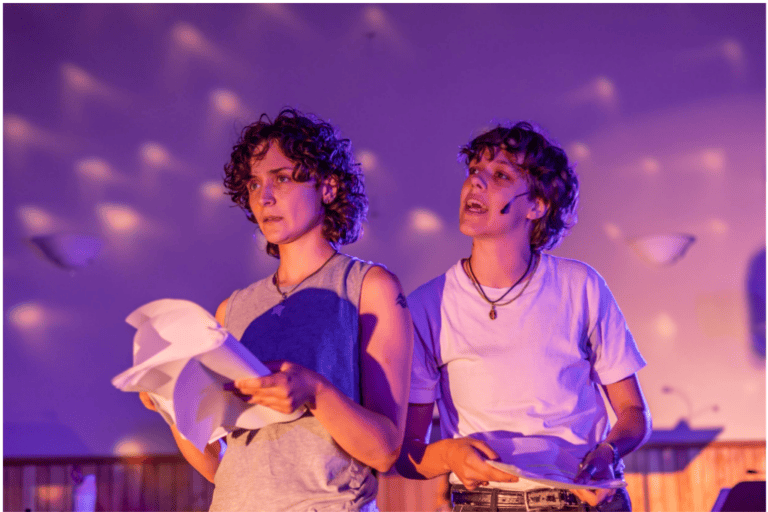 iPhoto caption: Anna Morreale and Luca McPhee perform in 'From Stardust' at the 2025 MADGEN Theatre Festival. Photo by Dave Klassen.
MADGEN Theatre Festival returns to the Danforth
Theatre of the Beat selected four producers under the age of 30 to receive paid mentorship from Toronto theatre-makers. From August 20 to 22, each member of the cohort mounts a new one-act Canadian play.
 iPhoto caption: Steven Sutcliffe and company in 'Twelfth Night.' Photo by Dahlia Katz.
REVIEW: High Park Twelfth Night pays tribute to the crazy things we do for love
As the play’s events ping-pong between seriousness and frivolity, Caroline Toal’s Viola appears constantly aware of the dangerous contradictions in the air, remaining guarded against the chaos' pull — and yet never entirely abandoning the possibility of enchantment.
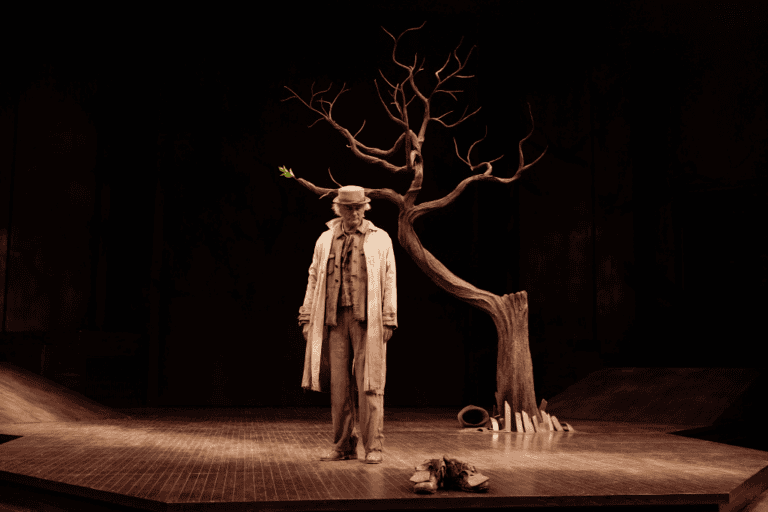 iPhoto caption: Paul Gross in 'Waiting for Godot.' Photo by David Hou.
Why Paul Gross thinks Waiting for Godot is ‘one of the great achievements of human creativity’
“The audience is with you. You bring them in. There isn't a big division between the stage and the audience,” says Gross, currently playing Vladimir in Waiting for Godot at the Stratford Festival. “They’re the final piece of the storytelling. We need them to complete the circle.”
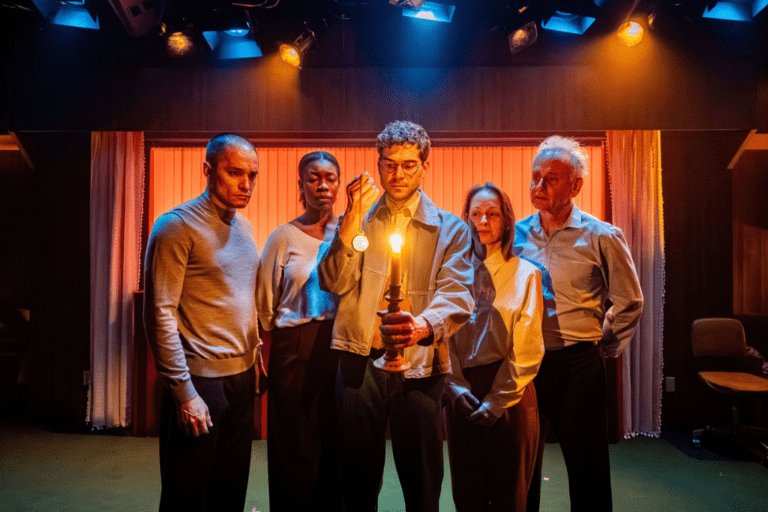 iPhoto caption: Karl Ang, Ivy Charles, Daniel Maslany, Mariya Khomutova, and Alon Nashman in 'The Division.' Photo by Dahlia Katz.
Productions at Crow’s and Theatre Passe Muraille win top honours at the 2026 Dora Awards
This evening at Meridian Hall, the Toronto Alliance for the Performing Arts (TAPA) announced the recipients of the 46th annual Dora Awards, celebrating local theatre, dance, and opera.
Comments