
REVIEW: An homage to Richard Foreman commands us to change our lives — and our theatre
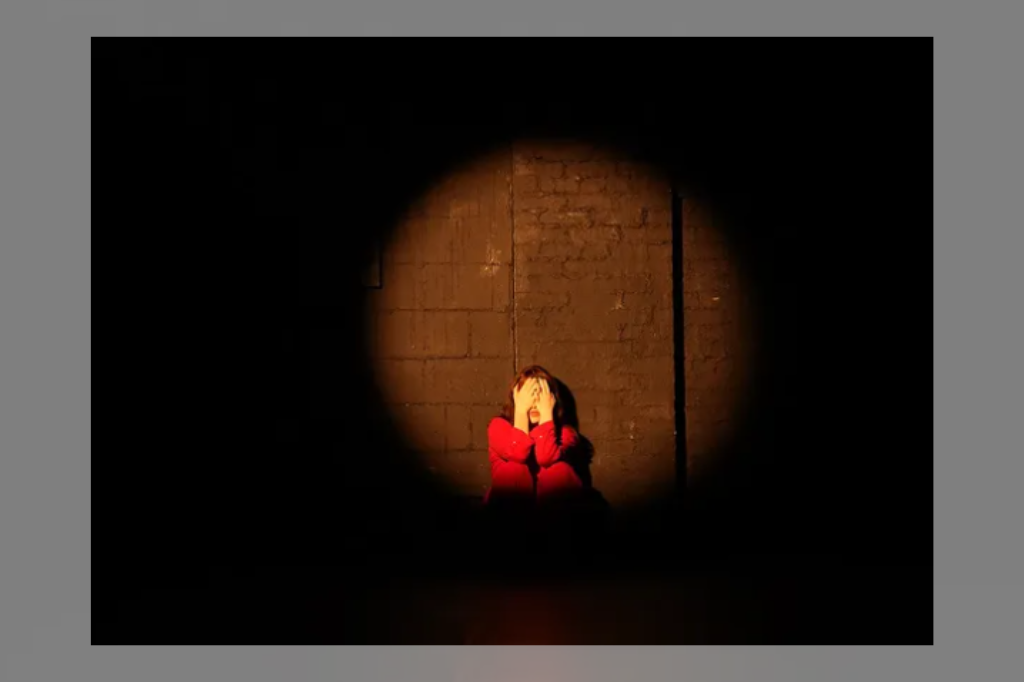 iPhoto caption: Photo by Drew Berry.
Richard Foreman. The perfectly trochaic name calls up a ream of associations: wheat-pasted all-caps posters, Paris and the East Village, the word “ontology,” and — most importantly — several dozen pieces of avant-garde theatre, created over four-and-half decades, performed both for tiny downtown audiences and at major international venues.
The American theatre creator’s plays usually drew on his personal journals and clocked in around 70 minutes; when he passed away last year at the age of 87, he left behind an invitation for directors to create royalty-free work from those journals. With the recently closed You Must Change Your Life at Toronto’s Alumnae Theatre, creator-director Ilana Khanin takes up that offer to ludic, collage-like effect.
“No more theatre,” commands an opening voiceover, echoing Foreman’s belief in breaking from conventional modes of representation. And many of Khanin’s chosen excerpts involve Foreman wrestling with the relationship between interest and beauty. I’m reminded that for many artists, the simple act of deciding to (dis)like something carries great weight, because it’s a reflection of taste, philosophy, and worldview. For Foreman, it’s particularly existential, even anguish-filled: he finds the start of spring depressing, because he can’t compete with its unencumbered beauty — and yet he savours it. We also hear him work through the idea that being tired is uninteresting, but falling asleep is interesting, but dreaming is uninteresting (I buy it).
These reflections arrive through the channel of actors: five women and one man, all seemingly in their 20s or early 30s. There are no character names (story isn’t interesting!), but the Brooklyn-based Annie Hoeg emerges as central: she enters alone and introduces chunks of text that go on to recur throughout the hour-long piece, such as the notion that this light is terrific, and if she just remembers how it feels, she can use it as a benchmark to judge other sensations.
Then enters the emerging Toronto actor Thea Mae Hesler. She and Hoeg transform Foreman’s musings on interest into circular arguments littered with wordplay, while executing blocking that feels rehearsed: they walk in circles, stand on their tip-toes, drop into a slight warrior pose, lie down. These mechanical movements contrast planned moments of failure, where the actors pretend to have forgotten what comes next.
For me, this sparring between Hoeg and Hesler is right on the line of being interesting; the movements are more visually engaging than stillness, but they remain awfully associative — there’s little sense of rise and fall. I would agree with the Hesler-delivered remark that mystery is interesting, and for a time the most mysterious element of the show is Hoeg’s wry performance, which manages to exude a confident, knowing energy without feeling at all smug.
Khanin might sympathize with my assessment of that sequence, because she centres the rest of the show around a handful of attempts to generate interest in more theatrically transformative ways.
The first resembles a surreal film shoot. Other actors from the cast gather to watch Hoeg and Hesler’s dialogue; after it concludes, Hoeg has them use a roll-down backdrop to transform a bare corner of the stage into the set of a house, complete with curtains, a carpet, and windows that go nowhere. Hoeg, seemingly the film’s director, coaches Hesler, her actor, in speaking with inspiration. After a few false starts, she succeeds, launching into a fast-paced stream-of-consciousness monologue about something that happened on a terrasse on a wide boulevard. I found this speech rapturous, not because it’s the closest the script gets to a story — though it is — but because of the way the entire production conspires to make it shimmer. Hesler’s body and voice quiver with emotion; lustrous music, composed by Sam Kaseta, swells; and something pretty happens with the lights (no designers are credited).
Khanin makes the play’s final sequence interesting by combining a similar array of theatrical elements, stacking a unique costume piece (a fluffy coat with a sweeping silhouette), vibrant lighting design (an intense red-blue-green mix, estimates the colourblind critic), comforting music (a glistening piano motif that’d appeared previously), and a contented performance (Hoeg savouring spring under terrific light).
So does the play argue that performance is at its most interesting when different parts of the theatrical apparatus collide in a moment of Gesamtkunstwerk, generating meaning that’s infinitely more complex than a plot alone ever could be? I’d wager not. The play isn’t arguing! It’s thinking, and since it’s theatre, it does that by testing out different ways of transforming bodies, text, and space. (Khanin does a remarkable job of leaning into the uniquely rundown architecture of the 108-year-old Alumnae.) Although the title You Must Change Your Life is mostly an homage to Foreman’s similarly grand statements, I feel the production lives up to this loud proclamation — because most of our lives could do with more theatre that invites the audience to join it in thought.
You Must Change Your Life ran at the Alumnae Theatre from June 11 to 21. More information is available here.
Intermission reviews are independent and unrelated to Intermission’s partnered content. Learn more about Intermission’s partnership model here.
Liam Donovan
Liam is Intermission’s senior editor. He lives in Toronto. His Substack newsletter is available at loamdonovan.substack.com.
LEARN MORE iPhoto caption: Stratford's Tom Patterson Theatre. Photo by Ann Baggley.
2027 highlights include a new Canadian Jacob Two-Two musical and two of the Bard’s thornier plays: The Merchant of Venice and The Taming of the Shrew.
 iPhoto caption: Devon Michael Brown as Rusty Charlie with members of the 'Guys and Dolls' company.
“It's so exhausting, but it's really rewarding when you get to dance so full-out,” says Devon Michael Brown. “You get to use your technique and your training to the fullest extent.”
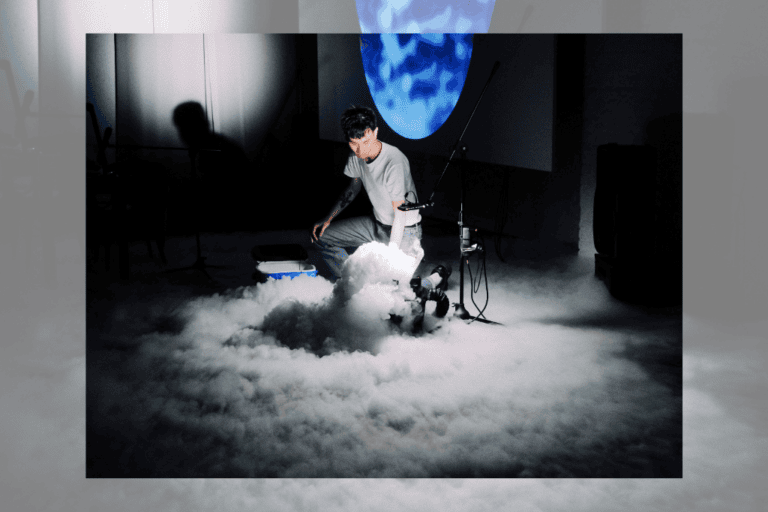 iPhoto caption: Ping-Hsiang Wang in 'Retina Maneuver.' Photo by Hang Su.
REVIEW: At this year’s SummerWorks Performance Festival, physical storytelling is central
From a dancer becoming a canine to a shy theatre director practicing his swordsmanship, the shows I’ve seen so far use performers’ bodies to dramatize defiance.
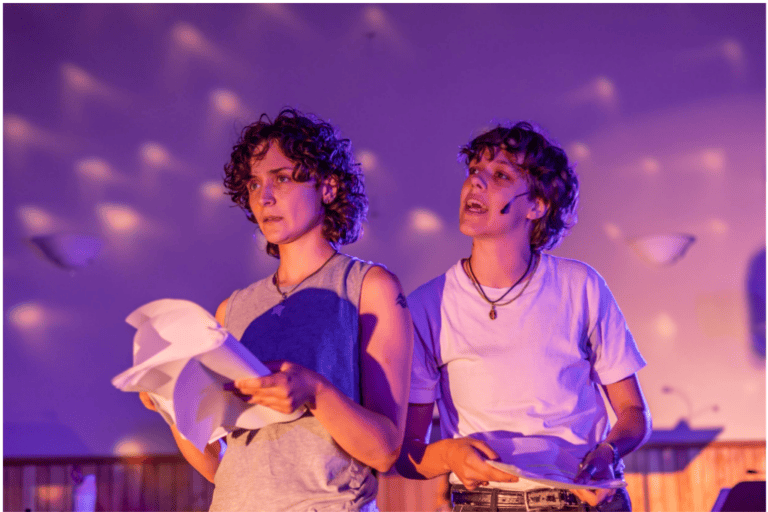 iPhoto caption: Anna Morreale and Luca McPhee perform in 'From Stardust' at the 2025 MADGEN Theatre Festival. Photo by Dave Klassen.
MADGEN Theatre Festival returns to the Danforth
Theatre of the Beat selected four producers under the age of 30 to receive paid mentorship from Toronto theatre-makers. From August 20 to 22, each member of the cohort mounts a new one-act Canadian play.
 iPhoto caption: Steven Sutcliffe and company in 'Twelfth Night.' Photo by Dahlia Katz.
REVIEW: High Park Twelfth Night pays tribute to the crazy things we do for love
As the play’s events ping-pong between seriousness and frivolity, Caroline Toal’s Viola appears constantly aware of the dangerous contradictions in the air, remaining guarded against the chaos' pull — and yet never entirely abandoning the possibility of enchantment.
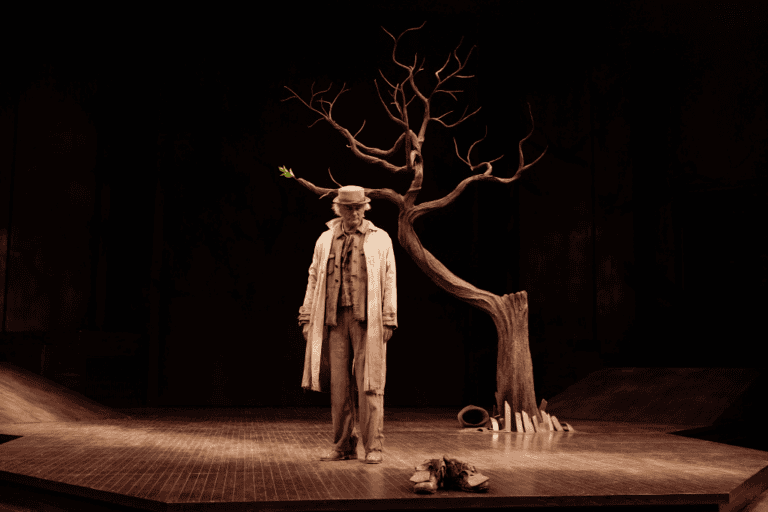 iPhoto caption: Paul Gross in 'Waiting for Godot.' Photo by David Hou.
Why Paul Gross thinks Waiting for Godot is ‘one of the great achievements of human creativity’
“The audience is with you. You bring them in. There isn't a big division between the stage and the audience,” says Gross, currently playing Vladimir in Waiting for Godot at the Stratford Festival. “They’re the final piece of the storytelling. We need them to complete the circle.”
Comments