
REVIEW: The Man That Got Away (A Special Appearance) at Buddies in Bad Times Theatre

So, who is this man who got away, anyhow?
Well. That’s a complex question.
Martin Julien is an actor and theatre scholar whose growing-up was anything but normal. His father was gay, his mother lesbian, two queer folks in a straight marriage with a straight kid. Julien practically grew up with a third parent, given his father’s love for Judy Garland, and that love survived the generational gap — even now, Julien internalizes Garland’s legacy, and in The Man That Got Away (A Special Appearance), Garland appears as a ghost, armed with sage advice and the occasional song.
The Man That Got Away is, by and large, a solo show, in which Julien walks us through the complications of his coming-of-age, introducing us to his parents through storytelling and recorded interview snippets. Occasionally, the solo-ness of the show dissipates, giving way to Tat Austrie’s take on Garland. Austrie’s a commendable stand-in — with a similar smoky voice and boisterous presence — and designer Sean Mulcahy’s costumes further cement Austrie as Garland, clad in a sequin suit which echoes the late actress’.
Julien’s a captivating storyteller, and the convergence of the interview excerpts with his monologue creates a varied, layered narrative that never feels like an extended game of “remember when?.” But even at its most engaging, The Man That Got Away runs a long two-and-a-bit hours. Julien’s storytelling is poignant, raw, and ultimately touching, but it feels like there’s room for further trims of repeated motifs. A tighter script doesn’t feel so far off — and the show’s heart is so big that it more than deserves further polish.
As well, Julien’s engagement with the ghost of Garland is fascinating — and opens up questions on the ethics of putting words in her mouth. Julien masterfully approximates Garland’s cadence and lexicon, and has made the choice to appoint Austrie-as-Garland as a sort of confidant. Peter Hinton-Davis has directed this choice well, drawing the audience’s gaze towards Austrie when needed and diverting it back towards Julien as his life story gets closer and closer to the present moment. But dramaturgically, I’m not sure where I stand on Garland-as-conscience. As she quite rightly says in The Man That Got Away, she was used for others’ narrative gain plenty when she was alive — Julien’s words on her behalf point out that problem, but arguably contribute to it, too.
What prevails, however, are the three knockout performances which anchor the show: Julien as himself, Austrie as Garland, and Ben Page on the twinkling piano keys. The chemistry between the three performers is charming and friendly, familiar and jovial, and contrasts some of the emotional awkwardness we come to recognize as typical between Julien’s parents. The story of his parents and their eventual deaths is heavy; the music shared between the three artists onstage never is.
This is a solid outing for what could be a gem of a solo show with further workshopping and disciplined cuts. Julien has an intriguing and potentially appealing project here — I hope he keeps at it as the material continues to settle.
The Man That Got Away (A Special Appearance) closed at Buddies in Bad Times Theatre on December 18. More information can be found here.

Aisling Murphy
Aisling is Intermission's former senior editor and the theatre reporter for the Globe and Mail. She likes British playwright Sarah Kane, most songs by Taylor Swift, and her cats, Fig and June. She was a 2024 fellow at the National Critics Institute in Waterford, CT.
LEARN MORE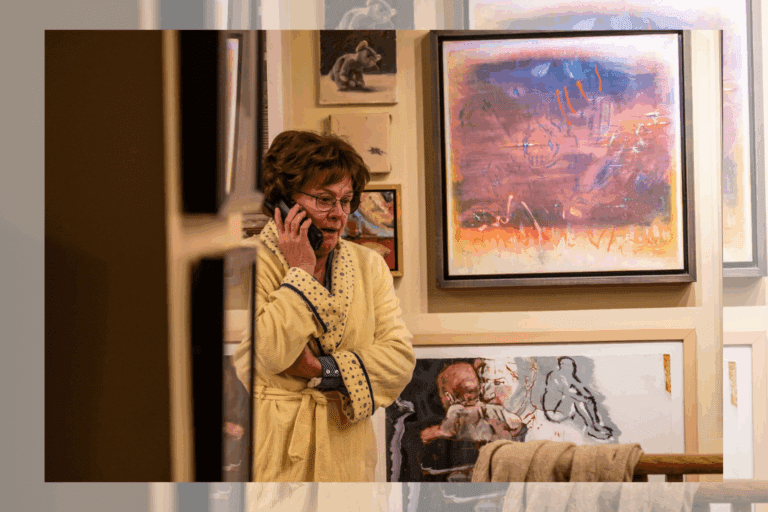 iPhoto caption: Jane Spidell in 'Twelve Dinners.' Photo by Dahlia Katz.
REVIEW: Family tensions run high in TIFT’s intimate Twelve Dinners
In the now-closed Twelve Dinners, an autobiographical play written and directed by Steve Ross, audiences received intimate access to an unvarnished version of a younger Ross through 12 evening meals with his parents.
 iPhoto caption: Members of the company of 'Narnia.' Photo by Dahlia Katz.
REVIEW: Bad Hats’ Narnia is a joyful, heartwarming escape
The spirit of openness and the joy of discovery rule over this Narnia. Open the wardrobe and see.
 iPhoto caption: Members of the company of 'Robin Hood.' Photo by Dahlia Katz.
REVIEW: Canadian Stage’s Robin Hood panto is anti-capitalist fun for the whole family
Following Ross Petty’s legacy of scene-stealing, Damien Atkins as the evil Prince John is easily the greatest delight of the show.
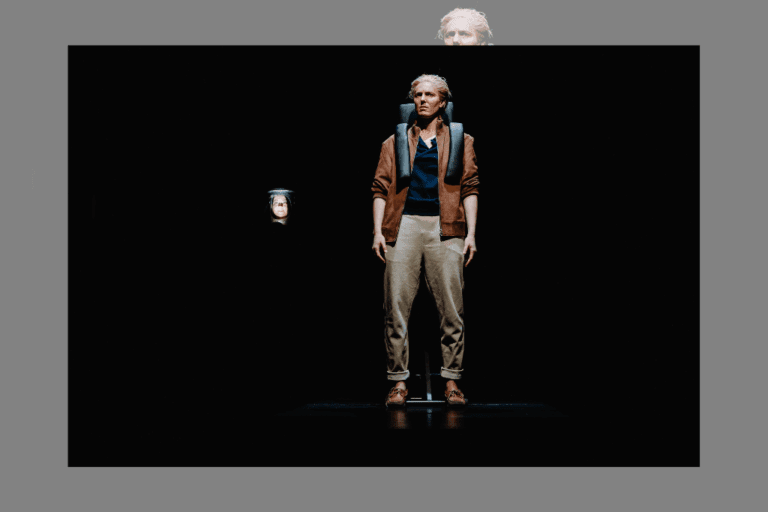 iPhoto caption: Lauren Gillis and Alaine Hutton in 'Public Consumption.' Photo by Eden Graham.
REVIEW: Lester Trips’ stylish Public Consumption captures the internet’s profound emptiness
Rather than directly representing online life, Public Consumption speculates — with virtuosity — about how the digital world affects our bodies. And the show's findings are by no means comfortable.
 iPhoto caption: Tony Ofori and Daren A. Herbert in 'Moonlight Schooner.' Photo by Dahlia Katz.
Kanika Ambrose’s Moonlight Schooner is animated and visually stunning, but its individual pieces don’t come together as neatly as I would've expected.
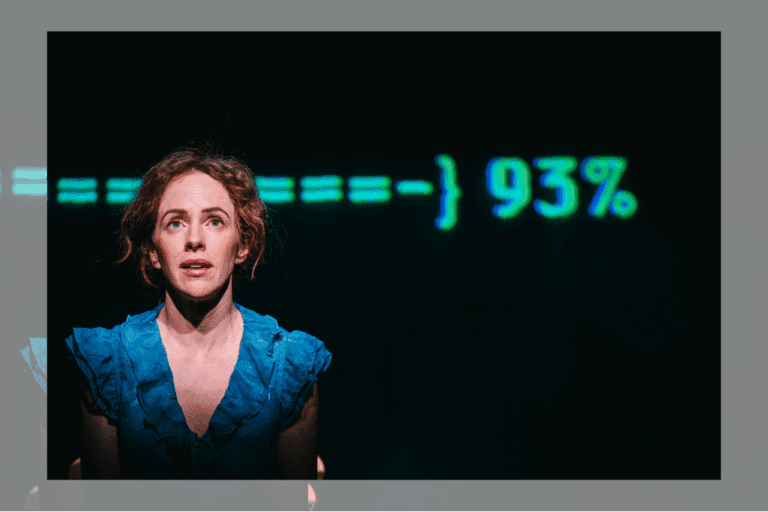 iPhoto caption: Fiona Mongillo in 'Reproduktion.' Photo by Ann Baggley.
REVIEW: Here For Now’s well-acted Reproduktion attempts to tackle too much
Amy Rutherford’s world premiere script is ambitious and the material it covers is complex — but the narrative feels disjointed.
 iPhoto caption: Photo by Aisling Murphy.
In the darkest months of Yukon winter, it’s all about the Sun Room
I’m here for a week in January as a guest of Nakai Theatre, a hub for theatrical experimentation and outside-the-box programming in Canada’s westernmost territory.

Armchairs, tattoos, and an online theatre magazine
When I started at Intermission, my world was limited to the confines of an armchair. Arts journalism was a high it felt dangerously fruitless to chase. The life stretched ahead of me was amorphous and frightening, a chasm filled with hand sanitizer and immigration concerns. It was worth crying over a spilled kombucha and scrubbing at the stain.
 iPhoto caption: Liz Appel headshot courtesy of Liz Appel.
Five questions with Wights playwright Liz Appel
Intermission spoke with Appel over email for a brief Q&A about Wights, now playing at Crow’s Theatre until February 9.

Call for applications: Publishing and editorial assistant
Intermission Magazine is seeking a dynamic and collaborative individual to join our team.
 iPhoto caption: What Writing Can Do: The 2025 Musical Theatre Critics Lab
Announcing What Writing Can Do: The 2025 Musical Theatre Critics Lab
What Writing Can Do is timed to coincide with the Grand and Theatre Aquarius’ co-production of Waitress, which will serve as a jumping-off point for discussions throughout the Lab.
 iPhoto caption: A Christmas Story production still by Dahlia Katz.
REVIEW: A Christmas Story feels fresh at Theatre Aquarius
If you want to catch A Christmas Story before it closes, good luck — the show is close to sold out, and with the talent on that stage, it’s not hard to see why.
Comments