
REVIEW: The Lehman Trilogy is a major win for Canadian Stage
 iPhoto caption: Photo by Dahlia Katz.
This continent is one held up by dynasties.
I mean, take your pick: the Bushes of American politics, the Sacklers of Purdue Pharma, or perhaps more locally, the Sahotas of Vancouver slums. While the American Dream might be predicated on the myth of individualism, it’s only kept alive for long stretches of history when that individual procreates and thus expands their empire.
So it goes with the Lehman brothers.
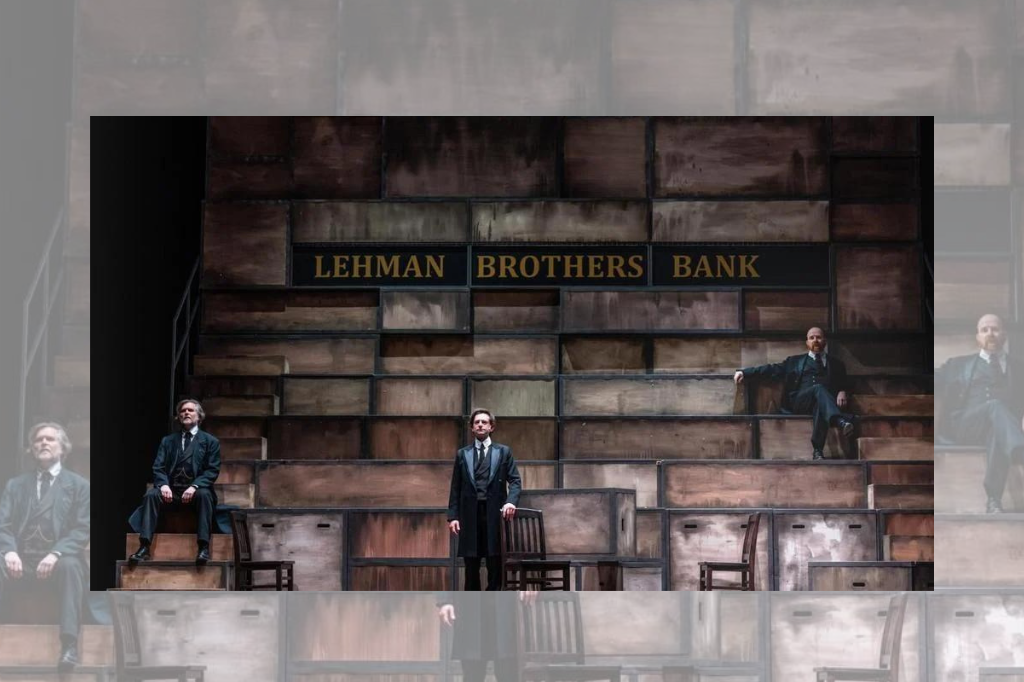
The Lehman Trilogy, presented by Canadian Stage in a luminous production at the Bluma Appel Theatre, theatricalizes the family often erroneously blamed for the 2008 financial crisis. Starting in the 19th century, Stefano Massini’s play, as adapted by Ben Power and directed by Philip Akin, traces the Lehmans from their first steps off the boat from Germany until their ultimately tragic downfall. A sprawling work, the production unfurls over three hours and with two intermissions, using three knockout actors to portray several generations’ worth of Lehmans.
In his recent Intermission Spotlight, Akin hinted at a design element in The Lehman Trilogy that would scream from the stage. (He brought it up again when I interviewed him for CP24.) And oof, what an element it is. Camellia Koo’s set resembles a set of risers or bleachers, with movable blocks and very steep stairs that serve as a playground for the Lehmans as they assemble (and destroy) their various companies on their climb to unthinkable wealth. But holding those steps up is a thin platform of human feet, their soles facing out towards the audience and their toes pointed to the actors above them, always visible and always a gut punch of raw symbolism in a play that in the wrong hands could be bogged down in financial history. These are the feet of the slaves who picked the cotton the Lehmans would eventually convert into fabric; the feet of the Lehmans’ rotting ancestors; the feet of the Indigenous communities crushed by European settlers; the feet of the swathes of lower classes breaking under capitalism’s relentless thrust forward. Akin’s right to have bragged about the impact of those feet – they’re quite a presence.
But it’s perhaps the more vital feet (and the actors attached to them) who make The Lehman Trilogy in all its heft feel so engaging and at times, even funny. Ben Carlson is Henry, commanding and shrewd, in a performance that echoes The Master Plan, in which Carlson’s character also slipped into the politics of society’s upper echelon. Graeme Somerville plays Emmanuel, the middle brother, the brawn of the Lehman kingdom. And Jordan Pettle is Mayer, often referred to as “the potato” of the Lehman family, its frequent comic relief. There’s a comparison to be made between the Lehmans as portrayed in this staging of their story and the members of the alternative rock band boygenius: in each there’s the soft one, the angry one, and the small one.
What’s brilliant in Akin’s production of The Lehman Trilogy is the extent to which it generalizes the atrocities of capitalism, and zooms out on American economics to shine a light on the bodies holding it up. One need not look far to see how Lehmanesque finances have reared their ugly heads in Toronto – the local housing market is evidence enough of that.
Perhaps my only qualm with the play is, well, the play. The first act of Massini’s text and Power’s adaptation focuses on the early years of the Lehman brothers; the second moves forward to the years leading up to the Great Depression; and the third covers… the tail end of that second timeframe, as well as a mad rush toward the Great Recession of the late 2000s. That’s a lot to squeeze in! It’s frustrating how solidly paced the first half of the play is, only for its back half to feel so incomplete and haphazard. Akin’s handling of this issue is mostly elegant, and where the text calls for it, he leans into the chaos, having his actors toss boxes, clamber up and down the stairs, and revel in practical stage effects I won’t spoil here. But still, it shows when the play itself begins to lose steam.
The Lehman Trilogy signifies one hell of a win for Canadian Stage, in a production I suspect will top many “best-of” lists next month. This is Akin at his A-game and a play whose message demands to be heard – and, in the case of those haunting feet, seen.
The Lehman Trilogy runs at the Bluma Appel Theatre until December 2. Tickets are available here.
Intermission reviews are independent and unrelated to Intermission’s partnered content. Learn more about Intermission’s partnership model here.

Aisling Murphy
Aisling is Intermission's former senior editor and the theatre reporter for the Globe and Mail. She likes British playwright Sarah Kane, most songs by Taylor Swift, and her cats, Fig and June. She was a 2024 fellow at the National Critics Institute in Waterford, CT.
LEARN MORE iPhoto caption: Members of the company of 'Narnia.' Photo by Dahlia Katz.
REVIEW: Bad Hats’ Narnia is a joyful, heartwarming escape
The spirit of openness and the joy of discovery rule over this Narnia. Open the wardrobe and see.
 iPhoto caption: Members of the company of 'Robin Hood.' Photo by Dahlia Katz.
REVIEW: Canadian Stage’s Robin Hood panto is anti-capitalist fun for the whole family
Following Ross Petty’s legacy of scene-stealing, Damien Atkins as the evil Prince John is easily the greatest delight of the show.
 iPhoto caption: Lauren Gillis and Alaine Hutton in 'Public Consumption.' Photo by Eden Graham.
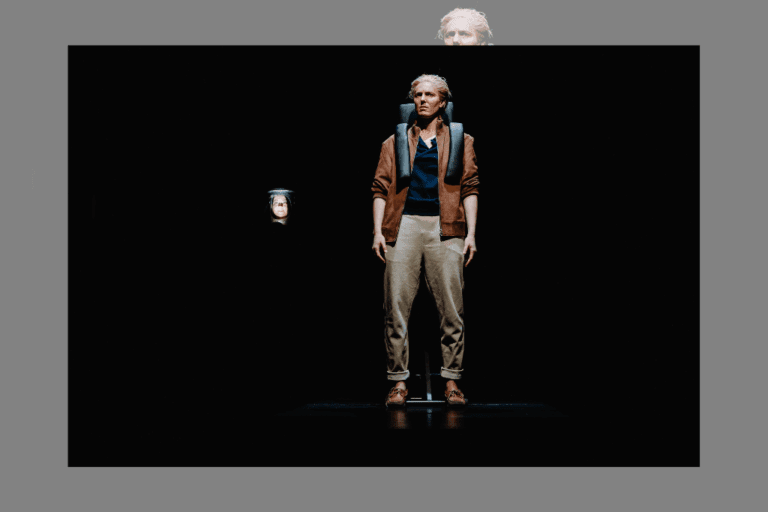
REVIEW: Lester Trips’ stylish Public Consumption captures the internet’s profound emptiness
Rather than directly representing online life, Public Consumption speculates — with virtuosity — about how the digital world affects our bodies. And the show's findings are by no means comfortable.
 iPhoto caption: Tony Ofori and Daren A. Herbert in 'Moonlight Schooner.' Photo by Dahlia Katz.
Kanika Ambrose’s Moonlight Schooner is animated and visually stunning, but its individual pieces don’t come together as neatly as I would've expected.
 iPhoto caption: Fiona Mongillo in 'Reproduktion.' Photo by Ann Baggley.
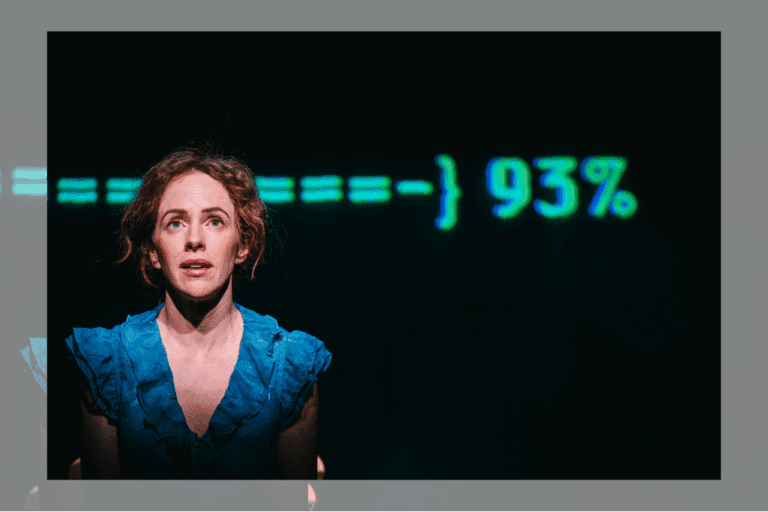
REVIEW: Here For Now’s well-acted Reproduktion attempts to tackle too much
Amy Rutherford’s world premiere script is ambitious and the material it covers is complex — but the narrative feels disjointed.
 iPhoto caption: Kristen Thomson in 'Fulfillment Centre.' Photo by Elana Emer.
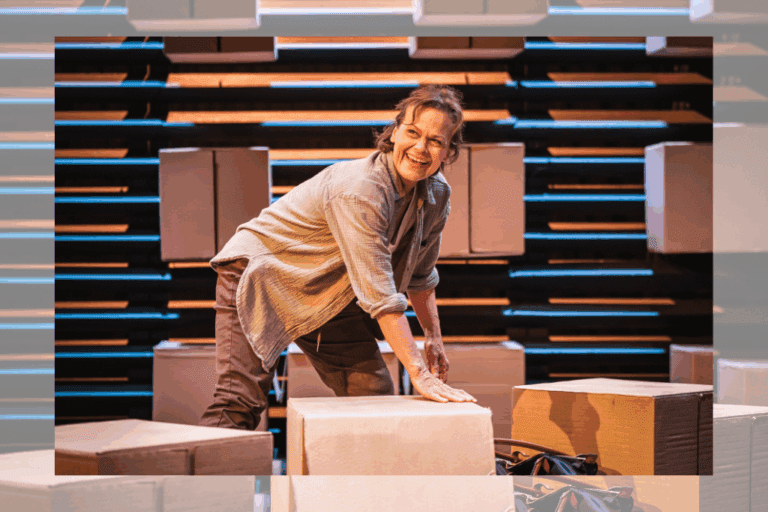
REVIEW: Coal Mine’s Fulfillment Centre asks how we end up alone, together
The production understands the play’s themes, yet feels limited by a script that delivers a package it never fully opens.
 iPhoto caption: Photo by Aisling Murphy.
In the darkest months of Yukon winter, it’s all about the Sun Room
I’m here for a week in January as a guest of Nakai Theatre, a hub for theatrical experimentation and outside-the-box programming in Canada’s westernmost territory.

Armchairs, tattoos, and an online theatre magazine
When I started at Intermission, my world was limited to the confines of an armchair. Arts journalism was a high it felt dangerously fruitless to chase. The life stretched ahead of me was amorphous and frightening, a chasm filled with hand sanitizer and immigration concerns. It was worth crying over a spilled kombucha and scrubbing at the stain.
 iPhoto caption: Liz Appel headshot courtesy of Liz Appel.
Five questions with Wights playwright Liz Appel
Intermission spoke with Appel over email for a brief Q&A about Wights, now playing at Crow’s Theatre until February 9.

Call for applications: Publishing and editorial assistant
Intermission Magazine is seeking a dynamic and collaborative individual to join our team.
 iPhoto caption: What Writing Can Do: The 2025 Musical Theatre Critics Lab
Announcing What Writing Can Do: The 2025 Musical Theatre Critics Lab
What Writing Can Do is timed to coincide with the Grand and Theatre Aquarius’ co-production of Waitress, which will serve as a jumping-off point for discussions throughout the Lab.
 iPhoto caption: A Christmas Story production still by Dahlia Katz.
REVIEW: A Christmas Story feels fresh at Theatre Aquarius
If you want to catch A Christmas Story before it closes, good luck — the show is close to sold out, and with the talent on that stage, it’s not hard to see why.
Comments