
‘It’s democratizing theatre’: How PlayMe brings the best of Canadian theatre straight to audience’s ears

While the theatre-going experience typically involves the engagement of both the auditory and visual senses, it is also possible to be immersed into a play’s universe through nothing but sounds — allowing one’s imagination to do the rest. Just ask Laura Mullin and Chris Tolley, co-artistic directors of Expect Theatre and hosts of the podcast PlayMe, produced in partnership with CBC Podcasts.
The popular podcast, which also airs on CBC Radio twice a week, transforms some of the very best of Canadian theatre into compelling audio stories, making them accessible to a much wider audience — one that isn’t held back by economic, physical, or geographic barriers.
“It’s democratizing theatre and making it available to everyone and anyone at any time,” Mullin said in an interview. “Obviously not in the same form as being live on stage, but in a different way — incorporating the theatre of the mind.”
Mullin and Tolley are both theatre artists with audio experience, so the concept was a natural marriage of their mutual skills and passions. After conceiving the idea in 2016, they were given a small grant by the Toronto Arts Council, allowing them to run the podcast independently for two years before being picked up by CBC in 2018. They’ve produced more than 150 episodes to date and collected a host of honours, including a Webby Award in 2016 and a New York Festivals Radio gold medal in 2020.
Each season of the podcast features a selection of various plays from across the country, in addition to interviews with the playwrights behind them. Some of the works featured in previous seasons include Marcia Johnson’s Serving Elizabeth, Michele Riml’s Sexy Laundry, Keith Barker’s This Is How We Got Here, Jordi Mand’s Between the Sheets, and Cliff Cardinal’s Huff.
Producing the episodes involves bringing the cast into the studio — a step that was done remotely during the pandemic — and recording the plays in sequence, without blocking, forcing the actors to physicalize everything from fist fights to kissing scenes with just their voices. During post-production, they’ll recreate any sound effects they can right there in the studio, and anything they can’t record themselves is taken from a library of pre-recorded sounds.
“All these little sound effects can tell so much of the story,” Tolley said.
When it comes to their play selection process, Tolley says the most important factor is ensuring a wide range of diversity. That means diversity from across the country, diversity in the form, and diverse voices with different stories to tell.
“Canada truly is this incredible mosaic,” Tolley said. “We want to slot in the best of the best from across the country and really represent the whole region and the whole country itself.”
PlayMe’s upcoming season includes a variety of plays, all of them crowd favourites, including Crow’s Theatre’s Uncle Vanya, Punctuate! Theatre’s First Métis Man of Odesa, and Trey Anthony’s da kink in my hair.
Certain shows easily lend themselves to the audio format, Mullin says, which also helps with the selection process. While a live play can take its time to get into the story because it has a captive audience, a podcast must grab a listener’s attention from the get-go.
“We want to make sure we’re programming shows that are really about something that’s in the zeitgeist,” Mullin said. “Something that people are talking about or should be talking about or are afraid to talk about — juicy, meaty shows with great dialogue and great characters.”
And while PlayMe’s audience is of course made up of theatre people, many “general audience” members also tune in: people who might become theatre people if they just get a proper introduction. The PlayMe team believes offering these plays through audio, for free, actually results in more tickets bought in theatres across the country, not fewer.
“We think about what’s going to be a show that will be a nice entryway into theatre, something that will hopefully transform somebody who never thought of themselves as a theatre person into a theatre person,” Tolley said.
Artistic directors from across Canada are also among the podcast’s listeners. Sometimes, they’re so impressed by what they hear that they pick up a play for production, giving it a second life it might not otherwise receive.
And though Mullin and Tolley don’t have access to their exact number of listeners since joining the CBC, they say they were quite surprised to see the number of listeners from outside Canada when they were running the podcast independently.
“I think as Canadian theatre artists, we sometimes like to downplay our contribution,” said Tolley. “But when you actually see people around the world hungry for Canadian stories, you realize we have an awful lot to contribute.”
PlayMe’s newest season launches on January 10 with Uncle Vanya. You can learn more about the podcast here.

Mira Miller
Mira is an arts, lifestyle, and health freelance writer based in Toronto. She covers intersectional feminism, issues affecting the 2SLGBTQ+ community, theatre, body image, and more. In her spare time, you can find her listening to the soundtrack of a musical, watching Broad City, or dreaming about her next meal.
LEARN MORE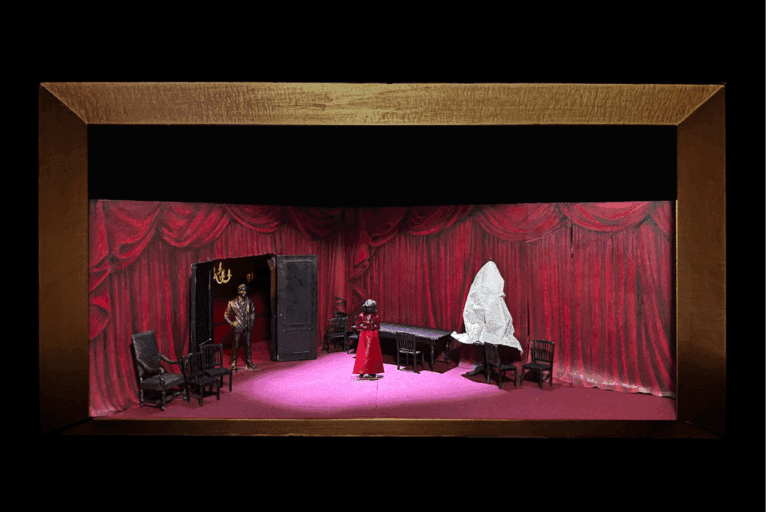 iPhoto caption: Design rendering for 'A Doll's House,' set designed by Gillian Gallow and directed by Brendan Healy for Canadian Stage.
In Canadian Stage’s A Doll’s House, the house is a window within
“It is more about how Nora feels inside the space,” says set and costume designer Gillian Gallow. “It's also that difference between house and home — the house is the object, but the home is actually the feeling.”
 iPhoto caption: L: Lara Arabian in promo still for 'Siranoush.' Photo by Robert J. Brodey.
R: Babz Johnston as Ginger Spice in Wannabe: A Spice Girls Tribute. Photo by Screamsmedia.
iPhoto caption: L: Lara Arabian in promo still for 'Siranoush.' Photo by Robert J. Brodey.
R: Babz Johnston as Ginger Spice in Wannabe: A Spice Girls Tribute. Photo by Screamsmedia.
“It feels lovely to be in this curated window of [the festival],” says Siranoush writer-performer Lara Arabian. "We are excited to have a conversation with the Fringe audience.”
 iPhoto caption: Photo by Randy deKleine-Stimpson.
GCTC solo show traces the complex journey of parenting a trans child
“At the end of the day, the play is trying to show the messiness of parenthood, that it's not about perfection,” says Why It’s imPossible playwright Sophia Fabiilli ahead of the show’s run at the Great Canadian Theatre Company in Ottawa. “It's about finding where the discomfort is.”
 iPhoto caption: Kiera Publicover in Isle of Demons. Images courtesy of Guild Festival Theatre.
Isle of Demons blends hope and grief at Guild Festival Theatre
“It's a really powerful piece for right now,” says actor Kiera Publicover. “We see so much grief going on around us all of the time and sometimes it feels impossible to fight through it, but at the end of the day, it's the hope that gets us through.”

Inside three mouth-watering shows at Toronto Fringe 2024
Intermission sat down with the creative masterminds behind three highly anticipated Fringe shows to get the inside scoop on what goes into creating a smash hit.
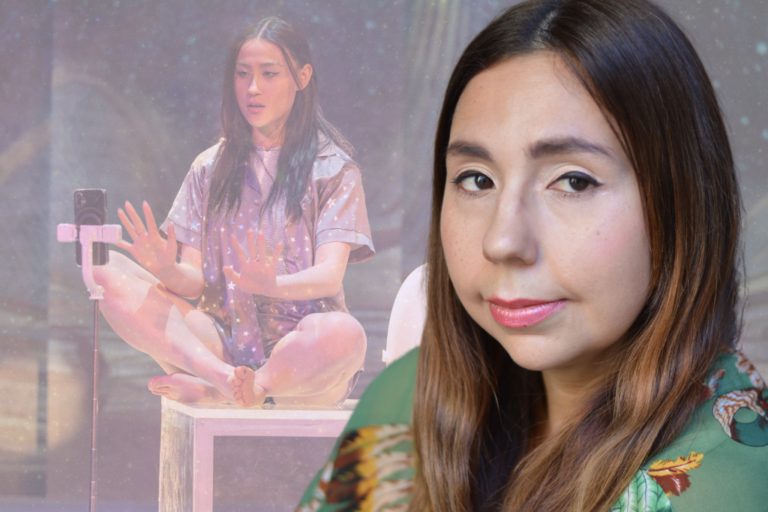 iPhoto caption: Production photo by Joey Senft.
An intergalactic influencer tackles colonization in Space Girl at Prairie Theatre Exchange
Space Girl explores the concept of social media and the power it holds — a topic deeply important to playwright Frances Koncan.
Comments