
At the Confluence of Many Worlds: In Conversation with Crypto’s Guillaume Côté
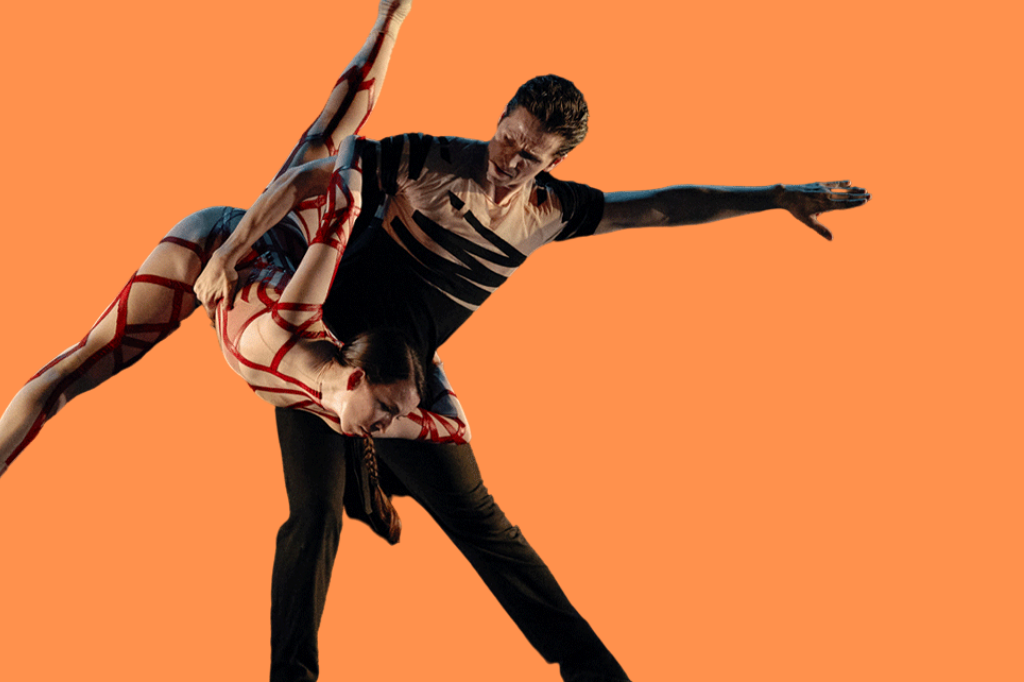
“I’m not afraid of combining things that don’t always go together logically.”
That may as well be Guillaume Côté’s artistic modus — or even a micro-autobiography. I’m speaking with the choreographic artist and principal dancer for National Ballet of Canada from his Alma, Quebec birthplace, the trailhead of a “path that is kind of a Billy Elliot story.” Côté’s preparing to perform Crypto for the industrial town of 25,000, and his excitement at having two sold-out weekend shows (“which is UNHEARD OF for a dance performance in Northern Quebec!”) is palpable.
Crypto, Canadian Stage’s upcoming 21-22 season finale in co-production with TO Live, exists at the confluence of many worlds — just like Côté. The dancer and choreographer’s new work (originally planned to debut in 2020) converses “raw contemporary form and classical ballet.” But it also brings in a host of other collaborators, including projections by mirari, score by composer Mikael Karlsson, and original text by Pulitzer Prize-winning librettist Royce Vavrek.
Crypto began when Côté approached Vavrek with the idea of crafting a story that would complicate balletic tradition.
“In the ballet world, we always play with these fairy-tales, but I wanted to know if there was potential in developing new narratives in that format.”
Vavrek’s “incredibly scandalous” result is more Black Swan than Swan Lake. And no, it has nothing to do with cryptocurrencies (sorry, Bay Street). The “crypto” here is the cryptozoological: think Loch Ness Monster, Bigfoot, and other mythical beings. The story portrays a couple (Côté and NBC alum Greta Hodgkinson) looking to reignite their marriage by bringing in a romantic third party. Enter Casia Vengochea, depicting a cryptozoological creature and the mutual object of the couple’s desire. Employing a plastic surgeon (Natasha Poon Woo) in an effort to “domesticate and keep this creature for themselves,” the story is a haunting reflection on the pitfalls of humanity’s interactions with nature.
Côté is aware that Crypto’s central tensions reflect those of a society all too familiar with “containing” the coronavirus, forest fires, and other forces of nature.
When asked by folks at Canadian Stage if he thought the project would still be relevant post-pandemic, Côté emphatically said yes. “The moral of the story rotates around us trying to control nature, and in order to do that, we ruin it. I love that message; I feel like it’s very true now more than ever.”
But he also recognizes how lockdowns tested interpersonal relationships similar to those of Crypto’s protagonists.
“In the pandemic, I think a lot of people questioned their personal relationships…we were all together all the time, and it made for a lot of tension. We realized: it doesn’t matter what we go outside of a relationship to spice it up with, it’s doomed to stay in a stagnant situation if we don’t address what’s at its core.”
Pursuing deep connections with such a close group of artists seems to offset any such spiritual stagnation in Côté’s work. This is evident in the glowing language Côté uses to describe the prowess of his Crypto collaborators. While Côté and Hodgkinson are seasoned contemporary ballet practitioners who “reside within that vocabulary,” Vengochea is a highly sought-after contemporary dancer in Europe, one who “lives in a world of complete bizarre contemporary acrobatics.” Côté’s individualized choreographic approach aims to best showcase her one-of-a-kind skillset, an important goal for a choreographer wanting to demonstrate that “it’s almost like she has no spine.” Vengochea diametrically opposes Poon Woo, “an incredibly precise, incredibly exact, and unbelievably musical” dancer who uniquely converses with Vengochea’s elasticity. With “four different movement qualities from four different characters,” Crypto is as much a display of each dancer’s unique artistry as it is a testament to Côté’s compositional expertise.
This all lends itself to the responsibilities Côté feels as a choreographer. Citing inspirations like Robert Lepage, Crystal Pite, and Wayne McGregor, Côté does not think that compositional expertise alone is their key to making profound work.
“The greatest gift they have is the gift of communicating with their dancers what and how they can invest themselves personally into someone else’s vision,” he says.
This philosophy extends to Côté’s willingness in collaborating with other artforms, an intermedial approach that allows him to discover “so many beautiful ways of finding movement and dance everywhere” as he does with Crypto. For all stages of Côté’s process, there is “always a level of collaboration, even when it’s just tights and lights.”
It is Côté’s openness to conversing with new people and forms that lends his work the originality he sets out to achieve. “One of the major things that I am aware of in the age of the internet is regurgitation,” he says.
“A lot of artists will see something online and just recreate the same thing, and a lot of it is not conscious. We want to see what we have seen already. When I find a collaborator and it works, it steers me away from what I would normally create.”
But Crypto also represents a shift in Côté’s fundamental intentions: he is now creating art for himself, and not to prove something to others. For many performers in 2022, the return to performance is prefaced by returning to a better stage than what was left behind. And for Côté, this means leaving the competitive mindset of his classical training to the past.
“In the ballet world, there’s always this obsession with ‘what are people thinking, and what if…’ and you start creating things for people to like it. You have this kind of ‘love me! Love me!’ mentality because in ballet it’s so competitive; you have to compete for attention. This is the first project where I stop trying to do that.”
For Côté, Crypto is an important turning point.
“It’s the first time that I did all of this because I wanted to.”
You can find out more about Crypto here.
Martin Austin
Martin Austin is a PhD student at the University of Toronto’s Centre for Drama, Theatre & Performance Studies. Martin’s research explores the past and current state of ethics in Euro-American dance practice. He is research assistant for Category Is, a study of house ballroom communities in Toronto and Montréal, and lead administrative coordinator of the Institute for Dance Studies.
LEARN MORE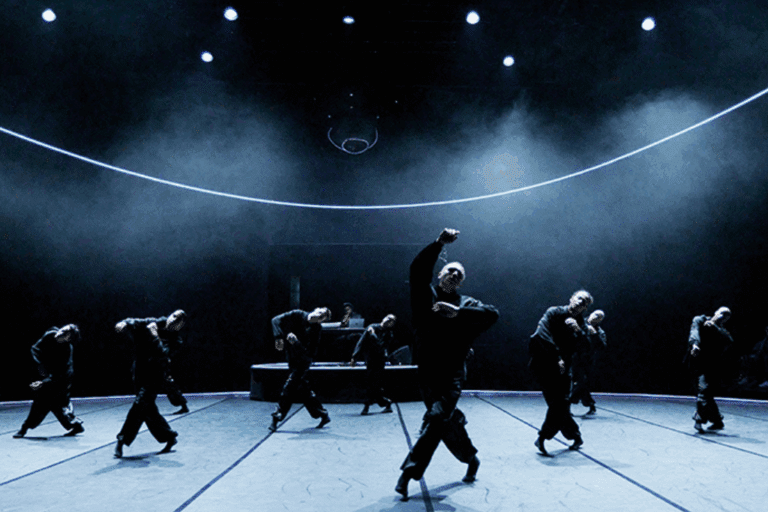 iPhoto caption: Photo by Fabian Hammerl.
In A a | a B : B E N D, choreographer Aszure Barton aims to rebuild dance from the inside out
“It’s so easy to over-intellectualize dance in general, but B E N D is about hearing and moving to cool-ass music together,” says Barton ahead of the show's run at the Bluma Appel Theatre.
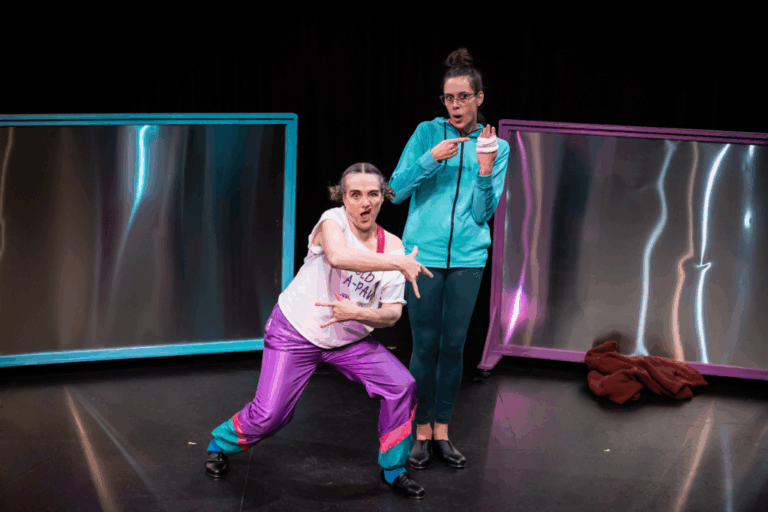 iPhoto caption: Elinor Holt and Ellen Close in 'How Patty and Joanne Won High Gold at the Grand Christmas Cup Winter Dance Competition.' Photo by Benjamin Laird.
“We’re living in a world right now where failure is not an option,” says actor Elinor Holt. “And a lot of times people would rather not try anything at all, rather than try something and risk failing at it.”
 iPhoto caption: Jane Spidell as Bettye, Kevin Bundy as Jim, and Noah Beemer as Steve in 'Twelve Dinners.' Photo by Dahlia Katz.
With TIFT’s Twelve Dinners, actor Steve Ross makes the leap to playwright-director
"I love sitting with the actors before rehearsals and discussing, especially when they ask questions,” says Ross. “I love the blocking and staging. I love directing my own work, but find it challenging."
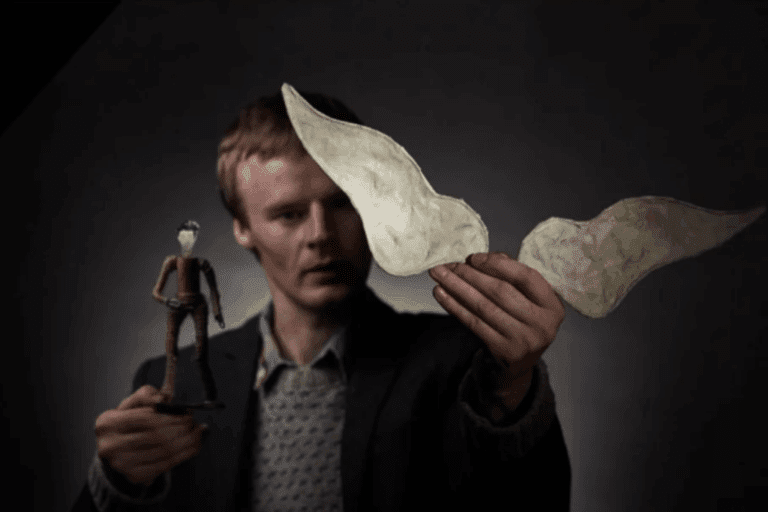 iPhoto caption: Manus Halligan in Dan Colley's adaptation of 'A Very Old Man with Enormous Wings'. Photo by Ste Murray.
A contemporary Gabriel García Márquez adaptation touches down in Toronto
A Very Old Man with Enormous Wings has toured internationally since 2022, with a shifting cast of performers. Halligan and Beaman, the original actors and co-adaptors, will reprise their roles for the Toronto premiere.
 iPhoto caption: 'Narnia' in rehearsal. Photo by Dahlia Katz.
"What emerged for us was this idea of life cycles,” reflects Narnia adaptor-director Fiona Sauder. “‘What happens when you get stuck in one season [of life], and what happens when that season comes to an end? [What things] have to die and fall away in order for new things to grow?’”
 iPhoto caption: Jordan Pettle, Janelle Cooper, and Monique Mojica in CHILD-ish. Photo by Jae Yang.
Tarragon’s upcoming show gives audiences a verbatim taste of children’s wisdom, wit, and weirdness
The first inklings of CHILD-ish came to Drake in 2017. “I got to an age where I started having a lot more kids in my life,” he said. That “got me curious about what adults can learn from kids: playing with and flipping that power dynamic of who’s the learner and who’s the teacher.”
 iPhoto caption: Production still from The Nutcracker courtesy of the National Ballet of Canada.
Why should you go to the ballet?
My childhood memories of learning to dance were front and centre for me when I attended opening night of The Nutcracker, performed by the National Ballet of Canada at the Four Seasons Centre for the Performing Arts.
 iPhoto caption: ROSA promotional image courtesy of RUTAS.
RUTAS redefines ‘American’ theatre and performance
“I think [Latinx artists] have always been a strong voice, but now we need to be even louder to the rest of Canada,” says multidisciplinary performance artist Carlos Rivera. “The things that we can bring to the table and bring to the stages can show the beauty, and the strain, and the capacities that Latino Americans carry with us in our bodies, in our minds, in our souls.”
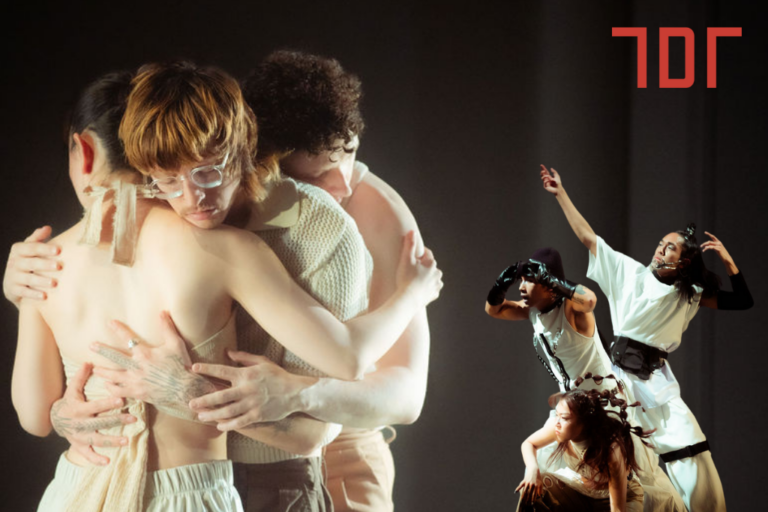 iPhoto caption: Original photos by Kendra Epik.
With its Spring Double Bill, Toronto Dance Theatre centres community and new voices
For the Spring Double Bill, artistic director Andrew Tay is considering how programming can be a means of supporting emerging artists.
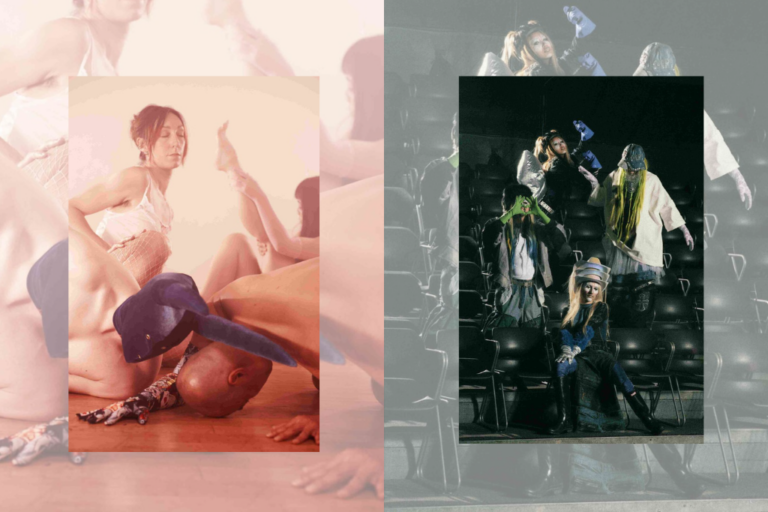 iPhoto caption: Photos by Roya DelSol
REVIEW: Boundary-pushing TDT double bill features face-riding and odd sensuality
Both pieces in the winter double bill are par for the course with TDT’s recent artistic output: unabashedly queer and consistently experimental.
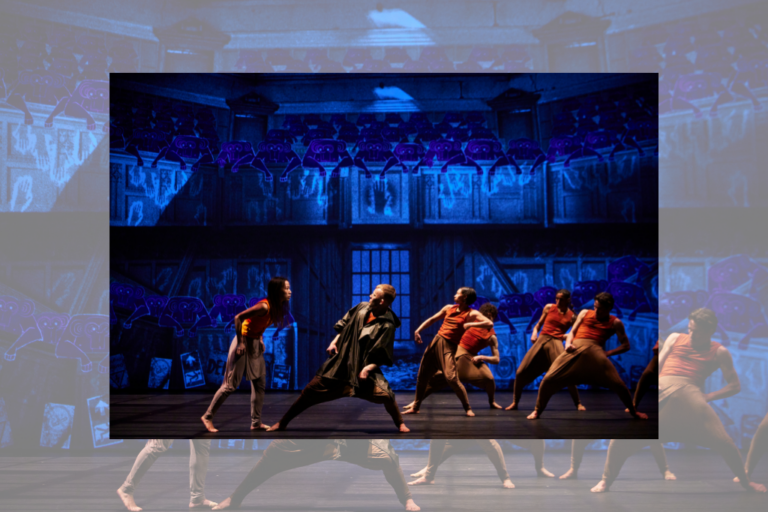 iPhoto caption: Photo by Ambra Vernuccio.
REVIEW: Jungle Book reimagined needs a little reimagining
Indeed, Akram Khan “reimagines” a historically complex story into a two-hour exposé on the environmental catastrophe. Jungle Book’s captivating visual effects and dynamic physicality brought the opening night audience to their feet. But as the choreographer’s first billing as director, Jungle Book’s storytelling doesn’t always live up to Khan’s skill as a dancemaker.

When it comes to dance made in Canada, there’s an overabundance of great work happening.
Comments