
Q&A: How Expandido Arts Collective is reimagining the Medea myth
 iPhoto caption: Maria Paula Carreño-Martínez in 'Kill Your Father.' Photo by Galactticaaa.
Following their 2023 Toronto production of The Rage of Narcissus, the Expandido Arts Collective is staging Brazilian playwright Grace Passô’s contemporary Medea adaptation Kill Your Father.
Originally written in Portuguese as Mata Teu Pai, Passô’s play reimagines the myth of Medea through a contemporary feminist lens. Translated and adapted by Marcio Beauclair and Matthew Romantini, Kill Your Father introduces the Brazilian play to new audiences.
Directed by Beauclair and performed by Maria Paula Carreño-Martínez, the production will play at Theatre Passe Muraille’s Bob Nasmith Innovation Backspace after earlier iterations in Brazil and the U.K.
Intermission connected with Beauclair and Carreño-Martínez over email for a brief Q&A about translating Passô’s work. Their responses have been lightly edited for length and clarity.
You first encountered Grace Passô’s Mata Teu Pai in Brazil. What compelled you to translate and stage this version of the Medea story now, for Canadian audiences?
Marcio Beauclair (MB): I’ve long been fascinated by the myth of Medea, particularly Euripides’ tragedy. When I encountered Grace Passô’s version, I was struck by its political perspective. Passô, a Black Brazilian feminist playwright, reframes the story in a surprising way: instead of Medea killing her children, the play suggests she should kill the father, Jason. That shift turns the myth into an allegory about confronting the patriarchy that oppresses women — which is why the play is called Kill Your Father.
As you adapted the play into English, what felt essential to preserve from Passô’s language and politics? Where did you allow yourselves to reshape it for diasporic contexts?
MB: In my previous adaptation of Sergio Blanco’s The Rage of Narcissus, I reshaped parts of the text to situate the story in Toronto. This time, Matthew Romantini and I stayed very close to Passô’s script. Her words already carry a strong political urgency, so we preserved the language and ideas as faithfully as possible.
As a director, though, I brought additional political and activist elements to the staging and created a few new moments using Passô’s language. Our version therefore feels more raw and visceral than the Brazilian production I first saw, which included a poetic chorus of women from the community. I also explore Medea’s immigrant experience more directly — something that resonates strongly in Canada. As the exiled Medea says in the play, we are all living on a land that is not our own.
You describe the piece as a “punk drama.” What does punk mean in your theatrical vocabulary, and how does that sensibility collide with the classical tragedy you’re reworking?
Maria Paula (MP): When Marcio and [Expandido co-founder Renato Baldin] first described the piece as a “punk drama,” I immediately felt it in my stomach. Punk suggests opposition to authority and a willingness to shock, and that’s how the play feels every time I perform it.
Through Marcio’s direction, we also explore a close and immersive relationship with the audience by performing in intimate venues and breaking the fourth wall. In this world, no one can escape Medea.
Medea’s infanticide remains, in my view, one of theatre’s most disturbing acts. What ethical or emotional encounter with that violence are you inviting audiences into?
MP: In this version, the “infants” are the audience, so the encounter becomes direct. I believe the ethical and emotional questions belong to the audience to reflect on after seeing the piece.
As Medea, I approach them closely — through words, touch, and presence. I teach them, nurture them, protect them, and love them. But audiences should also consider Medea’s perspective: for her, the most maternal act may be ending suffering.
I can’t say much more, or I’ll spoil it.
As the production travels between Brazil, the U.K., and Canada, what has shifted in the piece, and what do you hope this Toronto chapter carries forward?
MB: The original Brazilian production had a different creative team and a more culturally specific approach. The version we’re presenting in Toronto grows out of the staging we developed in England last year, which we designed for international audiences.
Around the world, we continue to witness violence against women, but we also see women speaking out and demanding accountability. We hope the Toronto run contributes to that broader conversation and helps carry forward the call for justice and dignity.
Kill Your Father runs at Theatre Passe Muraille from March 19 to March 29. More information is available here.
Expandido Arts Collective is an Intermission partner. Learn more about Intermission’s partnership model here.
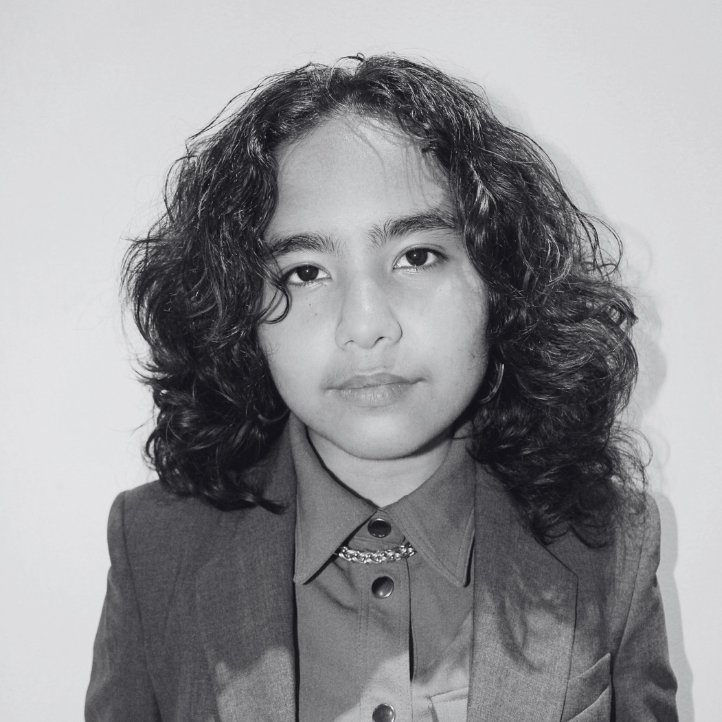
Krystal Abrigo
Krystal is Intermission's Publishing and Editorial Coordinator. At any given moment, you can probably find her at a concert, or on a long walk somewhere in Toronto (or elsewhere).
LEARN MORE iPhoto caption: Carolyn Fe in 'Aye Caesar.' Photo by Mathieu Taillardas.
REVIEW: Carolyn Fe’s Aye Caesar asks what it means to be seen
The phrase is, in my view, a quintuple entendre — and, like the play itself, its meanings become clearer the longer you sit with them.
 iPhoto caption: Lissete VC in 'Deer Woman.' Photo by Andy Moro.
Q&A: At RUTAS Festival, Tara Beagan’s Mujer Venado / Deer Woman makes its Spanish-language premiere
The translation connects the play’s existing themes to the experiences of missing and murdered Indigenous women across the Americas.
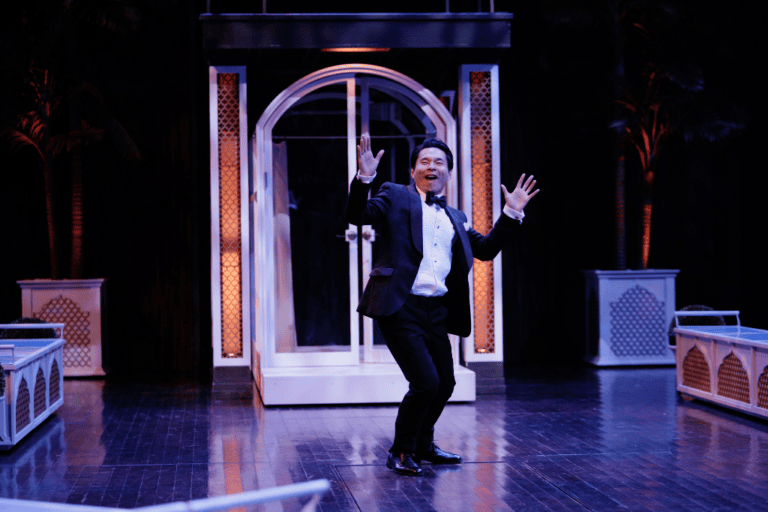 iPhoto caption: Michael Man as Dr. Wilson Wong in 'The Tao of the World.' Stratford Festival 2026. Photo by David Hou.
Meet Michael Man, the versatile actor playing Gollum at the Stratford Festival
Dr. Wong and Gollum are just two of the three roles Man is playing in his second consecutive season at Stratford. He also appears in a smaller role as Robin Starveling, one of the mechanicals, in A Midsummer Night’s Dream, giving him the opportunity to move between wildly different theatrical worlds over the course of a single season.
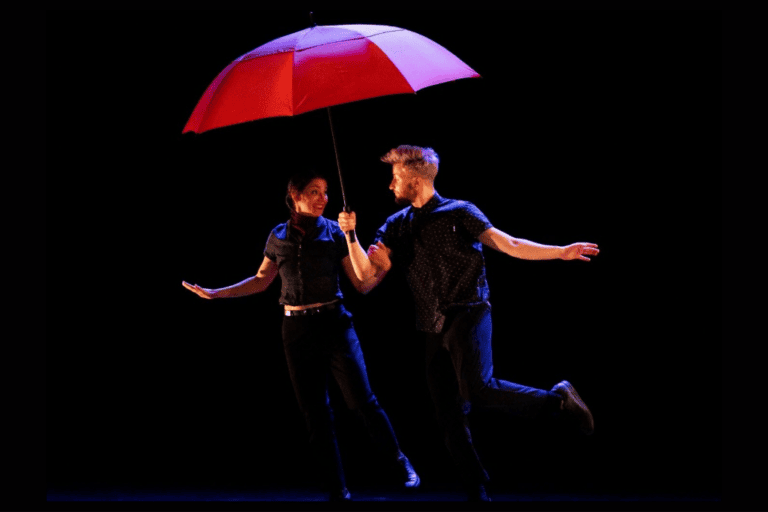 iPhoto caption: Compagnie de Fakto's 'C'est la vida.' Photo by Julie Cherki.
Alliance Française Toronto unveils 2026-27 season at Spadina Theatre
International theatre and dance will play at the downtown venue alongside live music, free cinema, exhibitions, and more.
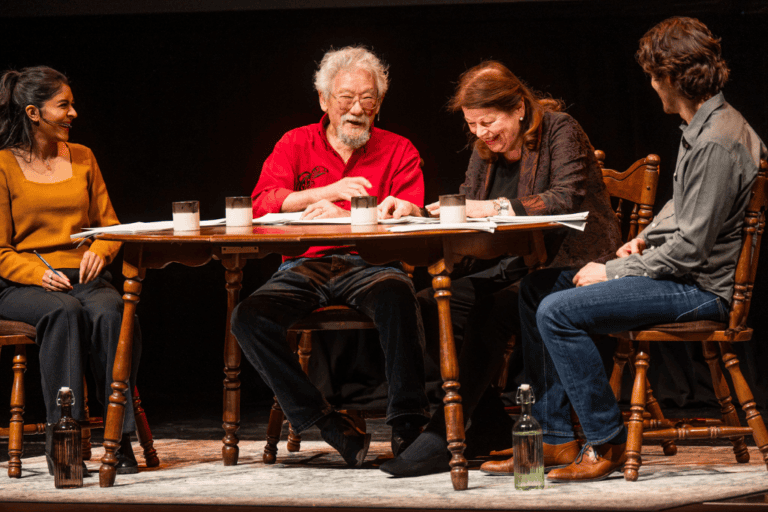 iPhoto caption: Sturla Alvsvaag, Tara Cullis, Michelle Mohammed, and David Suzuki in 'What You Won't Do For Love.' Photo by Dahlia Katz.
David Suzuki and Lester Trips to headline Factory Theatre’s fall season
In addition to its lineup of full productions, Factory will host work-in-progress presentations of Provisions and Ghost River Theatre and Macromatter's Soft Squishy Things in its Studio Theatre during the SummerWorks Performance Festival, running from August 6 to 16.
 iPhoto caption: Toronto Fringe promo photo by Robbie Harper.
REVIEWS: Toronto Fringe Festival 2026
This collection of Toronto Fringe Festival capsule reviews will be updated throughout the festival with writing from 10 different critics.
Comments