
At the Lighthouse Festival, Jamie Williams’ new comedy pays homage to the family westerns of his childhood
 iPhoto caption: Ryan Bommarito in rehearsal for Pinkerton Comes to Prospect. Photo Credit: Aidia Mandryk.
Actor-writer Jamie Williams doesn’t appear in his latest comedy — but he’s still performed every part.
The play in question is Pinkerton Comes to Prospect, a tongue-in-cheek homage to the western genre, produced by Lighthouse Festival. The production begins previews on July 30 in Port Dover and transfers to Port Colborne on August 20. Pinkerton features actors Ryan Bommarito, Matt Oliver, Adrian Shepherd-Gawinski, Jessica Sherman, and Evelyn Wiebe, and is directed by Steven Gallagher.
“I’ve done a lot of farces [as an actor],” said Williams in a Zoom interview. And indeed, over his 30-year stage career, he’s made frequent appearances in fast-paced comedies at theatres across the country, including Lighthouse, Edmonton’s Citadel Theatre, and Halifax’s Neptune Theatre. It’s only natural that when writing the farcical Pinkerton, Williams’ “acting brain was really engaged,” he said. “I was playing each of the characters in my mind as I was writing them.”
Audiences will recognize those characters as classic archetypes from films and stories set in the Old West (a shorthand for the western United States during the period of settler expansion in the 19th century). There’s an ambitious young woman named Lacey, who “wants to get out of Prospect,” said Williams, “and go to the big city to get an education.”
Unfortunately for Lacey, she’s entangled in the schemes of her uncle Doc, a con man whose life is under threat from a notorious killer. When a naive surveyor named Herschel Pinkerton arrives in town, he too gets swept up in the town’s drama. “His belief in himself grows by a magnitude that he doesn’t expect,” said Williams.
For those wondering why the play’s title involves the name Pinkerton, not Penkerton, that’s a twist Williams said he didn’t want to spoil. Suffice it to say, a case of mistaken identity early on in the show leads to a spiral of comic consequences.
Although Williams enjoys gritty westerns — he named the classic spaghetti western The Good, The Bad, and the Ugly, starring Clint Eastwood, as one of his favourites — he said the inspiration for Pinkerton came from his “childhood enjoyment of… family westerns,” such as Disney’s 1975 The Apple Dumpling Gang, which featured skilled comic actors like the late Don Knotts.
Williams also noted a practical reason for Pinkerton’s period setting: “It allows for greater opportunity for miscommunication… It’s a little harder to make those things believable in a modern setting, particularly now that we carry cellphones and have [so much] access to information all the time. The less information characters have, the more opportunity for comic situations.”
Williams named Gallagher as the ideal director for Pinkerton Comes to Prospect. Gallagher was the creator and director of Murder at Ackerton Manor, another zippy farce that, like Pinkerton, spoofed a specific genre: Agatha Christie mysteries.
Gallagher is “a great guy, and he’s been a great help in this last stage of [Pinkerton’s] development,” said Willams. He praised the director’s “keen eye and keen ear, towards making sure all the [farcical] sequences are in place.”
Williams honed the script for Pinkerton in Lighthouse’s play development program, which nurtures new Canadian comedies. The program gave him a chance to test the script in front of an audience and receive valuable feedback. “You get some first-hand earnest reactions,” he reflected. “You write in a vacuum for so long that you lose the perspective of a first-time reader or listener.”
He described how the process of working on his first play, It’s Your Funeral (which premiered at Upper Canada Playhouse in 2018), taught him the value of rewrites.
“The day I finished, I thought, ‘I’ve finished it! I’ve written a script!’” he remembered. “And it was a piece of crap. But that’s okay! I’ve learned since then that the first draft should be the crappy draft. You just get it down, and then you’ve got a body of material to work with — your clay, which you can then mold.”
Though Williams has apparently molded Pinkerton to be a tightly plotted, saloon-storming farce, he’s made sure that there’s a heart of gold at its centre.
“All the characters in the show come to a place at the end of the day where they’re better versions of themselves,” he said. The fact that the town in the play is called Prospect “represents [on the one hand] this miniscule possibility that there’s gold in the ground,” and on the other hand the idea that “if you search for it and you believe in it enough, you will discover” gold — metaphorically — wherever you are.
“There’s gold [inside] the characters of the town,” said Williams. “Each of these people are [the real] nuggets [they] value.”
Pinkerton Comes to Prospect runs July 30 to August 16 at the Lighthouse Theatre in Port Dover, and August 20 to 31 at the Roselawn Theatre in Port Colborne. Tickets are available here.
The Lighthouse Festival is an Intermission partner. Learn more about Intermission’s partnership model here.

Nathaniel Hanula-James
Nathaniel Hanula-James is a multidisciplinary theatre artist who has worked across Canada as a dramaturg, playwright, performer, and administrator.
LEARN MORE iPhoto caption: 'C'est la vida!' production photo by Julie Cherki.
C’est la vida! uses mime, dance, and electro beats to remix classic rom-com tropes
“Having endless talks with David about love, and our respective relationships, while creating and touring this show has definitely helped me grow,” says dancer Liesbeth Kiebooms. “It’s given me a more subtle understanding of love.”
 iPhoto caption: Headshots of Sophie Gee, Ray Hogg, Margot Greve, Leora Morris, and Jessica Carmichael.
Five theatre directors offer advice to the next generation — and the programs training it
The artists on this call were candid and vulnerable. They spoke openly about their professional frustrations and challenges — and they weren’t shy about pinpointing the ways that mainstream anglophone Canadian theatre practices fail directors and artists more broadly. That said, I didn’t leave our chat feeling hopeless or cynical.
 iPhoto caption: Ann-Marie MacDonald in 'Goodnight Desdemona (Good Morning Juliet).' Photo by Elana Emer.
“Sexism kept me out of hockey as a kid,” says Ann-Marie MacDonald. “But sexism also shut me out of Shakespeare."
 iPhoto caption: Headshots of Sophie Gee, Ray Hogg, Margot Greve, Leora Morris, and Jessica Carmichael.
How can theatre directors forge a sustainable career in Canada?
It’s increasingly unlikely that directors will hone their craft through formal training. Relatively few post-secondary programs devoted to directing exist, and it seems to me that directing-specific mentorship programs are less common than similar initiatives for actors or playwrights. To convene a roundtable about director training, I reached out to five very different artists on a continuum of early- to mid-career.
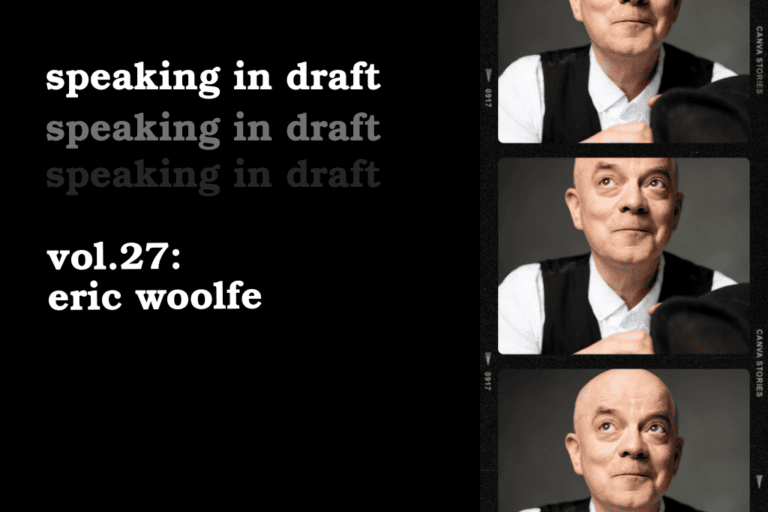 iPhoto caption: Portrait of Eric Woolfe. Photo by Dahlia Katz.
Eric Woolfe’s inventive horror theatre is a monster mash of artistic influences
For the past 26 years, Eldritch Theatre’s director of the uncanny has given ghoulies, ghosties, and long-legged beasties of all kinds a spot in the limelight, in productions that serve up puppets, magic, and a crumbling castle’s-worth of uncanny influences, including schlock-horror B-movies, Shakespeare at his bloodiest, and the fiction of H.P. Lovecraft.
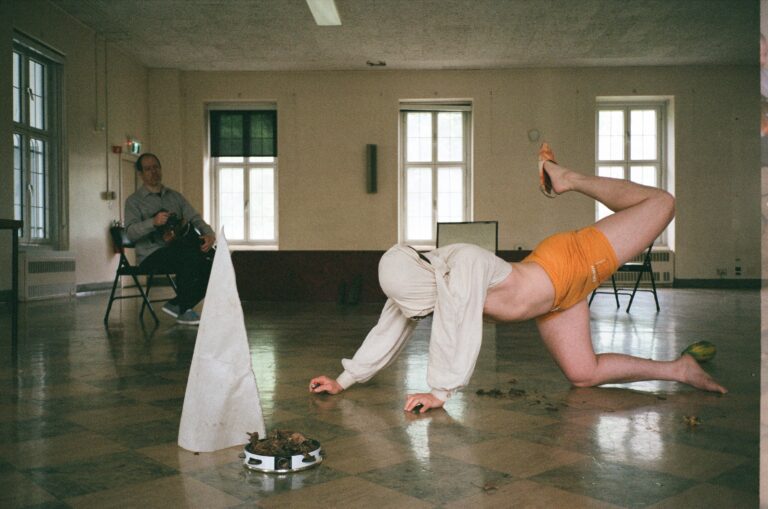 iPhoto caption: Nate Yaffe in 'Rot Hat.' Photo by Kinga Michalska.
This year’s SummerWorks Performance Festival strives to make accessibility intrinsic
The curated festival’s 36th edition features a range of works by Disabled and neurodivergent artists where the medium is very much the message.
Comments