
Tara Beagan’s Governor General’s Award-winning Rise, Red River is a multilingual vision of Indigenous survivance
 iPhoto caption: Headshot by Andy Moro.
One award. Two plays. Three languages.
That’s a short description of playwright Tara Beagan’s victory last fall at the 2025 Governor General’s Literary Awards. Two of Beagan’s plays — Rise, Red River and The Ministry of Grace — were nominated in the English-language drama category, a first for any playwright in the history of that award. Rise, Red River, published by Playwrights Canada Press, won the top honour.
“I was doing the Gros Morne residency with Playwrights Workshop Montreal out in Newfoundland [when I found out],” said Beagan in a video call. “We were all flying out [that day], and we were in this small airport. I’m a true introvert, so I was sitting by myself, and I saw an Ottawa call coming in.
“‘Either I screwed up when I submitted my last grant, or this is that call,’” she remembered thinking. “[Afterward], I had to completely keep a lid on my joy, because there were colleagues three tables away.”
Rise, Red River is set in Treaty One territory (also known as southern Manitoba), in a not-too-distant future where forest fires have ravaged the land and made the titular body of water run dry. A young woman, referred to as She in the speech headings until another character names her, trawls the riverbed with a makeshift plough for traces of missing and murdered Indigenous women, girls, and two-spirit people. The play unfolds in multiple languages. She speaks English, while the women whose stories she unearths speak French. Watching over them is an Ancestor presence, who speaks Anishinaabemowin.
“A big part of what I consider this writing to be is an honoring of ancestors that I will never meet in person,” said Beagan. “[That includes Indigenous] ancestors who [may only be] distantly related to me, or not actually bloodline-related to me at all, because it feels like we have to do that wherever we are in this colonized nation.
“It feels essential,” she continued, “and it feels like an honour that artists carry, and one that I’m happy to practice. [I have an] awareness that I’m safe enough in my life that I’m able to tell these stories. There are a lot of women who actually endured having their lives stolen from them. My privilege is that I can carry these stories forward for whoever will allow them to come to me.”
Beagan, who is of Ntlaka’pamux and Irish descent, was inspired by the Indigenous-led organization Drag the Red, which searches the Red River for missing community members. Real-life climate catastrophes also informed the piece.
“[Four years ago], I was at Caravan Farm Theatre, and it was forest fire time [in British Columbia],” Beagan remembered. “It was snowing ash. I stepped away for 10 minutes [from writing Rise, Red River], came back to the keyboard, and there was ash on it. You don’t want that kind of pathetic fallacy to occur when you’re writing [a play] that — while there this hope inside of it — [is] an exercise in the land mourning the people, and the people mourning the land. I actually stopped [writing] for the day. I thought, ‘I can’t be fictionalizing this when it’s happening right now.’”
Rise, Red River was commissioned by Winnipeg’s Prairie Theatre Exchange (PTE) during the tenure of artistic director Thomas Morgan Jones, who led PTE from 2018 to 2024. The play premiered in March 2024, as a co-production between PTE, Théâtre Cercle Molière, and Article 11, which Beagan co-founded in 2013 with her partner, theatre designer Andy Moro. As Beagan started to create Rise, Red River, she realized that writing a piece true to Treaty One would require more languages than just English.
“Andy and I happened to be [in Winnipeg] during the Festival du Voyageur,” remembered Beagan. “[It’s] a massive celebration of Métis culture [that] takes over the city. We all know about the great divide among Anglophones and Francophones in this country, but it [hadn’t] even [occured] to me that these Francophone Métis folks are their own island in a way.
“[I thought], ‘Why am I writing a piece about this land, in one colonizer language?’” she continued. “‘Because they’re the ones who won?’ That didn’t seem right. So I immediately spoke with Thomas Morgan Jones, [who] got excited about doing English and French. Then within that conversation I [went], ‘Why the hell am I doing two colonizer languages? Why don’t [we add] a pre-contact language?’ We went with Anishinaabemowin, because there are many speakers compared to other languages, and multiple dialects are still alive and well.” Artists Wanda Barker and Natasha Kanapé-Fontaine collaborated with Beagan to translate her English dialogue into Anishinaabemowin and French, respectively.
Beagan directed Rise, Red River’s premiere. Of the cast members — Tracey Nepinak, Caleigh Crow, and Marsha Knight — none were trilingual, and each came to the process with different language skills and histories. In production, all three languages were projected simultaneously for the audience at all times, which meant the dialogue had to exist in three complete translations. To facilitate this, the production engaged Charlene Van Buekhenhout as a script carrier (or supervisor).
“Anytime we made one change, [Charlene] had to go back to both translators,” Beagan explained. “[Jack Maier], who created and operated [the] surtitles, said he came to rehearsal more than he ever has in any other [show], because he had to learn the timing of humour in three different languages. He was so reverent with the actors’ processes.”
In the published text of Rise, Red River, the characters retain the languages they spoke in the premiere production. English translations in brackets follow dialogue in French and Anishinaabemowin.
“I was quite impressed by Playwrights Canada Press,” said Beagan. “They were so game to figure out the translation [and] how it should look on the page.” The publisher re-engaged Van Buekenhout and both translators to assist in the process.
“It felt like such a communal [experience] to get things down on the page. We were all just like, ‘Yes and!’” said Beagan, laughing. “It was like first-year theatre school delight.”
Rise, Red River is available to purchase via Playwrights Canada Press.
Playwrights Canada Press is an Intermission partner. Learn more about Intermission’s partnership model here.
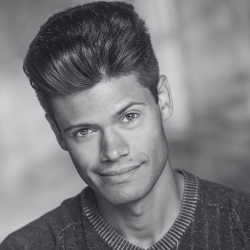
Nathaniel Hanula-James
Nathaniel Hanula-James is a multidisciplinary theatre artist who has worked across Canada as a dramaturg, playwright, performer, and administrator.
LEARN MORE iPhoto caption: Toronto Fringe promo photo by Robbie Harper.
REVIEWS: Toronto Fringe Festival 2026
This collection of Toronto Fringe Festival capsule reviews will be updated throughout the festival with writing from 10 different critics.
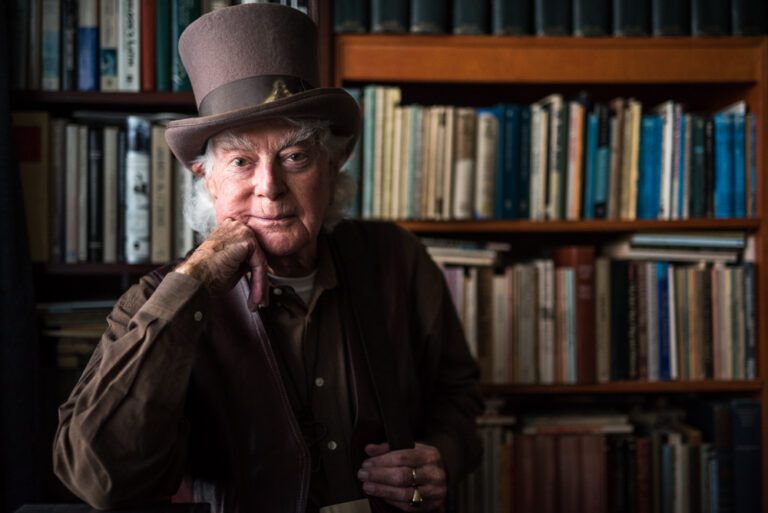 iPhoto caption: Peter Wylde for Intermission Magazine. Photo by Dahlia Katz.
In memory of Peter Wylde, the time-travelling acting teacher
What follows is an edited and condensed collage, loosely organized by theme, that only scratches the surface of Wylde’s life and impact.
 iPhoto caption: Dance Macabre cast. In photo: Keira Marie Forde (front). Back: [L to R] Uche Ama, King Cosmos, Theresa Gomes and Thomas Fournier. Photo by Tiku Romello Fisher (TRF Media).
At the 2026 Toronto Fringe, Caribbean artists stage collisions of identity, power, and desire
In separate video conversations, the lead artists behind Danse Macabre, Ex-Change of Words, and Momme Domme spoke about approaching themes of Blackness, diaspora, power, and desire.
 iPhoto caption: Marissa Orjalo as Ariel with members of the company in 'The Tempest.' Stratford Festival 2026. Photo by Ann Baggley.
For Marissa Orjalo, this season at Stratford is such stuff as dreams are made on
“Every day feels like a new adventure,” says Orjalo. “I always look to the people who've come before me, and they're always very generous. I'm on this journey of learning, and I hope to learn for the rest of my life.”
 iPhoto caption: Ordena Stephens-Thompson and Tony Nappo in 'The Neighbours' at Tarragon Theatre. Photo by Jae Yang.
As PlayME’s season concludes, its creators reflect on the changing world of Canadian audio drama
Chris Tolley remembers CBC's Studio 212 with a sense of awe. “It felt like you were on the Starship Enterprise holodeck,” he said. “There was this big, long table with all these different computers and servers underneath. The studio had these different staircases made out of wood and metal, and strips of concrete and wood floor, so that you could run on them and record [different sound effects].”
 iPhoto caption: 'Chicken.' Photo by Hildegard Ryan.
This piece of contemporary Irish theatre stars a talking fowl with a ketamine habit. Its creators are anything but chicken.
 iPhoto caption: Members of the company of 'Katma.' Photo by Anna Kucera.
At the 2026 Luminato Festival, performance gets up close and personal
“It would be so weird for people to be sitting two feet away, watching other people have a good time,” says Katma creator Azzam Mohamed. “In the party environment, there’s nothing between me and you. You’re so close to me that I can’t fake it."
Comments