
Wing Chun Dance Drama is a martial arts movie come to life
 iPhoto caption: Wing Chun Dance Drama, courtesy of Shenzhen Opera and Dance Theatre.
Wing Chun Dance Drama’s homage to the life of a martial arts grandmaster has played to audiences in China, Paris, and London. This holiday season, the production’s North American premiere will land in Toronto, bringing grand-scale storytelling, filmic flourish, and explosive displays of martial arts.
Created and premiered by China’s Shenzhen Opera and Dance Theatre in 2022, Wing Chun draws audiences into the early years of celebrated martial artist Ip Man, who passed away in 1972. The Toronto run, presented by TO Live in collaboration with ADEM Company Inc. and the Canada China Cultural Development Association, is now on at Meridian Hall.
It’s taken almost two years of effort for these producers to bring Wing Chun to Canada, not least because the production tours with a 60-person creative team. Clyde Wagner, president and CEO of TO Live, expressed his excitement at bringing this massive production to the city. “I see a lot of different work [all over the world], but I was just stunned at this incredible melding of martial arts and contemporary dance,” he said over Zoom.
The co-directors and choreographers behind this enormous undertaking are Han Zhen and Zhou Liya. The duo’s long history of collaboration includes the dance film A Tapestry of a Legendary Land (2024), as well as Only This Green (2021), a dance-theatre piece based on a well-known Song Dynasty painting. In taking on Ip Man’s story, they were conscious of their responsibility to his legacy.

“In China — especially in the history of Chinese cinema — Ip Man is a household name,” said Han, in translated written responses to questions over email. Ip had a lasting influence on wing chun, a style of kung fu that originated in southern China over 300 years ago. In his 60s, he trained Bruce Lee, who would go on to become a famous performer in Hong Kong and American martial arts films.
Before that, though, Ip was a young man doing his best to survive in the precarious world of 1950s Hong Kong. It’s that part of the master’s life — before mastery — that Han and Zhou chose to focus on.
“People rarely become ‘great’ all at once,” Han reflected. “More often, they grow from small intentions into heroic figures. [Ip Man’s] life is legendary, yet it never unfolded in a grand or ostentatious way. He faced disappointment and hardship; he was, in many ways, an ordinary man with simple aspirations. His initial goal in Hong Kong was merely to make a living and open a small martial arts school.”
Han was as fascinated by the art form Ip practiced as by his humble origins. “In traditional Chinese understanding, wing chun was often referred to as ‘the women’s fist,’” she explained, “because it was originally created for women’s self defense. It avoids large, sweeping movements and instead focuses on swift, decisive actions.”

Audiences can expect plenty of live martial arts feats from Wing Chun’s skilled ensemble of actor-dancers. The production showcases wing chun alongside other forms like tai chi, baguazhang, bajiquan, and praying mantis boxing. Although the production will feature English surtitles, its highly physical and action-packed storytelling should help make it accessible to audiences of all linguistic backgrounds.
Wing Chun is only the latest in a long line of works about Ip Man’s rise to greatness. To date, the grandmaster’s life has inspired the Ip Man film series and its spin-offs, multiple other movies, and a television series. Wing Chun Dance Drama doesn’t attempt to hide this precedent. On the contrary, Han and Zhou have leaned into the cinematic, by framing Ip’s story within the context of a film crew making a biopic.
“For those of us who grew up in the ‘80s, martial arts — [wing chun,] kung fu, wuxia, all of it — came to us through only one channel: film,” Han shared. “This work pays tribute not only to kung fu as an art form, but also to the era when kung fu cinema flourished and gave us countless moments of inspiration.”

Beyond embracing cinema in its dramaturgy, Wing Chun’s design bursts with cinematic effects that evoke wuxia films, a genre based on the legendary exploits of ancient China’s martial artists.
Han previewed a few of the filmic sequences that audiences can look forward to. “[One] features alleyway combat reminiscent of scenes from Bruce Lee and Jackie Chan films,” she said, “where weapons and close-quarter confrontations bring a dynamic visual rhythm.
“There’s also a section inspired by battles in bamboo forests,” she continued, “like [in Ang Lee’s] Crouching Tiger, Hidden Dragon, yet reimagined [for] the architectural landscapes of Hong Kong.”
“The way the sets move, the way the actors and the story are told through light and sound and movement is incredible,” added Wagner. “It’s almost like watching a live movie on stage.”
Wing Chun Dance Drama begins performances at Meridian Hall on December 16, and runs until January 4. Tickets are available here.
TO Live is an Intermission partner. Learn more about Intermission’s partnership model here.
Nathaniel Hanula-James
Nathaniel Hanula-James is a multidisciplinary theatre artist who has worked across Canada as a dramaturg, playwright, performer, and administrator.
LEARN MORE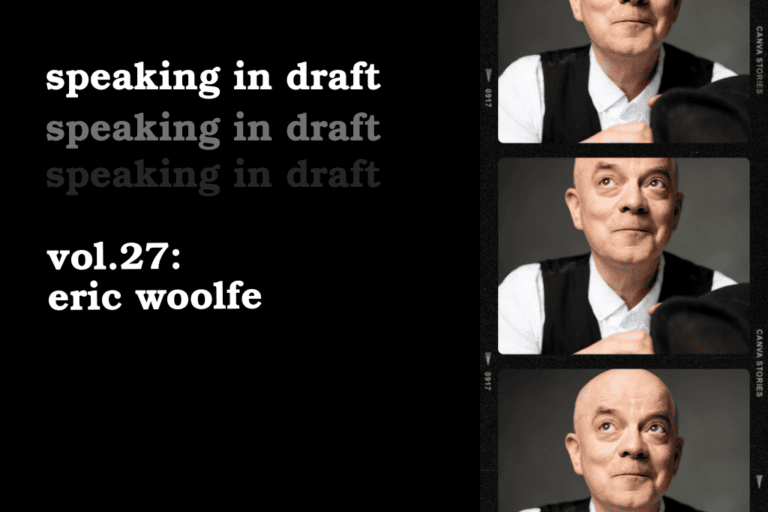 iPhoto caption: Portrait of Eric Woolfe. Photo by Dahlia Katz.
Eric Woolfe’s inventive horror theatre is a monster mash of artistic influences
For the past 26 years, Eldritch Theatre’s director of the uncanny has given ghoulies, ghosties, and long-legged beasties of all kinds a spot in the limelight, in productions that serve up puppets, magic, and a crumbling castle’s-worth of uncanny influences, including schlock-horror B-movies, Shakespeare at his bloodiest, and the fiction of H.P. Lovecraft.
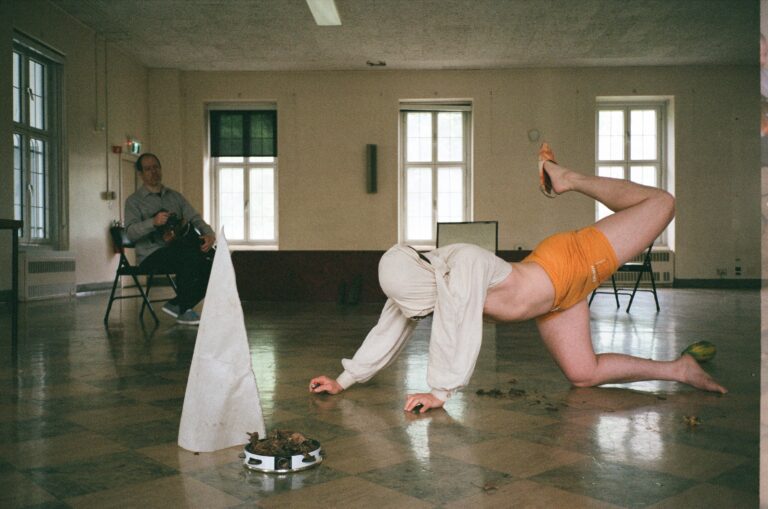 iPhoto caption: Nate Yaffe in 'Rot Hat.' Photo by Kinga Michalska.
This year’s SummerWorks Performance Festival strives to make accessibility intrinsic
The curated festival’s 36th edition features a range of works by Disabled and neurodivergent artists where the medium is very much the message.
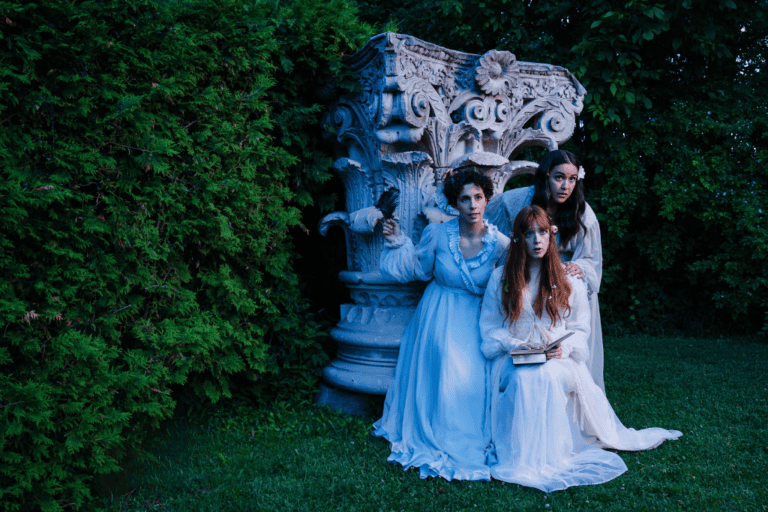 iPhoto caption: Laura Del Papa, Hilary Scott, and Lara Lucia in 'Brontë: The World Without.' Photo by Raph Nogal.
GFT’s Brontë: The World Without is a window into the ordinary lives of literary icons
Directed by Helen Juvonen in Guild Park and Gardens’ Greek Amphitheatre, The World Without follows sisters Emily, Charlotte, and Anne Brontë — the authors of Wuthering Heights, Jane Eyre, and The Tenant of Wildfell Hall, respectively.
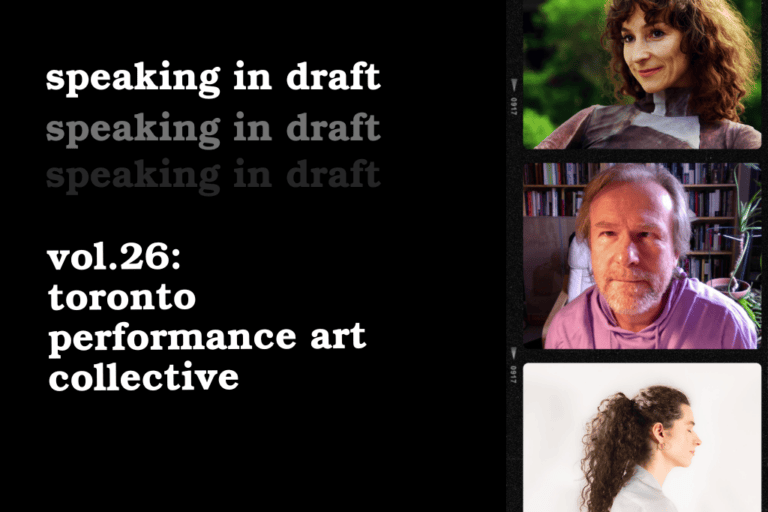 iPhoto caption: Photos of Shalon T. Webber-Heffernan, Paul Couillard, and James Knott courtesy of 7a*11d.
The organizers of the 7a*11d festival want you to know that performance art is still ‘punk as hell’
"There’s something about being live, with a sweaty, stinking, gross, dirty body, that’s just — you’re in it," says collective member Shalon T. Webber-Heffernan. "There’s some kind of alchemy going on that’s addictive to me. I think 7a*11d is sort of the dealer, if you will! It’s keeping us all hooked onto this weird obsession."
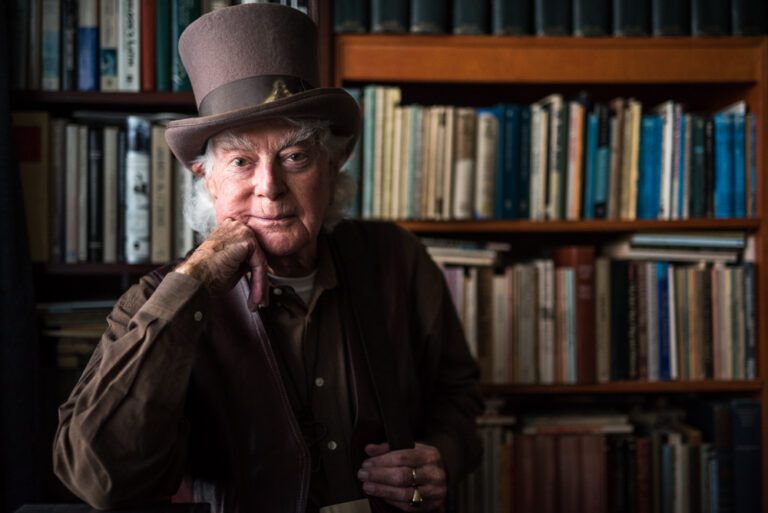 iPhoto caption: Peter Wylde for Intermission Magazine. Photo by Dahlia Katz.
In memory of Peter Wylde, the time-travelling acting teacher
What follows is an edited and condensed collage, loosely organized by theme, that only scratches the surface of Wylde’s life and impact.
 iPhoto caption: Dance Macabre cast. In photo: Keira Marie Forde (front). Back: [L to R] Uche Ama, King Cosmos, Theresa Gomes and Thomas Fournier. Photo by Tiku Romello Fisher (TRF Media).
At the 2026 Toronto Fringe, Caribbean artists stage collisions of identity, power, and desire
In separate video conversations, the lead artists behind Danse Macabre, Ex-Change of Words, and Momme Domme spoke about approaching themes of Blackness, diaspora, power, and desire.
Comments