
Growing Pains in the Opera Industry: In Conversation with Teiya Kasahara 笠原貞野
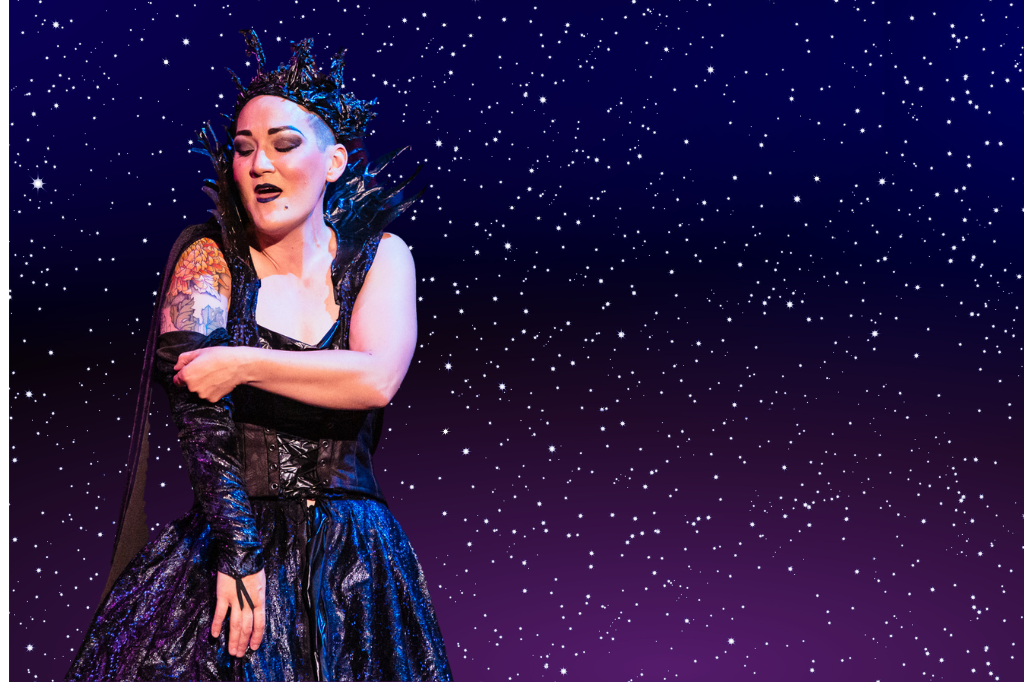
The Queen of the Night, the infamous diva from Mozart’s famous opera The Magic Flute, has been around for centuries — two hundred and thirty years, to be exact. And Teiya Kasahara 笠原貞野 has a long personal and professional history with the character. Kasahara’s relationship and fascination with the Queen of the Night has inspired their solo monologue-concert The Queen and Me, which had a recent run at the Greenwin Theatre at the Meridian Arts Centre in North York. (The Queen In Me also heads to Belfast next month.)
The Queen of the Night has been an important entity in Kasahara’s personal and professional growth as a soprano and as a person.
“The Magic Flute was the first opera I ever saw,” Kasahara told me in an interview.
“I was fifteen. I saw Ingmar Bergman’s 1975 film version. I was blown away by the vocal feat of the Queen of the Night’s famous aria. And I thought to myself, ‘if I could sing that once in my life, I would be happy!’ And lo and behold, my voice developed into that voice category — that of coloratura soprano. Eventually I was being cast as the Queen of the Night here in Canada with the Canadian Opera Company, on school tours, in Vancouver, in Edmonton, and in Germany.”
For better or for worse, once Kasahara became known for being able to sing the impossibly high notes of the Queen of the Night’s famous aria, they began to get type-cast in the role. As a non-binary person, this presented a unique opportunity: Kasahara was inspired to ask themselves how they could reconcile being trans non-binary and being a soprano, a voice type historically associated with femininity and female identity.
“This is the question that prompted this show. To be able to understand this, unpack it, and live with my voice type in this industry. Being an opera singer, you’re expected to uphold an outdated, cisgendered femininity both onstage and off. My personal exploration of who I am was stunted because of this. I was a late bloomer, so to speak, in figuring out my sexuality and my gender,” said Kasahara.
They found the opportunity to explore queer gender and sexual identity outside of the opera industry.
“It took many occasions of being in micro-aggressive, racist, sexist, unsafe situations that led me to realize that this was not the kind of industry I wanted to be in. This, alongside encountering queer theory and post-colonial theory, introduced to me by my partner, inspired me to put words to these experiences.”
“I reached out to the theatre industry in Toronto. The theatre industry in Toronto was ahead of the opera industry in efforts to make spaces more equitable. The Queen and Me first emerged from working with the Emerging Creators Unit at Buddies in Bad Times, which then developed into a twenty-minute-long solo show that I performed at the Rhubarb Festival.”
The Queen and Me has afforded Kasahara an opportunity to free both themself and others from social expectations of gender and sexuality.
“In my mind, the Queen has become a part of me. I have given her a fictional life and backstory beyond what we’re presented with in The Magic Flute. In a way, I’ve freed her from being imprisoned by the story of The Magic Flute,” said Kasahara.
“By expanding the possibilities for the Queen of the Night, I hope that I’ve expanded the possibilities for women, girls, for gender-nonconforming folks, for people who have had experienced of womanhood like myself, but who want to break free from the limited expectations of what a woman or a girl should be in society today.”
For Kasahara, there is value in the classical canon as well as in the development of new works like The Queen and Me.
“We need to broaden our perspective of what opera is and what the classical canon can be. We need to evolve the classical canon in addition to putting energy and resources into new works. And that’s why I think I wrote the show. To say ‘here’s what’s going on!’ and to give myself an opportunity to perform and to share my art,” they said.
“It’s tough because I want to participate in the status quo of the industry. I love the classical repertoire. But I know that my show is rubbing people in not-the-best way. I hope that these reactions are just growing pains.”
“I hope that this bit of discomfort that some people are feeling will help them to grow, as I’ve had to grow.”
You can find out more about The Queen In Me here.

Stephen Low
Stephen Low received his PhD from Cornell University in April 2016, where he also received his Masters in Theatre Studies in 2014. He received his first Masters from the University of Texas at Austin in the Performance as Public Practice Program. His scholarly interests include twentieth-century theatre and performance, dance, musicals, queer theory, sex and sexuality, gender, critical race studies, and gay culture. His current book project, Hail Mary: The Theatrical Constitution of Gay Culture, identifies theatricality as the constitutive feature of contemporary gay culture. His essays have been published in Modern Drama, Theatre Research in Canada, Canadian Theatre Review, Queer Theatre in Canada. Critical Perspectives in Canadian Theatre in English Series, Opera Canada, and Intermission.
LEARN MORE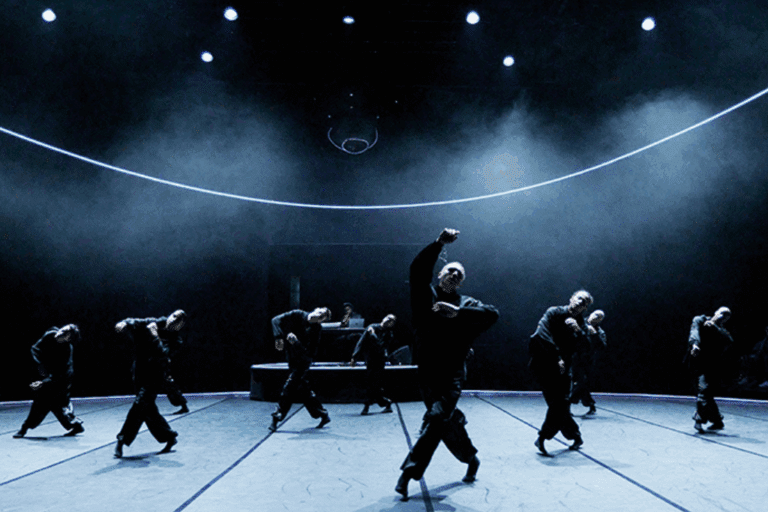 iPhoto caption: Photo by Fabian Hammerl.
In A a | a B : B E N D, choreographer Aszure Barton aims to rebuild dance from the inside out
“It’s so easy to over-intellectualize dance in general, but B E N D is about hearing and moving to cool-ass music together,” says Barton ahead of the show's run at the Bluma Appel Theatre.
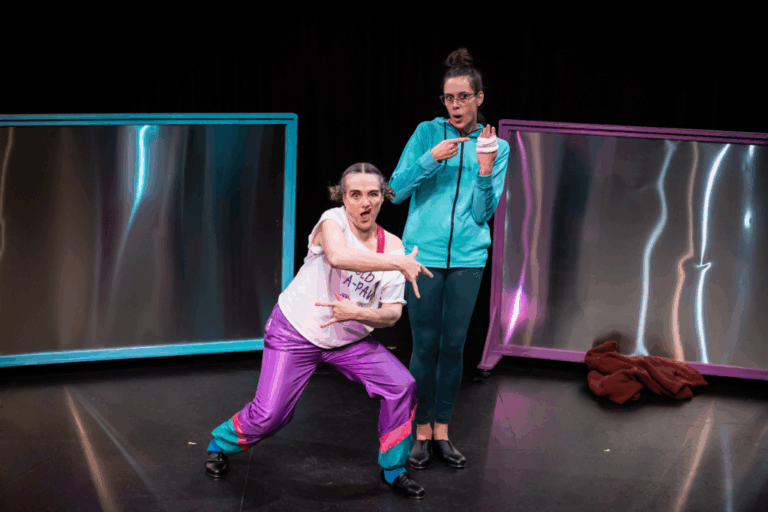 iPhoto caption: Elinor Holt and Ellen Close in 'How Patty and Joanne Won High Gold at the Grand Christmas Cup Winter Dance Competition.' Photo by Benjamin Laird.
“We’re living in a world right now where failure is not an option,” says actor Elinor Holt. “And a lot of times people would rather not try anything at all, rather than try something and risk failing at it.”
 iPhoto caption: Jane Spidell as Bettye, Kevin Bundy as Jim, and Noah Beemer as Steve in 'Twelve Dinners.' Photo by Dahlia Katz.
With TIFT’s Twelve Dinners, actor Steve Ross makes the leap to playwright-director
"I love sitting with the actors before rehearsals and discussing, especially when they ask questions,” says Ross. “I love the blocking and staging. I love directing my own work, but find it challenging."
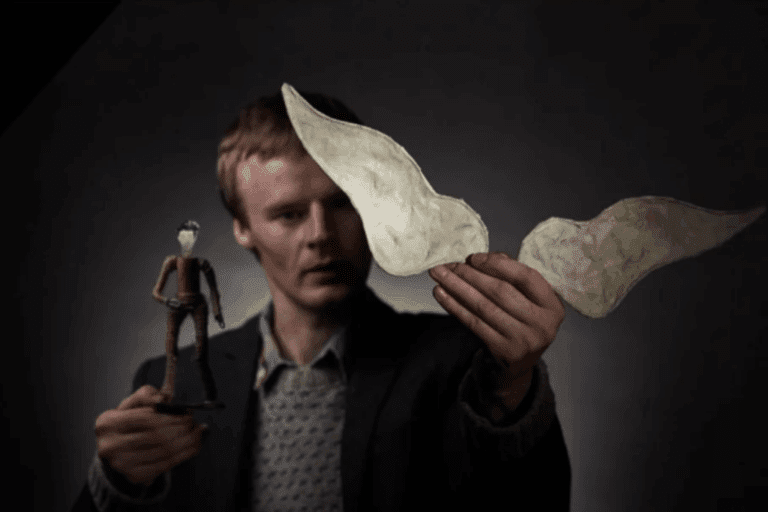 iPhoto caption: Manus Halligan in Dan Colley's adaptation of 'A Very Old Man with Enormous Wings'. Photo by Ste Murray.
A contemporary Gabriel García Márquez adaptation touches down in Toronto
A Very Old Man with Enormous Wings has toured internationally since 2022, with a shifting cast of performers. Halligan and Beaman, the original actors and co-adaptors, will reprise their roles for the Toronto premiere.
 iPhoto caption: 'Narnia' in rehearsal. Photo by Dahlia Katz.
"What emerged for us was this idea of life cycles,” reflects Narnia adaptor-director Fiona Sauder. “‘What happens when you get stuck in one season [of life], and what happens when that season comes to an end? [What things] have to die and fall away in order for new things to grow?’”
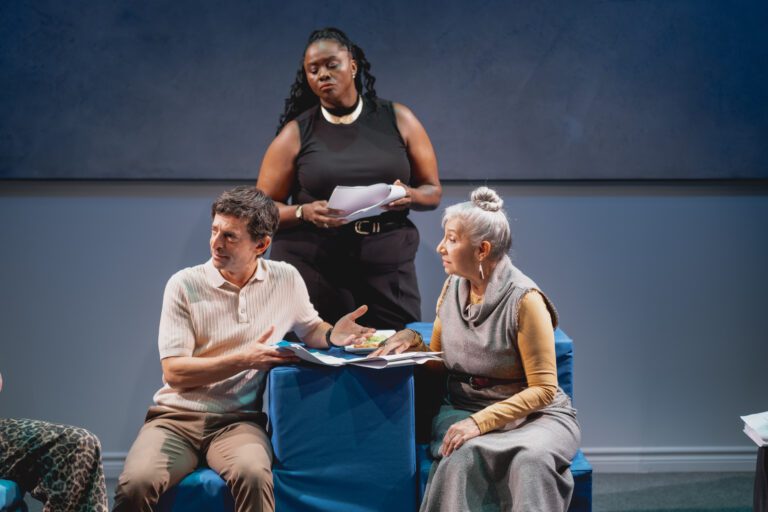 iPhoto caption: Jordan Pettle, Janelle Cooper, and Monique Mojica in CHILD-ish. Photo by Jae Yang.
Tarragon’s upcoming show gives audiences a verbatim taste of children’s wisdom, wit, and weirdness
The first inklings of CHILD-ish came to Drake in 2017. “I got to an age where I started having a lot more kids in my life,” he said. That “got me curious about what adults can learn from kids: playing with and flipping that power dynamic of who’s the learner and who’s the teacher.”
 iPhoto caption: Production stills from Faust and Nabucco courtesy of the Canadian Opera Company.
REVIEW: Excellent singing elevates lacklustre productions in Faust and Nabucco
Both operas in the Canadian Opera Company’s current fall repertoire, Faust and Nabucco, include stellar performances from world-class singers in productions featuring directorial and design choices that abandon historical accuracy and realistic mise-en-scène to varying degrees of success.
 iPhoto caption: Photo by Michael Cooper
REVIEW: Chiara Isotton burns like a supernova in COC’s Medea
Isotton is riveting, offering a masterful vocal and physical performance that swings wildly from one emotional episode to the next.
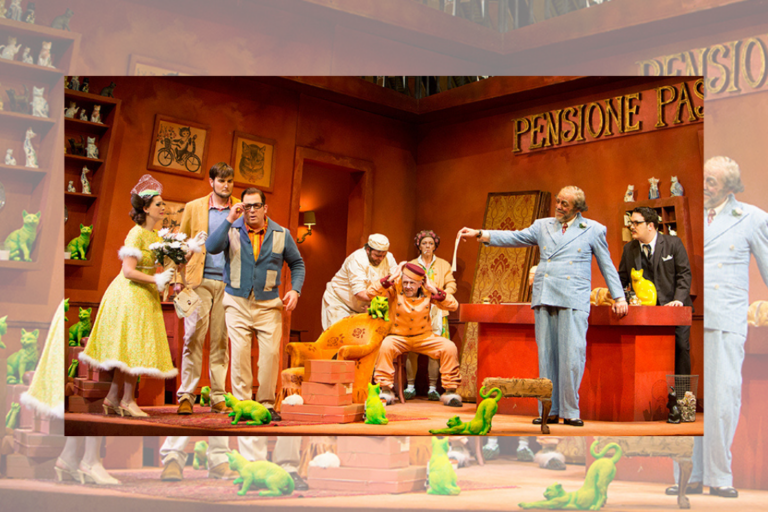 iPhoto caption: Photo courtesy of Canadian Opera Company.
REVIEW: A new take on Don Pasquale re-imagines its lead as a cat-loving crank
If you love cats, you’ll like Barbe & Doucet’s production of Don Pasquale.
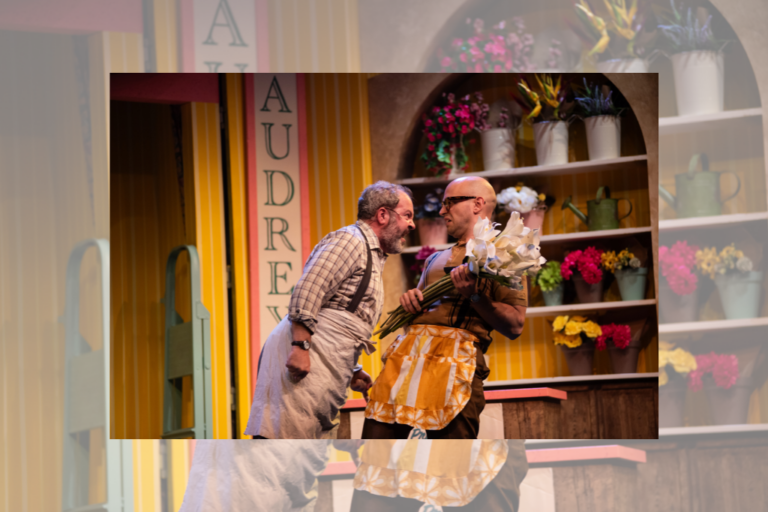
REVIEW: Little Shop of Horrors at Capitol Theatre Port Hope
The performances in Little Shop of Horrors at the Cameco Capitol Theatre in Port Hope are proof that there is formidable talent in theatres out of town that aren’t part of the Stratford and Shaw festivals.
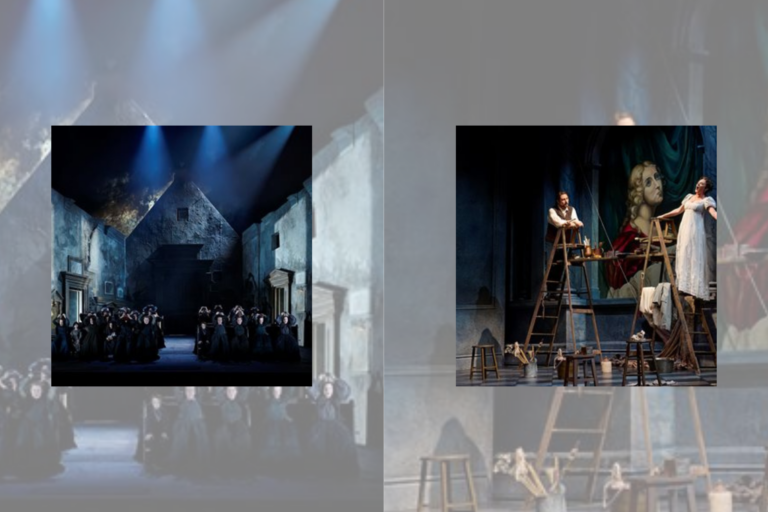 iPhoto caption: Photo by Michael Cooper
REVIEW: Tosca and Macbeth at Canadian Opera Company
Be it the lush and extravagant production of Tosca or the brooding and eerie production of Macbeth, both operas capture the spirit of romantic opera to delight audiences.

REVIEW: The Marriage of Figaro at Canadian Opera Company
Guth’s staging highlights the profound dimensions of human relationships in his exploration of individuals torn between morality, desire, and impulse.
Comments