
REVIEW: Studio 180 Theatre’s Four Minutes Twelve Seconds stirs one moment and puzzles the next
 iPhoto caption: Photo by Dahlia Katz
Constructed as a series of reveals detailing events set before the play’s start, it may be best to experience Studio 180 Theatre’s Four Minutes Twelve Seconds, directed by Mark McGrinder at the Tarragon Theatre Extraspace, with no knowledge of what’s to come. There are so many twists, it occasionally appears playwright James Fritz is satirizing the plotiness of thrillers — though at other points he embraces these narrative swerves with earnestness, or something resembling it.
The play in any case centres on Di (Megan Follows) and David (Sergio Di Zio), a married couple living in Scarborough (for the North American premiere of this British play from 2014, McGrinder has modified location names). After their 17-year-old son Jack, who never appears on stage, returns home wearing a shirt covered in blood, Di and David panic, stained garment in hand: who’s done this? Turns out it’s the brother of Cara (Jadyn Nasato), Jack’s ex-girlfriend. Cara dumped him after a video of the two having sex surfaced online. Owing in part to the sweet Nick (Tavaree Daniel-Simms), a schoolmate of the young couple, information surfaces indicating the sex was likely non-consensual, further distressing Di and David.
Fritz has named fellow Brit Caryl Churchill as an influence, a fact visible in the play’s snappy, cutoff-ridden dialogue, made up largely of conversations slow to unveil their subject. And though Fritz’s deployment of this style can veer toward affectation — he sometimes obscures trivial information until it’s more aggravating than engrossing — it does serve to produce an aura of mystery, along with a degree of forward momentum.
Di emerges as our detective. She’s the only character with any real will to uncover the truth of what’s occurred and thereby push the drama forward. She collects evidence, meets with both Cara and Nick, and concocts idiosyncratic plans to resolve the conflict, all the while fighting to stay grounded. As the script ties itself in narrative knots, Follows never loses sight of the situation’s overwhelming nature; it’s as if Di’s fending off a panic attack at every moment, grabbing onto any scrap of hope she can, clutching to it for survival.
Critics at Toronto’s daily newspapers have had very strong feelings about this (in my view) rather middle-of-the-road production; for the Globe and Mail’s J. Kelly Nestruck, the script is dated and the direction “embarrassingly awkward,” while for Toronto Star’s Joshua Chong, the show is “pretty close to perfect.”
I see where both writers are coming from: the show is conflicting, with much to both stir and puzzle. On a certain level, Fritz’s twists rouse, and are entertaining in the comforting manner of genre fiction purchased at an airport. But they never stop coming off as constructed; the play prioritizes shocks above all else, at times seeming more interested in manipulating the audience than staying true to its characters.
As for McGrinder’s direction, I find the production effective on the level of rhythm, pace, and, often, performance (Di Zio is one of Toronto’s most metamorphic actors, transforming from role to role enough that it usually takes me a few minutes to recognize him). But McGrinder realizes the physical world of the play is in a less complete manner. Jackie Chau’s set of angular modern furniture is sleek, backing up the text’s hints that Jack’s family is wealthy in comparison with Cara’s — yet the actors don’t get many chances to interact with it, making it feel oddly tertiary. And while lighting designer Logan Raju Cracknell provides extra theatricality via occasional isolations of Follows’ Di, the choice to illuminate an unimportant upstage bowl of apples during nearly every transition grows confusing.
McGrinder has opted against selecting a specific angle for his production, writing in his director’s note that distilling a Studio 180 show down to a single idea “has never been more challenging than it is with Four Minutes Twelve Seconds.” Instead, he writes, the play is a catalyst for conversations around “consent, privacy, masculinity, sexual assault, and the perils of technology.” Embracing this thematic soup rather than picking a defined direction doesn’t exactly help with bringing the text into the present day.
That said, I’m glad to see the show has two student matinees scheduled each week. The relevant subject matter, winding plot, pulpy 80-minute runtime, and pair of heartfelt performances from Nasato and Daniel-Simms — young, emerging actors — mean high schoolers in particular should find plenty to get excited about.
Four Minutes Twelve Seconds runs until May 12 at Tarragon Theatre. Tickets are available here.
Intermission reviews are independent and unrelated to Intermission’s partnered content. Learn more about Intermission’s partnership model here.
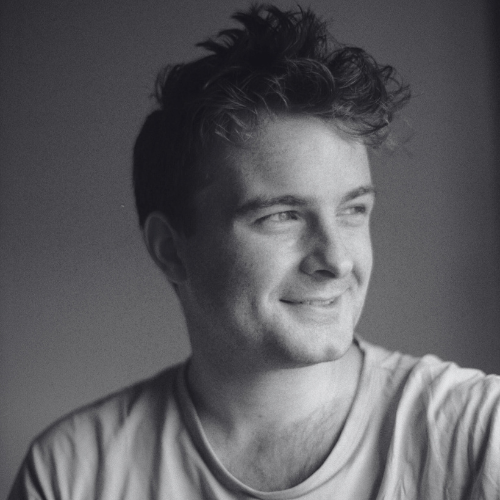
 iPhoto caption: Members of the company of 'Narnia.' Photo by Dahlia Katz.
REVIEW: Bad Hats’ Narnia is a joyful, heartwarming escape
The spirit of openness and the joy of discovery rule over this Narnia. Open the wardrobe and see.
 iPhoto caption: Members of the company of 'Robin Hood.' Photo by Dahlia Katz.
REVIEW: Canadian Stage’s Robin Hood panto is anti-capitalist fun for the whole family
Following Ross Petty’s legacy of scene-stealing, Damien Atkins as the evil Prince John is easily the greatest delight of the show.
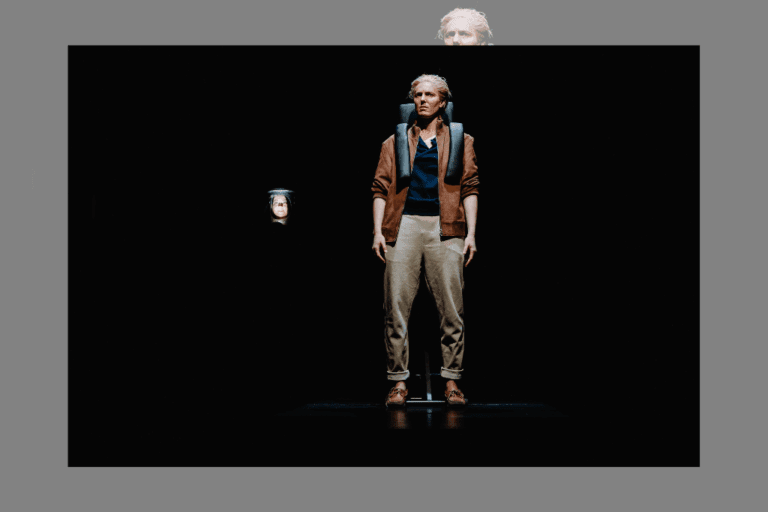 iPhoto caption: Lauren Gillis and Alaine Hutton in 'Public Consumption.' Photo by Eden Graham.
REVIEW: Lester Trips’ stylish Public Consumption captures the internet’s profound emptiness
Rather than directly representing online life, Public Consumption speculates — with virtuosity — about how the digital world affects our bodies. And the show's findings are by no means comfortable.
 iPhoto caption: Tony Ofori and Daren A. Herbert in 'Moonlight Schooner.' Photo by Dahlia Katz.
Kanika Ambrose’s Moonlight Schooner is animated and visually stunning, but its individual pieces don’t come together as neatly as I would've expected.
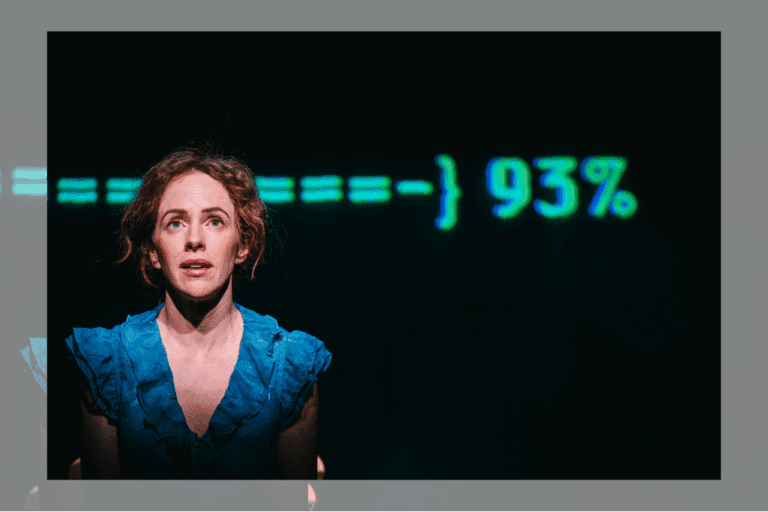 iPhoto caption: Fiona Mongillo in 'Reproduktion.' Photo by Ann Baggley.
REVIEW: Here For Now’s well-acted Reproduktion attempts to tackle too much
Amy Rutherford’s world premiere script is ambitious and the material it covers is complex — but the narrative feels disjointed.
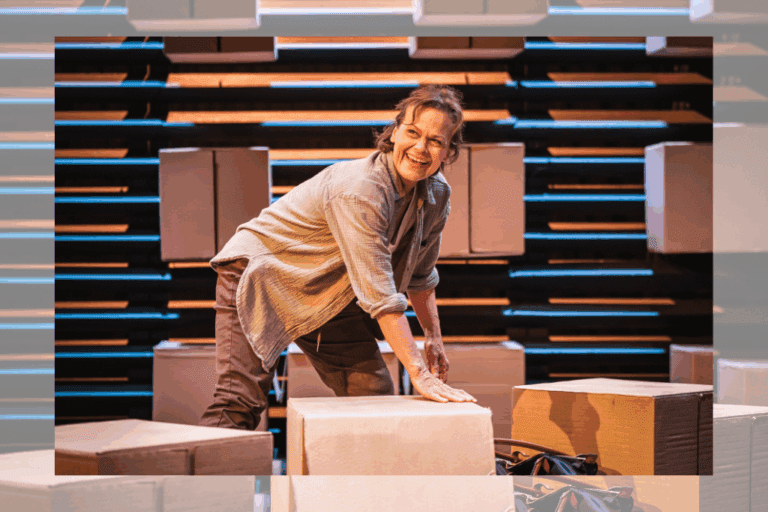 iPhoto caption: Kristen Thomson in 'Fulfillment Centre.' Photo by Elana Emer.
REVIEW: Coal Mine’s Fulfillment Centre asks how we end up alone, together
The production understands the play’s themes, yet feels limited by a script that delivers a package it never fully opens.
iPhoto caption: Lauren Gillis and Alaine Hutton in 'Public Consumption.' Photo by Eden Graham.
REVIEW: Lester Trips’ stylish Public Consumption captures the internet’s profound emptiness
Rather than directly representing online life, Public Consumption speculates — with virtuosity — about how the digital world affects our bodies. And the show's findings are by no means comfortable.
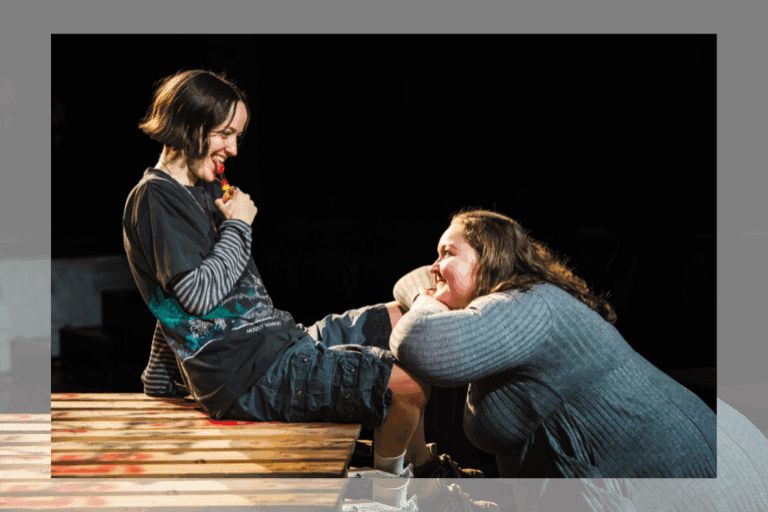 iPhoto caption: Photo by Elana Emer.
REVIEW: Icarus Theatre’s DNA paints a disturbing mural of teenage rebellion
While director Erik Richards’ tendency toward snappy, thriller-esque pacing doesn’t suit all of DNA’s more intimate moments, it adds electricity to the drama’s group scenes, bringing playwright Dennis Kelly’s reflections on groupthink and collective grief into clear view.
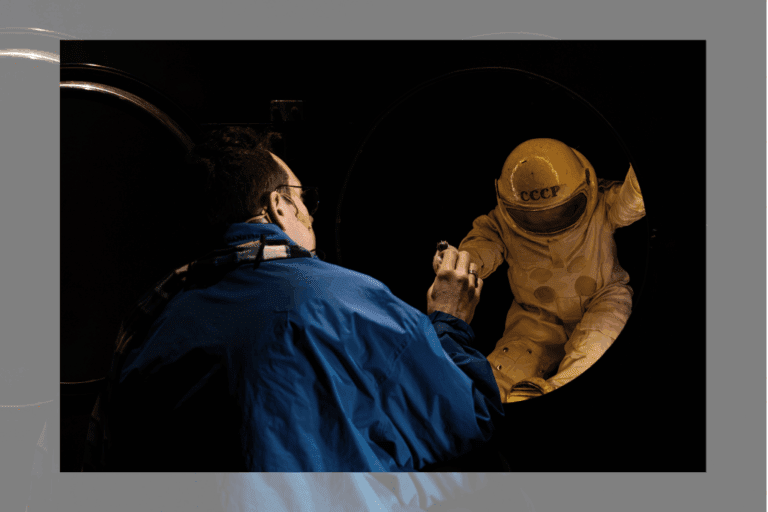 iPhoto caption: Olivier Normand in 'The Far Side of the Moon.' Photo by Li Wang.
REVIEW: Lepage’s ethereal The Far Side of the Moon is insomniac theatre
The Far Side of the Moon begins and ends with a large mirror on stage, and the show extracts enigmatic power from the tantalizing question of whether its protagonist is losing himself in his reflection, or moving toward self-discovery.
 iPhoto caption: 'Kokuho' still courtesy of TIFF.
REVIEW: During this year’s TIFF, two films depicted theatre as a vessel for transcendence
Of the several performing arts-adjacent selections I took in, most affecting were two dramas: Lee Sang-il’s Kokuho and Chloé Zhao’s Hamnet. In both period pieces, theatre creation serves as an emotional outlet for an artist navigating devastating loss.
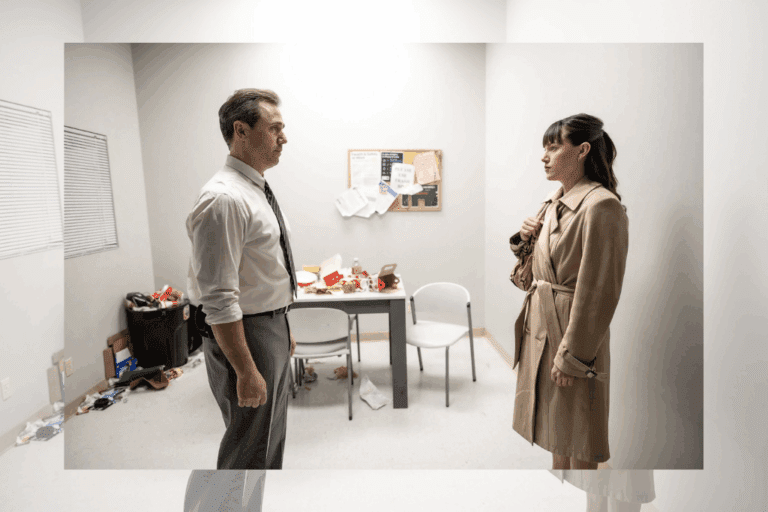 iPhoto caption: Cyrus Lane and Kirstyn Russelle in Barrie run of 'Blackbird.' Photo by Dahlia Katz.
REVIEW: Talk is Free Theatre’s Blackbird offers a close-up look at two detailed performances
Emerging director Dean Deffett has concocted a tight, straightforward production, primarily of interest as an intimate character study.
 iPhoto caption: Sleman Aldib and an audience member in 'The Opposite.' Still from a trailer by Spectrum Associates.
REVIEW: Kitchener’s biennial IMPACT Festival crackled with urgency
Most of the six works I viewed tackled urgent topics, from the convoluted Canadian immigration system to the Palestinian experience of displacement: explorations that line up with artistic director Pam Patel’s curatorial statement, which discusses how IMPACT ‘25 “unpacks what it means to survive, to resist, and to seek refuge” through a global, Indigenous-focused lens.
Comments