
REVIEW: Lepage’s ethereal The Far Side of the Moon is insomniac theatre
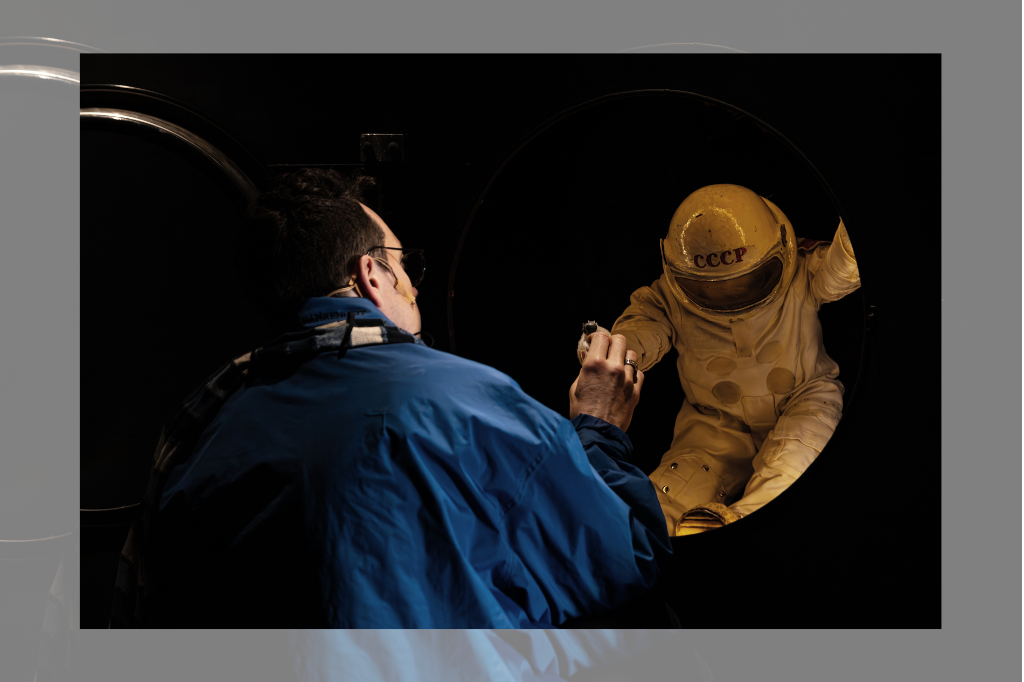 iPhoto caption: Olivier Normand in 'The Far Side of the Moon.' Photo by Li Wang.
Mirrors can bring us closer to ourselves or have a distancing effect; it depends on the hour, manner, and angle of our gaze. Writer-director Robert Lepage’s The Far Side of the Moon begins and ends with a large mirror on stage, and the show extracts enigmatic power from the tantalizing question of whether its protagonist is losing himself in his reflection, or moving toward self-discovery. This visual doubling finds further thematic parallels in a story defined by pairs: of brothers, worldviews, and celestial bodies.
A Canadian Stage-presented remount of a lengthy one-act that premiered a quarter of a century ago to international acclaim, Ex Machina’s The Far Side of the Moon concerns a late-30s science historian named Philippe. Impoverished and stuck in the early stages of his career, the character drifts through late-1990s Quebec with the melancholy affect of a neo-noir detective. Actor Olivier Normand embodies Philippe and a handful of other characters — most centrally Andre, a successful TV weatherman and Philippe’s younger brother.
As Philippe attends to the last wishes of his recently deceased mother, he must interact more than usual with Andre, whom he considers frustratingly ordinary. In an opening monologue downstage from the aforementioned mirror, he compares their relationship to the U.S.-Soviet space race of the 1950s to 1970s; archival clips of milestones from that period go on to appear throughout, interwoven in chronological order. This speech also introduces the titular image of the moon’s two sides: the sunlit one we recognize — once thought to be a mirror — and the darkness-shrouded side disfigured by cosmic winds.
Reality begins to warp in the show’s second scene, during which Philippe washes a load of clothes at a laundromat. The front of the washing machine appears on stage; next to it, live projection design displays the appliance’s interior, where Philippe’s laundry spins. After the load is complete, Philippe opens the door and climbs inside. The projection then zooms out slightly, and Philippe begins moving in slow-motion, as if floating through space.
This washing machine door pops up throughout the rest of the show, sometimes as viewed from the inside. Philippe’s cosmic fantasies continue as well, often involving puppetry representing astronauts or spaceships (manipulated by Éric Leblanc, with design by Pierre Robitaille and Sylvie Courbron). At one point, he reveals to a bartender that he’s interested in space because he thinks that next to something so momentous, reconciling with Andre should be comparatively straightforward. But what gives the show its delicious aura of mystery is that sometimes, these fantasies seem to unfold somewhat independently of Philippe: So do they really stem from his imagination, or from some greater force?
The Far Side of the Moon is insomniac theatre. Time acts oddly: A glowing analog clock signals last call in a liminal Montreal hotel bar, shortly past midnight; later, in a Moscow conference venue, the same set piece causes Philippe to grab his face in horror when he realizes he’s lost track of time. And stuck in an elevator during the work day, Andre dreams of an evening from his childhood where he rummaged through Philippe’s belongings in their shared room — an ethereal series of events that in a different scene Philippe appears also to recall, as part of a memory tinged by LSD. I got the sense that the brothers’ connection, in all its pain and tenderness, owes much to them having routinely been together during those ever-mysterious early-morning hours. Although Philippe’s reflection spacewalks, his real self tends to sleepwalk.
Light further blurs the boundaries between day and night. For much of the show, it hugs Normand closely, leaving him floating in darkness, the back of the set in shadows as Andre attempts to convince himself that he didn’t kill their mother’s fish or as Philippe works the phones for Quebec daily Le Soleil (in the show’s most superfluous scene). The crepuscular register becomes familiar; the audience’s eyes adjust. Then arrives brightness — whether strobing, terrifyingly; blinding, like a rocket launch; or piercing but somehow comfortable, as when it accompanies a sumptuous red velvet curtain, evoking visions of the shimmeringly surreal Club Silencio in David Lynch’s Mulholland Drive.
Normand’s well-sculpted performance is highly physical, punctuated by exaggerated movements that reverberate through the imposing Bluma Appel Theatre. But on the level of text, there were moments where I found it distracting that the production wasn’t appearing in the original French. The show has long been performed in Quebecois and English versions, but it’s still rather strange to hear an evidently Francophone actor perform a Quebec weather broadcast that shouts out the Gaspé Peninsula… in English. And while the script doesn’t explicitly deconstruct Quebecois identity, there are obvious resonances, considering it’s about semi-estranged brothers and set in the years following the 1995 referendum — a subtext that may have rung out more clearly if at least some performances were presented in French with English surtitles (an approach that has become more commonplace since the show’s premiere).
But I’m overall very grateful that I got to see this complex 25-year-old production. Literature and film critics are a little spoiled in that they can freely experience key works from the history of their art form, but when it comes to theatre, there are fewer chances to look in the rearview mirror.
The Far Side of the Moon runs at the Bluma Appel Theatre until November 16. More information is available here.
Intermission reviews are independent and unrelated to Intermission’s partnered content. Learn more about Intermission’s partnership model here.
Liam Donovan
Liam is Intermission’s senior editor. He lives in Toronto. His Substack newsletter is available at loamdonovan.substack.com.
LEARN MORE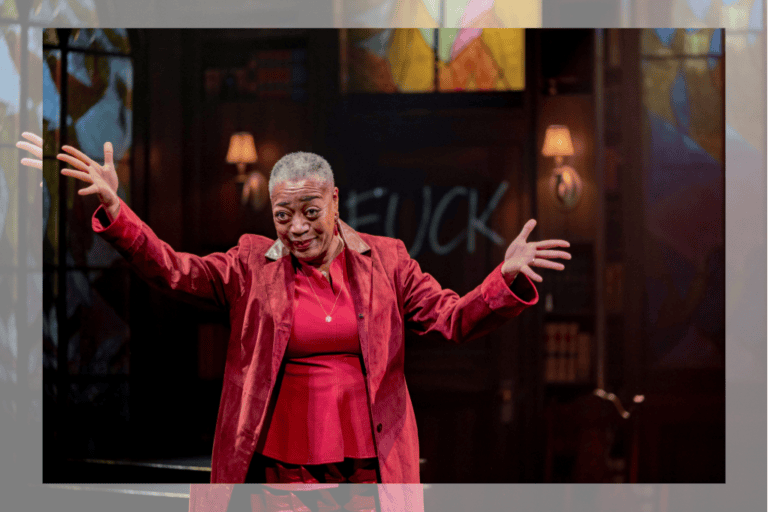 iPhoto caption: Karen Robinson in 'Prophetess.' Photo by Jae Yang.
REVIEW: In Tarragon’s outstanding Prophetess, language is both mighty and inadequate
Margaret’s facility with text helps her maneuver through an institution like York University, where words hold significant power. But the brilliant middle-aged scholar finds herself surprisingly unequipped to process the true sense of more elemental forces: love, grief, spiders.
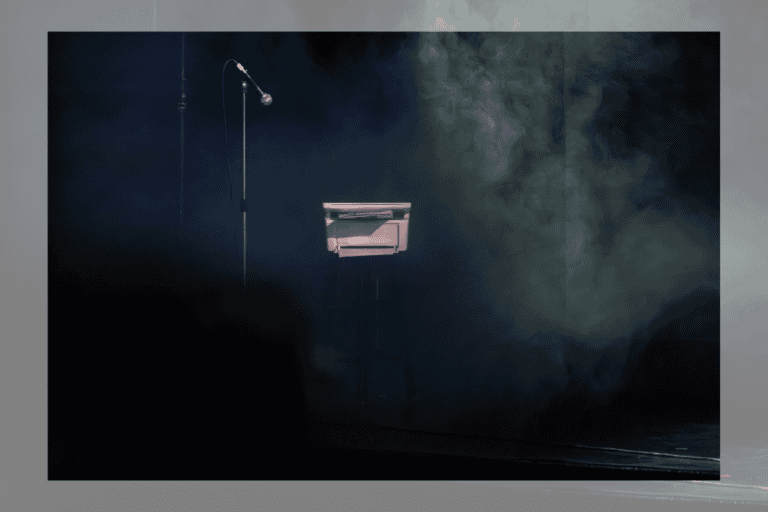 iPhoto caption: 'Documents Perform 3.' Photo by T Photo Factory.
Joining online from across the Americas, more than a dozen artists, artistic producers, cultural leaders, and policymakers add live suggestions to the document, together transforming stuffy bureaucratic language into a rowdy patchwork of compassionate imagining.
 iPhoto caption: Stratford's Tom Patterson Theatre. Photo by Ann Baggley.
2027 highlights include a new Canadian Jacob Two-Two musical and two of the Bard’s thornier plays: The Merchant of Venice and The Taming of the Shrew.
 iPhoto caption: Devon Michael Brown as Rusty Charlie with members of the 'Guys and Dolls' company.
“It's so exhausting, but it's really rewarding when you get to dance so full-out,” says Devon Michael Brown. “You get to use your technique and your training to the fullest extent.”
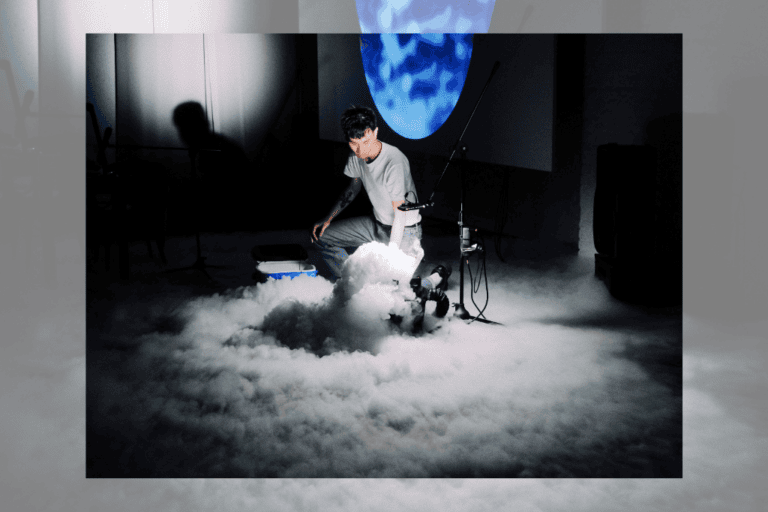 iPhoto caption: Ping-Hsiang Wang in 'Retina Maneuver.' Photo by Hang Su.
REVIEW: At this year’s SummerWorks Performance Festival, physical storytelling is central
From a dancer becoming a canine to a shy theatre director practicing his swordsmanship, the shows I’ve seen so far use performers’ bodies to dramatize defiance.
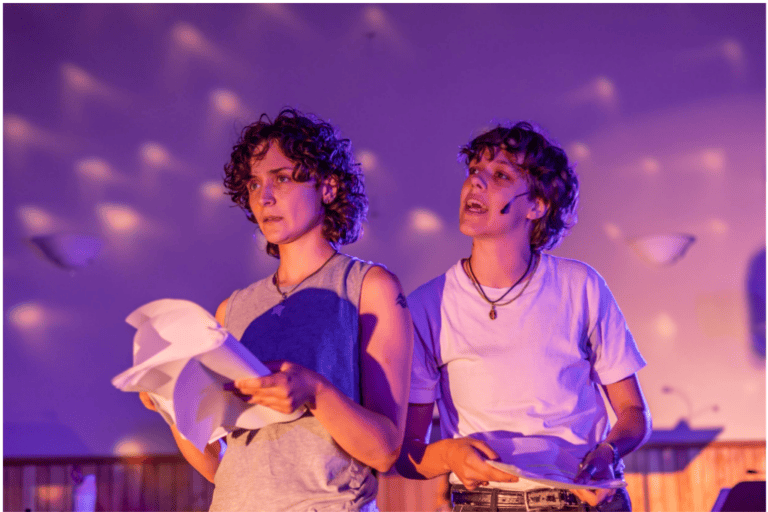 iPhoto caption: Anna Morreale and Luca McPhee perform in 'From Stardust' at the 2025 MADGEN Theatre Festival. Photo by Dave Klassen.
MADGEN Theatre Festival returns to the Danforth
Theatre of the Beat selected four producers under the age of 30 to receive paid mentorship from Toronto theatre-makers. From August 20 to 22, each member of the cohort mounts a new one-act Canadian play.
Comments