
REVIEW: Baram and Snieckus’ Big Stuff uses improv to explore the materiality of grief
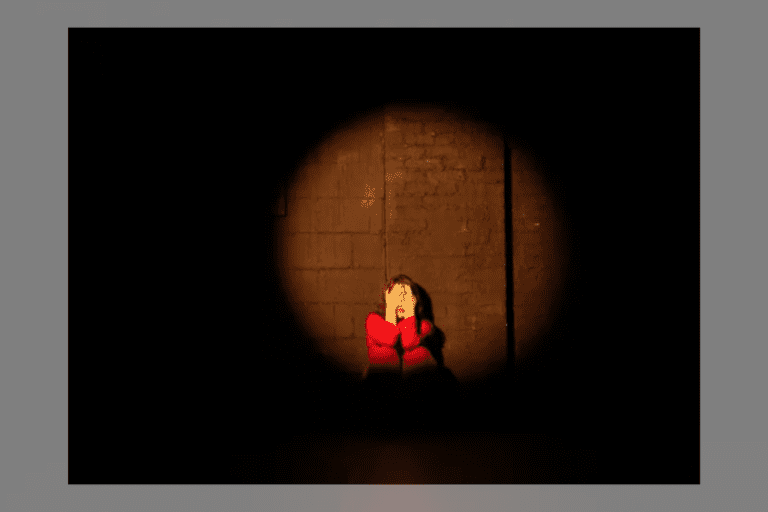
 iPhoto caption: Photo by Dahlia Katz.
Cardboard boxes housing an idiosyncratic array of objects including a pinprick portrait of a crying orphan, a wooden carving of a hunted owl, and a shiny fleet of toasters provide the backdrop for the world premiere of Big Stuff, produced and performed by married comedy duo Matt Baram and Naomi Snieckus in association with Crow’s Theatre. The hour-and-a-half two-hander, directed by co-creator Kat Sandler with set design by Michelle Tracey, investigates how seemingly useless items can serve as conduits for memory, particularly after the death of a loved one. This is charged subject matter — but Baram and Snieckus’ improvisation-infused, Second City-tested comic repartee keeps the show moving with delicious lightness.
The autobiographical premise: In the wake of their parents’ deaths, Baram wishes to trash many of the inherited belongings, while Snieckus is insistent on keeping them. This disagreement yields flashbacks explaining the various items’ significance (or lack thereof), a conceit that lets the couple dramatize key moments in their lives, from their first meeting to the final days of Snieckus’ father’s life.
Pens and paper populate the seats of the Crow’s Studio before the show begins. Once the audience arrives, printed instructions have us write down an item in our living space that reminds us of someone. Baram and Snieckus then collect the entries and incorporate them into the show, splitting up written scenes with brief audience interviews about the objects.
At the performance I attended, the crowd’s responses were often intensely personal, burrowing deep into family histories and tales of first love. Because of its focus on stuff, the play at first seems aimed at people old enough to have accumulated a large number of meaningful personal belongings. As a younger viewer, I wasn’t sure what to write down, and wouldn’t have had much to say if asked about my eventual choice. But the fact that others held forth with elegance on trinkets of such remarkability — a 200-strong collection of mini-elephants marched ahead of a rose petal enshrined in glass — helped me see relevance in the show’s concept.
A rather American forcefulness combines with a particularly Canadian commitment to self-deprecation in the performances of Baram and Snieckus, who are based in Toronto but recently lived in Los Angeles for several years. The blazer-and-glasses-clad Baram is neurotic and grounded, whereas Sniekcus, in a crewneck and button-down, comes off as compassionate but ever-so-slightly fiendish. The duo’s considerable rhythmic precision and kindly, fluid presence anchor the show, even when the ship drifts off course (at my performance, they at one point got lost in the script, having to converse with the stage manager before going back a few pages; they of course washed, peeled, and diced this mishap into a six-course meal).
The synopsis on the Crow’s website discusses the duo’s “distinct blend of storytelling and improvisation,” and, indeed, Big Stuff owns property near that porous border between comedy and theatre. Baram and Snieckus provide the comic chops, while Sandler brings in much of the staginess, coordinating shifts in lighting (by Emilie Trimbee) and sound (by Tim Lindsay) to signpost the beginning and end of different timelines. The show even draws attention to the tension between the art forms; a few times, after a section of improvisation, Baram and Snieckus return to the text of a scripted scene but act as if they’ve forgotten to do the blocking before hastily acknowledging this discrepancy and returning to the correct physical spot.
If the show falters, the tumult lies in its conclusion, which seems to me oddly neat, given the show’s discursive structure. In it, Baram and Snieckus appear eager to offer a final argument regarding the usefulness of their stuff. But this spelled-out rhetoric is less powerful than the subtext that’s been building over the piece’s runtime: That these objects are valuable because they inspired this exceptional show.
Big Stuff runs at Crow’s Theatre until December 8. Tickets are available here.
Intermission reviews are independent and unrelated to Intermission’s partnered content. Learn more about Intermission’s partnership model here.
Liam Donovan
Liam is Intermission’s senior editor. He lives in Toronto. His Substack newsletter is available at loamdonovan.substack.com.
LEARN MORE iPhoto caption: Steven Sutcliffe and company in 'Twelfth Night.' Photo by Dahlia Katz.
REVIEW: High Park Twelfth Night pays tribute to the crazy things we do for love
As the play’s events ping-pong between seriousness and frivolity, Caroline Toal’s Viola appears constantly aware of the dangerous contradictions in the air, remaining guarded against the chaos' pull — and yet never entirely abandoning the possibility of enchantment.
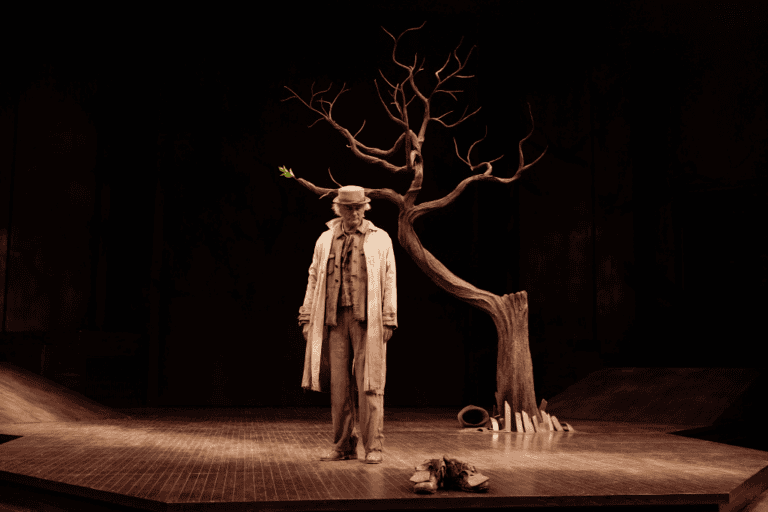 iPhoto caption: Paul Gross in 'Waiting for Godot.' Photo by David Hou.
Why Paul Gross thinks Waiting for Godot is ‘one of the great achievements of human creativity’
“The audience is with you. You bring them in. There isn't a big division between the stage and the audience,” says Gross, currently playing Vladimir in Waiting for Godot at the Stratford Festival. “They’re the final piece of the storytelling. We need them to complete the circle.”
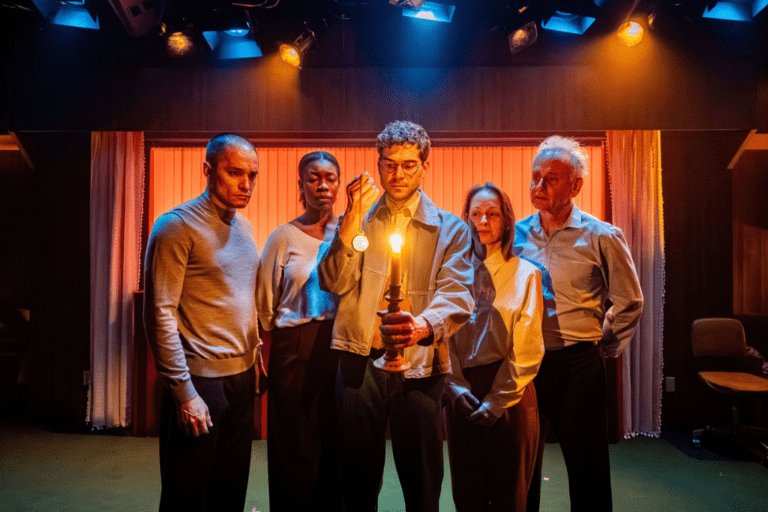 iPhoto caption: Karl Ang, Ivy Charles, Daniel Maslany, Mariya Khomutova, and Alon Nashman in 'The Division.' Photo by Dahlia Katz.
Productions at Crow’s and Theatre Passe Muraille win top honours at the 2026 Dora Awards
This evening at Meridian Hall, the Toronto Alliance for the Performing Arts (TAPA) announced the recipients of the 46th annual Dora Awards, celebrating local theatre, dance, and opera.
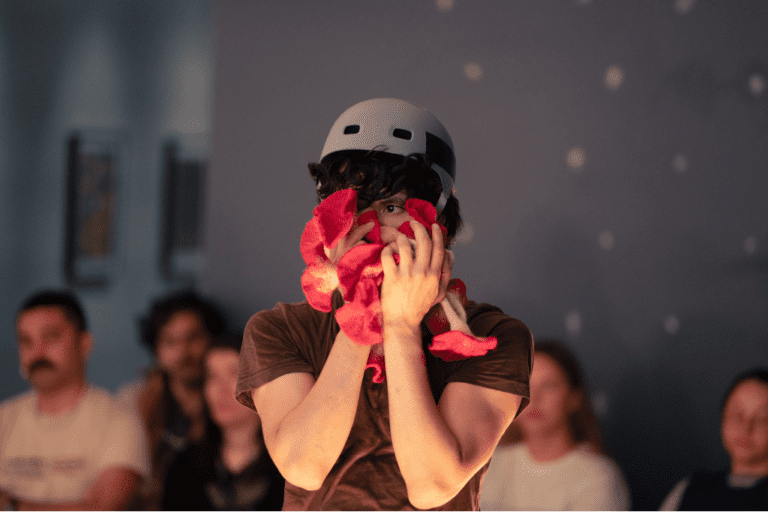 iPhoto caption: 'Golden Rez Dog.' Photo by Philippe Latour.
Creations from Denmark, Hong Kong, Iran, Mexico, and beyond feature in this year’s SummerWorks Performance Festival programming.
 iPhoto caption: Photo by Drew Berry.
REVIEW: An homage to Richard Foreman commands us to change our lives — and our theatre
Richard Foreman's plays usually drew on his personal journals and clocked in around 70 minutes; when he passed away last year at the age of 87, he left behind an invitation for directors to create royalty-free work from those journals. With the recently closed You Must Change Your Life at Toronto’s Alumnae Theatre, creator-director Ilana Khanin took up that offer to ludic, collage-like effect.
 iPhoto caption: Danny O’Mahony and Emily Kilkenny Roddy in 'Bellow.' Photo by Ste Murray.
REVIEW: This year’s Bealtaine Theatre Festival featured accordions, ketamine, and James Joyce
The festival serves up a curated program of contemporary theatre from Ireland — appreciated, in a city that punches below its weight in terms of international performing arts offerings from countries it doesn’t border.
Comments