
REVIEW: Charlie and the Chocolate Factory at the Grand Theatre exudes whimsy and warmth
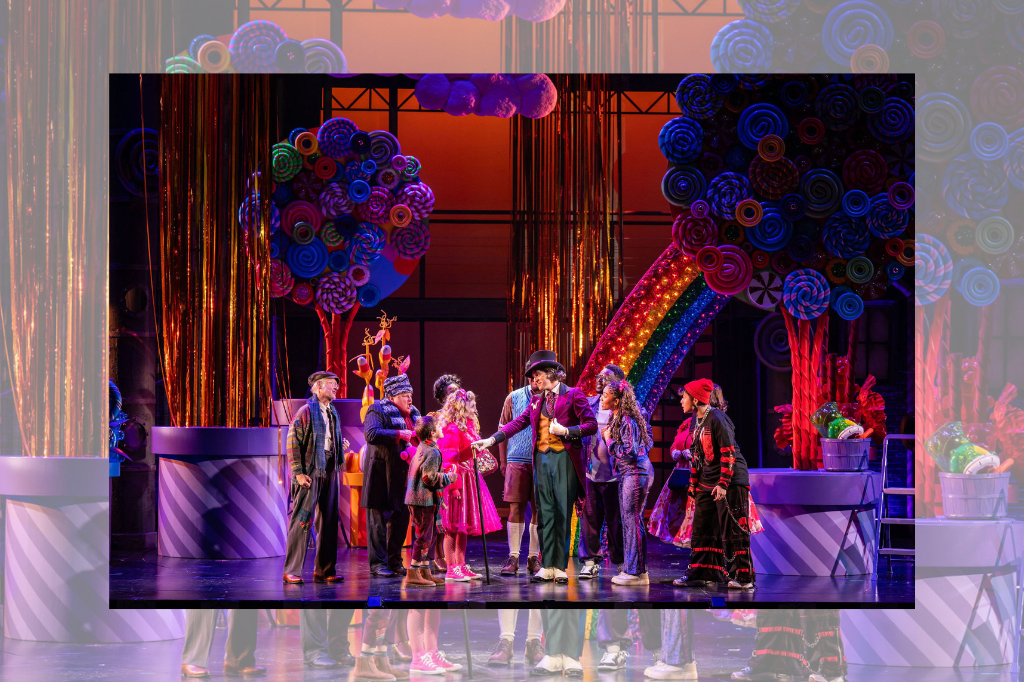 iPhoto caption: Photo by Dahlia Katz
“Who can take a rainbow and wrap it in a sigh? Soak it in the sun and make a groovy lemon pie?” Mark Uhre can. Following Gene Wilder’s and Johnny Depp’s iconic Willy Wonka performances — and coming at the same time as Timothée Chalamet’s take on the role — is no small task for any actor, but Uhre cheekily wriggles his way into his own triumphant performance of everyone’s favourite Roald Dahl chocolatier. Even with a full first act of build up to his official entrance, from the moment the purple gloves go on until the final note on the great glass elevator ride, Uhre’s Wonka captivates the audience. The night I was there, Uhre’s performance in this family-friendly musical provoked the most audible gasps and cheers from the playgoers all around me.
Roald Dahl’s Charlie and the Chocolate Factory — the story of a little boy who wins a golden ticket against all odds to see inside the magical world of a famous chocolate factory — is likely already well known and loved by audience members who will attend the Grand Theatre’s production. Kudos to director Jan Alexandra Smith for helping Uhre and the rest of the talented cast find that difficult balance between delightfully dangerous and charmingly sincere that Dahl’s work demands.
Other standout performances include the wonderfully awful Veruca Salt (Nicole Norswothy) and the bubble gum-chewing queen of pop Violet Beauregarde (Mikela Marcellin). Norswothy shows off her brilliant strength as a dancer, in choreography expertly conceived by Robin Calvert. Veruca’s bratty side is clear as she twirls around on pointe shoes demanding everyone’s attention. Marcellin’s movement skills are also on full display in her shining spotlight moment, but it’s her gorgeous vocal instrument which is particularly striking — even with a mouth full of gum! A round of applause for musical director Alexandra Kane for bringing together this fantastic number and deftly carrying the musical action throughout the entire production.
In what I think is the highest form of flattery for any performer taking on one of Charlie’s notoriously horrid fellow golden ticket holders, I found myself cheering for all four children’s ridiculous demises. I only wish their movement skills were utilized to greater effect in their characters’ final moments. In contrast, little pure-of-heart Charlie Bucket (played by Greyson Reign Armer and Neela Noble on alternate nights) is sure to win audiences over, especially because this lovable protagonist is the only kid actor in the show.
The design elements alone would be a reason to make it out to the show. Fun moments of whimsy are built into everything from set designer Scott Penner’s delightful rotating bed to projection designer Cameron Fraser’s gorgeous framing of the play’s final moments. I was particularly happy to see how well this production used the sought-after talents of magic and illusions designer Skylar Fox, who was brought in from across the border. I have a feeling families will be chatting about a few spectacular moments on the car ride home.
Now, even though I very much enjoyed many aspects of this production, like many Dahl fans out there, I have some very specific ideas of how this childhood classic should be done and I understand this might get in the way of my full enjoyment of any Charlie and the Chocolate Factory adaptation. It’s perhaps unsurprising then that I didn’t love everything about this version, written by David Greig and with music and lyrics by the duo behind Hairspray, Marc Shaiman and Scott Wittman.
This is partly because of the ambiguous time period: Is it the 1920s, 1970s, 1990s, the early 2000s, or today? While on the one hand, we’re dealing with a children’s story and time really shouldn’t matter all that much, by pitting musical styles against one another through time, there’s an ingrained sense of musical hierarchy in the piece that feels a little odd. Dahl’s work is emblematic of championing the underdog which inherently pushes against social hierarchies. He also celebrates childhood creativity above all else, so a dig at one creative form over another doesn’t quite sit right to me.
Characters like Mike Teevee — to no fault of the talented performer Elena “Elm” Reyes — become confused by competing interests. Do Teevee’s horrible antics tell us we are supposed to hate early aughts, or pop-punk angst? Or modern day social media’s corruption of our youth? I’m not quite sure — but perhaps this doesn’t matter. I suppose there’s the argument that this sort of piece has the ability to musically connect with multiple generations at once. I just worry that it’s already a little out of date with post-genre listening habits on the rise and that it doesn’t correspond with the anti-classist spirit of Dahl’s original work.
Am I reading too much into a holiday show for kids? Maybe. I did warn you that I have strong feelings about how Dahl’s work should be adapted. Does the piece work as a fun play that people should see over their Christmas break? Yes, absolutely. Quibbles on music and class aside, this production is beautifully conceived, and a very enjoyable night out with friends and family this holiday season.
Charlie and the Chocolate Factory runs at the Grand Theatre in London until December 24. Tickets are available here.
Intermission reviews are independent and unrelated to Intermission’s partnered content. Learn more about Intermission’s partnership model here.

Taylor Marie Graham
Taylor Marie Graham (she/her) is a Dora nominated writer, theatre artist, and educator living in Cambridge, ON / Haldimand Tract. At the University of Guelph, she holds an MFA in Creative Writing and is currently a Doctoral Candidate writing an analysis of the Blyth Festival Theatre. Both Taylor’s artistic and academic work often explores rural feminisms and the decolonization of bodies in space. www.taylormariegraham.com
LEARN MORE iPhoto caption: Members of the company of 'Robin Hood.' Photo by Dahlia Katz.
REVIEW: Canadian Stage’s Robin Hood panto is anti-capitalist fun for the whole family
Following Ross Petty’s legacy of scene-stealing, Damien Atkins as the evil Prince John is easily the greatest delight of the show.
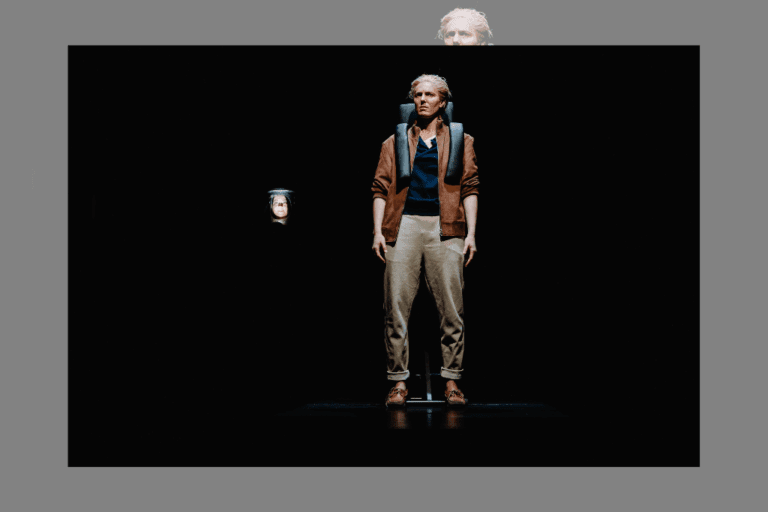 iPhoto caption: Lauren Gillis and Alaine Hutton in 'Public Consumption.' Photo by Eden Graham.
REVIEW: Lester Trips’ stylish Public Consumption captures the internet’s profound emptiness
Rather than directly representing online life, Public Consumption speculates — with virtuosity — about how the digital world affects our bodies. And the show's findings are by no means comfortable.
 iPhoto caption: Tony Ofori and Daren A. Herbert in 'Moonlight Schooner.' Photo by Dahlia Katz.
Kanika Ambrose’s Moonlight Schooner is animated and visually stunning, but its individual pieces don’t come together as neatly as I would've expected.
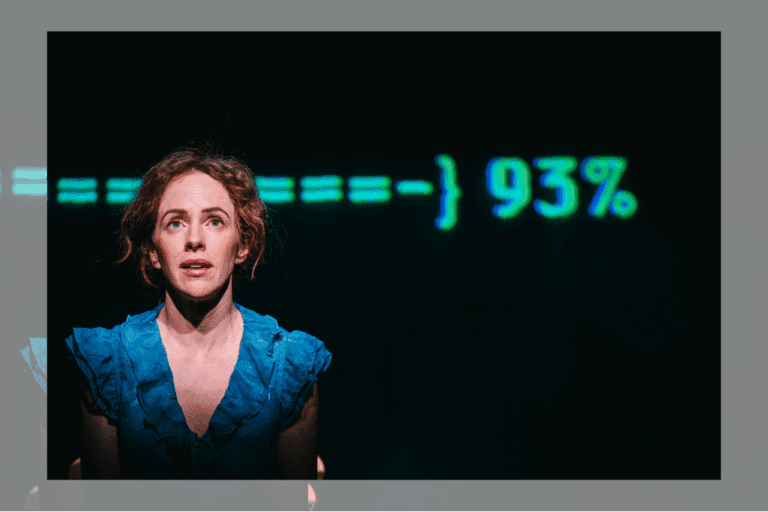 iPhoto caption: Fiona Mongillo in 'Reproduktion.' Photo by Ann Baggley.
REVIEW: Here For Now’s well-acted Reproduktion attempts to tackle too much
Amy Rutherford’s world premiere script is ambitious and the material it covers is complex — but the narrative feels disjointed.
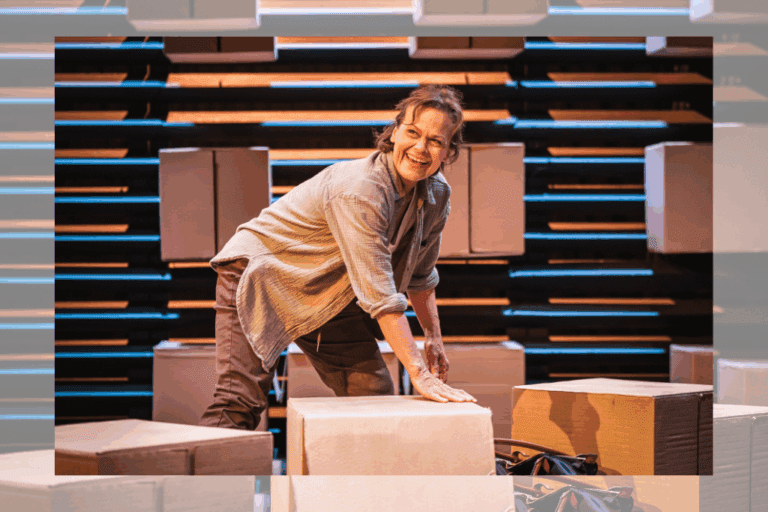 iPhoto caption: Kristen Thomson in 'Fulfillment Centre.' Photo by Elana Emer.
REVIEW: Coal Mine’s Fulfillment Centre asks how we end up alone, together
The production understands the play’s themes, yet feels limited by a script that delivers a package it never fully opens.
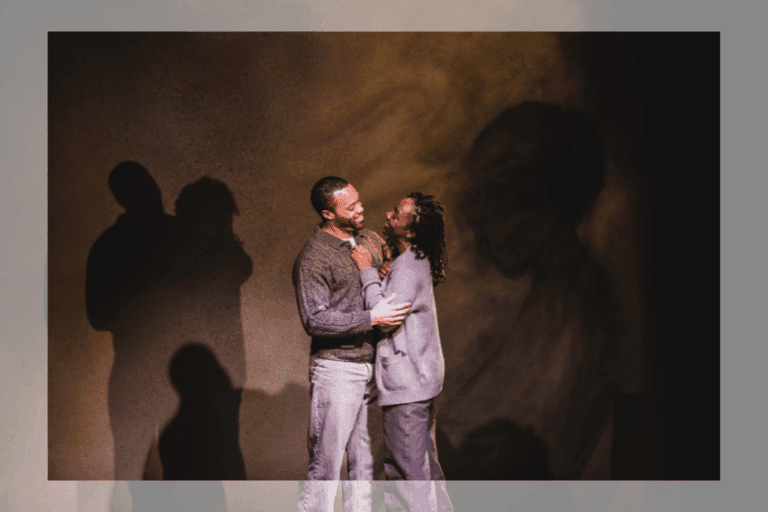 iPhoto caption: Dwain Murphy and Virgilia Griffith in 'a profoundly affectionate, passionate devotion to someone
(-noun).' Photo by Jae Yang.
iPhoto caption: Dwain Murphy and Virgilia Griffith in 'a profoundly affectionate, passionate devotion to someone
(-noun).' Photo by Jae Yang.
REVIEW: Obsidian and Tarragon co-production reflects on the inadequacy of language
a profoundly affectionate, passionate devotion to someone (-noun): the title says it all, offering a definition for an absent word. The thing is the thing unsaid. For the play’s three couples, language falls short: beautifully, tragically, sublimely.
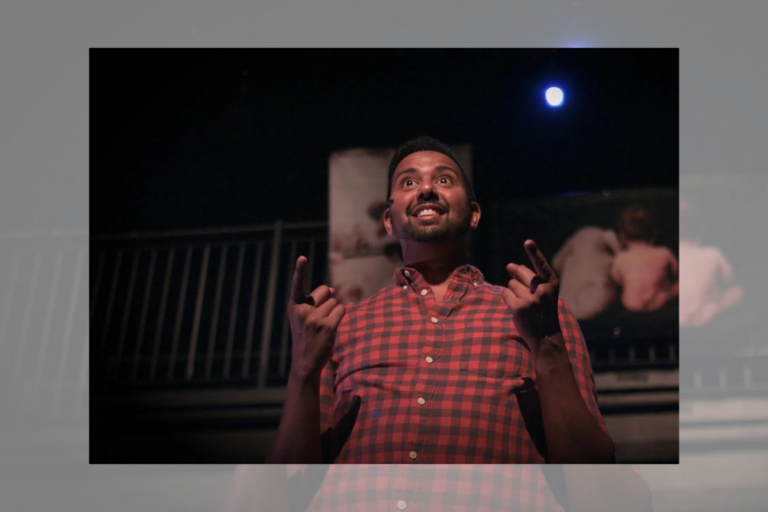 iPhoto caption: Video still courtesy of the Grand Theatre.
REVIEW: In One Step At A Time, Andrew Prashad unpacks disability through tap dance
Prashad’s play is undeniably impactful and advocates for the spina bifida community with great passion and joy.

REVIEW: You’d have to be a grinch not to like Lighthouse Festival’s Jack and the Beanstalk
You’d have to be a real grinch not to like this take on Jack and the Beanstalk, a panto perfect for Port Dover and Port Colborne.

REVIEW: Kim’s Convenience starring Ins Choi skilfully sews together the past and present
I suspect that audiences will pack the Grand Theatre to see this well-executed new production.

REVIEW: Grand Ghosts at The Grand Theatre
Grand Ghosts’ score is bone-chilling from the first note to the last.
 iPhoto caption: Academia or creation — the age-old question. Image: Aisling Murphy.
Both jobs require strong communication and storytelling. Both fill me with a sense of meaning in a difficult world, and the more I dissect them, the less I am able to find where one ends and the other begins.
Comments