
REVIEW: World premiere of Comfort Food is anything but comfortable — and that’s why it works
 iPhoto caption: Zorana Sadiq and Noah Grittani in Comfort Food. Photo by Dahlia Katz.
When appearances become the main course, Comfort Food questions what’s really on the menu. Playwright-performer Zorana Sadiq crafts a rich, genre-blurring character study that asks where real nourishment comes from, and what we lose when performance replaces authenticity.
Sadiq plays Bette, the host of a struggling post-pandemic cooking show — also called Comfort Food — and mother to chronically online 15-year-old KitKat (Noah Grittani). Formerly inseparable, the two used to film YouTube cooking videos together. Now, Kit isolates himself in his room, as his climate anxiety quietly spirals into something far more dangerous (a textbook Gen Z doomer mindset). Bette, meanwhile, softens her edges to please a major network, gradually losing control of her show, her son, and herself.
Sim Suzer’s set design literalizes their emotional distance, making strong use of the intimate Crow’s Theatre Studio. The cheery mint-green kitchen — kitschy, cosy, and camera-ready — opens into Kit’s dimly lit bedroom through a swinging cupboard. The visual metaphor lands hard: On the surface, things look sweet, but just behind them bubbles something far more unsettling.
Their rift boils over when Kit returns to the show to promote his niche YouTube channel and rebelliously disrupts the segment. The clip goes viral. The network smells ratings gold and rebrands Bette as a devil’s advocate host who stirs the pot instead of soothing it. She’s pressured to play along — caught between motherhood and professional survival.
Sadiq’s critiques are incisive and layered. In an era of endless broadcasts, Comfort Food questions what it means to truly connect. The show skewers the spectacle-hungry media machine, but also explores how adults contort themselves for approval, how networks co-opt authenticity, and how algorithms radicalize kids in real time.
Kit is like a modern-day Holden Caulfield, wrestling with the concept of what’s phony and what’s real. No one seems to truly see or care for him. His mother is busy playing nice for the network, masking her true self. His peers dismiss him. He finds validation in an online community that “likes” him, but doesn’t necessarily love or support him. This fractured search for authenticity drives him toward more insular, ideology-driven communities. That’s where the real threat begins to simmer.
The play astutely tracks the slow burn of a boy radicalized through painfully believable details. Kit starts parroting talking points about legacy, purity, and self-sufficiency. His heroes are no longer scientists or activists, but men who chop their own wood and make weapons in their bedrooms. His earnest environmentalism curdles into purity politics and prepper masculinity.
Grittani is a knockout as Kit and as the absurd carousel of guests featured on Bette’s spiralling show: a microbiologist who 3D-prints meat, a doomsday prepper wielding a massive axe, and a quippy P.E.I. farmer dad wearing a beanie and overshirt. Grittani distinguishes each character using accent changes and minimal costume shifts, moving deftly between Kit’s emotional volatility and a rotating cast of exaggerated caricatures. Not every transition from character to character is immediate, but the cumulative effect is striking. The surreal chaos of the show-within-a-show builds with each appearance, adding layers to the play’s critique of performative identity.
One of the funniest moments comes when Bette pulls out a fictional mindfulness app for bread makers. “Meditate while you bake,” the voice instructs, as she attempts to find inner peace through artisanal sourdough. It’s a pitch-perfect satire of self-care culture — and it lands beautifully.
Mitchell Cushman’s direction leans into the folly of it all while preserving the emotional core between mother and son. He handles the transitions between spectacle and sincerity with control, ensuring the stark tonal shifts feel intentional rather than abrupt. Thomas Ryder Payne’s sound design sharpens the satire. The Comfort Food jingle starts off sweet, then coagulates into a peppy, overproduced pop tune, echoing Bette’s glossy brand.
Sadiq commands the stage as Bette: tightly wound, exhausted, and deeply human. In one standout monologue, she compares herself to a “bobblehead stuck on the dash” yanked around by the demands of parenting and hollow media work.
Food is the play’s central metaphor. The audience never sees Bette or Kit eating a full meal; they nibble only here and there, a subtle visual cue to their fractured connection. A nuanced thread about breastfeeding and touch aversion foreshadows Kit and Bette’s emotional estrangement.
After the play ends, Sadiq offers the audience slices of sourdough bread that she has been baking throughout the performance. Maybe she wants to ease the tension. Maybe she’s giving us one last gesture of care. Either way, it lingers, because Comfort Food isn’t here to soothe. It’s here to ask: what are we feeding each other, and why?
And let me tell you — what a show to watch with your mom. I saw it with mine, who’s also a single mother, and days later, she’s still rattled by the portrait Sadiq paints.
Comfort Food runs at Crow’s Theatre until June 8. Tickets are available here.
Intermission reviews are independent and unrelated to Intermission’s partnered content. Learn more about Intermission’s partnership model here.
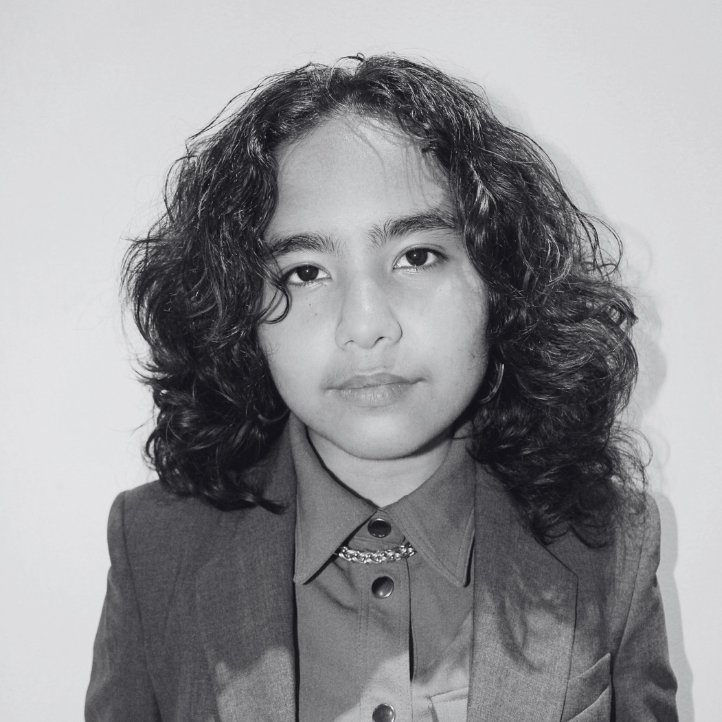
Krystal Abrigo
Krystal is Intermission's Publishing and Editorial Coordinator. At any given moment, you can probably find her at a concert, or on a long walk somewhere in Toronto (or elsewhere).
LEARN MORE iPhoto caption: Carolyn Fe in 'Aye Caesar.' Photo by Mathieu Taillardas.
REVIEW: Carolyn Fe’s Aye Caesar asks what it means to be seen
The phrase is, in my view, a quintuple entendre — and, like the play itself, its meanings become clearer the longer you sit with them.
 iPhoto caption: Lissete VC in 'Deer Woman.' Photo by Andy Moro.
Q&A: At RUTAS Festival, Tara Beagan’s Mujer Venado / Deer Woman makes its Spanish-language premiere
The translation connects the play’s existing themes to the experiences of missing and murdered Indigenous women across the Americas.
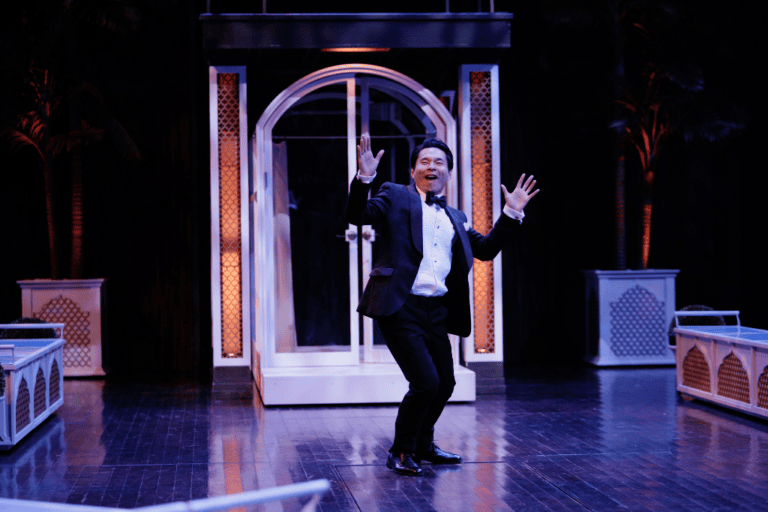 iPhoto caption: Michael Man as Dr. Wilson Wong in 'The Tao of the World.' Stratford Festival 2026. Photo by David Hou.
Meet Michael Man, the versatile actor playing Gollum at the Stratford Festival
Dr. Wong and Gollum are just two of the three roles Man is playing in his second consecutive season at Stratford. He also appears in a smaller role as Robin Starveling, one of the mechanicals, in A Midsummer Night’s Dream, giving him the opportunity to move between wildly different theatrical worlds over the course of a single season.
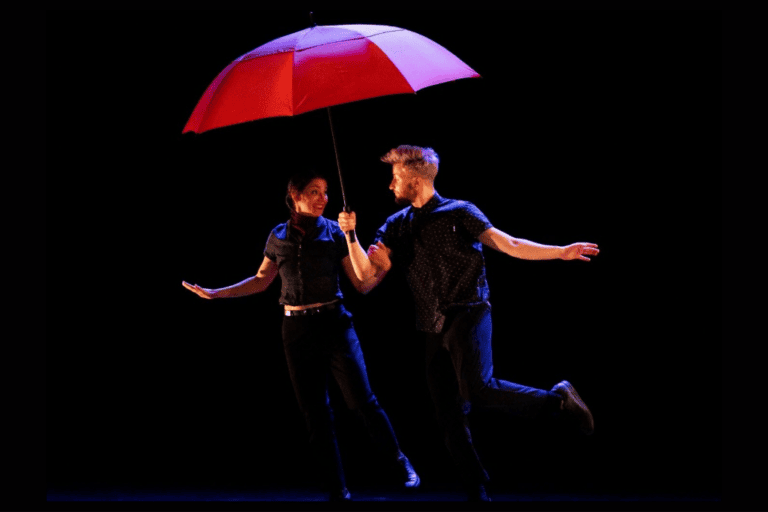 iPhoto caption: Compagnie de Fakto's 'C'est la vida.' Photo by Julie Cherki.
Alliance Française Toronto unveils 2026-27 season at Spadina Theatre
International theatre and dance will play at the downtown venue alongside live music, free cinema, exhibitions, and more.
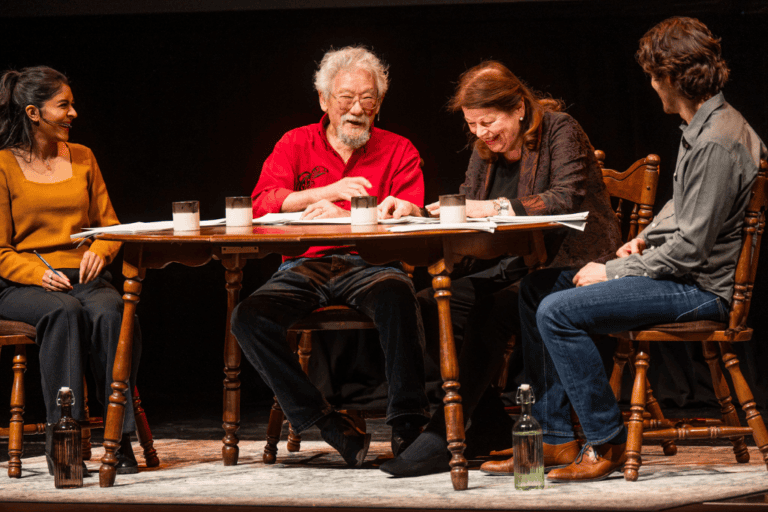 iPhoto caption: Sturla Alvsvaag, Tara Cullis, Michelle Mohammed, and David Suzuki in 'What You Won't Do For Love.' Photo by Dahlia Katz.
David Suzuki and Lester Trips to headline Factory Theatre’s fall season
In addition to its lineup of full productions, Factory will host work-in-progress presentations of Provisions and Ghost River Theatre and Macromatter's Soft Squishy Things in its Studio Theatre during the SummerWorks Performance Festival, running from August 6 to 16.
 iPhoto caption: Toronto Fringe promo photo by Robbie Harper.
REVIEWS: Toronto Fringe Festival 2026
This collection of Toronto Fringe Festival capsule reviews will be updated throughout the festival with writing from 10 different critics.
Comments