
REVIEW: Icarus Theatre’s DNA paints a disturbing mural of teenage rebellion
 iPhoto caption: Photo by Elana Emer.
In the opening minutes of Icarus Theatre’s DNA, by English playwright Dennis Kelly, a flood of bodies dances among fallen leaves, expressive graffiti, and metal scraps. It’s a party — but something’s off. The teenagers’ movements crackle with tension; there’s fear where there should be freedom. It’s a natural start to a grungy, passionate production that stars young people, but finds them terrifying.
Like Jordan Tannahill’s Concord Floral — which fellow indie company Pucker’s staged a month ago in the same venue, The Theatre Centre’s BMO Incubator — the narrative of DNA centres 10 teenagers. Immediately following the opening movement score, we learn that an adolescent named Adam has disappeared after falling into a deathly pit beneath a sidewalk grate. Only his friends know about the tragedy, and because some of them were at the scene of the crime, they worry that if the news circulates, they’ll go to jail.
Everyone reacts to this prospect with wide eyes except the brooding Ray (Chantal Grace, in a role the production has renamed and compellingly gender-bent), who emerges as their confident leader. She climbs atop a centre-stage wooden platform and starts rattling off complex instructions of how to fool the police — and their DNA-detecting tools — into thinking Adam was abducted and killed. The rest of the 70-minute play tracks the teens’ execution of this convoluted, ethically questionable plan, as well as its haunting fallout.
Kelly’s script whips from scene to scene, and director Erik Richards renders the required transitions in stylishly atmospheric fashion. In one instance, Ray ends a conversation by asking “Any questions?”; she then carries her laid-back swagger into the following transition, tossing a pop can into a bucket right as music begins and the lights dim. (The only credited designer is Emily Anne Corcoran, responsible for set and props.)
The production unfolds in an alley seating arrangement, with a long, narrow playing space splitting the audience in two. Because autumn leaves litter the floor, and the entire plot takes place outside, this setup brought to mind Toronto’s ravine system — a notion the production partially affirms during its final seconds, when it switches out a mention of Brighton Beach, in England, for Lake Ontario’s Cherry Beach. While there are a couple of lines that imply the play is meant to have a more specific geography than somewhere in a ravine, Richards’ broader approach is suggestive, and not overly confusing.
In Kelly’s highly naturalistic dialogue, the characters think in real time, often navigating touchy subjects by speaking in spirals of half-formed ideas. This clipped, rugged syntax gets impressively close to approximating the anxious speech patterns of teenagers, but on a technical level it proves a challenge for this group of emerging performers. In order to justify a character cutting themselves off several times in a single line, an actor must appear to be cycling through the same number of thoughts. But here, in casual exchanges — particularly those with only two or three characters — the actors’ mental process often seems to lag behind their words, creating a stilted effect that feels unintentional.
During scenes featuring most of the cast, though, the production ignites. The text whistles around the stage as different characters speak up, the air vibrating with energy. While Richards’ tendency toward snappy, thriller-esque pacing doesn’t suit all of DNA’s more intimate moments, it adds further electricity to these ensemble sequences, bringing the play’s central reflections on groupthink and collective grief into clear view.
For the first half-hour or so, Icarus’ DNA mostly just feels damn cool, the pop-punk aesthetic and slick staging creating a vibe that’s simple but very watchable, easy to get lost in. But this palatability grows more complicated as Kelly twists the plot in knots and Richards modulates the atmosphere to a darker, yet equally potent, register. Although the characters act in revolting ways, I more than once found myself wanting to defend them. I guess I was starting to feel like part of the gang.
DNA runs at The Theatre Centre until November 15. More information is available here.
Intermission reviews are independent and unrelated to Intermission’s partnered content. Learn more about Intermission’s partnership model here.
 iPhoto caption: Members of the company of 'Narnia.' Photo by Dahlia Katz.
REVIEW: Bad Hats’ Narnia is a joyful, heartwarming escape
The spirit of openness and the joy of discovery rule over this Narnia. Open the wardrobe and see.
 iPhoto caption: Members of the company of 'Robin Hood.' Photo by Dahlia Katz.
REVIEW: Canadian Stage’s Robin Hood panto is anti-capitalist fun for the whole family
Following Ross Petty’s legacy of scene-stealing, Damien Atkins as the evil Prince John is easily the greatest delight of the show.
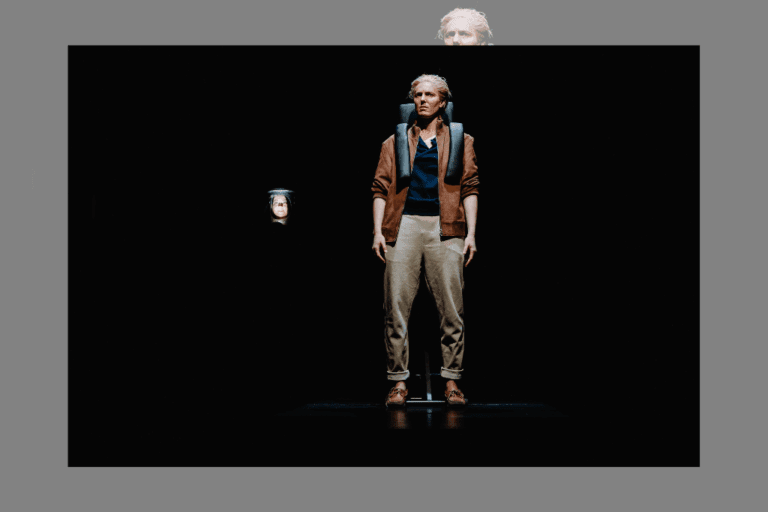 iPhoto caption: Lauren Gillis and Alaine Hutton in 'Public Consumption.' Photo by Eden Graham.
REVIEW: Lester Trips’ stylish Public Consumption captures the internet’s profound emptiness
Rather than directly representing online life, Public Consumption speculates — with virtuosity — about how the digital world affects our bodies. And the show's findings are by no means comfortable.
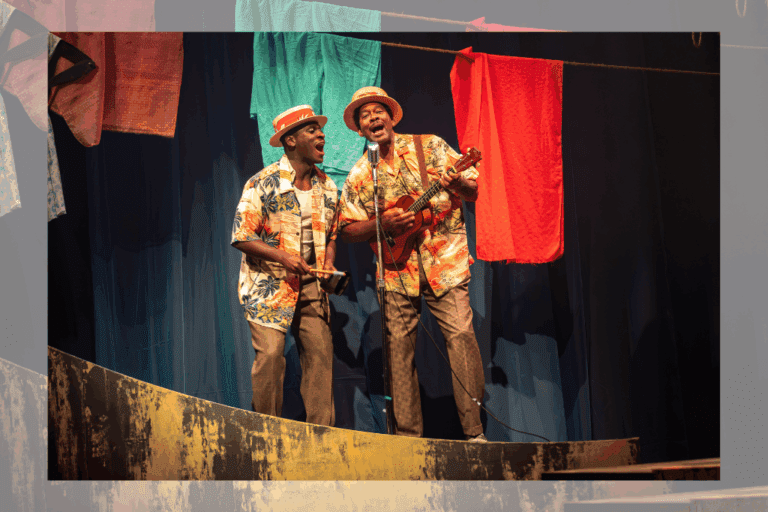 iPhoto caption: Tony Ofori and Daren A. Herbert in 'Moonlight Schooner.' Photo by Dahlia Katz.
Kanika Ambrose’s Moonlight Schooner is animated and visually stunning, but its individual pieces don’t come together as neatly as I would've expected.
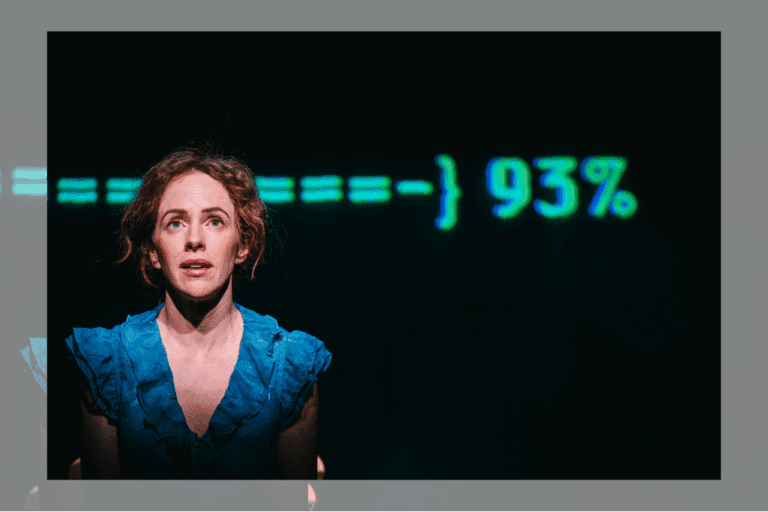 iPhoto caption: Fiona Mongillo in 'Reproduktion.' Photo by Ann Baggley.
REVIEW: Here For Now’s well-acted Reproduktion attempts to tackle too much
Amy Rutherford’s world premiere script is ambitious and the material it covers is complex — but the narrative feels disjointed.
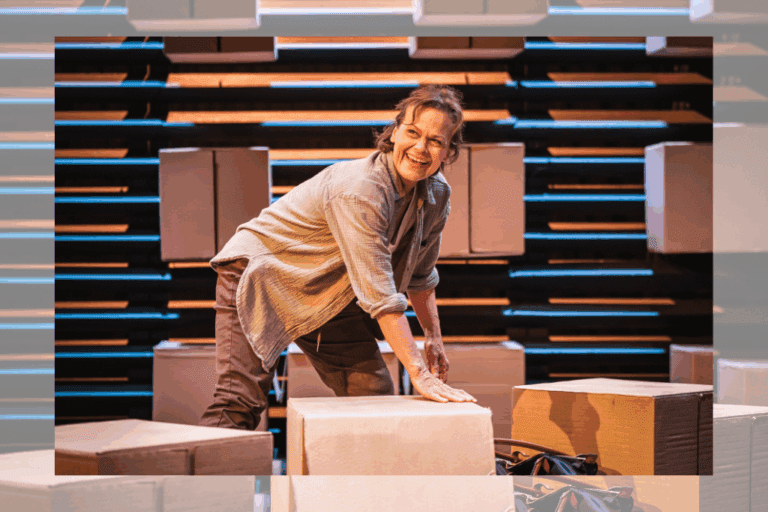 iPhoto caption: Kristen Thomson in 'Fulfillment Centre.' Photo by Elana Emer.
REVIEW: Coal Mine’s Fulfillment Centre asks how we end up alone, together
The production understands the play’s themes, yet feels limited by a script that delivers a package it never fully opens.
iPhoto caption: Lauren Gillis and Alaine Hutton in 'Public Consumption.' Photo by Eden Graham.
REVIEW: Lester Trips’ stylish Public Consumption captures the internet’s profound emptiness
Rather than directly representing online life, Public Consumption speculates — with virtuosity — about how the digital world affects our bodies. And the show's findings are by no means comfortable.
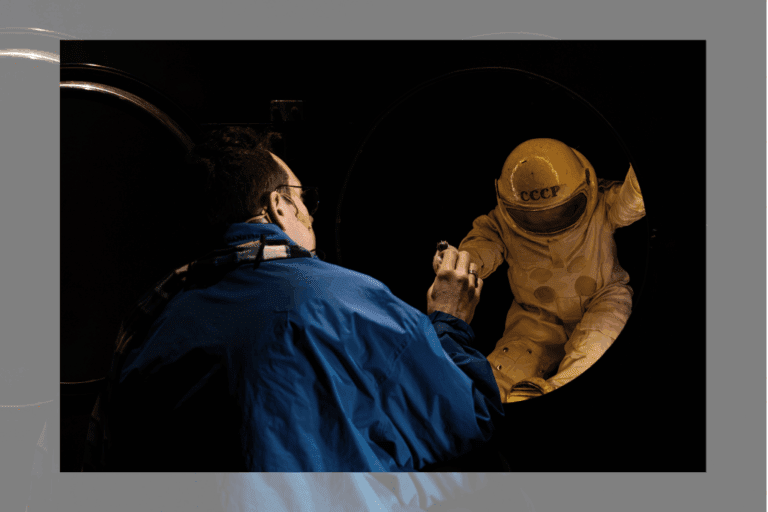 iPhoto caption: Olivier Normand in 'The Far Side of the Moon.' Photo by Li Wang.
REVIEW: Lepage’s ethereal The Far Side of the Moon is insomniac theatre
The Far Side of the Moon begins and ends with a large mirror on stage, and the show extracts enigmatic power from the tantalizing question of whether its protagonist is losing himself in his reflection, or moving toward self-discovery.
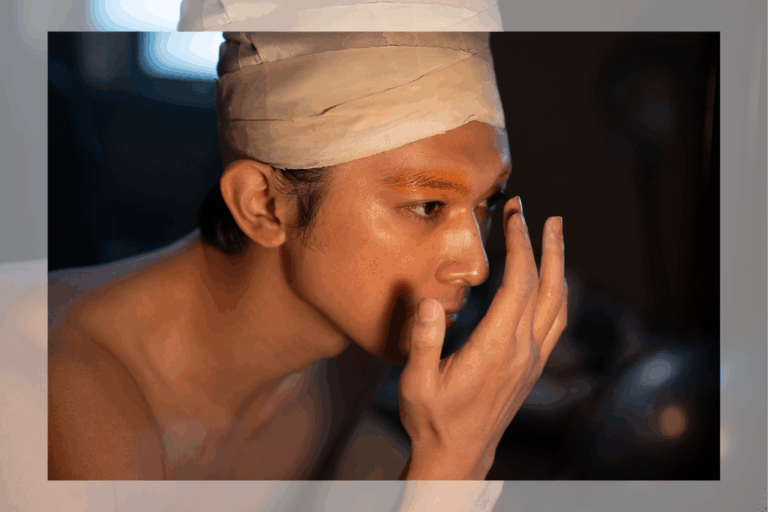 iPhoto caption: 'Kokuho' still courtesy of TIFF.
REVIEW: During this year’s TIFF, two films depicted theatre as a vessel for transcendence
Of the several performing arts-adjacent selections I took in, most affecting were two dramas: Lee Sang-il’s Kokuho and Chloé Zhao’s Hamnet. In both period pieces, theatre creation serves as an emotional outlet for an artist navigating devastating loss.
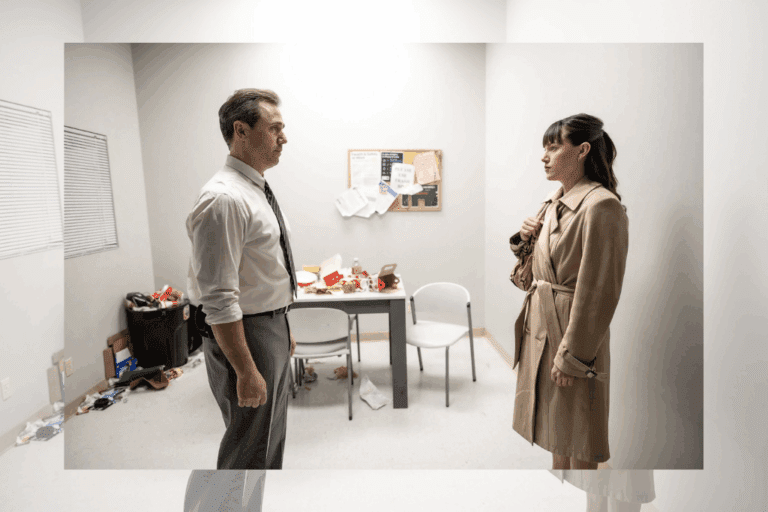 iPhoto caption: Cyrus Lane and Kirstyn Russelle in Barrie run of 'Blackbird.' Photo by Dahlia Katz.
REVIEW: Talk is Free Theatre’s Blackbird offers a close-up look at two detailed performances
Emerging director Dean Deffett has concocted a tight, straightforward production, primarily of interest as an intimate character study.
 iPhoto caption: Sleman Aldib and an audience member in 'The Opposite.' Still from a trailer by Spectrum Associates.
REVIEW: Kitchener’s biennial IMPACT Festival crackled with urgency
Most of the six works I viewed tackled urgent topics, from the convoluted Canadian immigration system to the Palestinian experience of displacement: explorations that line up with artistic director Pam Patel’s curatorial statement, which discusses how IMPACT ‘25 “unpacks what it means to survive, to resist, and to seek refuge” through a global, Indigenous-focused lens.
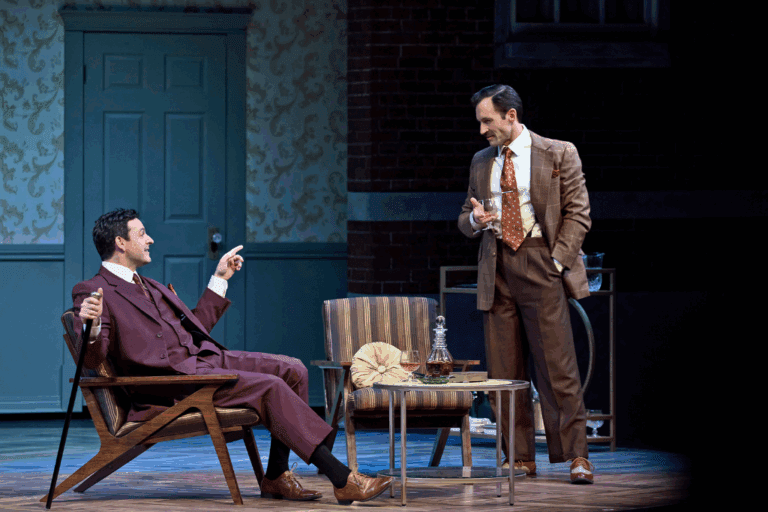 iPhoto caption: Tyrell Crews and Stafford Perry in 'Dial M For Murder.' Photo by Trudie Lee.
“There's a magic in theatre, and a spiritual part of theatre, that's really important," says Keiley. "It's the gathering, but it's also: ‘How did you make me believe that? How did you do that?’ That's the mystery I play with in all my shows. And it's a tightrope every time."
Comments