
REVIEW: Hamlet at A Company of Fools (Ottawa)
 iPhoto caption: Photo by Justin Van Leeuwen.
Unpretentious Shakespeare. Sound like an oxymoron?
Enter a Company of Fools — Ottawa’s longest running Shakespeare troupe. Since 1990, the Fools have performed abridged versions of the Bard’s classics in parks around the city. This year, the company takes on Hamlet, one of the longest and most renowned of Shakespeare’s plays, and adapts it for audiences of all ages, backgrounds, and theatre palates.
I knew this version was meant to be a more comedic interpretation of the play and, heading into opening night at Strathcona Park, I wasn’t too sure what to expect. (Hamlet is not exactly a feel-good play.) I found myself pleasantly surprised, though, by director Nicholas Leno’s skilled process of weaving playfulness and clown into this prototypical tragedy.
Colourful design, slapstick, and original music serve as the driving force behind the comedic undertaking. The use of puppets and ribbons in lieu of corpses and guts introduces much-needed joy and absurdity to otherwise gruesome scenes, making this production digestible to younger audiences without censoring integral plot points.
Production designer Vanessa Imeson skillfully curates fantastical costumes to help us keep track of relationships and the small cast of actors’ ever-changing roles. Choices as simple as dressing all of Polonius’ family in orange, though perhaps obvious to those versed in the original text, prove extremely effective as comprehension aids for newer audiences.
To increase pizazz-factor, Alli Harris’ sound design and music composition provides a uniquely visceral layer to the performance. Without access to a typical indoor theatre’s lighting grid, Fools’ Hamlet immerses us instead through the expert employment of music and soundscapes. The show presents us with a mix of original songs and fun, familiar tunes (Weezer’s “Say It Ain’t So” proved a hilarious motif throughout).
For the most part, the music is instrumental underscoring to complement the action onstage. However, the production’s most standout moments occur when the performers belt out Harris’ original songs. This is particularly poignant for Andrea Massoud’s Ophelia. Her descent into madness communicated through song is refreshingly raw and honest amongst the play’s otherwise loyal commitment to hilarity.
The issue with how great Harris’ tunes are is that there just aren’t enough of them. A handful of songs included in the latter half give an impression of tentativeness, ultimately leaving audiences wanting more. Is there potential for a full-scored musical here? I hope the company might explore that possibility in the future.
As much as Fools’ Hamlet is packed with song and whimsy, the production never shies away from delving into the inky drama Shakespeare purists might crave from the source text. Maryse Fernandes’ Hamlet is analytical and ambitious, unwaveringly driven to uncover the truth of her father’s fate and avenge his killer. Fernandes’ performance buzzes with power and confidence. You never doubt Hamlet’s sanity for a second.
The whole cast is undeniably skilled. Pristine delivery and impeccable comedic timing make this a bulletproof production from start to finish.
It is impossible to overlook Leno’s choice to depict Hamlet as a woman and, in turn, a queer one. This feels less like a bold, heavy-handed attempt at radicality and more of a way of saying, “she’s a woman. So what?” Leno’s production feels no need to rationalize its subversive casting choices and for that I commend it.
An intrinsic, almost casual inclusion of queer women in revered classics and beyond is the precise representation that our stages need. By allowing queer characters to be fallible and full-bodied as opposed to flat and didactic, we assert their belonging in spaces that they were once excluded, both in our art and our communities. This play is queer just as much as it is comedic; not by nature, but by clever choice.
Subtly touching and overtly hilarious, this 90-minute venture jam-packs all the drama and heartbreak you’d expect with all the joy and comedy you don’t. Thanks to pay-what-you-can ticket pricing and a comprehensive touring route, a Company of Fools’ Hamlet breaks down a lot of the barriers contemporary theatre can present. With difficult content, strict latecomer policies, food and beverage restrictions, and often anxiety-inducing ticket prices, attending theatre isn’t always accessible to everyone. Fools’ Hamlet is theatre designed for all.
Uncomplicated, refreshing, and fun — I recommend this to anyone with a lawn chair and a spare summer evening.
Hamlet tours to parks around Ottawa and the wider National Capital Region region through August 26. Tickets are available here.
Intermission reviews are independent and unrelated to Intermission’s partnered content. Learn more about Intermission’s partnership model here.

Eve Beauchamp
Eve Beauchamp (they/them) is an award-winning Calgary-based theatre artist, playwright, and graduate of the BFA in Acting at the University of Ottawa. They are the co-artistic director of Levity Theatre Company and primarily create work that explores queerness, capitalism, and neurodivergence through humour, poetry, and storytelling. Currently, you can find them pursuing their Master of Fine Arts in Drama at the University of Calgary.
LEARN MORE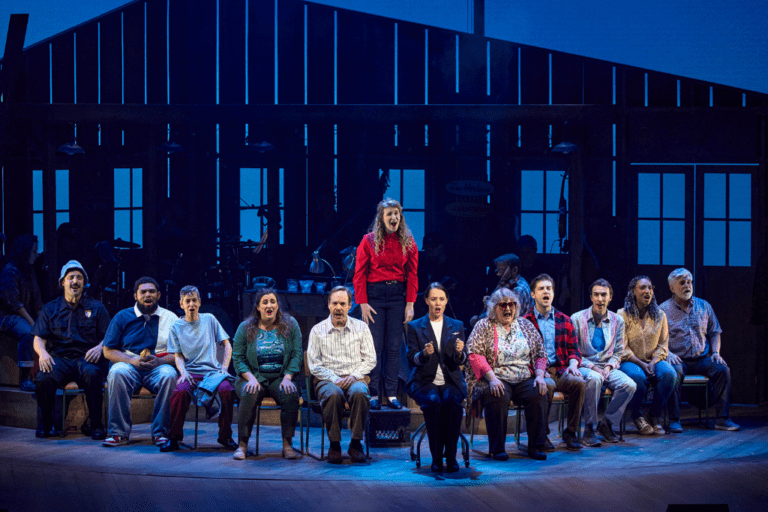 iPhoto caption: The cast of 'Come From Away.' Photo by Harder Lee.
Theatre Calgary’s new staging of Come From Away aims for the heart
“It really boils down to: ‘What are the words we're saying and how are we carrying ourselves in space?’" reflected director-choreographer Jesse Robb.
 iPhoto caption: Members of the cast of 'Appropriate.' Photo by Colin Munch.
Q&A: How a new Calgary performance venue aims to energize the city’s indie theatre scene
"Smaller venues that create independent theatre rather than the institutional spaces — I think that’s something that really enriches the city," says co-artistic director Jakob Schäefer.
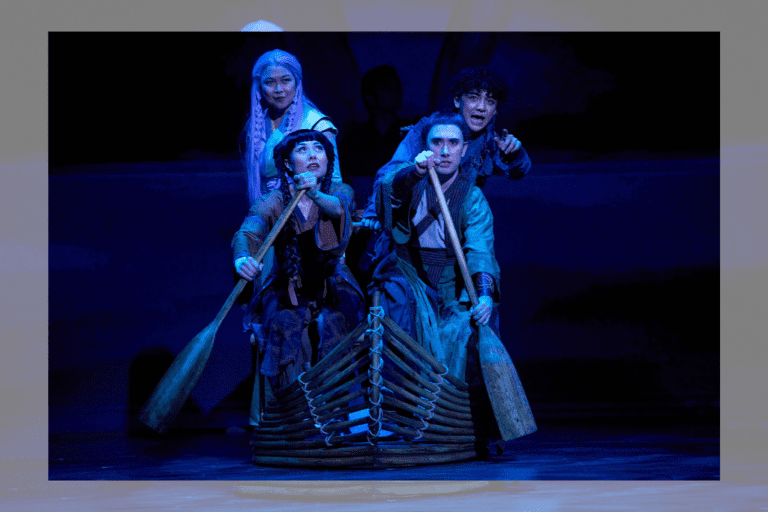 iPhoto caption: Ma-Anne Dionisio, Nikko Angelo Hinayo, Kennedy Kanagawa, and Kelsey Verzotti in 'The Tale of the Gifted Prince.' Photo by Harder Lee.
REVIEW: Theatre Calgary’s The Tale of the Gifted Prince is a dazzling new musical
The world premiere production stuns, delivering audiences a larger-than-life musical flush with Broadway splash.
 iPhoto caption: 'Dream Machine' photo by Blake Brooker.
REVIEWS: High Performance Rodeo 2026
For Calgary theatre-goers, January holds the antidote to frigid post-holiday slumps: One Yellow Rabbit’s High Performance Rodeo, the city's biggest performing arts festival. This year marks the 40th iteration of the interdisciplinary event and offers Calgarians a feast of over 30 shows across 12 venues from January 13 to 31.
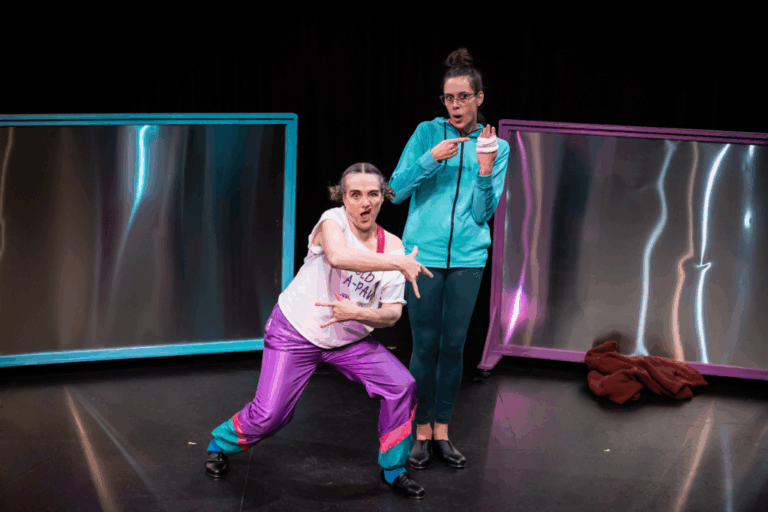 iPhoto caption: Elinor Holt and Ellen Close in 'How Patty and Joanne Won High Gold at the Grand Christmas Cup Winter Dance Competition.' Photo by Benjamin Laird.
“We’re living in a world right now where failure is not an option,” says actor Elinor Holt. “And a lot of times people would rather not try anything at all, rather than try something and risk failing at it.”
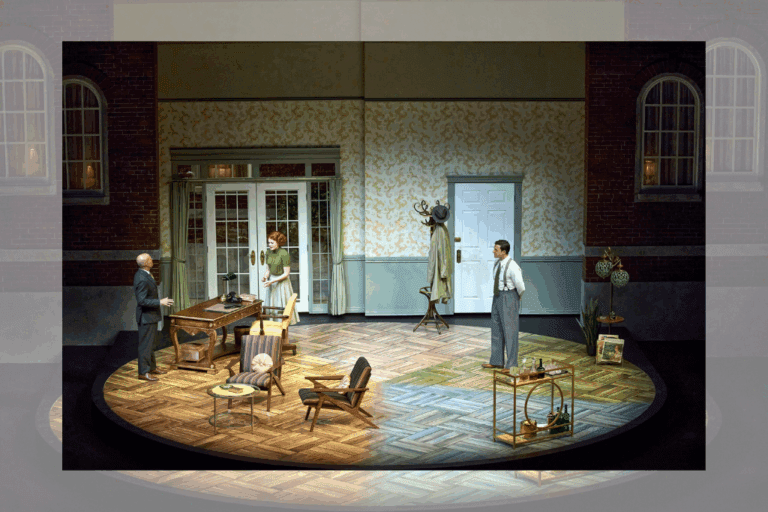 iPhoto caption: Shekhar Paleja, Emily Dallas, and Tyrell Crews in 'Dial M For Murder'. Set design by Anton deGroot. Photo by Trudie Lee.
REVIEW: Theatre Calgary’s Dial M For Murder queers the classic with style and suspense
The cloaked romance that sparks the homicidal scheme at the core of play is no longer between Margot (Emily Dallas) and a Mark, but rather a Maxine (Olivia Hutt). Yes, exactly — the original heterosexual coupling becomes refreshingly queer.
Comments