
REVIEW: In Favour the Brave’s Heartless, action and ambition abound
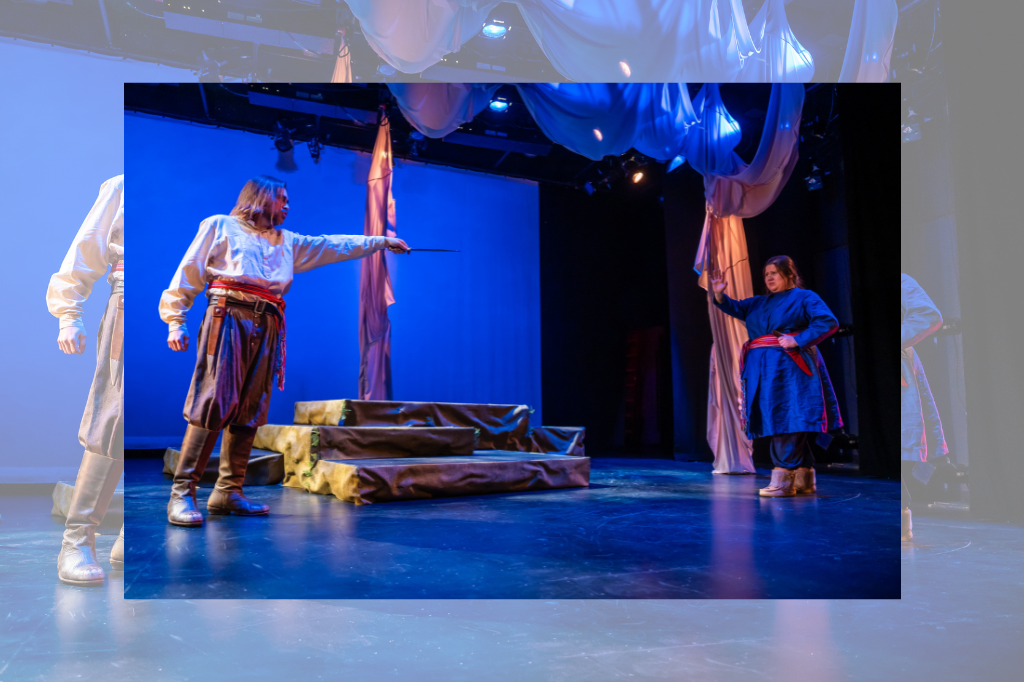
When people remark that post-lockdown Toronto theatre has enjoyed going big, they’re usually referring to productions from larger companies — ones that can afford to stage six-hour adaptations of historical fiction or put up full-length productions of Shakespeare for the sake of contextualizing new work.
For size of a different sort, check out Favour the Brave Collective’s world premiere production of Heartless at the Aki Studio. In form, the show resembles standard Toronto indie fare: it’s 75 minutes with no intermission, and produced on a seemingly modest budget. But Heartless is unique in that it’s the culmination of a project over a decade in the making, a trilogy of plays written by Genevieve Adam and set in New France. Although this is the first of them I’ve seen, the wide-reaching scale of Adam’s vision is apparent within minutes of the lights going down, even in Tyler J. Seguin’s scrappy, imperfect staging.
It’s spring 1689 and two female Wendat warriors, the impulsive Oheo (Theresa Cutknife) and the reserved Sheauga (Montana Adams), have kidnapped Nicolas (Scott Garland), a French priest. The three tussle in a forest, knives in hand.
A table soon appears, marking a new location: the home and business place of Marinette (Darcy Gerhart), a widowed French fur trader. After a round of deflecting romantic advances from trapper Lionel (Jordan M. Burns), a Mohawk woman named Catherine (Brianne Tucker) appears, disrupting Marinette’s routine. Catherine reveals she knew Marinette’s husband, and that she’s here for help finding Hochelaga, a historical Iroquois village that mysteriously disappeared following Jacques Cartier’s arrival on the continent.
These two sets of characters soon become entangled, with Marinette’s mother Anne (Adam, in a performance pointed and clear) also playing a key role. The drama is powered by a somewhat classical engine — the slow reveal of buried secrets. This means a great deal of exposition, often delivered statically and at times tough to follow. But Seguin keeps the pace snappy, and once the context is in place, the show moves with significant momentum; though there is likely still room for the actors to dig deeper, they are well attuned to the play’s ups and downs.
For better or worse, I’ve rarely felt more aware of the presence of fight and intimacy choreographers (Matt Richardson and Corey Tazmania, respectively) than with Heartless. This is mainly because the vast majority of the play’s climatic moments happen to fall under one or the other’s purview (i.e. there’s plenty of violence and sex). What’s curious is that while Richardson and Tazmania both do strong, clear work, Heartless’ fight and intimacy sequences seem to occupy rather opposite stylistic poles. Richardson’s fights are pulpy and heightened, a choice that sound designer Maddie Bautista and composer Alyssa Delbaere-Sawchuk use campy string stings to double down on. Meanwhile, Tazmania’s staging of intimate moments is realistic and down-to-earth. These opposing styles don’t help the piece’s cohesion, and the sheer amount of fight and intimacy sequences makes it somewhat difficult to identify the show’s theatrical climax; but on the other hand, these shifts in tone keep the production seriously exciting throughout.
Though Kalina Popova’s set is simple, it fills all corners of the space. Above, wavy, billowing fabric traces out a kind of rectangular arch, like a proscenium made malleable. Beneath, an upstage platform of a few steps allows for a touch of vertical movement.
Imogen Wilson’s lighting design is gloomy, often to the point of obscuring the actors’ faces. If this effect is intentional, it’s not one that tends to mesh well with the production’s more heightened aspects, instead seeming almost overly realistic. Similarly, the production’s slight focus issue is not helped by the broadness of the lighting, which doesn’t always direct the audience’s eye as much as it might.
But the big reason to see Heartless is Adam’s script, which is wondrous in its economy. Though refreshingly subtle on a big-picture level, Adam’s sentences hit like darts; quotations worth recording surface nearly every minute. And while this energetic Favour the Brave staging is plenty worthwhile in and of itself, I now long to see the entire trilogy back-to-back, with grand design to match.
Heartless runs at the Aki Studio until January 14. Tickets are available here.
Intermission reviews are independent and unrelated to Intermission’s partnered content. Learn more about Intermission’s partnership model here.
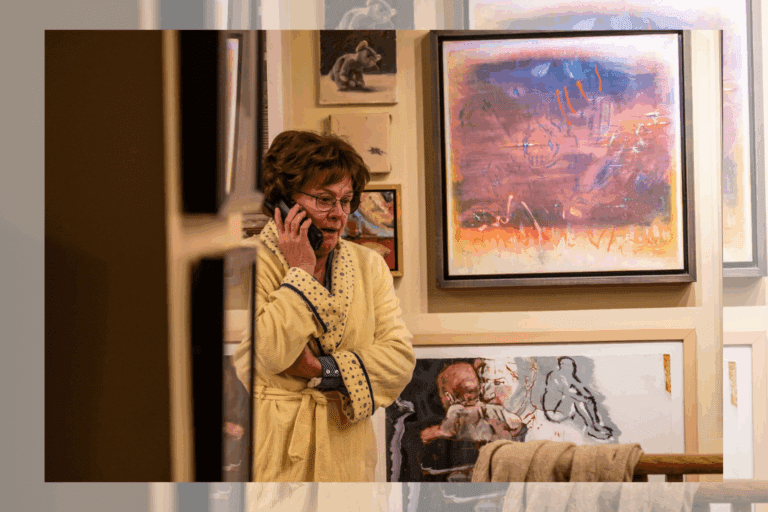 iPhoto caption: Jane Spidell in 'Twelve Dinners.' Photo by Dahlia Katz.
REVIEW: Family tensions run high in TIFT’s intimate Twelve Dinners
In the now-closed Twelve Dinners, an autobiographical play written and directed by Steve Ross, audiences received intimate access to an unvarnished version of a younger Ross through 12 evening meals with his parents.
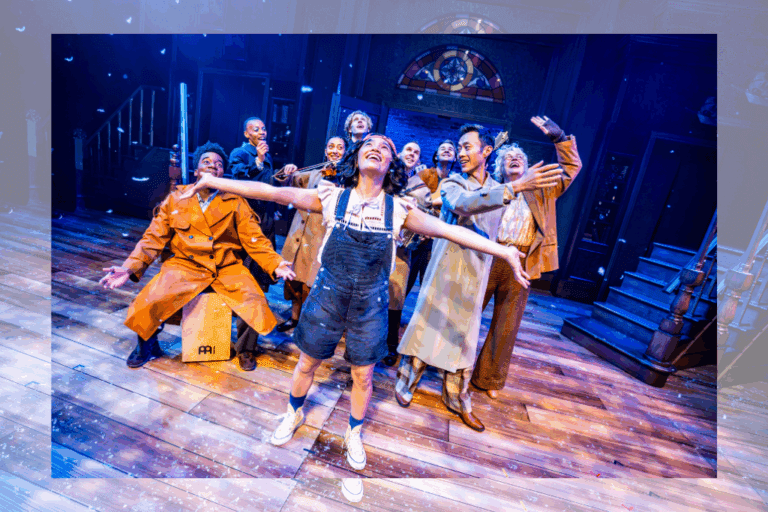 iPhoto caption: Members of the company of 'Narnia.' Photo by Dahlia Katz.
REVIEW: Bad Hats’ Narnia is a joyful, heartwarming escape
The spirit of openness and the joy of discovery rule over this Narnia. Open the wardrobe and see.
 iPhoto caption: Members of the company of 'Robin Hood.' Photo by Dahlia Katz.
REVIEW: Canadian Stage’s Robin Hood panto is anti-capitalist fun for the whole family
Following Ross Petty’s legacy of scene-stealing, Damien Atkins as the evil Prince John is easily the greatest delight of the show.
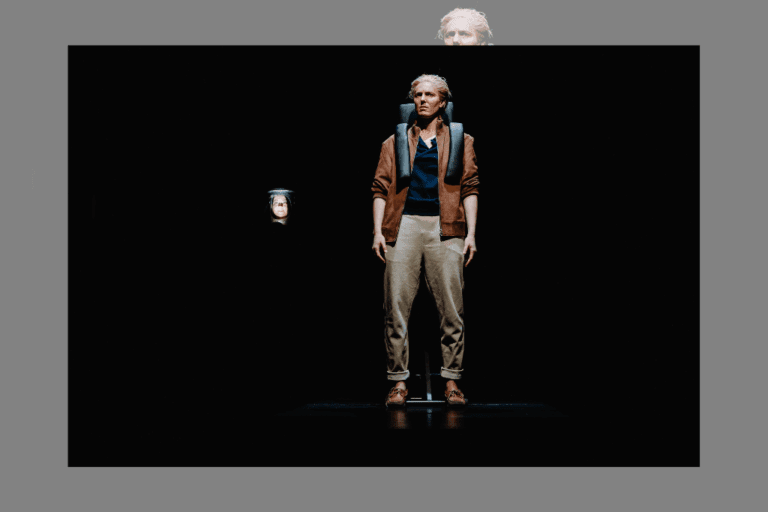 iPhoto caption: Lauren Gillis and Alaine Hutton in 'Public Consumption.' Photo by Eden Graham.
REVIEW: Lester Trips’ stylish Public Consumption captures the internet’s profound emptiness
Rather than directly representing online life, Public Consumption speculates — with virtuosity — about how the digital world affects our bodies. And the show's findings are by no means comfortable.
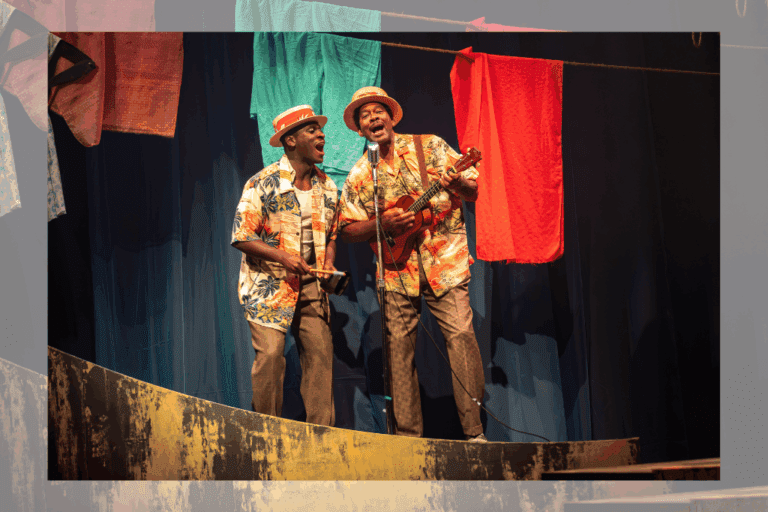 iPhoto caption: Tony Ofori and Daren A. Herbert in 'Moonlight Schooner.' Photo by Dahlia Katz.
Kanika Ambrose’s Moonlight Schooner is animated and visually stunning, but its individual pieces don’t come together as neatly as I would've expected.
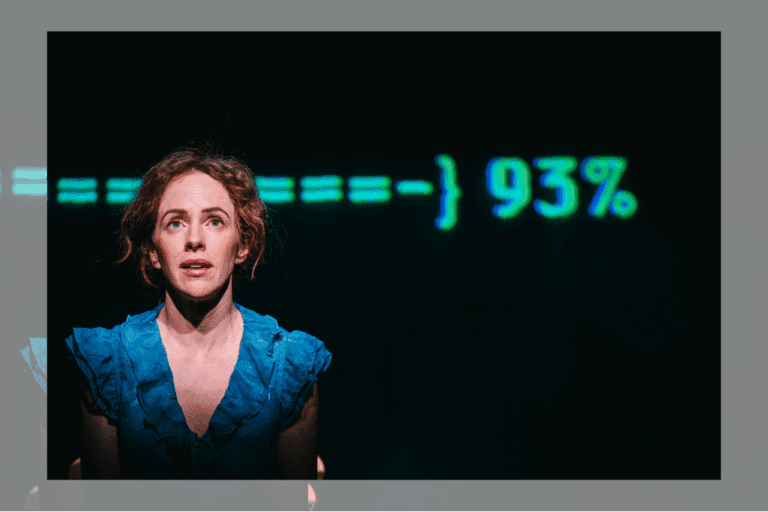 iPhoto caption: Fiona Mongillo in 'Reproduktion.' Photo by Ann Baggley.
REVIEW: Here For Now’s well-acted Reproduktion attempts to tackle too much
Amy Rutherford’s world premiere script is ambitious and the material it covers is complex — but the narrative feels disjointed.
iPhoto caption: Lauren Gillis and Alaine Hutton in 'Public Consumption.' Photo by Eden Graham.
REVIEW: Lester Trips’ stylish Public Consumption captures the internet’s profound emptiness
Rather than directly representing online life, Public Consumption speculates — with virtuosity — about how the digital world affects our bodies. And the show's findings are by no means comfortable.
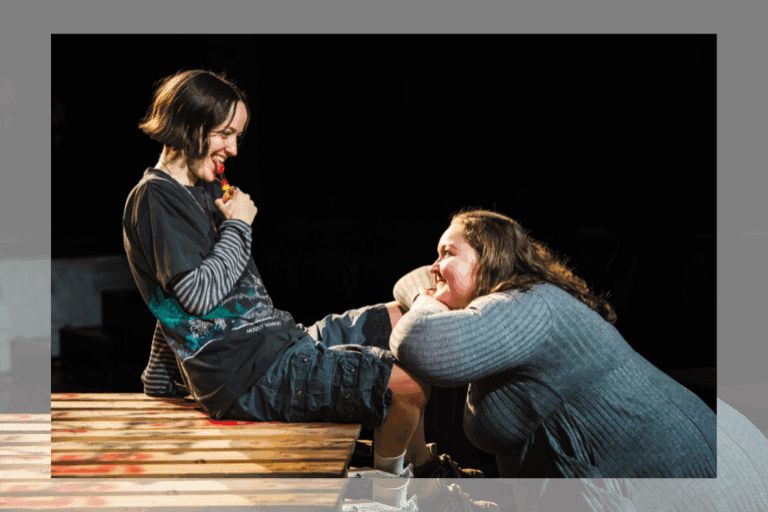 iPhoto caption: Photo by Elana Emer.
REVIEW: Icarus Theatre’s DNA paints a disturbing mural of teenage rebellion
While director Erik Richards’ tendency toward snappy, thriller-esque pacing doesn’t suit all of DNA’s more intimate moments, it adds electricity to the drama’s group scenes, bringing playwright Dennis Kelly’s reflections on groupthink and collective grief into clear view.
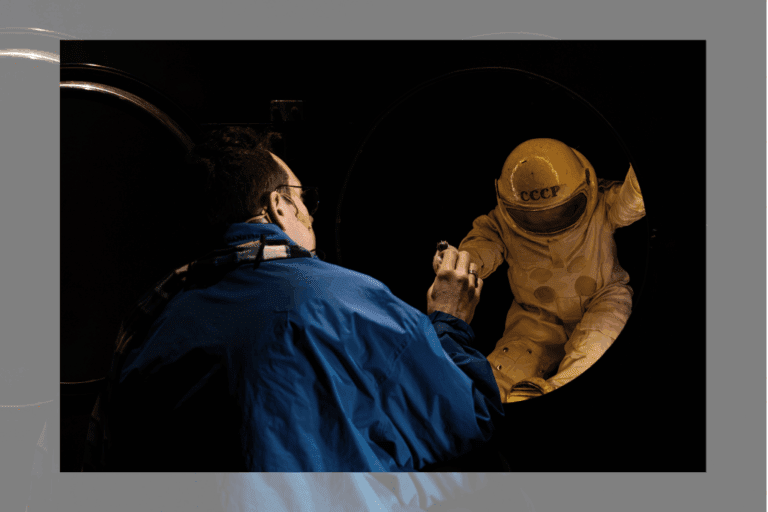 iPhoto caption: Olivier Normand in 'The Far Side of the Moon.' Photo by Li Wang.
REVIEW: Lepage’s ethereal The Far Side of the Moon is insomniac theatre
The Far Side of the Moon begins and ends with a large mirror on stage, and the show extracts enigmatic power from the tantalizing question of whether its protagonist is losing himself in his reflection, or moving toward self-discovery.
 iPhoto caption: 'Kokuho' still courtesy of TIFF.
REVIEW: During this year’s TIFF, two films depicted theatre as a vessel for transcendence
Of the several performing arts-adjacent selections I took in, most affecting were two dramas: Lee Sang-il’s Kokuho and Chloé Zhao’s Hamnet. In both period pieces, theatre creation serves as an emotional outlet for an artist navigating devastating loss.
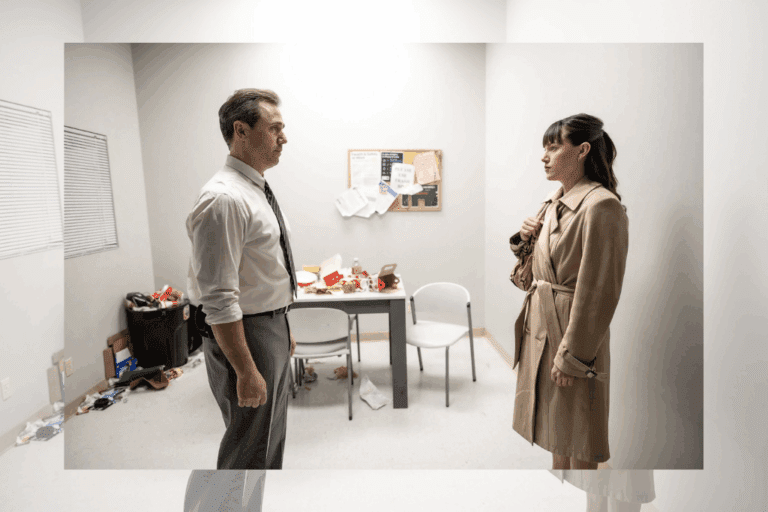 iPhoto caption: Cyrus Lane and Kirstyn Russelle in Barrie run of 'Blackbird.' Photo by Dahlia Katz.
REVIEW: Talk is Free Theatre’s Blackbird offers a close-up look at two detailed performances
Emerging director Dean Deffett has concocted a tight, straightforward production, primarily of interest as an intimate character study.
 iPhoto caption: Sleman Aldib and an audience member in 'The Opposite.' Still from a trailer by Spectrum Associates.
REVIEW: Kitchener’s biennial IMPACT Festival crackled with urgency
Most of the six works I viewed tackled urgent topics, from the convoluted Canadian immigration system to the Palestinian experience of displacement: explorations that line up with artistic director Pam Patel’s curatorial statement, which discusses how IMPACT ‘25 “unpacks what it means to survive, to resist, and to seek refuge” through a global, Indigenous-focused lens.
Comments