
REVIEW: Coal Mine Theatre’s Job is terrifyingly evocative and layered with suspense
 iPhoto caption: Photo by Elana Emer.
*notification dings* @coalminetheatre commented: watch out… this is gonna be an intense one.
What would you do to keep your job? For many of us these days, stable employment can feel unreachable. Most people’s desire to stay employed is fuelled by survival, needing to buy groceries and pay rent. It’s considered lucky to love what you do for work. For Jane (Charlotte Dennis), however, her job is her life’s purpose — and Loyd (Diego Matamoros), her employer-mandated therapist, is her only hope at keeping it.
Playwright Max Wolf Friedlich weaves tension into every line of this 80-minute intergenerational two-hander. He begins the show with quick flashes of action, instilling instant intrigue. What follows is a taut unravelling of a story far more twisted than I was prepared for. The production team has posted the trigger warnings on the website (as well as the door), cautioning the audience that they’ll open themselves up to spoilers by reading them. You’re then left with a choice: be protected or dwell in the darkness — I chose the latter. Either way, the show is a worthy leap into the unknown, as long as you’re ready to be bombarded with cavernous complexities and more questions than answers — about your phone, your beliefs, and, naturally, your job.
The Coal Mine Theatre space is small and, for this production, in-the-round, making the reactions of fellow audience members visible. Though Dennis and Matamoros are captivating enough to keep your eyes’ attention, it only amplifies the piece to see the shock, intermittent laughter, and stressful contemplation on the faces of those around you. After seeing A Public Reading of an Unproduced Screenplay About the Death of Walt Disney and seven methods of killing kylie jenner, Nick Blais is becoming one of my favourite scenic designers. Here, with assistance from Addie Moody, he expertly transforms the stage into Loyd’s minimalist, modern office with a touch of what Jane describes as “hippie Haight-Ashbury” vibes.
Wesley Babcock’s lighting design and Michael Wanless’ sound design act in tandem, punctuating moments of panic that anchor the plot. Momentary flashes of pink light and eerily evocative sound bites only build in intensity as the story gets progressively catastrophic. This shifting design made me feel like I was in the scariest doom-scroll of my life; it’s fleeting and overstimulating, reflecting the sinister nature of our dopamine-induced dependence on social media.
Friedlich interrogates the presence of phones in our lives through Jane’s youthful and nuanced analysis; she passionately urges Loyd to see the sociopolitical implications of the generational difference between them. Dennis gives an energized and intentional performance, a firecracker in contrast to Matamoros’ grounded presence. Both Dennis and Matamoros (who also worked on The Death of Walt Disney) employ charged physicalities that contribute to the constant rise and fall of tension. Director David Ferry plays with extremes of distance between the two characters to emphasize this rollercoaster of stress, sculpting the underlying conversation of body language.
Jane and Loyd’s dialogue is complex and uncensored. Friedlich unpacks tensions around age, gender, politics, race, and class, painting a truthful yet unflattering portrait of the world we live in today. The conversation is shaped by the heightened situation that Friedlich drops these characters into right from the opening image. Though I wasn’t partial to the ending’s twist, which felt a tad forced, the show was undoubtedly worth it for the ride there.
Ferry’s production of Job is terrifyingly evocative and layered with suspense. It was a feast for the puzzle-loving part of my brain, but a heavy weight on my sensitive side. The performance is probably best attended with a friend for some much needed post-show processing (then again, if you’re like me, and are content to stare numbly into the distance on the subway ride home, then you should be fine to attend alone). I definitely felt a shift stepping out of the theatre; I was both stimulated with ideas and stirred with melancholy. The show made me contemplate the grip that my phone has on my life and nearly compelled me to turn it off for good. When a performance affects me enough that I want to make life changes, I know it’s doing its job right.
Job runs at Coal Mine Theatre until May 18. Tickets are available here.
Intermission reviews are independent and unrelated to Intermission’s partnered content. Learn more about Intermission’s partnership model here.

Gus Lederman
Gus Lederman is an emerging playwright and performer. They graduated from OCAD University’s Creative Writing program in May 2025, where they were awarded the Nora E. Vaughan medal for their thesis project, mycomimic. Gus got their start as a theatre critic in the Toronto Fringe's 2024 New Young Reviewers program. They love campy queer movies and (almost) anything with puppets.
LEARN MORE iPhoto caption: Members of the company of 'Robin Hood.' Photo by Dahlia Katz.
REVIEW: Canadian Stage’s Robin Hood panto is anti-capitalist fun for the whole family
Following Ross Petty’s legacy of scene-stealing, Damien Atkins as the evil Prince John is easily the greatest delight of the show.
 iPhoto caption: Vivien Endicott-Douglas & Liz Der. Photo by Dahlia Katz.
The show is approximately an hour-and-a-half long, but in the world of the story, it all takes place in only 10 minutes. Woolley’s choice to manipulate time in this way is clever and appropriate, allowing the audience to feel the enormity of what someone undergoing a mental health crisis might experience over a few minutes.
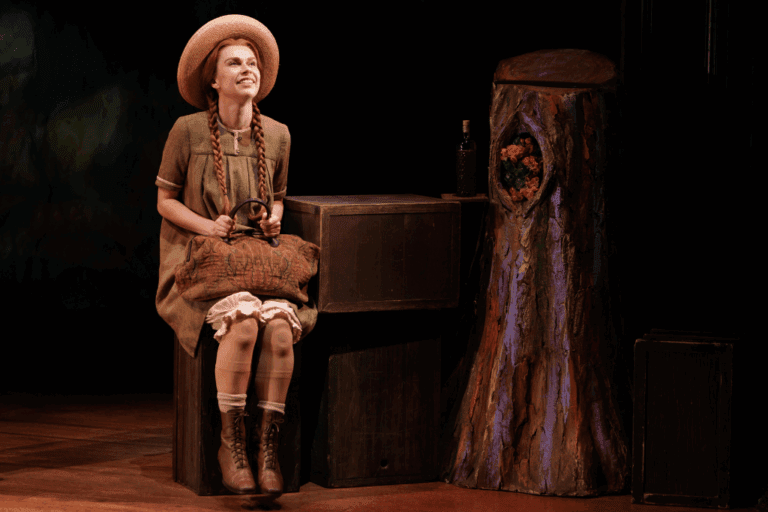 iPhoto caption: Caroline Toal as Anne Shirley in 'Anne of Green Gables.' Photo by David Hou.
“The story is so hopeful and beautiful and funny and silly and moving — and I think that nowadays, it's so nice to be reminded of hope," says Toal.
 iPhoto caption: Photo by Mike McPhaden.
REVIEW: Shakespeare in the Ruff’s Tiff’ny of Athens throws a delightful party in Withrow Park
The text draws on an eclectic mix of sources: other Shakespeare plays, Dolly Parton songs, and automated messages from government service helplines, to name a few.
 iPhoto caption: Andrew Penner and Deborah Hay in 'After the Rain.' Photo by Dahlia Katz.
REVIEW: After the Rain transforms the Tarragon Mainspace into a passionate folk-rock concert
The performers of this world premiere musical got a lot of laughs from the buzzing opening night audience, but make no mistake, they got quite a few audible tears out of us, too.
 iPhoto caption: Photo by Nanc Price.
REVIEW: Mirvish’s Made in Italy dishes a pleasant but lengthy family feast
Made in Italy is a feat of physical comedy, with creator-performer Farren Timoteo seamlessly taking on the distinct voices and mannerisms of about 10 different characters.
Comments