
REVIEW: La Reine-garçon hits like an avalanche at the COC

Midway through a corpse dissection, a realization strikes René Descartes, prompting him to hurl a baritone melody into the cavernous Four Seasons Centre for the Performing Arts: “Je pense, donc je suis!”
That endearingly on-the-nose exclamation is one of the goofier moments from composer Julien Bilodeau’s opera La Reine-garçon, which takes care to mix the intellectual with the accessible throughout. Arriving in Toronto after its world premiere in Montreal, this co-production between the Canadian Opera Company and the Opéra de Montréal is eminently watchable, often moving with a sprightliness that belies the dreary contours of its gloomy, crystalline aesthetic.
La Reine-garçon marks a return to familiar snow drifts for librettist Michel Marc Bouchard. The opera shares its protagonist — the 17th-century Queen Christina of Sweden, famously raised by her father as a boy — with Bouchard’s play Christina, the Girl King, which debuted in French before playing at the Stratford Festival in 2014. (He also penned the screenplay to Mika Kaurismäki’s biographical drama The Girl King, released the year after.)
Christina, here named Christine, is best known for the gender antics of her youth, but La Reine-garçon only lends a couple minutes to that arc, instead tracing her reign’s final few years (in French, with bilingual surtitles). But even at this juncture, a jarring dissonance exists between society’s expectations for Christine (Kirsten MacKinnon) and how she lives — multiple men seek her hand, but she’s in love with Countess Ebba (Queen Hezumuryango), her lady-in-waiting. Although a suite of philosophical and political ideas waft down for optional engagement (Owen McCausland plays the aforementioned Descartes, who instructs Christine in notions of free will), a story of yearning lies at this blizzard’s centre.
La Reine-garçon prances through its intermission-inclusive two hours and 45 minutes, traversing from location to location with efficiency. While this fleet-footed approach is entertaining, it did leave me occasionally confused about key plot points. Absent opera’s tendency to repeat information more than once, I at times had difficulty keeping track of the three grouchy men dressed in edgy black furs (period-accurate costume design by Sébastien Dionne); my seatmate encountered the same issue.
Bilodeau’s score is classical in intention, but with plenty of contemporary colouring. Offstage singer Anne-Marie Beaudette performs a high-pitched motif inspired by the kulning, an ancestral Scandinavian women’s chant, and MacKinnon joins her in the vocal stratosphere, driving the action with an agile but full soprano. Playing the smarmy Count Johan, Isaiah Bell puts his gleaming tenor to comedic work, repeating the onomatopoeic phrase “Click! Clack!” so often that the surtitles stop bothering. Conductor Johannes Debus collaborates with the COC Orchestra and chorus master Sandra Horst to ensure climaxes arrive with majestic force.
Except for the staging of Descartes’ lecture, which draws inspiration from Rembrandt’s “Anatomy Lesson,” director Angela Konrad’s chosen visual language is snow, snow, and more snow. The first scene proves characteristic: While Siminovitch-winning set designer Anick La Bissonnière fills the playing space with towering tree trunks, projection designer Alexandre Desjardins conjures a snowstorm at the rear of the stage, as well as on a downstage scrim. This three-dimensional effect contributes to the opera’s distinctive opening image of a Swedish army huddling for warmth.
Projections continue to provide backdrops, with scenery flying in and out as needed. La Bissonnière, Desjardins, and lighting designer Éric Champoux render Christine’s castle in a particularly expressionistic fashion, facilitating an excellent sequence involving a group of dancing stags who Christine might be dreaming… and who maybe aren’t actually animals at all? With the playing space so sparse and neutral, the possibilities are numerous.
La Reine-garçon represents a delicious chance to see a new opera performed at sweeping scale. And I think there may be a subtextual reason that Canadian artists and audiences gravitate toward Christine’s story: As she stands in front of a projected sheet of ice and sings of love for her nation, the arctic landscape seeming to expand for kilometers, I found it disarmingly easy to forget she means Sweden, and not here.
La Reine-garçon runs at the Four Seasons Centre for the Performing Arts until February 15. Tickets are available here.
Intermission reviews are independent and unrelated to Intermission’s partnered content. Learn more about Intermission’s partnership model here.

 iPhoto caption: Members of the company of 'Narnia.' Photo by Dahlia Katz.
REVIEW: Bad Hats’ Narnia is a joyful, heartwarming escape
The spirit of openness and the joy of discovery rule over this Narnia. Open the wardrobe and see.
 iPhoto caption: Members of the company of 'Robin Hood.' Photo by Dahlia Katz.
REVIEW: Canadian Stage’s Robin Hood panto is anti-capitalist fun for the whole family
Following Ross Petty’s legacy of scene-stealing, Damien Atkins as the evil Prince John is easily the greatest delight of the show.
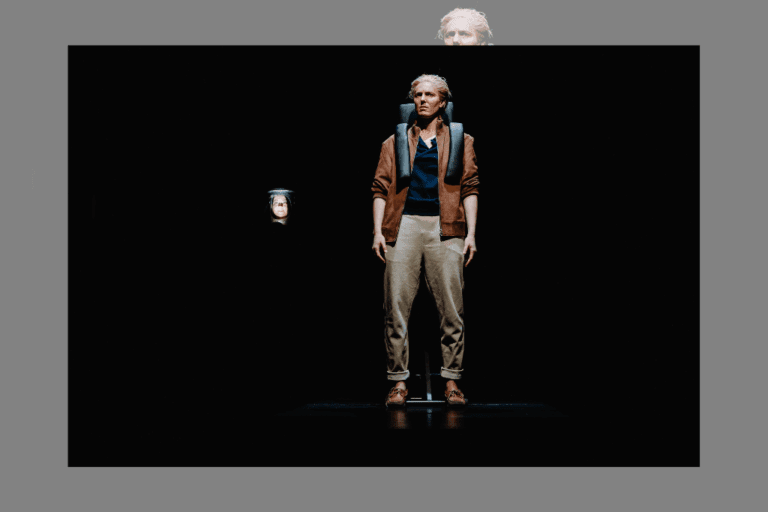 iPhoto caption: Lauren Gillis and Alaine Hutton in 'Public Consumption.' Photo by Eden Graham.
REVIEW: Lester Trips’ stylish Public Consumption captures the internet’s profound emptiness
Rather than directly representing online life, Public Consumption speculates — with virtuosity — about how the digital world affects our bodies. And the show's findings are by no means comfortable.
 iPhoto caption: Tony Ofori and Daren A. Herbert in 'Moonlight Schooner.' Photo by Dahlia Katz.
Kanika Ambrose’s Moonlight Schooner is animated and visually stunning, but its individual pieces don’t come together as neatly as I would've expected.
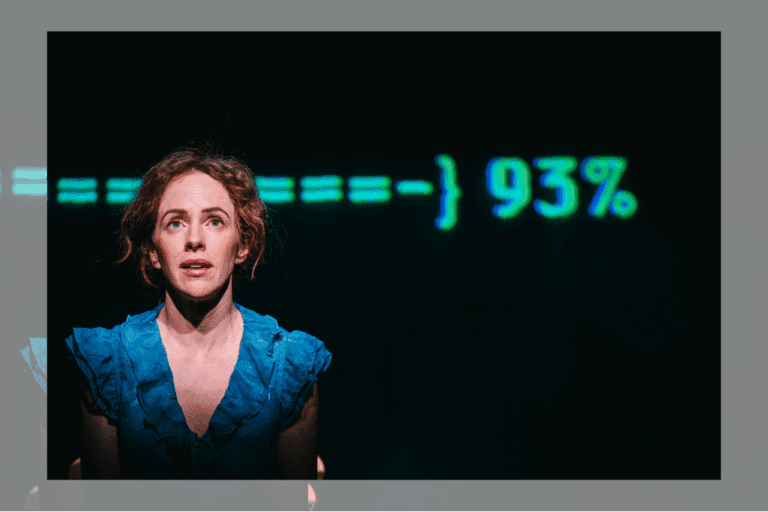 iPhoto caption: Fiona Mongillo in 'Reproduktion.' Photo by Ann Baggley.
REVIEW: Here For Now’s well-acted Reproduktion attempts to tackle too much
Amy Rutherford’s world premiere script is ambitious and the material it covers is complex — but the narrative feels disjointed.
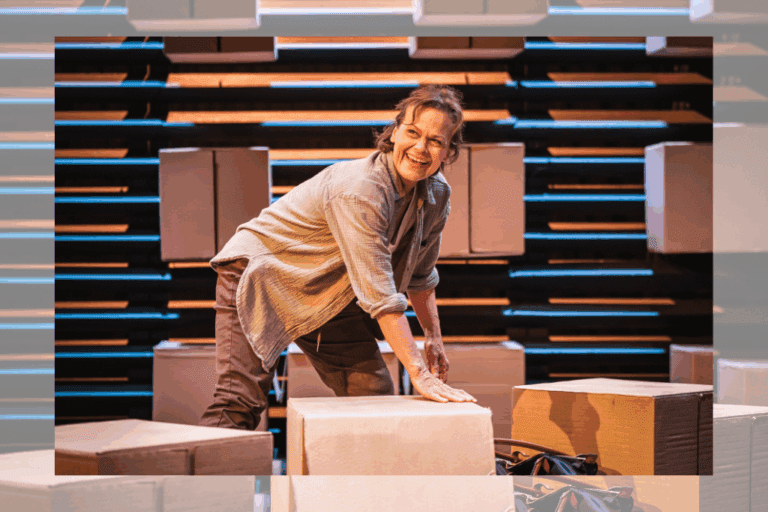 iPhoto caption: Kristen Thomson in 'Fulfillment Centre.' Photo by Elana Emer.
REVIEW: Coal Mine’s Fulfillment Centre asks how we end up alone, together
The production understands the play’s themes, yet feels limited by a script that delivers a package it never fully opens.
iPhoto caption: Lauren Gillis and Alaine Hutton in 'Public Consumption.' Photo by Eden Graham.
REVIEW: Lester Trips’ stylish Public Consumption captures the internet’s profound emptiness
Rather than directly representing online life, Public Consumption speculates — with virtuosity — about how the digital world affects our bodies. And the show's findings are by no means comfortable.
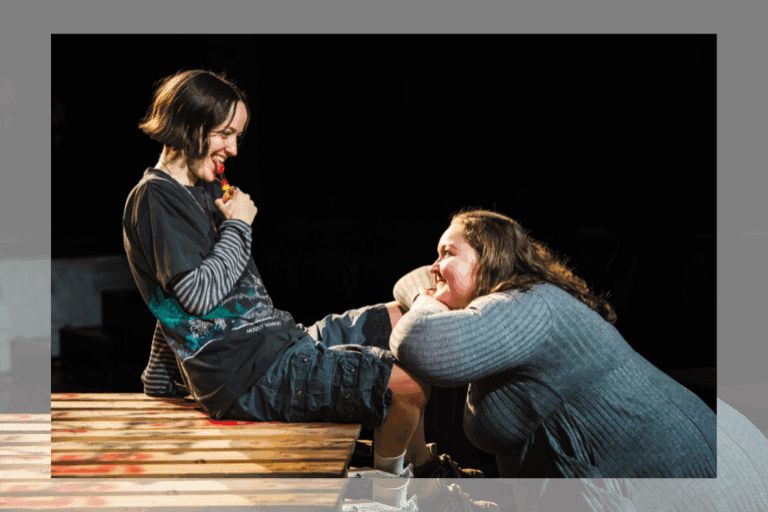 iPhoto caption: Photo by Elana Emer.
REVIEW: Icarus Theatre’s DNA paints a disturbing mural of teenage rebellion
While director Erik Richards’ tendency toward snappy, thriller-esque pacing doesn’t suit all of DNA’s more intimate moments, it adds electricity to the drama’s group scenes, bringing playwright Dennis Kelly’s reflections on groupthink and collective grief into clear view.
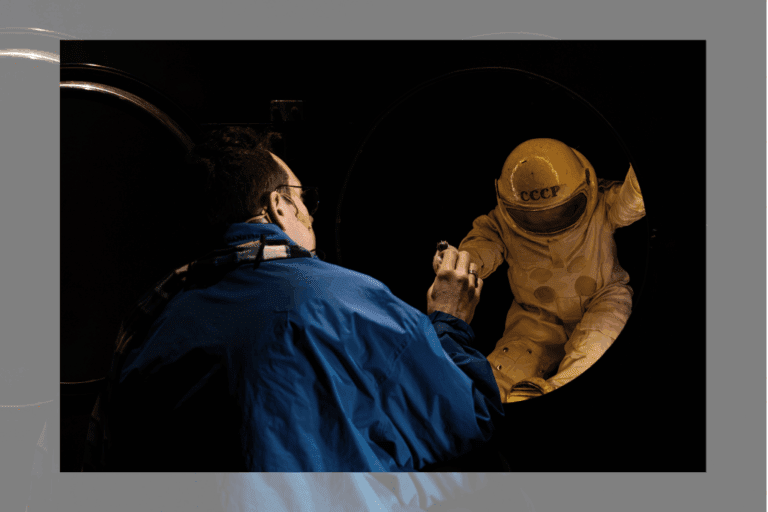 iPhoto caption: Olivier Normand in 'The Far Side of the Moon.' Photo by Li Wang.
REVIEW: Lepage’s ethereal The Far Side of the Moon is insomniac theatre
The Far Side of the Moon begins and ends with a large mirror on stage, and the show extracts enigmatic power from the tantalizing question of whether its protagonist is losing himself in his reflection, or moving toward self-discovery.
 iPhoto caption: 'Kokuho' still courtesy of TIFF.
REVIEW: During this year’s TIFF, two films depicted theatre as a vessel for transcendence
Of the several performing arts-adjacent selections I took in, most affecting were two dramas: Lee Sang-il’s Kokuho and Chloé Zhao’s Hamnet. In both period pieces, theatre creation serves as an emotional outlet for an artist navigating devastating loss.
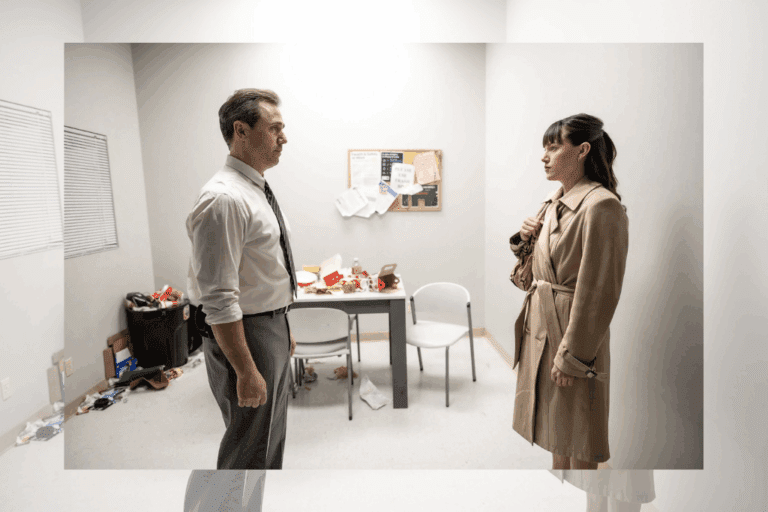 iPhoto caption: Cyrus Lane and Kirstyn Russelle in Barrie run of 'Blackbird.' Photo by Dahlia Katz.
REVIEW: Talk is Free Theatre’s Blackbird offers a close-up look at two detailed performances
Emerging director Dean Deffett has concocted a tight, straightforward production, primarily of interest as an intimate character study.
 iPhoto caption: Sleman Aldib and an audience member in 'The Opposite.' Still from a trailer by Spectrum Associates.
REVIEW: Kitchener’s biennial IMPACT Festival crackled with urgency
Most of the six works I viewed tackled urgent topics, from the convoluted Canadian immigration system to the Palestinian experience of displacement: explorations that line up with artistic director Pam Patel’s curatorial statement, which discusses how IMPACT ‘25 “unpacks what it means to survive, to resist, and to seek refuge” through a global, Indigenous-focused lens.
Comments