
REVIEW: My Sister’s Rage at Tarragon
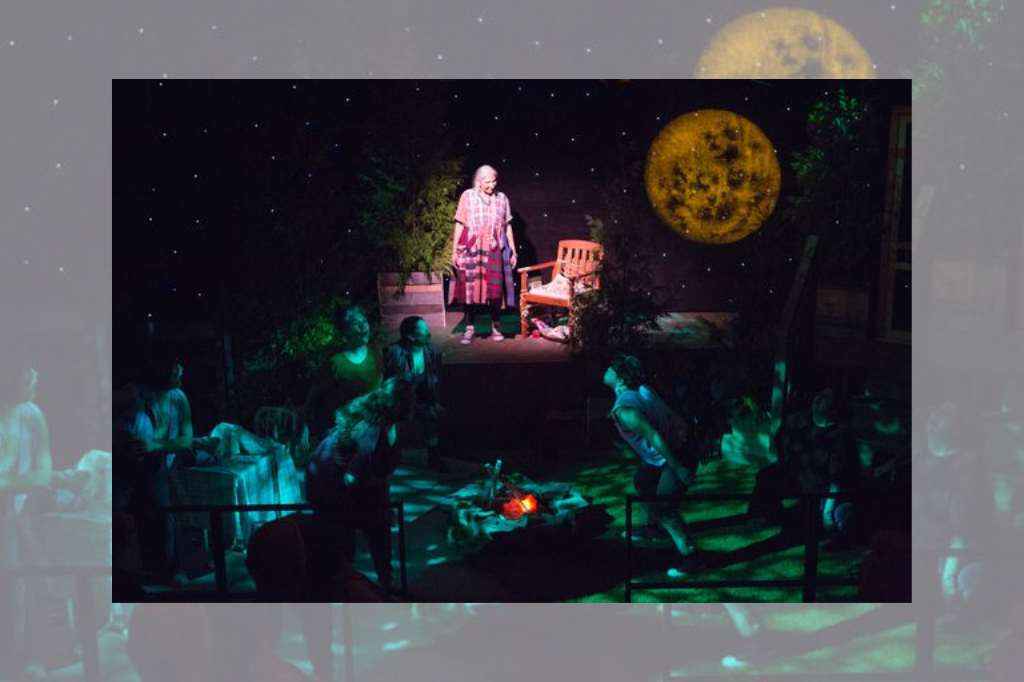
The family matriarch is about to cross over into the spirit world while family gather together. As they prepare for the end, past wounds and secrets boil over, but in Yolanda Bonnell’s latest work, My Sister’s Rage, the result is a heartwarming story of healing and laughter through difficult times. My Sister’s Rage has been staged in Tarragon Theatre’s Extraspace, a small venue which naturally heightens the sense of intimacy in playwright and director Bonnell’s already-intimate family portrait.
Before the play begins, the cast introduce themselves and explain that this work deals with difficult subject matter: death, and missing and murdered Indigenous women, girls, and two-spirit people. Death and grief will be performed and that might trigger unpleasant things for the audience, we’re told. The performance is relaxed: if you need to go out or speak with an Indigenous active listener for grounding and support, it’s not only okay, it’s encouraged. But there will be jokes and laughter too, so laugh and make noise. Fidget freely. Such an offer of compassionate spaces still feels revolutionary to me, as does seeing stories by fierce kwe (woman in Anishinaabemowin), told by fierce kwe and two-spirit artists in a more mainstream theatre like Tarragon.
The story begins with elder and neighbour Wanda (Monique Mojica) telling a goofy rez joke, the kind that’s funniest out of the mouth of an auntie who’s seen it all. She’s our emcee of sorts for the evening, guiding us through the story, breaking tension, and delivering meaningful teachings to disenfranchised cousins.
It’s Wanda’s friend who is the matriarch of the family and in intensive care. Two years earlier, one of her granddaughters went missing only to be found dead under suspicious circumstances. A lack of suspects and police concern left the investigation at a premature end and the family fractured by grief and anger. The matriarch’s current precarious state erodes the walls everyone built to protect themselves and each other from grief, where they finally begin to heal and find refuge in their love for one another.
The cast is an absolute dream. The matriarch’s daughters are played by Nicole Joy-Fraser, Shandra Spears Bombay, and Ange Loft. The trio balances each other’s strengths and weaknesses as performers which creates an incredibly realistic sisterly bond, with the bulk of their time spent keeping vigil in the hospital, playing cards, fighting, and reconnecting. The sisters’ teenage children are played by Samantha Brown, Ty Sloane, Pesch Nepoose, and Theresa Cutknife. Though played by adults, together they embody the spirit of the teenage cousin dynamic. Around the firepit and watched by a playful crow, the youngest ones learn to swear, smoke pot, and generally rebel from the older ones, everyone figuring out growing up together. Important life lessons taught with a healthy serving of teasing while the veil between the physical and spirit worlds is thin.
It’s been a while since I’ve been a teen or around teens, so whether accurate or not, I believed the dialogue between the sisters. None of it reads as an elder Millennial trying to capture what the kids are saying these days. It’s that banter and the teen angst between the cousins, as well as their relationship with the weird old neighbour Wanda that, for me, was one of the highlights of the show.
Wanda and Tash (a two-spirit cousin who has been struggling with their mental health played by Ty Sloane) are the other standouts of the show. Both Bonnell and Mojica deeply love and understand Wanda, putting her eccentricities out on display without turning her into a caricature, reminding us of why our elders are the way they are without being didactic about it. As for Tash, it’s refreshing to see a 2S character who is allowed to exist as they are without making their fluidity the cause of their struggles or a focal point. I dream of a day where 2S characters living fully will just be par for the course, and though My Sister’s Rage will not singlehandedly reform an entire genre, it most certainly will contribute to manifesting that reality.
As with many of Bonnell’s works, interpretive movements provide an emotional thermostat throughout, denoting the complex feelings haunting each character. Often this sort of thing makes me uncomfortable to watch, always wondering if I’m fully understanding what I’m seeing. Bonnell, with the support of Aria Evans (associate director and movement facilitator), however, strikes just the right balance, giving voice to the underlying unspeakable inner turmoil within the characters without unnecessary exposition or leaving too much room for audience interpretation. They masterfully use movement where words would fail.
It sounds grim, right? Well, I’m not going to lie. It’s HEAVY. But, thanks to Bonnell’s compassion, empathy, and quick wit, it’s as funny as it is intense. Laughter truly is medicine. In My Sister’s Rage Bonnell continues to write stories that are easily recognizable and relatable to many Indigenous women, representing experiences and perspectives too long dismissed. Rather than taking a bath in the traumas many of us face, Bonnell continues to make them safe to laugh through and heal, and see ourselves represented as real people having our real experiences.
My Sister’s Rage runs at Tarragon Theatre October 11 through November 6, 2022.
Robyn Grant-Moran
Robyn Grant-Moran (Métis Nation of Ontario) is a classical singer, writer, and a jack of many trades who has recently met the requirements to call herself a Bachelor of the Fine Arts (thank you, York University and Indspire!). Along with her BFA, she has also completed the Performance Criticism Training Program with Generator, has studied with some beloved Canadian classical singers, and been in a opera or two. Robyn currently resides in Toronto with her tiny adorable rat dog.
LEARN MORE iPhoto caption: Members of the company of 'Narnia.' Photo by Dahlia Katz.
REVIEW: Bad Hats’ Narnia is a joyful, heartwarming escape
The spirit of openness and the joy of discovery rule over this Narnia. Open the wardrobe and see.
 iPhoto caption: Members of the company of 'Robin Hood.' Photo by Dahlia Katz.
REVIEW: Canadian Stage’s Robin Hood panto is anti-capitalist fun for the whole family
Following Ross Petty’s legacy of scene-stealing, Damien Atkins as the evil Prince John is easily the greatest delight of the show.
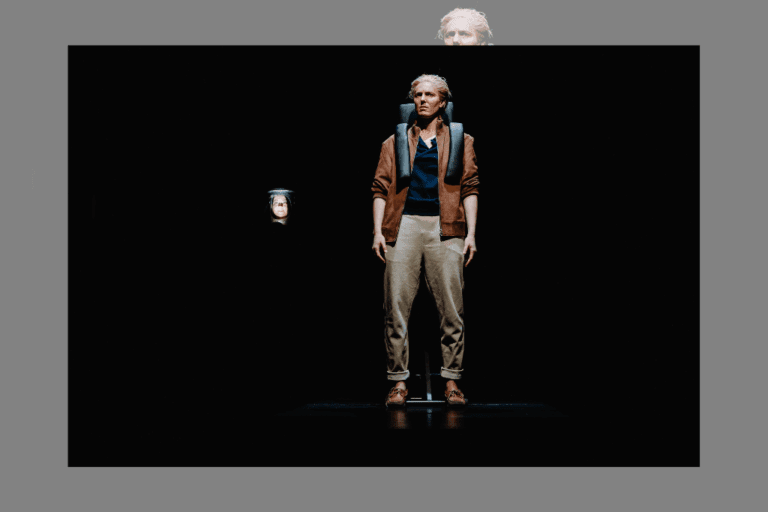 iPhoto caption: Lauren Gillis and Alaine Hutton in 'Public Consumption.' Photo by Eden Graham.
REVIEW: Lester Trips’ stylish Public Consumption captures the internet’s profound emptiness
Rather than directly representing online life, Public Consumption speculates — with virtuosity — about how the digital world affects our bodies. And the show's findings are by no means comfortable.
 iPhoto caption: Tony Ofori and Daren A. Herbert in 'Moonlight Schooner.' Photo by Dahlia Katz.
Kanika Ambrose’s Moonlight Schooner is animated and visually stunning, but its individual pieces don’t come together as neatly as I would've expected.
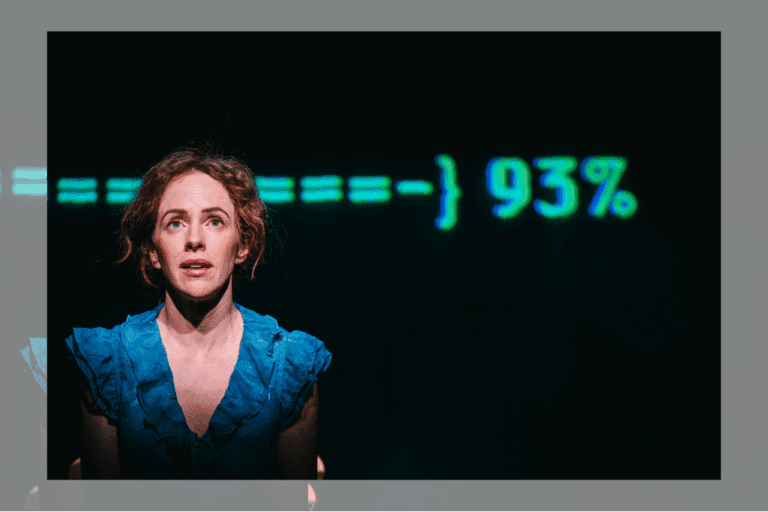 iPhoto caption: Fiona Mongillo in 'Reproduktion.' Photo by Ann Baggley.
REVIEW: Here For Now’s well-acted Reproduktion attempts to tackle too much
Amy Rutherford’s world premiere script is ambitious and the material it covers is complex — but the narrative feels disjointed.
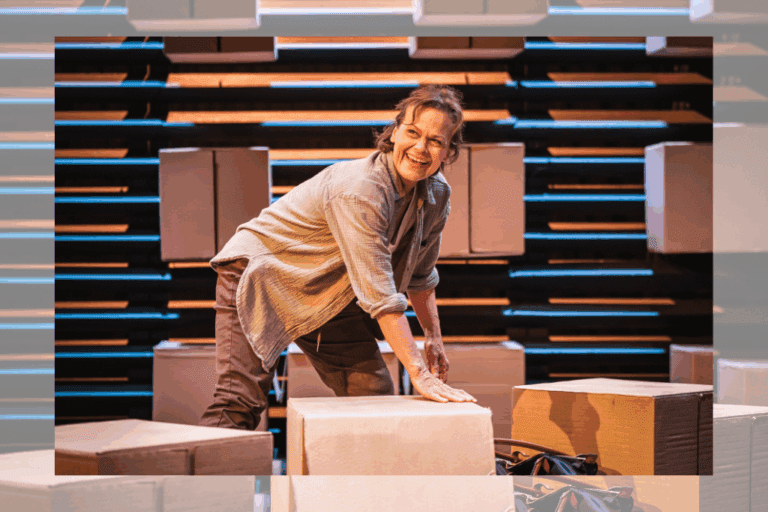 iPhoto caption: Kristen Thomson in 'Fulfillment Centre.' Photo by Elana Emer.
REVIEW: Coal Mine’s Fulfillment Centre asks how we end up alone, together
The production understands the play’s themes, yet feels limited by a script that delivers a package it never fully opens.
 iPhoto caption: Festival artwork by Mishiikenh Kwe.
Weesageechak Begins to Dance invites artists and audiences to explore newness together
Weesageechak Begins to Dance is the annual festival of new and innovative First Nations, Métis, and Inuit theatre, opening on November 6 at Native Earth Performing Arts.
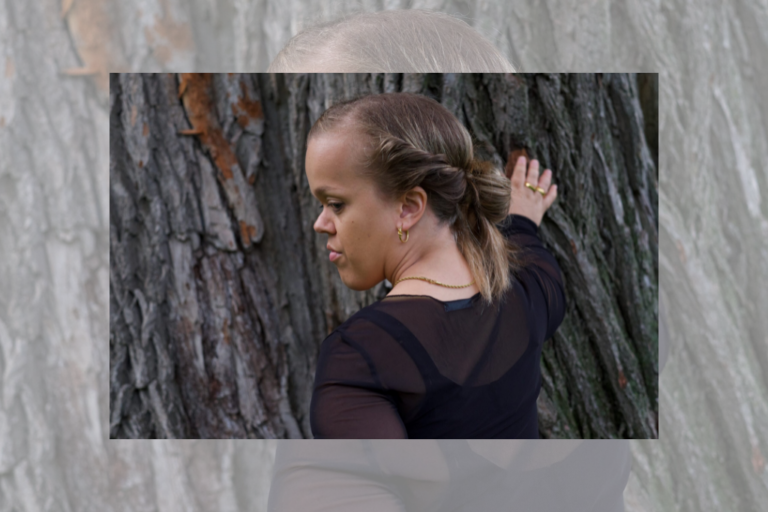 iPhoto caption: Photo by Mike McPhaden.
There is a rift in the time-space continuum at Withrow Park this summer: multiverse Richard III has met Shakespearean universe Richard III for a coronation and some Shakespearean hijinks.
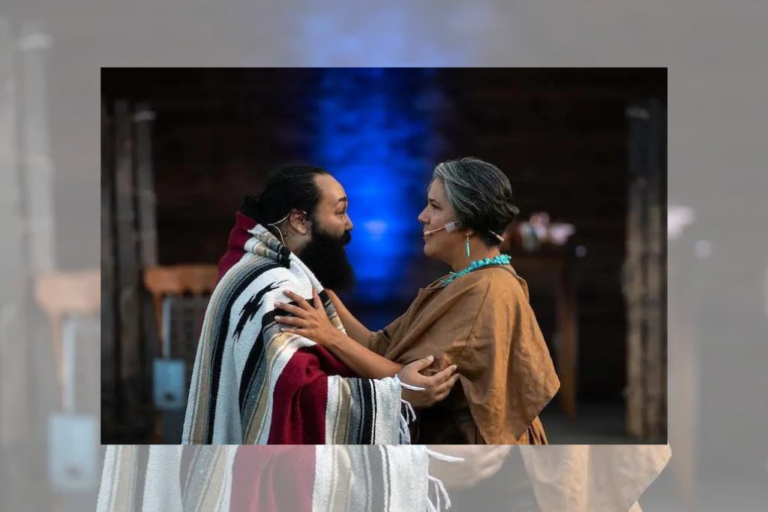
REVIEW: Otîhêw at Shakespeare in Action
A volcanic eruption and violent colonial expansion has turned the world upside down. Without sun and moon, the realities of famine and smallpox unleash new fears that threaten to unravel the fabric of community.
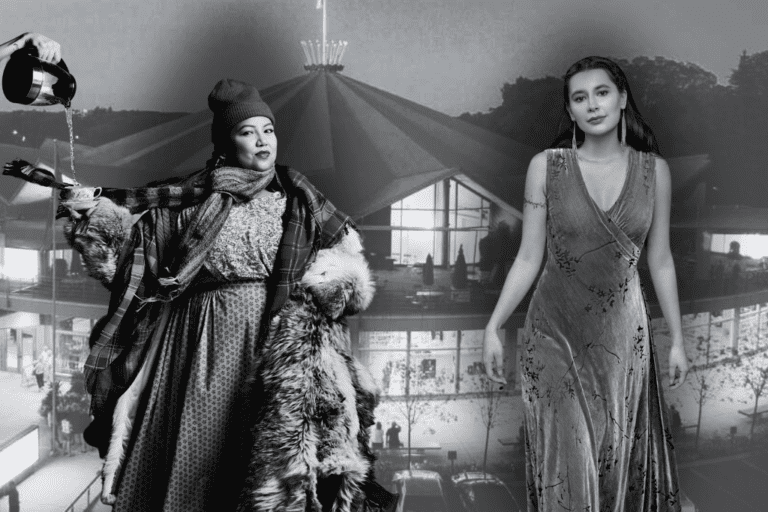 iPhoto caption: Joelle Peters (left) and Tara Sky (right). Original images of Peters and Sky by Ted Belton.
Change for the Better: On Indigeneity at the Stratford Festival
Both [Sky and Peters] want to honour the Indigenous artists who have worked with the [Stratford] festival for years, quietly carving out space for public and visual representation.
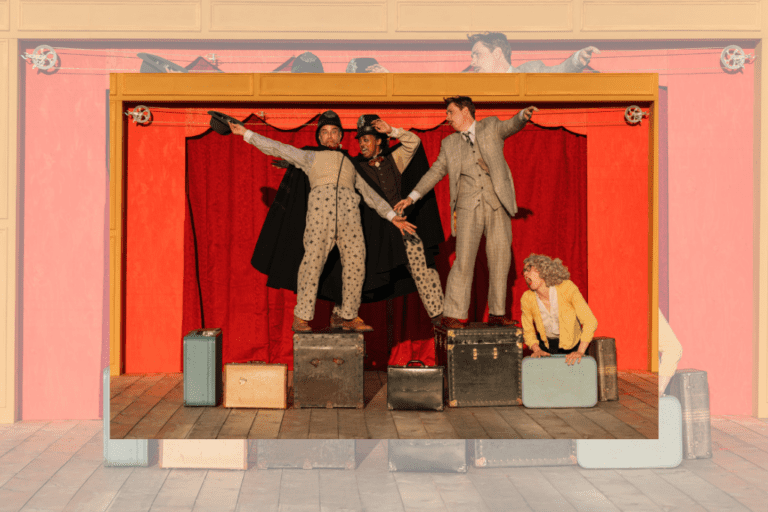 iPhoto caption: Courtenay Stevens, Helen Belay, Brandon McGibbon, Courtney Ch’ng Lancaster perform in The 39 Steps. Photo by Sarah Kirby.
REVIEW: The 39 Steps at County Stage Company
A cast of fantastic actors takes you on an equally fantastic journey through some of the silliest places and situations — it’s great fun.
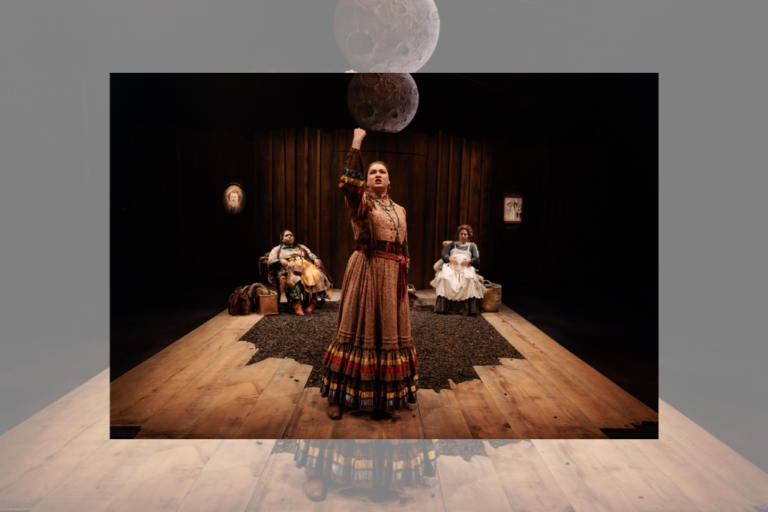 iPhoto caption: Photo by David Hou
REVIEW: Women of the Fur Trade at the Stratford Festival
Louis Riel is SO dreamy. Tall. A little disheveled and unkempt, because he’s an introspective poet who’s busy fighting for social justice. And he wears glasses. He’s the total package.
Comments