
REVIEW: A Poem for Rabia at Tarragon fits a large story into a small space
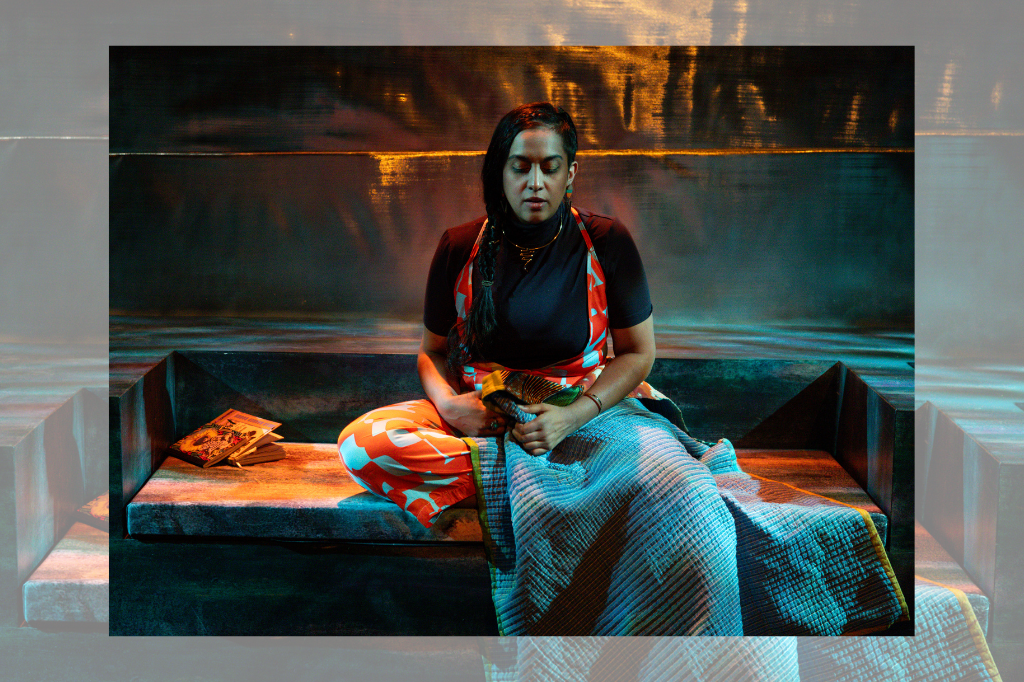 iPhoto caption: Photo by Cylla von Tiedemann.
If I had a nickel for every 2023 Tarragon show that interweaves a 21st-century setting with an older one, stars the playwright as a queer Canadian trying to make sense of the world, and features a pool of real water at the front of the stage, I’d have 10 cents.
The first was Makram Ayache’s The Hooves Belonged to the Deer in April. The second is Nikki Shaffeeullah’s A Poem for Rabia, produced by Tarragon in association with Nightwood Theatre and Undercurrent Creations.
While the former made up for fuzzy performances with explosive aesthetic highs, the latter works somewhat oppositely. On a scene-to-scene level, co-directors Clare Preuss and Donna-Michelle St. Bernard render Shaffeeullah’s ambitious text with impressive clarity, ensuring the actors are supported in their traversal of the play’s manifold shifts. The dramatic foundation of A Poem for Rabia is well in place; it’s the visual concept that’s in need of greater love — and, perhaps, a larger canvas than the intimate Tarragon Extraspace can offer.
Shaffeeullah plays Zahra, an activist living in Canada in the year 2053. Though the country recently abolished prisons, she feels disconnected from her ancestors, and worries her contemporary lifestyle is turning her into a “fairweather descendant.”
The play brings to life two such ancestors, interweaving their stories with Zahra’s. One is Betty (Michelle Mohammed), a secretary starting work at the Governor of British Guiana’s office in 1953. Another century back lives the titular Rabia (Adele Noronha), an Indian domestic worker being sent to the Caribbean on an indentured labour ship helmed by colonizers.
All three live through times of immense political change. But Shaffeeullah doesn’t coat their lives in drama. Instead, A Poem for Rabia focuses on the smaller joys and disappointments of everyday life — the nervous excitement that accompanies a new job, the embarrassment-tinged thrills of awkward conversation, and the delight of exploring new foods (along with the comfort of indulging in old ones). Despite the vast temporal gulf separating the women, Shaffeeullah’s attention to detail connects them: their emotional and spiritual journeys intersect even as their literal circumstances diverge.
The show’s double casting contributes to this sense of overlap. Virgilia Griffith, Jay Northcott, and Anand Rajaram each play characters in two of the timelines, blurring the differences between the worlds. The grounded performances of the central trio of women keep things from becoming unclear, however — Mohammed, in particular, anchors her setting with fire and dynamism.
It’s becoming somewhat common for Toronto playwrights to star in their own shows, but Shaffeeullah gives herself a fairly laidback role — Zahra’s emotional range isn’t huge, and she speaks less than one might expect. Shaffeeullah’s casting also helps underline her personal connection to the material (her playwright’s note hints at parallels between her family history and Zahra’s).
Sonja Rainey’s sea blue set doesn’t evoke a specific time or place. Instead, it’s an abstract jungle gym of sorts; a couple of inclined slopes and a blocky upstage platform serve as perches for the actors, allowing Preuss and St. Bernard to create unique stage images.
The semi-circular pool of water is less effective, however: it occupies downstage centre, and a barrier cuts it off from the rest of the playing space; since it’s only really used in one late scene (Chekhov’s pond, yes), this placement feels unearned — though the payoff of the pond scene is sweet, I’m not sure it’s worth losing prime stage space elsewhere. And when scenes take place on the ground behind the pool, the barrier cuts off the actors’ legs, leeching their energy.
Any show that interweaves settings puts a great deal of responsibility on the lighting designer; especially if there aren’t many set changes, they tend to be tasked with dividing and defining the space. Echo Zhou 周芷會 takes up this challenge admirably, offering expressionistic flourishes in addition to clearly signposting the play’s shifts. But a large, foil-like wall at the back of the stage at times muddies Zhou’s work — it’s a reflective surface, so it smudges the light, making it difficult to isolate characters in spotlights without light flashing forward.
A Poem for Rabia feels a little trapped in the Extraspace — at two-and-a-half hours, Shaffeeullah’s play is big, and could use more space to breathe. (It would even be fascinating to see what a film or novel adaptation would do with the sweeping story.)
But the show’s passionate core comes through nonetheless. Though the character Rabia does write a poem, it’s moving that the play’s title speaks of a poem “for” Rabia, not “by” her; A Poem for Rabia is ultimately a circular gesture, a loving handing back of what’s been passed down.
A Poem for Rabia runs at Tarragon Theatre until November 12. Tickets are available here.
Intermission reviews are independent and unrelated to Intermission’s partnered content. Learn more about Intermission’s partnership model here.
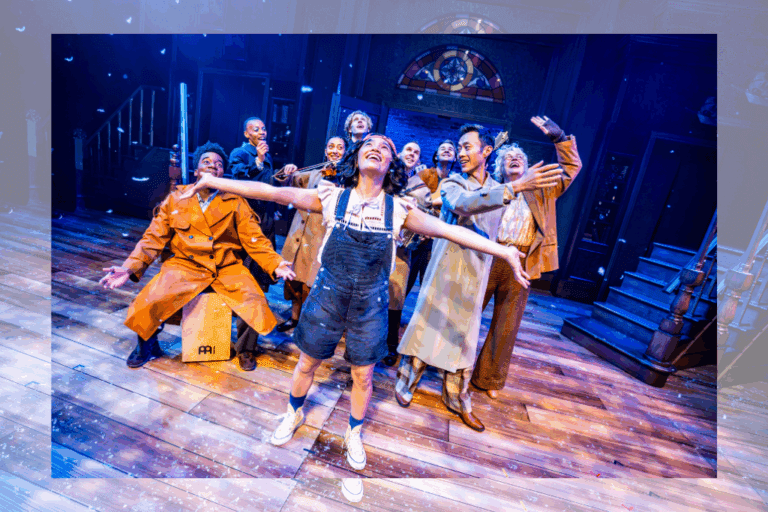 iPhoto caption: Members of the company of 'Narnia.' Photo by Dahlia Katz.
REVIEW: Bad Hats’ Narnia is a joyful, heartwarming escape
The spirit of openness and the joy of discovery rule over this Narnia. Open the wardrobe and see.
 iPhoto caption: Members of the company of 'Robin Hood.' Photo by Dahlia Katz.
REVIEW: Canadian Stage’s Robin Hood panto is anti-capitalist fun for the whole family
Following Ross Petty’s legacy of scene-stealing, Damien Atkins as the evil Prince John is easily the greatest delight of the show.
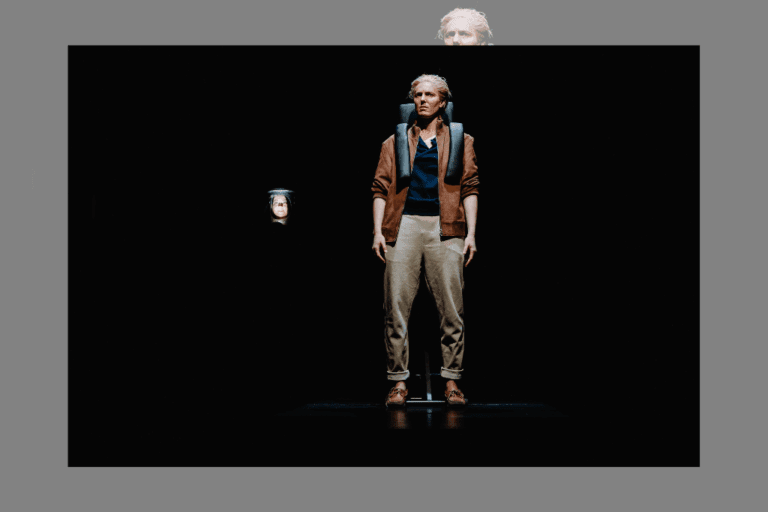 iPhoto caption: Lauren Gillis and Alaine Hutton in 'Public Consumption.' Photo by Eden Graham.
REVIEW: Lester Trips’ stylish Public Consumption captures the internet’s profound emptiness
Rather than directly representing online life, Public Consumption speculates — with virtuosity — about how the digital world affects our bodies. And the show's findings are by no means comfortable.
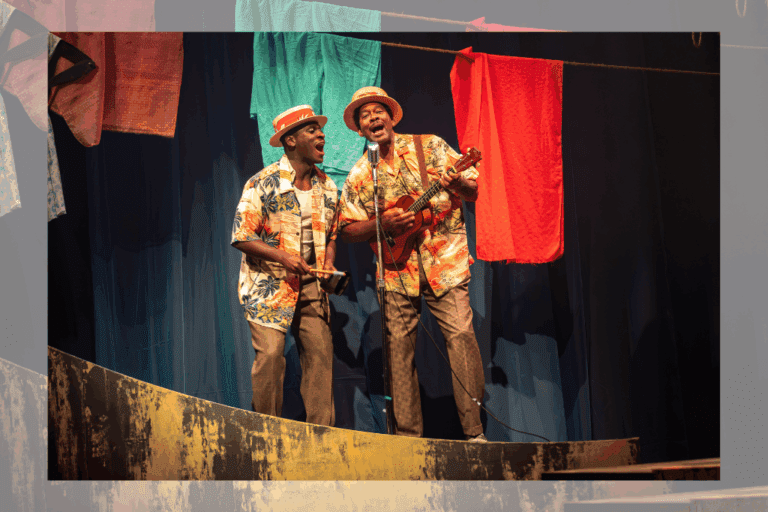 iPhoto caption: Tony Ofori and Daren A. Herbert in 'Moonlight Schooner.' Photo by Dahlia Katz.
Kanika Ambrose’s Moonlight Schooner is animated and visually stunning, but its individual pieces don’t come together as neatly as I would've expected.
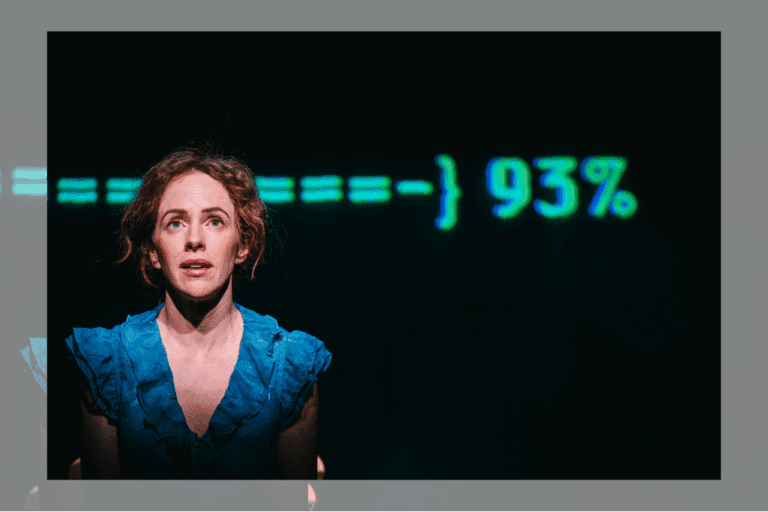 iPhoto caption: Fiona Mongillo in 'Reproduktion.' Photo by Ann Baggley.
REVIEW: Here For Now’s well-acted Reproduktion attempts to tackle too much
Amy Rutherford’s world premiere script is ambitious and the material it covers is complex — but the narrative feels disjointed.
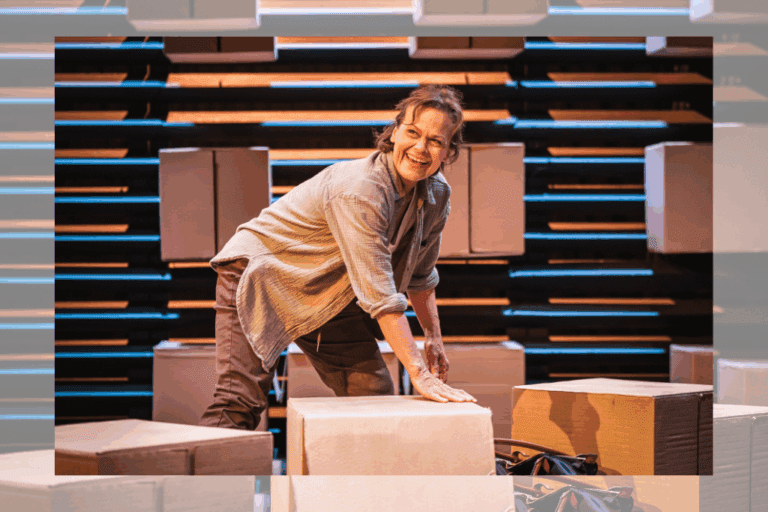 iPhoto caption: Kristen Thomson in 'Fulfillment Centre.' Photo by Elana Emer.
REVIEW: Coal Mine’s Fulfillment Centre asks how we end up alone, together
The production understands the play’s themes, yet feels limited by a script that delivers a package it never fully opens.
iPhoto caption: Lauren Gillis and Alaine Hutton in 'Public Consumption.' Photo by Eden Graham.
REVIEW: Lester Trips’ stylish Public Consumption captures the internet’s profound emptiness
Rather than directly representing online life, Public Consumption speculates — with virtuosity — about how the digital world affects our bodies. And the show's findings are by no means comfortable.
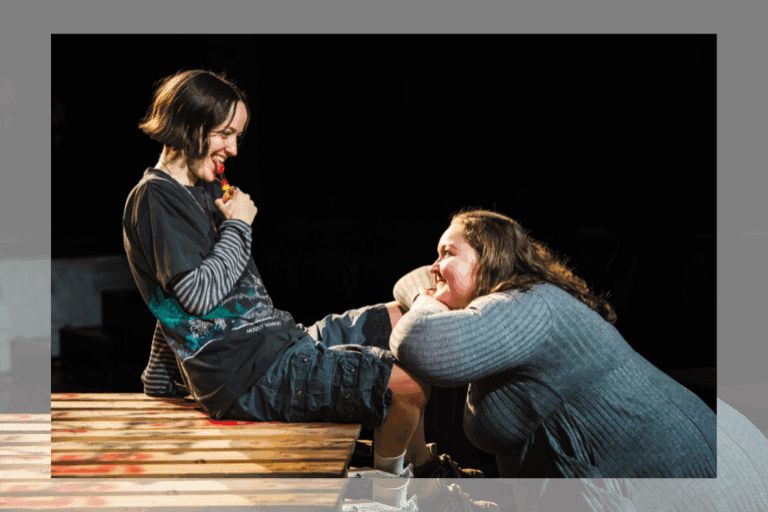 iPhoto caption: Photo by Elana Emer.
REVIEW: Icarus Theatre’s DNA paints a disturbing mural of teenage rebellion
While director Erik Richards’ tendency toward snappy, thriller-esque pacing doesn’t suit all of DNA’s more intimate moments, it adds electricity to the drama’s group scenes, bringing playwright Dennis Kelly’s reflections on groupthink and collective grief into clear view.
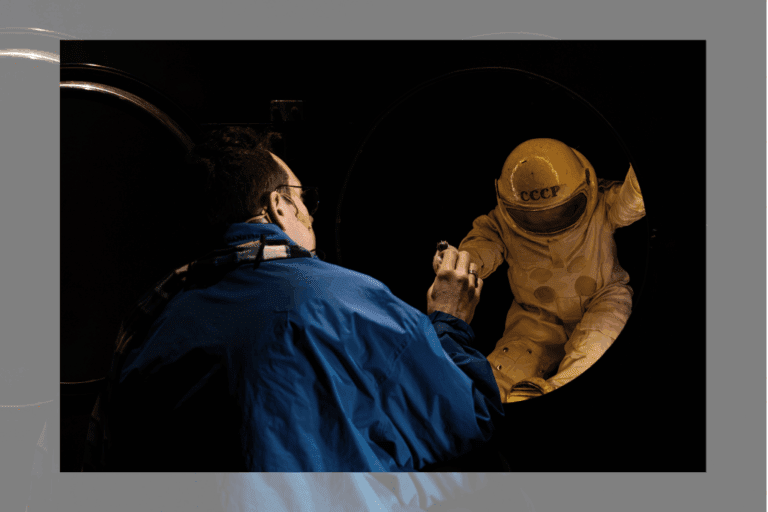 iPhoto caption: Olivier Normand in 'The Far Side of the Moon.' Photo by Li Wang.
REVIEW: Lepage’s ethereal The Far Side of the Moon is insomniac theatre
The Far Side of the Moon begins and ends with a large mirror on stage, and the show extracts enigmatic power from the tantalizing question of whether its protagonist is losing himself in his reflection, or moving toward self-discovery.
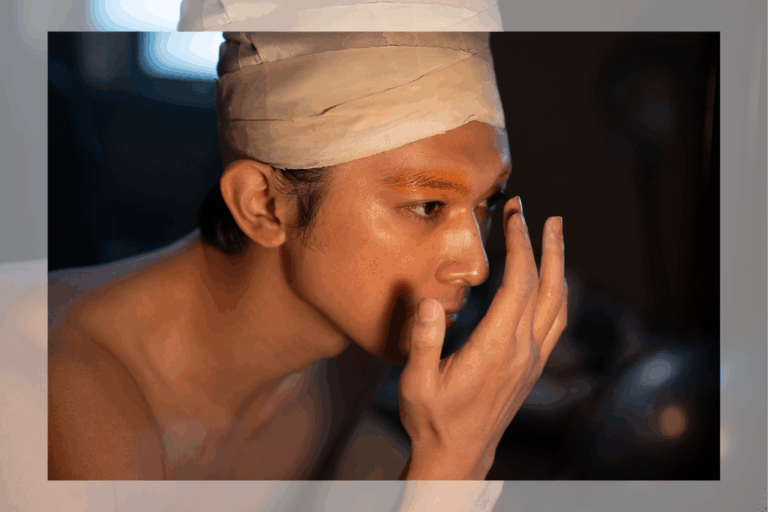 iPhoto caption: 'Kokuho' still courtesy of TIFF.
REVIEW: During this year’s TIFF, two films depicted theatre as a vessel for transcendence
Of the several performing arts-adjacent selections I took in, most affecting were two dramas: Lee Sang-il’s Kokuho and Chloé Zhao’s Hamnet. In both period pieces, theatre creation serves as an emotional outlet for an artist navigating devastating loss.
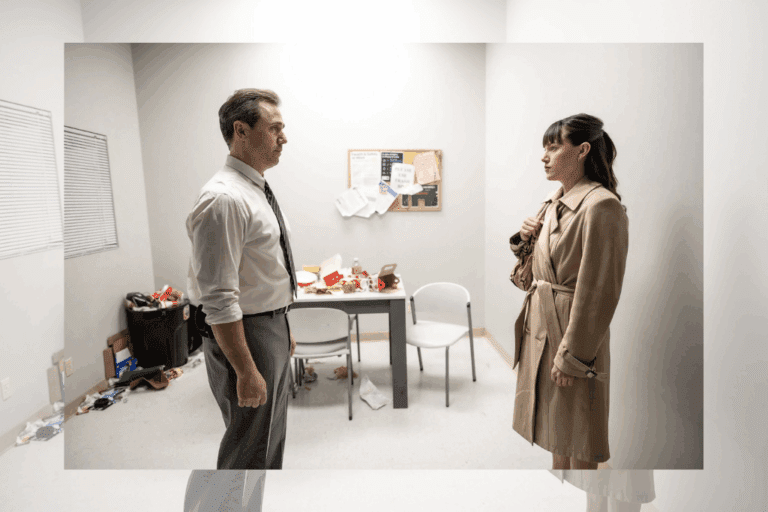 iPhoto caption: Cyrus Lane and Kirstyn Russelle in Barrie run of 'Blackbird.' Photo by Dahlia Katz.
REVIEW: Talk is Free Theatre’s Blackbird offers a close-up look at two detailed performances
Emerging director Dean Deffett has concocted a tight, straightforward production, primarily of interest as an intimate character study.
 iPhoto caption: Sleman Aldib and an audience member in 'The Opposite.' Still from a trailer by Spectrum Associates.
REVIEW: Kitchener’s biennial IMPACT Festival crackled with urgency
Most of the six works I viewed tackled urgent topics, from the convoluted Canadian immigration system to the Palestinian experience of displacement: explorations that line up with artistic director Pam Patel’s curatorial statement, which discusses how IMPACT ‘25 “unpacks what it means to survive, to resist, and to seek refuge” through a global, Indigenous-focused lens.
Comments