
REVIEW: Solo Crow’s Theatre Macbeth is a little too compact for its own good
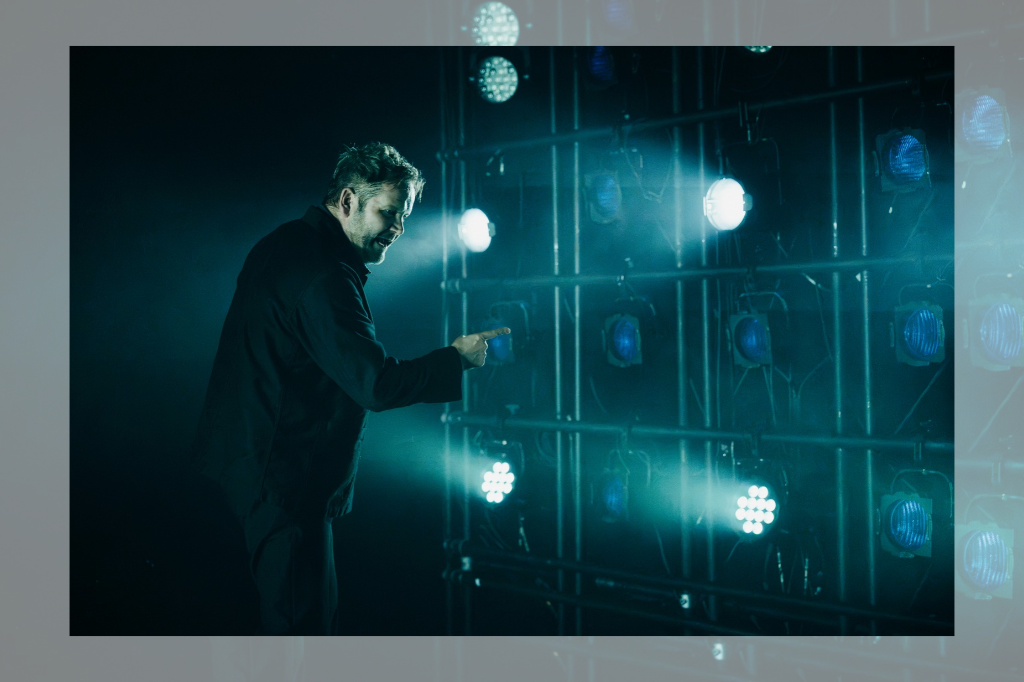 iPhoto caption: Evan Buliung in 'Macbeth' at Crow's Theatre. Photo by Kendra Epik.
To solo or not to solo, that is the question…
Or at least that’s the question posed by the new Crow’s Theatre production of Macbeth, which takes Shakespeare’s bloody tragedy and hands it over to a single performer. Directed and co-created by Christopher Manousos, the production condenses one of the Bard’s shortest works into an even brisker 85-minute theatrical experience, relying on an inventive combination of lighting, sound, and staging to bring its world to life. It’s an ambitious undertaking and one that tests just how much can be done with a relatively small space and one actor.
When we first meet Evan Buliung, the production’s other co-creator, he isn’t Macbeth or any other character from the Scottish play. He’s an unnamed man in the present day, dissatisfied with his life and looking for guidance from an AI chatbot. The bot suggests Buliung read Macbeth, and before long, he’s sucked into the story, playing just about every role, with the chatbot occasionally interrupting to narrate the action. The result of this framing device is a mixture of contemporary and Elizabethan, with smartphones sitting next to swords and shields. This contrast was a little jarring at first, but hearing the AI announce things like “Macbeth calls some assassins” or “Enter murderers” is a funny touch that gives the production a distinct flavour.
Manousos brings much of the world around Buliung to life through the production’s technical design. Staged in the Crow’s Studio Theatre, the action unfolds on a circular, slightly raised platform with the audience seated on either side. A few chairs and props help suggest various locations, but much of the transformation comes from Chris Malkowski’s magnificent lighting design. Fixed around and above where everything takes place, lights shift colour, intensity, and direction, continually changing the atmosphere of the otherwise barren stage. The effect is especially striking during an encounter where Macbeth seeks answers about his future from the three Witches in the latter half of the show. The centre of the platform opens, smoke billows from below, and a wash of green light envelops the stage. Suddenly, the platform has become something resembling a witches’ cauldron, and along with Thomas Ryder Payne’s eerie and otherworldly sound design, it’s a marvellous bit of theatrical conjuring.
Buliung also has to do quite a bit of conjuring. He does a fine job carrying the show, though I did occasionally wish there was more variation in the way he approached each character. Having recently seen Raoul Bhaneja take on every role in Hamlet (solo) at Theatre Passe Muraille, the contrast between the two performances was striking. Bhaneja had virtually nothing to work with: no props, costumes, set, or lighting changes. Instead, he expertly modified his voice, posture, and general attitude to make each character easily recognizable. Manousos and Buliung have more theatrical tools (including prerecorded voices) at their disposal, and Buliung occasionally tries on an accent or a different costume to embody the many characters he flits between, but the distinctions aren’t always as immediately recognizable as they could be.
And despite the production’s technical ingenuity, I found myself wishing its AI concept had been given a little more attention. There’s an interesting opportunity here to connect contemporary anxieties surrounding artificial intelligence to some of Macbeth’s central themes: the desire for easy answers, the danger of hearing only what we want to hear, and the consequences of letting outside influences shape our decisions. The program even mentions that this particular staging wants to examine “the seductive promises of artificial intelligence,” but outside of the initial framing device and a few lines here and there, that promise never fully materializes.
Perhaps that’s the trade-off of trying to fit so much into a compact production. Although the snappy pace makes the story easy to follow, at times the show plays more like a visually enticing summary of Shakespeare’s tragedy. Still, Macbeth makes an impressive technical achievement of its one-person format — even if its moving parts don’t always feel like a cohesive whole.
Macbeth runs at Crow’s Theatre until December 6. More information is available here.
Intermission reviews are independent and unrelated to Intermission’s partnered content. Learn more about Intermission’s partnership model here.

Hunter Weaymouth
Hunter Weaymouth (he/him) is a Hamilton-based playwright, screenwriter, and theatre critic.
LEARN MORE iPhoto caption: Hamilton Fringe 2025. Photo by Dave Pijuan-Nomura
REVIEWS: Hamilton Fringe Festival 2026
From intimate performances and new dramas to musical comedies and experimental collaborations, these shows offer a glimpse into the many strange, funny, moving, and unexpected stories being told across Hamilton this summer.
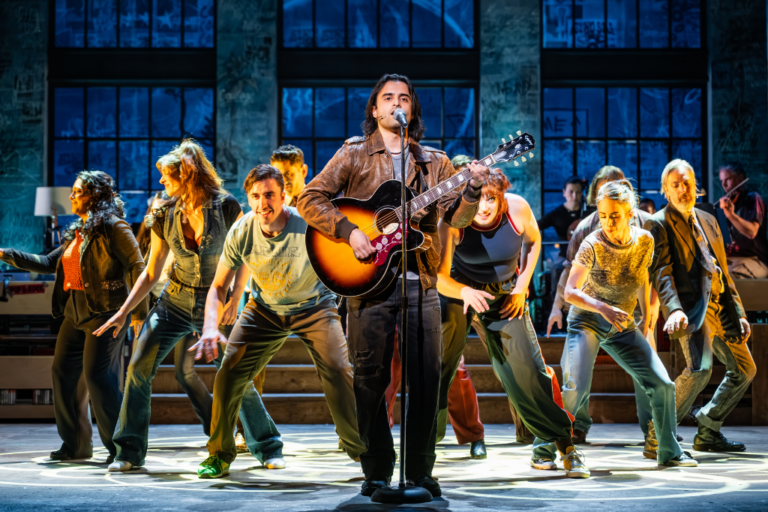 iPhoto caption: The company of 'It’s a Good Life If You Don’t Weaken.' Photo by Dahlia Katz.
In Theatre Aquarius’ new Tragically Hip jukebox musical, emotion comes first
“This show isn’t about the Tragically Hip,” says director Mary Francis Moore. “It’s about Waleed.” Instead of bending the Hip’s music to fit the narrative, the team has looked for thematic threads and moments where the emotional undercurrent of a song aligns with what’s happening on stage, even if the connection isn’t explicit.
 iPhoto caption: Lisa Nasson and Nicole Joy-Fraser in 'Mischief.' Photo by Jae Yang.
REVIEW: In Tarragon and Native Earth’s Mischief, the jokes aren’t the point
Mischief may not fully cohere into a singular statement, but it leaves behind something quieter and more human: the feeling of having spent time inside a community, listening to its jokes, its arguments, and its silences. It is a play full of questions — some answered, many not — and it trusts the audience enough to live with that uncertainty.
Comments