
REVIEW: Soulpepper’s Old Times casts a tense, haunting spell
 iPhoto caption: Jenny Young in 'Old Times.' Photo by Dahlia Katz.
Directed by Peter Pasyk, Old Times at Soulpepper Theatre sustains 75 minutes of simmering tension. This production promises a revelatory experience for Harold Pinter veterans and novices alike, expertly deploying the playwright’s iconic device — silence.
It’s twilight. Sipping coffee in a stylish living room, somewhere in the English countryside, old friends reminisce. Kate (Anita Majumdar) and Deeley (Christopher Morris) are a married couple. Kate and Anna (Jenny Young) haven’t seen each other in twenty years.
At first, conversation rolls out in and out like the sea. Anna chatters about girlhood; her recollections are met with unease from Deeley and Kate. I wonder: Do any of these people even know one another? As the evening progresses, the subtle resonances of the characters’ relationships intensify. Longing and resentment and jealousy have accumulated over the years. Currents of sexual energy travel between the three. Sometimes the conversation stops, and we’re left in complete silence. It’s so quiet that the audience has to breathe softly, so as not to be heard. This was my first time experiencing Pinter’s famous silences on stage. It felt intimate and vulnerable.
Kate is the most reticent of the three characters. While Anna and Deeley engage in power play (who gets the armchair? Whose life is better? Who knows Katey best?) Kate says little, and is difficult to pin down. In the first half of the play, Young and Morris achieve present and natural performances in contrast to Majumdar’s detachment, bringing Pinter’s challenging poetics to life.
I will not spoil the second act (without an intermission, the play’s two halves are divided by a brief blackout). But I will say Majumdar delivers a shocking and dynamic performance that I’m still thinking about.
In his director’s note, Pasyk addresses Pinter’s notoriously enigmatic style, commending the British playwright for trusting his audience. “The mysteries within his plays rely on our intelligence and intuition,” Pasyk explains. Reflecting on this note after the show, I initially thought Pinter should trust me less. I can’t say for sure what happens in this play. Time wraps around itself, creating uncertainty about what’s being repeated and what’s happening for the very first time. But I also don’t wish things were clearer — in fact, Pasyk’s production has motivated me to explore more of Pinter’s work.
Pasyk approaches his production without any trace of anxiety about settling the play’s overall meaning. His focus seems to be on crafting the details. Each beat takes the time it needs. Somehow, this doesn’t stall the play’s urgency to recover what has been lost: not the past, exactly, but the person you once were.
Indeed, one question Old Times asks — I think — is how much of yourself resides in other people. In the first few minutes, Deeley tells Kate he’ll be watching her, to see if Anna’s the same person. “You think you’ll find that out through me?” Kate asks. “Definitely,” Deeley replies. The cast embodies this concept throughout the play by reflecting an acute physical awareness of one another.
To that point, the actors’ movements, coached by Kelly McEvenue, a practitioner of Alexander Technique, are deceptively simple — pouring coffee, sitting, standing. Yet their physicality is precise, like dancers, augmenting the many silences and contributing to the play’s overall intensity. (I must say, this is not true of the continuous smoking. It’s not the actors’ faults — it’s the fake cigarettes. They make the smoking look unnatural, and not in a Lynchian way, as with the rest of the play.)
Ultimately, this understated production of Pinter’s classic seeps under your skin. In addition to the performances, part of what works so well is the cultivation of atmosphere through set and lighting design (by Snezana Pesic and Imogen Wilson respectively). A large window runs along the back wall of the set, through which you can see the sky and the sea. As night falls, the sky darkens, and the actors’ reflections are visible in the window. Later the curtains are closed, creating a spectral ambience. The lighting responds to the emotional life of the play, starting with a comforting yellow, then taking on elements of blue and red, and sometimes deep gold. The overall effect is stomach-churning nostalgia. Fitting, because in Old Times the past is not the past.
So, why Old Times now? The play certainly captures a sense of unreality that feels heightened at this moment, given the state of the world. But the production also resists any direct claim to currency. It feels appropriately outside of time.
Last week the heat in Toronto was awful. The rain kept coming, bizarrely, while the sun was shining. Even at night, which is getting earlier and earlier, the heat remained. Old Times is a perfect August play, I think, because every recent conversation I’ve had includes the observation that summer is moving too quickly. That we’ve arrived at the end too soon.
Old Times runs at Soulpepper Theatre until September 7. Tickets are available here.
Intermission reviews are independent and unrelated to Intermission’s partnered content. Learn more about Intermission’s partnership model here.

Ferron Delcy
Ferron Delcy is pursuing her PhD in early modern literature at the University of Toronto. In 2024, Ferron participated in the New Young Reviewers program facilitated by Toronto Fringe and Intermission. She is a big fan of ghost stories, fog machines, and weird metaphors.
LEARN MORE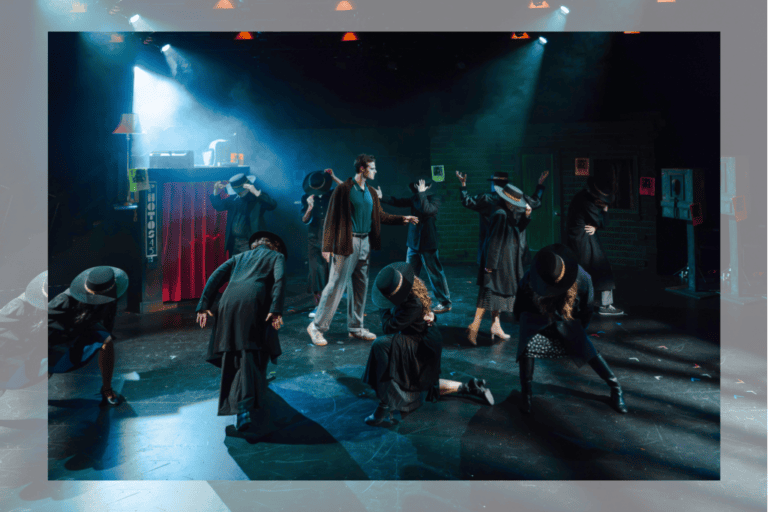 iPhoto caption: Graysen LaPointe and the company of 'Amélie.' Photo by Taylor Long.
REVIEW: Shifting Ground Collective’s Amélie is vivid and endearingly earnest
There’s an overwhelming sincerity to this production that, at times, overwrites the offbeat sensibility of the original film — although, I suspect that Anglicization and a shift to musical theatre conventions have something to do with this tonal incongruity as well.
 iPhoto caption: Karen Robinson in a promo photo for 'Prophetess.' Photo by Dahlia Katz.
When I spoke to actor Karen Robinson and playwright Ho Ka Kei about Prophetess' upcoming world premiere, they described an artistic process grounded in care and collaboration. Ho had long wanted to write the part of Queen Margaret for Robinson, and he framed the “love letter aspect” of writing for people he holds dear as key to the play’s origin story.
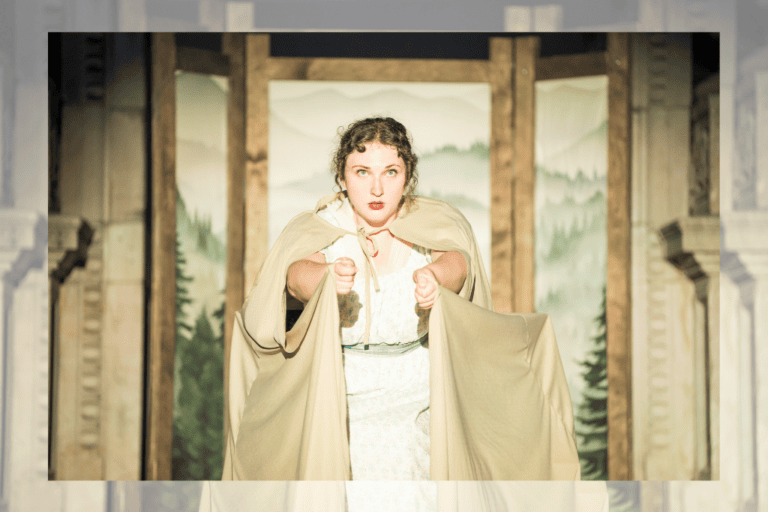 iPhoto caption: Georgia Findlay in 'Northanger Abbey.' Photo by Raph Nogal.
REVIEW: GFT’s Northanger Abbey embodies the delights and absurdities of Gothic fiction
Handwringing over popular fiction is hardly a thing of the past, as present panic about Romantasy attests. Unsurprisingly, both genres have a reputation for attracting women readers. Tyler J. Seguin’s Northanger Abbey displays how legitimate literary criticism can devolve into worrying that women are having too much fun.
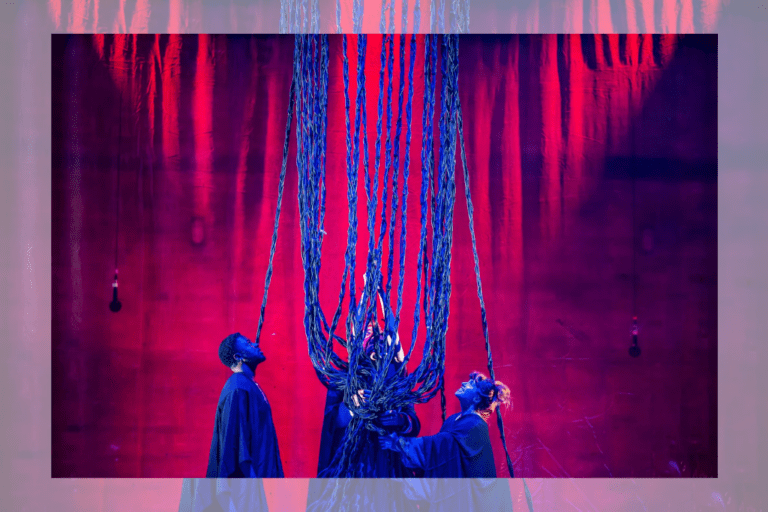 iPhoto caption: Members of the company of 'Medusa.' Photo by Dahlia Katz.
REVIEW: Soulpepper’s Medusa creates a mess it refuses to tidy
Speaking in sibilant murmurs via headsets wired into each seat of the Baillie Theatre, a chorus of intimate voices infiltrates the audience experience, drowning out dialogue and weaving an overstimulating soundscape.
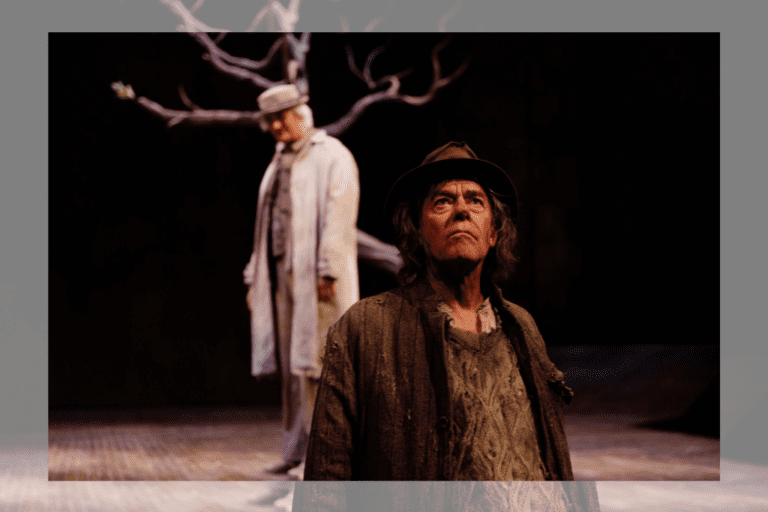 iPhoto caption: Paul Gross and Tom McCamus in 'Waiting for Godot.' Photo by David Hou.
REVIEW: Stratford Festival’s Waiting for Godot never feels fully its own
Tom McCamus' and Paul Gross' performances are clear and intentional. Nonetheless, I struggled to connect with this production.
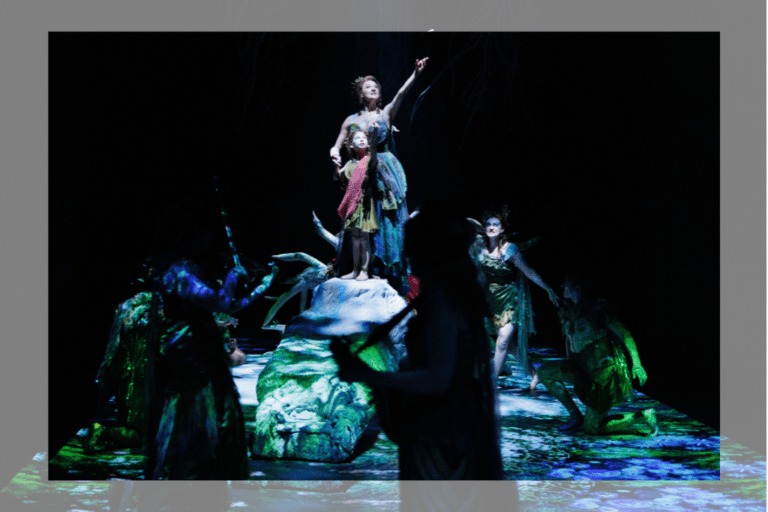 iPhoto caption: Members of the company of 'A Midsummer Night's Dream.' Photo by David Hou.
Developed in collaboration with Groundling Theatre, this A Midsummer Night’s Dream revels in the plights of its love-drugged protagonists through clever clowning, live music, and an animated landscape.
Comments