
REVIEW: Coal Mine Theatre’s Waiting for Godot is lucid and unpretentious
 iPhoto caption: Ted Dykstra and Alexander Thomas in 'Waiting for Godot.' Photo by Elana Emer.
Waiting for Godot is a playful and unpretentious season opener for Coal Mine Theatre. Directed by Kelli Fox, this production embraces the bodily sensibilities of Beckett’s dark humour, grounding his abstract poetics in the kidneys, the feet, and the dirt.
You likely know Waiting for Godot, but I’ll recap it anyway. It starts with “A country road. A tree. / Evening.” Vladimir (Alexander Thomas) and Estragon (Ted Dykstra) wait. Wondering what happens from there? That’s Beckett’s question, too. If you write, you’ll certainly relate to Godot’s anxious commentary on its own action, as Vladimir and Estragon seek something to do. Great, something happened! But — oh god — now something needs to happen again? And again? And again?
But let’s not get ahead of ourselves (we have the time). We were at the country road and the tree. Scott Penner’s set design is one of the first delights of this production. In Coal Mine’s intimate basement space, the stage is covered by a thick layer of dirt. The tree, appropriately abject, has a gnarled, clawing posture, and three painted walls resemble a blue sky with clouds. The walls aren’t trying very hard to be the sky, however, seeing how there’s a purposeful gap between each panel.
Fox, in her director’s note, references her impulse to “just get out of [Beckett’s] way.” Still, she and her team have obviously made choices and I think they’re good ones. Penner’s design resonated for me on two levels. First, there’s the grime. It coats the actors. Just watching them, you can feel the dirt chafing their armpits and furring their lips. It has stained their clothing with red and brown streaks (costume design by Ming Wong). The world of Godot is dirty and weary and uncomfortable. That’s what makes the sky so beautiful — and so tempting as a subject for trite poetry about twilight, as in the comically bombastic monologue delivered by Pozzo (Jim Mezon), a travelling character who enters with his slave, Lucky (Simon Bracken).
The second level is a bit more abstract. I was reminded of a child’s sandbox, where play happens. We also use this word (especially in corporate speak) for environments without consequences. What a suitable setting for Vladimir and Estragon’s attempts to escape the unrelenting pressure of time. “We could play at Pozzo and Lucky,” Vladimir suggests in the second act. “I’ll do Lucky, you do Pozzo.”
Dykstra and Thomas play masterfully. They approach the script with a balance of irreverence and earnest hope. Sometimes they mean what they say, and sometimes they’re just saying. Dykstra’s dry delivery and vulnerable befuddlement felt particularly endearing, while Thomas’s more determined search for meaning (or just a good laugh) established a poignant counterpoint. The best part was watching the two toss the proverbial ball back and forth.
Another highlight was the physical comedy. At some point, Pozzo, Gogo, and Didi demand that Lucky perform a party trick called “thinking.” Here, the abused man launches into a winding syntax of philosophical thought, while the other characters try and fail to make him stop. “Not so fast!” Lucky shouts, as Pozzo creeps forward to take back his thinking cap (an example of how Fox’s production balances clarity and symbolism in its interpretation of Beckett’s cryptic dialogue — on the page, this line doesn’t necessarily speak to Lucky’s careful guarding of his fragile power). Pozzo, Vladimir, and Estragon then perform a chase sequence around the walls of the set, running in and out of doors, trying to grab Lucky’s hat so that he will finally shut up. It’s very funny. It’s very unsettling.
While the over-the-top physicality worked for me, I cannot say the same about the sound cues, designed by Michael Wanless. Sometimes, a bumping, clanging sound punctuated a character’s fall, whether it happened onstage or off (particularly in the second act, characters are frequently falling in the dirt, and crawling, and wallowing). The sound was never convincing, but unlike the painted panels of sky, I thought perhaps it was trying to be.
Under Fox’s direction, Godot makes sense. That’s not to say the mystery is gone. Only that what the characters are doing and saying lines up with what’s happening. If you’ve only encountered this play in a classroom, which is a good but sometimes limiting place for experiencing Beckett, this production will welcome you in. And if you’re already well-aquainted with Godot, you’ll hear a line that hits your ear with a new and wonderful clarity.
“You’re sure you saw me?” Vladimir asks Godot’s boy messenger (Kole Parks). “You won’t come and tell me tomorrow that you never saw me?” That was mine.
Waiting for Godot runs at Coal Mine Theatre until October 12. More information is available here.
Intermission reviews are independent and unrelated to Intermission’s partnered content. Learn more about Intermission’s partnership model here.

Ferron Delcy
Ferron Delcy is pursuing her PhD in early modern literature at the University of Toronto. In 2024, Ferron participated in the New Young Reviewers program facilitated by Toronto Fringe and Intermission. She is a big fan of ghost stories, fog machines, and weird metaphors.
LEARN MORE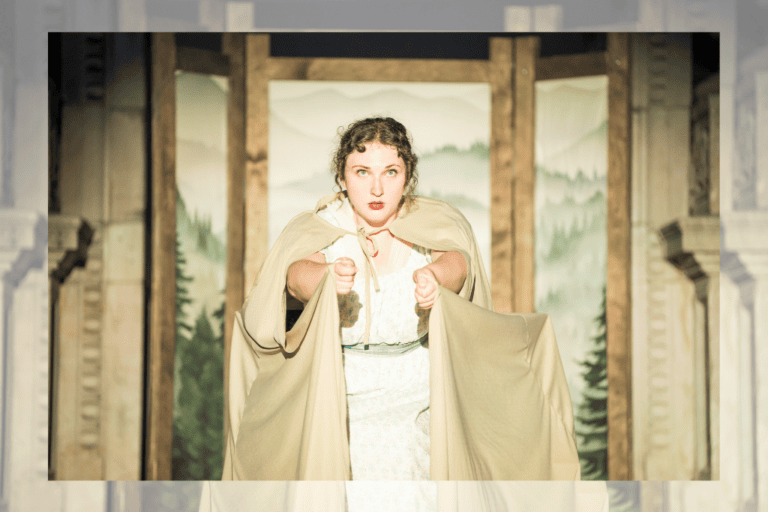 iPhoto caption: Georgia Findlay in 'Northanger Abbey.' Photo by Raph Nogal.
REVIEW: GFT’s Northanger Abbey embodies the delights and absurdities of Gothic fiction
Handwringing over popular fiction is hardly a thing of the past, as present panic about Romantasy attests. Unsurprisingly, both genres have a reputation for attracting women readers. Tyler J. Seguin’s Northanger Abbey displays how legitimate literary criticism can devolve into worrying that women are having too much fun.
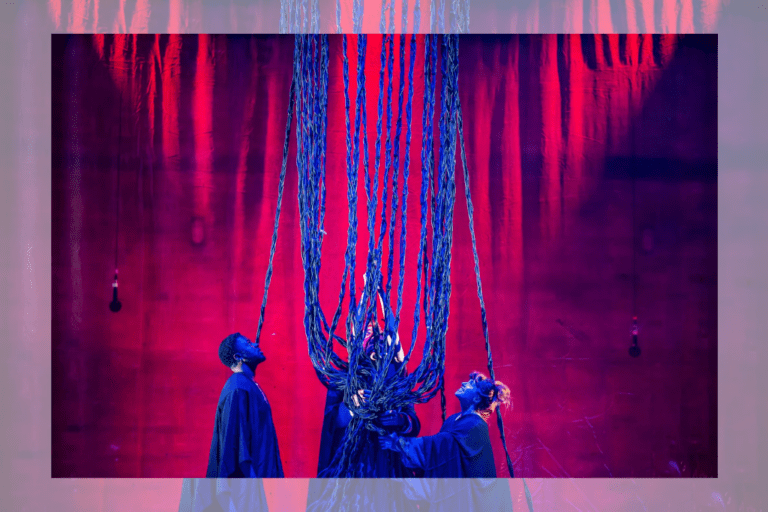 iPhoto caption: Members of the company of 'Medusa.' Photo by Dahlia Katz.
REVIEW: Soulpepper’s Medusa creates a mess it refuses to tidy
Speaking in sibilant murmurs via headsets wired into each seat of the Baillie Theatre, a chorus of intimate voices infiltrates the audience experience, drowning out dialogue and weaving an overstimulating soundscape.
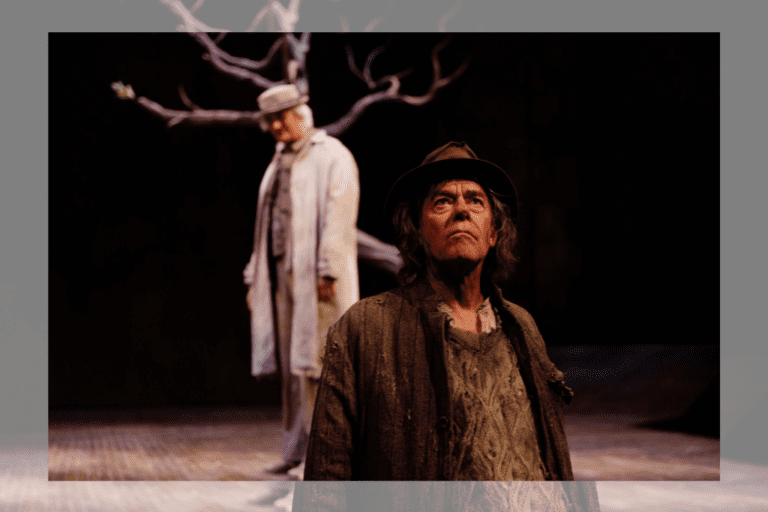 iPhoto caption: Paul Gross and Tom McCamus in 'Waiting for Godot.' Photo by David Hou.
REVIEW: Stratford Festival’s Waiting for Godot never feels fully its own
Tom McCamus' and Paul Gross' performances are clear and intentional. Nonetheless, I struggled to connect with this production.
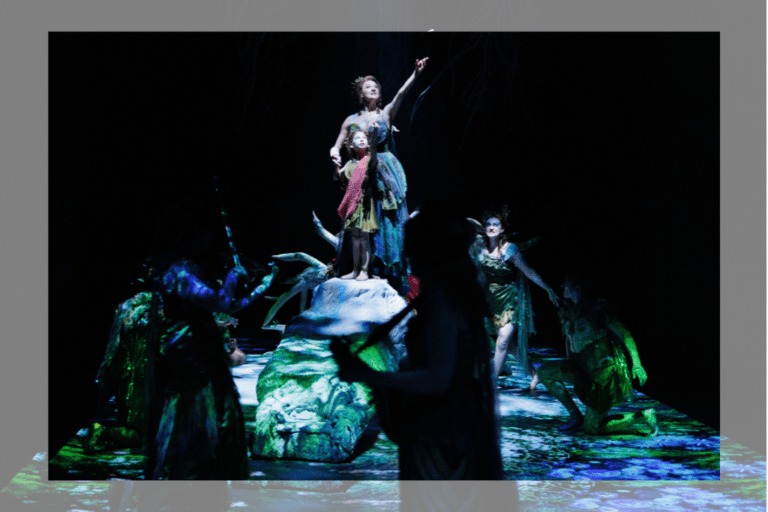 iPhoto caption: Members of the company of 'A Midsummer Night's Dream.' Photo by David Hou.
Developed in collaboration with Groundling Theatre, this A Midsummer Night’s Dream revels in the plights of its love-drugged protagonists through clever clowning, live music, and an animated landscape.
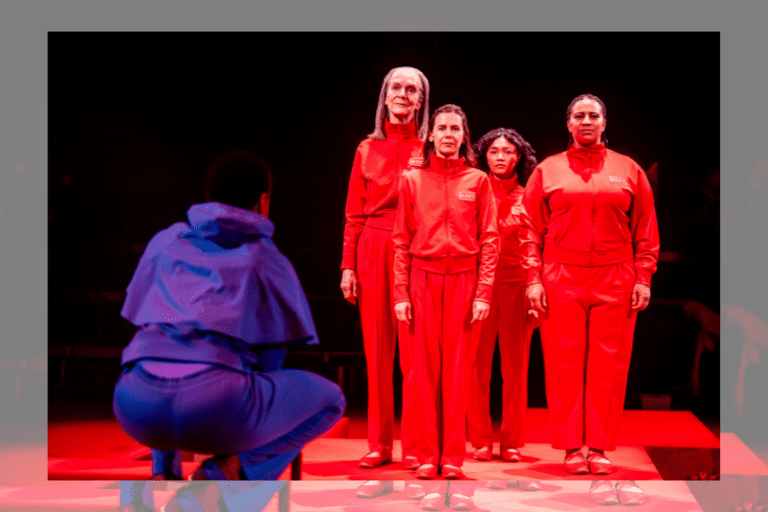 iPhoto caption: Amaka Umeh, Nancy Palk, Michelle Monteith, Belinda Corpuz, and Sabryn Rock in 'Mary, Mary, Mary, Mary.' Photo by Dahlia Katz.
REVIEW: Erin Shields’ Mary, Mary, Mary, Mary is brash, funny, and message-forward
At Crow’s Theatre, Mary, Mary, Mary, Mary is a sensory feast fit for any house of worship. But with so much material, and only 95 minutes, I’m left feeling that the Marys have more yet to say.
 iPhoto caption: William Ellis and members of the company of 'The Herald. Photo by Albert Hoang.
REVIEW: Jill Connell’s The Herald has a lot to say about potential
There’s so much to love about this smart, strange, and achingly lyrical exploration of labour and purpose. Dramaturgical intentionality falters, however, in the details.
Comments