
REVIEW: Things get crazy in Stratford’s Love’s Labour’s Lost — and that’s a good thing

Before it even opened, the Stratford Festival’s new production of Shakespeare’s Love’s Labour’s Lost was all but sold out.
If that seems strange, consider that the show reunites a pair of festival favourites, director Peter Pasyk and actor Amaka Umeh. They previously worked together on last year’s Hamlet, with Umeh in the title role, as well as 2021’s A Midsummer Night’s Dream, in which she played Helena.
Does the show live up to the buzz? I think yes. The production, playing at Stratford’s 260-seat Studio Theatre, is often delightfully irreverent. Pasyk condenses the five-act comedy into one intermission-less evening, and uses its creaky, farcical plot as a springboard for vivid, highly physical action. This leads to a richly varied tone that swerves from ridiculous to tender to tragic to ribald and back to ridiculous again.
The play, set in Navarre (a medieval kingdom that bordered Spain and France), follows four scholars who make a pact to avoid women for three years. Doable? Only until the Princess of France (Celia Aloma) and three of her ladies in waiting show up. When they do, the plan falls apart in typical Shakespearean fashion: identities are mistaken, letters are misdelivered, and words are mistook. It’s barely a spoiler to reveal that the show concludes with multiple marital engagements: where else could the narrative go? (That said, no one gets married on stage: the play’s final scene is thornier than that.)
Like Pasyk’s Hamlet, the production’s design is sharp and contemporary.
Sim Suzer, especially, does great work in her Stratford costume design debut. She gives the scholars crisp suits before their pact, and monkish white robes after. The quartet of women enter in colourful pantsuits, but switch garb for almost every scene; their evolving looks provide much of the show’s visual interest.
Julie Fox’s courtyard set plays with the Studio Theatre’s steeply angled, bird’s-eye view thrust seating by covering the floor in fake grass cut through with angular paths. It’s a boxy, video game-adjacent aesthetic — and the set’s symmetry combines with Thomas Ryder Payne’s quirky sound design to conjure a highly stylized aesthetic that occasionally nods at Wes Anderson.
Umeh plays Rosaline, one of the three women accompanying the princess. Especially in the first half of the play, she doesn’t have a large number of lines. But she’s the love interest of scholar Berowne (Tyrone Savage), who emerges as the play’s lead. Umeh and Savage are excellent together: both have firecracker voices, adding intensity and dimension to a relationship that’s somewhat underdeveloped in the text.
But while Umeh and Savage are the faces on the program, the leads of Love’s Labour’s Lost are not as central as, say, Benedick and Beatrice. From the top of the show, a bevy of supporting characters adds further chaos to the proceedings. Wahsontí:io Kirby brings a genuine tenderness to the comic figure Costard, Gordon S. Miller flexes his range in the buffoonish role of Don Armano, and Michael Spencer-Davis, who plays pedantic schoolmaster Holofernes, is an ace straight man. (That list barely dislodges the topsoil.)
Pasyk renders the play as a sequence of boldly realized theatrical events. Though the first half-hour feels fairly realistic, once the exposition ends, things get crazy. There are abrupt dance numbers, drawn-out sequences of physical comedy, and scenes staged partially in the audience.
It’s key that not all of these moments are light-hearted. Instead, Pasyk embraces the play’s detours from comedy.
When dorky page Moth (Christo Graham) bursts into a song, for instance, it’s melancholic. As he stands still, pouring his heart out in a soft falsetto, we’re reminded that the scholars’ cocky bluster is not the only way of life; once the play re-focuses on them, they seem all the more absurd.
Arrive late to a Pasyk Shakespeare production and you will likely be able to figure out what’s going on in seconds. He is expert at clarifying relationships through physicality and fleshing out individual beats of action.
As to whether his productions offer a unified artistic statement, that’s trickier. The way Pasyk approaches modernization makes instinctual, more than logical, sense. And though a more radical production, like Jillian Keiley’s Richard II, might lean into its conceptual abstractions, absolving audiences of the need to try and decode, Pasyk’s theatre often feels just on the verge of coming together: because each moment is so specific, the overall conceptualization promises to eventually reveal itself as equally precise. But in my experience, that revelation never quite arrives.
At the same time, a style defined by its slipperiness is still a style — and, these days, it’s uncommon for theatre directors to have one at all.
I’m reminded, too, of Walter Pater’s claim that “art comes to you proposing frankly to give nothing but the highest quality to your moments as they pass, and simply for those moments’ sake.” I would more or less agree — and certainly, nearly every moment of Love’s Labour’s Lost sparkles.
Love’s Labour’s Lost runs through October 1 at the Stratford Festival. Tickets are available here.
Intermission reviews are independent and unrelated to Intermission’s partnered content. Learn more about Intermission’s partnership model here.

Liam Donovan
Liam is Intermission’s senior editor. He lives in Toronto. His Substack newsletter is available at loamdonovan.substack.com.
LEARN MORE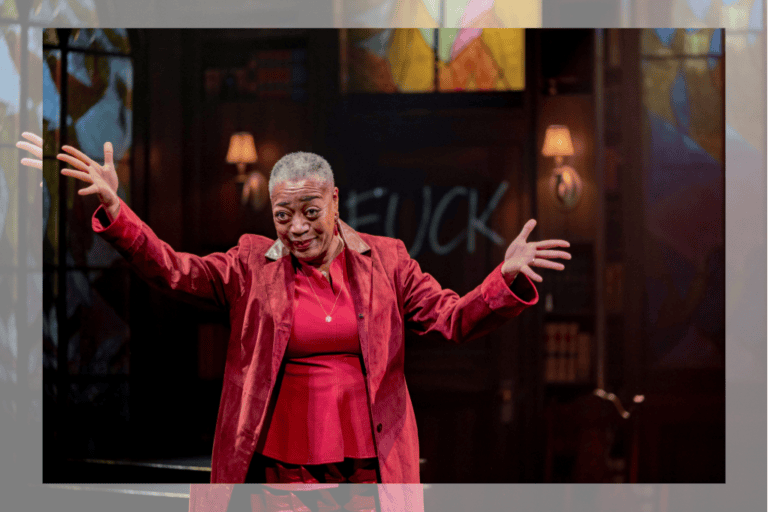 iPhoto caption: Karen Robinson in 'Prophetess.' Photo by Jae Yang.
REVIEW: In Tarragon’s outstanding Prophetess, language is both mighty and inadequate
Margaret’s facility with text helps her maneuver through an institution like York University, where words hold significant power. But the brilliant middle-aged scholar finds herself surprisingly unequipped to process the true sense of more elemental forces: love, grief, spiders.
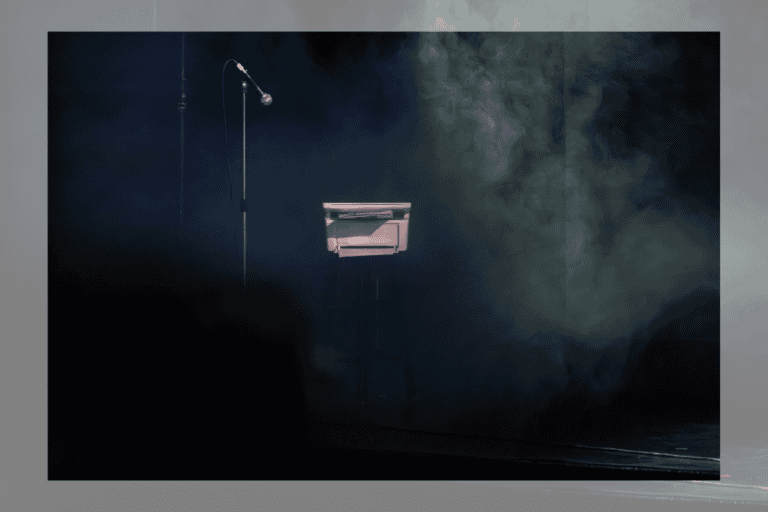 iPhoto caption: 'Documents Perform 3.' Photo by T Photo Factory.
Joining online from across the Americas, more than a dozen artists, artistic producers, cultural leaders, and policymakers add live suggestions to the document, together transforming stuffy bureaucratic language into a rowdy patchwork of compassionate imagining.
 iPhoto caption: Stratford's Tom Patterson Theatre. Photo by Ann Baggley.
2027 highlights include a new Canadian Jacob Two-Two musical and two of the Bard’s thornier plays: The Merchant of Venice and The Taming of the Shrew.
 iPhoto caption: Devon Michael Brown as Rusty Charlie with members of the 'Guys and Dolls' company.
“It's so exhausting, but it's really rewarding when you get to dance so full-out,” says Devon Michael Brown. “You get to use your technique and your training to the fullest extent.”
 iPhoto caption: Ping-Hsiang Wang in 'Retina Maneuver.' Photo by Hang Su.
REVIEW: At this year’s SummerWorks Performance Festival, physical storytelling is central
From a dancer becoming a canine to a shy theatre director practicing his swordsmanship, the shows I’ve seen so far use performers’ bodies to dramatize defiance.
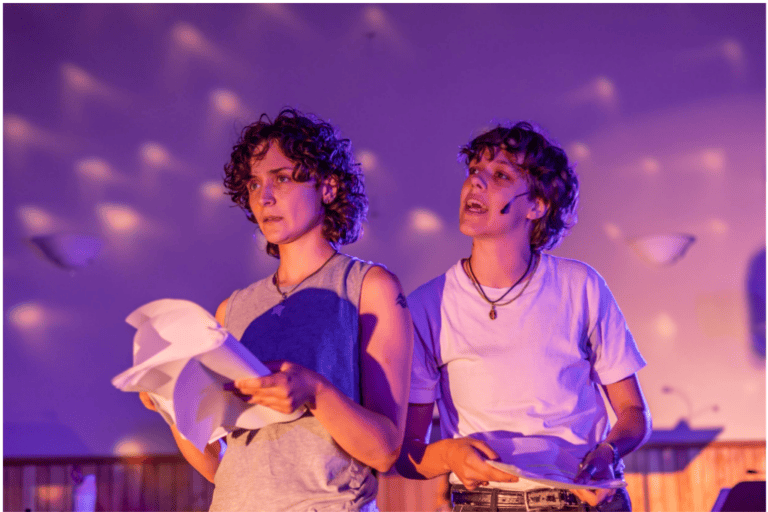 iPhoto caption: Anna Morreale and Luca McPhee perform in 'From Stardust' at the 2025 MADGEN Theatre Festival. Photo by Dave Klassen.
MADGEN Theatre Festival returns to the Danforth
Theatre of the Beat selected four producers under the age of 30 to receive paid mentorship from Toronto theatre-makers. From August 20 to 22, each member of the cohort mounts a new one-act Canadian play.
Comments