
In Shaking Up Shakespeare, crunchy conversations on casting abound
 iPhoto caption: From left: Hope Van Der Merwe, Liam Lockhart-Rush, Ho Ka Kei (Jeff Ho), and Dr. Marlis Schweitzer.
How might we cast Shakespeare in 2023 and beyond — besides in marble?
That’s just one of the questions on the mind of Shaking Up Shakespeare, a new podcast about the ongoing negotiation of Shakespeare’s legacy in Canadian theatre. I sat down with the podcast’s creators — Dr. Marlis Schweitzer, Hope Van Der Merwe, Liam Lockhart-Rush, and Ho Ka Kei (Jeff Ho) — to chat about the origins and aims of the project. The podcast is part of a larger initiative through York University, led by Schweitzer, called (Re)Setting the Stage: The Past, Present, and Future of Casting Practices in Canada.
Shaking Up Shakespeare began as an attempt to document the 2022 touring production of Why Not Theatre’s Prince Hamlet, directed by Ravi Jain. This groundbreaking production was bilingual, incorporating English and American Sign Language on equal footing, and positioning Deaf actor Dawn Jani Birley as Horatio at the centre of its narrative. In fact, it defied the norms of Shakespearean casting, not only with regard to access, but also race, culture, age, and gender. Ho Ka Kei (Jeff Ho), a queer Asian man, played Ophelia in the production.
While on the road, Ho interviewed his collaborators about the tour as well as previous iterations of the production. Ho’s full interview with Dawn Jani Birley in ASL is available on the (Re)Setting the Stage website, and the entire Shaking Up Shakespeare podcast will be available in ASL translation, with the first three episodes already posted on YouTube.
In our conversation, Ho reflected on “the chance to be onstage with this travelling group of artists, and then find a little space in a corner in a hotel” to record his fellow theatremakers. In such an ephemeral artform, this was a rare opportunity “to archive both…the tour itself,” said Ho, “but also questions around…why Shakespeare now?”
Those questions soon expanded beyond the bounds of Prince Hamlet. The Shaking Up Shakespeare team found themselves interviewing over 30 theatremakers and scholars about their relationship to the Bard and his works. Unsurprisingly, responses ranged from outright rejection, to ambiguity, to irreverent optimism.
Schweitzer stressed the ways in which colonial projects have co-opted Shakespeare’s plays to “prop up colonialism [and] white supremacy, and to support very particular notions around gender, race, sexuality [and disability] that have been used, historically, to undergird those structures of power.”
Schweitzer compared this version of Shakespeare to a milk bath, insofar as “there’s this idea of luxury and…the sense that Shakespeare is only accessible to certain people [and]…will enable a kind of white performance.”
Shakespeare is there. The question becomes, what are we going to do about it?
Van Der Merwe pointed out that even the language of scansion — which syllables should be stressed or unstressed in Shakespeare’s verse — has patriarchy baked into it. Students in theatre training programs learn about so-called “feminine endings…meaning that the line ends on a weak beat,” explained Van Der Merwe, as opposed to “masculine endings,” where the line ends on a strong one.
On the other hand, “if you live in Anglophone Canada,” said Schweitzer, “you will be inundated with [Shakespeare] in some form or other, whether it’s tourist mugs with Shakespeare’s face, or in newspaper accounts of some production…or just in everyday speech.”
Ho agreed. “For a lot of racialized artists, [Shakespeare] is also part and parcel with the education system having grown up in, or studied in, Canada,” he said. “You are embedded in it from high school onward.”
“Especially if you’re looking to work at the Stratford Festival, which is a gigantic institution,” said Lockhart-Rush, “it’s important to teach people who want to work as actors in Canada…techniques for working with Shakespeare.” He went on to note that, for better or for worse, proficiency with Shakespeare is often “measured as a type of success” for actors.
Van Der Merwe added that there are also practical economic incentives to revive and adapt Shakespeare’s work: “you don’t have to pay royalties on it, so it’s cheap to produce.”
“Shakespeare is there,” said Schweitzer. “The question becomes, what are we going to do about it?”
This query becomes the major focus of Shaking Up Shakespeare. Besides an episode devoted to Prince Hamlet, listeners can expect an interview with Debbie Patterson, who became the first disabled person in Canada to play Richard III, in Shakespeare in the Ruins’ 2016 production; an exploration of Amaka Umeh’s trail-blazing performance as a Black, non-binary Hamlet at the Stratford Festival in 2022; and more.
Each of these productions — and their respective approaches to casting — demonstrate how, in Schweitzer’s words, Shakespeare can be a “Trojan horse” for artists who want to tell new stories and increase representation on Canada’s stages.
She cited Erin Shields’ Queen Goneril — a prequel to King Lear which premiered at Soulpepper in repertory with the original text in 2022 — as an example of this kind of considered adaptation, both in terms of narrative and casting. Shields’ play reimagines Shakespeare’s villain, not only as a protagonist, but as a Black queer woman (played by Virgilia Griffith in the premiere production).
“Everybody knows King Lear,” said Schweitzer. “Soulpepper staged King Lear and Queen Goneril [as a double bill]. So people who are maybe only interested in Shakespeare could come and see it, but if they were interested in a new play, a feminist interpretation, they could go and see Shields’ brilliant reworking.” Listeners can hear Shields discuss her adaptation in episode six of the podcast.
In our interview, Lockhart-Rush offered Cliff Cardinal’s Governor General’s Award-winning As You Like It as another example of “Trojan horse” Shakespeare. The initial production of Cardinal’s play purported to be a straightforward adaptation of As You Like It — only to reveal itself as anything but. “It [drew] in those crowds who maybe…don’t see much theatre in Toronto, but they love to go to Stratford and they love to see [a Shakespeare play] every year,” said Lockhart-Rush. [Then] they come to [Cardinal’s play] and they’re exposed to things that they maybe haven’t considered, or perspectives…they need to reconsider.”
Perhaps the future of Canada’s relationship to Shakespeare is one in which every artist, no matter their intersections, can bring all of themselves to engage with the Bard. “There’s often an absence in how we talk about Shakespeare that everyone has alluded to,” said Ho. “When I take on Ophelia, am I playing ‘my fair Ophelia?’ Am I playing a fair-skinned character? Or am I who I am, bringing all of my intersectionality?”
Ho — whose acclaimed play Cockroach was also a wrestling match with Shakespeare’s omnipresence — made it clear that this intersectional approach is by no means a tidy solution to a problem. Rather, it is only the beginning of more “passionate, and sometimes painful, crunchy” but necessary conversations.
“When folks grapple with these questions from different perspectives,” said Ho, “it can be an act of reclamation…[or] it can be a complete rejection, and that is completely valid as well.”
“But why Shakespeare now?” he continued. “Because that crunchiness can be such fuel for artistic generation.” That same crunchiness is what makes Shaking Up Shakespeare such a vital listen.
Shaking Up Shakespeare is accessible on Spotify and Apple Podcasts as of January 15.
Nathaniel Hanula-James
Nathaniel Hanula-James is a multidisciplinary theatre artist who has worked across Canada as a dramaturg, playwright, performer, and administrator.
LEARN MORE iPhoto caption: 'C'est la vida!' production photo by Julie Cherki.
C’est la vida! uses mime, dance, and electro beats to remix classic rom-com tropes
“Having endless talks with David about love, and our respective relationships, while creating and touring this show has definitely helped me grow,” says dancer Liesbeth Kiebooms. “It’s given me a more subtle understanding of love.”
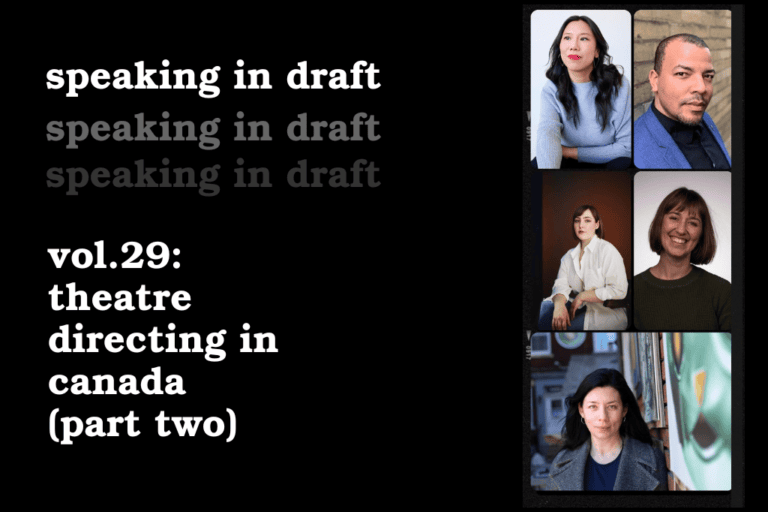 iPhoto caption: Headshots of Sophie Gee, Ray Hogg, Margot Greve, Leora Morris, and Jessica Carmichael.
Five theatre directors offer advice to the next generation — and the programs training it
The artists on this call were candid and vulnerable. They spoke openly about their professional frustrations and challenges — and they weren’t shy about pinpointing the ways that mainstream anglophone Canadian theatre practices fail directors and artists more broadly. That said, I didn’t leave our chat feeling hopeless or cynical.
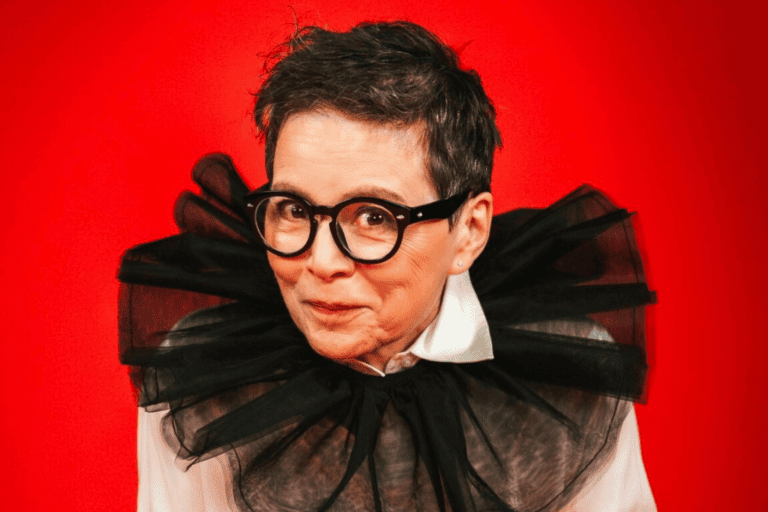 iPhoto caption: Ann-Marie MacDonald in 'Goodnight Desdemona (Good Morning Juliet).' Photo by Elana Emer.
“Sexism kept me out of hockey as a kid,” says Ann-Marie MacDonald. “But sexism also shut me out of Shakespeare."
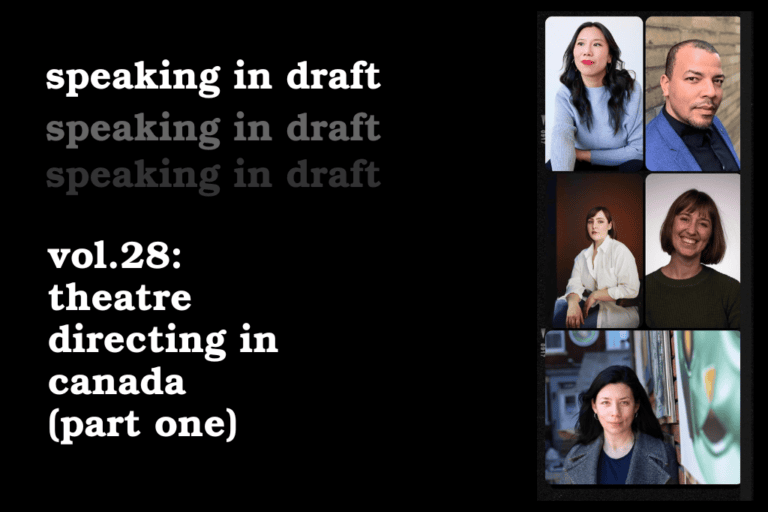 iPhoto caption: Headshots of Sophie Gee, Ray Hogg, Margot Greve, Leora Morris, and Jessica Carmichael.
How can theatre directors forge a sustainable career in Canada?
It’s increasingly unlikely that directors will hone their craft through formal training. Relatively few post-secondary programs devoted to directing exist, and it seems to me that directing-specific mentorship programs are less common than similar initiatives for actors or playwrights. To convene a roundtable about director training, I reached out to five very different artists on a continuum of early- to mid-career.
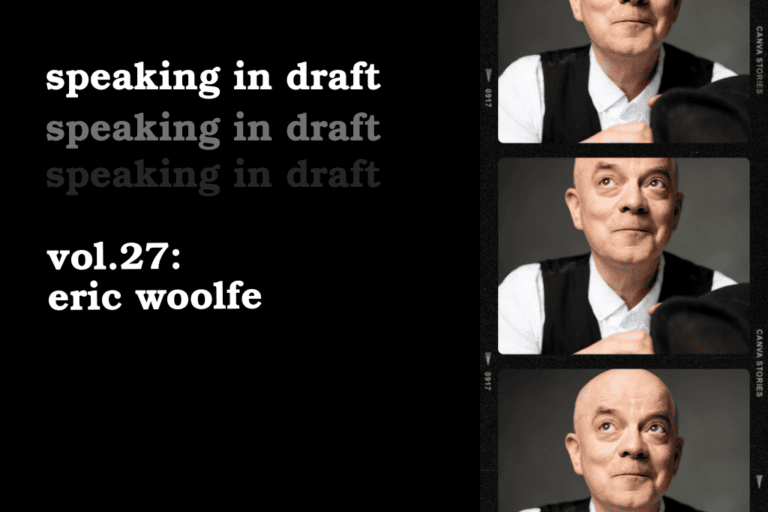 iPhoto caption: Portrait of Eric Woolfe. Photo by Dahlia Katz.
Eric Woolfe’s inventive horror theatre is a monster mash of artistic influences
For the past 26 years, Eldritch Theatre’s director of the uncanny has given ghoulies, ghosties, and long-legged beasties of all kinds a spot in the limelight, in productions that serve up puppets, magic, and a crumbling castle’s-worth of uncanny influences, including schlock-horror B-movies, Shakespeare at his bloodiest, and the fiction of H.P. Lovecraft.
 iPhoto caption: Nate Yaffe in 'Rot Hat.' Photo by Kinga Michalska.
This year’s SummerWorks Performance Festival strives to make accessibility intrinsic
The curated festival’s 36th edition features a range of works by Disabled and neurodivergent artists where the medium is very much the message.
Comments