
Speaking in Draft: David Yee
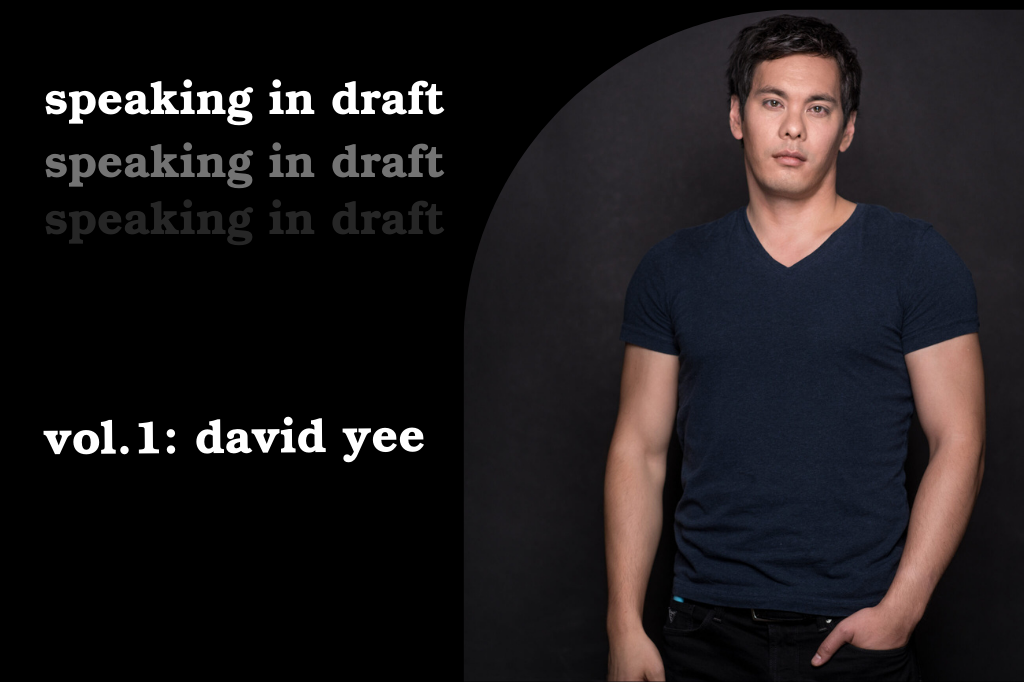 iPhoto caption: Headshot of David Yee by Dahlia Katz.
Speaking in Draft is an interview series in which Intermission staff writer Nathaniel Hanula-James speaks with some of the artistic visionaries shaping Canadian theatre today. In a mixture of light-hearted banter and deep dives into artistic practice, this column invites artists to voice nascent manifestoes, ask difficult questions, and throw down the gauntlets at the feet of a glorious, frustrating art form.
In his practice as a playwright, David Yee devotes himself to chasing unanswerable questions.
(He’s devoted to giving other artists the guidance, space, and freedom to chase those questions, too.)
This past December, Yee — previously the recipient of a Governor General’s Award for his play carried away on the crest of a wave — won the prestigious Siminovitch Prize. Not only does the prize bestow $75,000 on a mid-career artist whose work expands Canadian theatre’s notions of the possible; the artist also selects a protégé to receive $25,000 and a year of sustained mentorship.
As much as this prize marks a milestone in Yee’s career, it’s only one example of this artist’s ongoing commitment to future generations. When we spoke on Zoom, our conversation ranged from his work creating tailor-made plays for actors-in-training to his role as co-founder and artistic director of fu-GEN Theatre, where he nurtures the voices of Asian-Canadian artists, to the example he sets with his own audacious body of work.
This conversation has been lightly edited for length and clarity.
Nathaniel: How is the Siminovitch win settling in?
David: I was just explaining to somebody that one of my many faults, and probably chief among the reasons that I’m a writer and not really an actor anymore, is that I genuinely dislike attention. So when this whole thing happened, I was like, you know what? Just being a nominee is perfect. Now that it’s all on me, it does make me a little anxious. I’ve no misgivings about it whatsoever, and it’s a happy problem to have, but also, the more time that goes by where I can just sort of forget that these things happen…
Well, thank you again for letting me be a part of this happy problem. One of my previous roommates was actually part of a play you created at Toronto Metropolitan University in 2021. It was the Twitch stream…
Oh, rabbit hole.
Yes, rabbit hole! And so I wanted to ask you about this process of creating, often with Nina Lee Aquino, tailor-made productions for theatre training institutions, which you’ve been doing since 2010. How has that work challenged you as a writer and an educator? Has it changed your approach to playwriting?
When I was in theatre school, I played such esteemed parts as Wheels, a 96-year-old narcoleptic, and all I really learned from that was how to put gray in my hair semi-convincingly. [Often when theatre schools select shows] they’re not thinking about everybody having an arc that is going to be useful enough [for] a full character study…especially if you’re not in a lead role; and back then, as a person of colour, you were never going to be the lead role. So I wanted to allow people to have a different experience to the one that I did.
We go in with absolutely nothing. We run exercises with [the students]; we get to know them; I get them to, you know, bear and reveal their souls to me. Then we create a work that will challenge them but will also showcase them. The other tenet is that nobody plays somebody outside of their own age range. Often, when we’re writing in the theatre, we’re writing within the parameters of producibility: how can I make this into an affordable, producible script? So we never get to write for large casts. When I [work with students], I get to work with artistic parameters, and I find those really invigorating.
I went from rabbit hole into writing among men [which Factory Theatre produced in 2022]. So a complete 180 from young people on the internet to two poets in 1959 building a cabin. But one does inform the other, right? I think it’s useful because you still have the vitality of all of those voices and all of those lives living and buzzing inside of you, and you get to filter it through smaller vessels. It makes the work alive in a really interesting way.
Regarding mentorship, one of the great things about the Siminovitch is you get to pick a protégé, and you chose Julie Phan 潘家雯. What do you find most exciting about her work?
Julie is a tempest in a teapot. She’s quiet, and you have to really lean in to get what she’s saying, but when it comes out of her as a writer it’s this unimaginable force. I really appreciate that because I’ve often found when people…want to tell you how great they are and how their work is groundbreaking, they almost never fulfill those promises. It’s the quiet ones that are going to silently change the world. Her work is imaginative and compelling in its embrace of the absurd, and doesn’t abandon emotional impact in the service of telling a broader story.
What Siminovitch did this year that was different from previous years is that [we got to know] every emerging artist that each shortlisted person chose. I think that was such a step in the right direction. In using that platform to uplift these emerging writers…I think [Siminovitch] drives the value of mentorship up. These emerging artists see it and go, ‘Oh, I want to be recognized that way. I want $5000.’ They’ll start looking for someone to talk to instead of [maintaining] the fallacious belief that they can do it all themselves.
I wanted to ask as well about Nina Lee Aquino. You said in your Siminovitch acceptance speech that she has been your “most enduring, productive, and annoying collaborator.” How did that collaboration begin? What do you value most about the way you two work together?
Just out of university I decided to quit theatre because, you know, after four years in school that seemed the best choice. Then I saw that Factory Theatre was running a festival called Crosscurrents, which was, at the time, the only festival for writers of colour. I applied to it [and] I didn’t get in, but Brian Quirt, who was the literary manager at Factory at the time, invited me into the Playwrights Lab.
So the festival came along and I went to see one of the shows that had an actor who I hadn’t met yet, named Richard Lee. Nina was also at that show and her, Richard, and another guy named Leon Aureus had all graduated fairly recently.
Yourself, Richard, Nina, and Leon would go on to be the co-founders of fu-Gen Theatre in 2002.
Jean Yoon introduced [Nina and I.] We sort of ended up being pushed together all night, and we got on like a house on fire. I invited Nina to the reading I was having for the Playwrights Lab. [Her feedback] challenged me in a way where I understood that I was being artistically challenged and not having a wall thrown up at me. There’s a distinction when you do anything that requires other people to edit or polish or refine: two people can suggest the exact same change, but the way in which they engage with you can be either very positive or soul-crushingly negative.
Dramaturgy is a very personal enterprise. It’s a lot like dating. You try to find the right person to match with, and sometimes there will be awful people, [or] sometimes you’re the awful person, but when you find somebody who fits you’re just like, okay, I’m never letting you go.
The support you received from Nina makes me think of the support you’ve offered to Asian-Canadian theatre artists through your work at fu-GEN theatre. fu-GEN recently celebrated its 20th anniversary. What were the conversations and circumstances that led to the founding of that company?
It was off the back of that first meeting that the four of us came together. We were all looking for an Asian-Canadian theatre company because we didn’t have one. There were some companies that had started, maybe lasted two years, and then folded because they came together for one production. What we longed for was an institution with a longer view that would exist, not for us, but for the future generation. I think that’s why we’ve lasted so long, because our goal was never in the present tense. It was always in the future tense. It was never around one product or artists. It was about the community.
Not to ask you to be a prophet, but when you think about the future of Asian-Canadian theatre, are there any particular trends, conversations, or exciting things that you see on the horizon? And are there any parts of Canadian theatre in general that you find particularly frustrating right now?
What I find most exciting are those artists who are focused on building a new contemporary identity. Those early conversations about ‘Who am I? Where do I belong?’, those have already been had and been internalized. What’s the next question that we ask ourselves as individuals and as a community? Without even necessarily finding the answers to ‘Who am I?’ and ‘Where do I belong?’ Because I think those are questions that we continuously ask, and have answered, over the course of our lives. When you have enough life experience that you go, ‘Okay, this is an unanswerable question’, then what other unanswerable questions do you start asking? What other obsessions do you start chasing?
I think Julie’s work is a great example of that. Hong Kong Exile in Vancouver — Milton Lim, Remy Siu 蕭逸南, Natalie Tin Yin Gan — their work is emblematic of that, as well as Derek Chan 陳嘉昊, who is now the artistic director of Vancouver Asian-Canadian Theatre. I think Norman Yeung in Toronto has a really great curiosity about the Asian-Canadian experience and about what a contemporary identity is.
There’s a fearlessness in those works that I find really compelling. The more that we chase curiosity as opposed to just airing hot takes, that’s how we’re going to move forward, right?
Yeah, hot takes are great, but they’re not a sustained curiosity about what comes next.
They’re for the bar. That’s barstool prophecy, is what we used to call it, and it has its place, but it doesn’t make compelling art…if it’s not also asking the next question, if it’s just focused on what is and never demands what could be. It doesn’t bring that into a dialogue…
While I am frustrated by much, I really like to focus more on what I’m excited about. Because if we focus too much on, you know, ‘I wish this were different,’ I’m like, well — make it different. Do better. Don’t go around telling everybody that you’re going to do better. Just do better and let that work speak for itself.
In your own work — without describing your writing to you —
(Laughing) Please do! I’ve been dying to understand it myself.
When I’m reading your work, I sense that questing for what comes next, especially in your use of the fantastical, surrealism — whatever you want to label it. I’m like, why are these characters falling down a hole? What is Paddington Bear doing here? The poetic images in your plays feel like a dare to a creative team.
I love the way that you put that, because I think that really hits the nail on the head. I have the luxury of a community of artists [Nina Lee Aquino, Michelle Ramsay, Camellia Koo, Joanna Yu] that I really respect and admire. They embrace difficulty. I have what Yeats would call “the fascination of what’s difficult” and I have a bunch of people around me who are also fascinated by such things. I love working with people who are maybe a little bored by the status quo and want to keep pushing and keep inventing.
I have a lot of moments when I’m [writing] that I’ll put something in the stage directions and go, ‘I don’t know. Good luck.’ I’ve never seen a play of mine that looked the way I thought it would. I tend to not even think about…what [a play] will look like in the physical world. I just know it’ll be something that I don’t expect. I think maybe that’s the key: to surround yourself with people who give you what you don’t expect.
The magic realism or the otherworld-ness of things comes from a belief that the world can be more than we give it credit for. I do think consuming so much poetry helps me unlock that part of my brain that already didn’t know what to do with those things.
If there was one poet you could shout out into the universe and the readers of this article, who would it be?
I always go back to Auden, the way that his use of simplicity somehow conveys extraordinarily complex ideas and images while maintaining…not necessarily a readability, but a simplicity that equates to human curiosity. He has no equal.
But there’s a lot, and there’s a lot of poets from other languages that you need the right translator for. Like if you’re going to read Rilke, then you need to read only the translations by Edward Snow. If you read Apollinaire then you have to read Donald Revell.
I think there’s an analog [between translation and] writing for theatre. The translation from one language to another has to be done artfully. You have to understand the spirit of what that person meant in their mother tongue, then express that poetically in another language. I think that kind of transposition also exists in theatre. You take the real world, or whatever world that you’re imagining, and you put it on stage. You’ve got to do it in a way that communicates not an exact, one-to-one realization of your inner world, but something that is evocative enough to provoke as poetic an image in other people’s minds as it does in yours — which is not a simple thing.
I feel like what I’m hearing through this whole interview is this immense sense of generosity. [This work] requires you to be generous, an audience to be generous, a creative team—
It also requires you to think highly of the people around you, to think highly of the people you work with, to think highly of the people you’re giving this play to. To have a respect and an admiration for those who are encountering the work in whatever state. When we talk about art that panders, it’s art that disrespects its collaborators and its audience, that gives them exactly what they [want.] ‘Oh, here’s what you’ll like.’ To me, that sentiment is just not thinking very highly of the people that you’re working for.
But it’s generous of you to call it generous.
Last question. I’m curious about your typographic choices, mostly the use of lowercase [in your play titles]. bell hooks, for instance, used the lowercase to shift focus away from herself and toward the substance of her work. What does this stylistic decision mean for you?
I like your bell hooks reference and when I first read [your question] I was like, “Yeah, I’ll take that answer.” I have people ask me about this, and I feel like when I give them the real answer it spoils a bit of magic for them. So I don’t necessarily want to give you the real answer, just because it’s nice to have a little question about what something means. What does it mean to you? Not in a douchebag way. In an inviting way.
In short, I’ll take the bell hooks answer.
Happy to let the real answer remain a tantalizing question.
You can learn more about David Yee here.
Nathaniel Hanula-James
Nathaniel Hanula-James is a multidisciplinary theatre artist who has worked across Canada as a dramaturg, playwright, performer, and administrator.
LEARN MORE iPhoto caption: Portrait of Eric Woolfe. Photo by Dahlia Katz.
Eric Woolfe’s inventive horror theatre is a monster mash of artistic influences
For the past 26 years, Eldritch Theatre’s director of the uncanny has given ghoulies, ghosties, and long-legged beasties of all kinds a spot in the limelight, in productions that serve up puppets, magic, and a crumbling castle’s-worth of uncanny influences, including schlock-horror B-movies, Shakespeare at his bloodiest, and the fiction of H.P. Lovecraft.
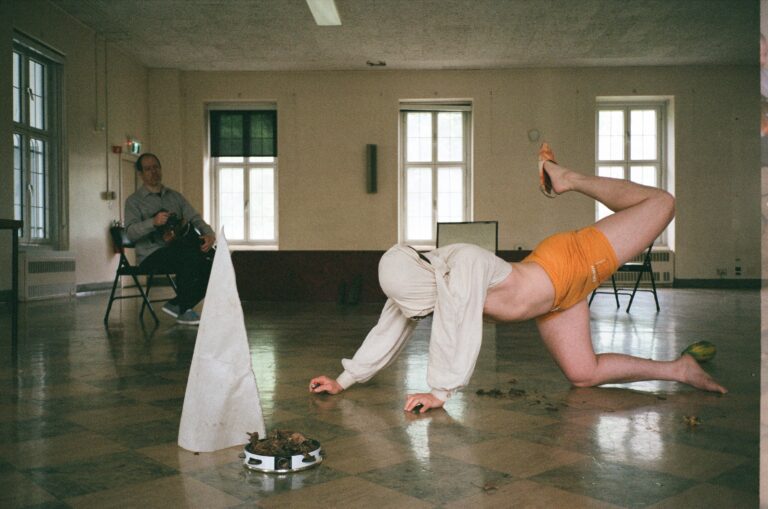 iPhoto caption: Nate Yaffe in 'Rot Hat.' Photo by Kinga Michalska.
This year’s SummerWorks Performance Festival strives to make accessibility intrinsic
The curated festival’s 36th edition features a range of works by Disabled and neurodivergent artists where the medium is very much the message.
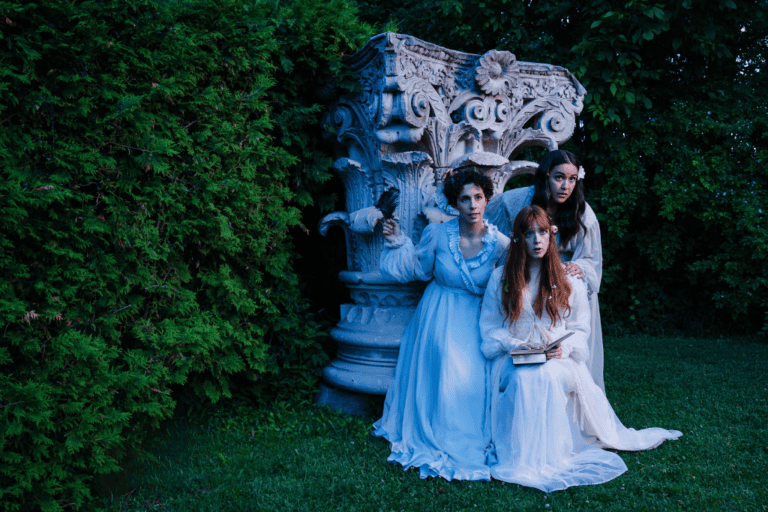 iPhoto caption: Laura Del Papa, Hilary Scott, and Lara Lucia in 'Brontë: The World Without.' Photo by Raph Nogal.
GFT’s Brontë: The World Without is a window into the ordinary lives of literary icons
Directed by Helen Juvonen in Guild Park and Gardens’ Greek Amphitheatre, The World Without follows sisters Emily, Charlotte, and Anne Brontë — the authors of Wuthering Heights, Jane Eyre, and The Tenant of Wildfell Hall, respectively.
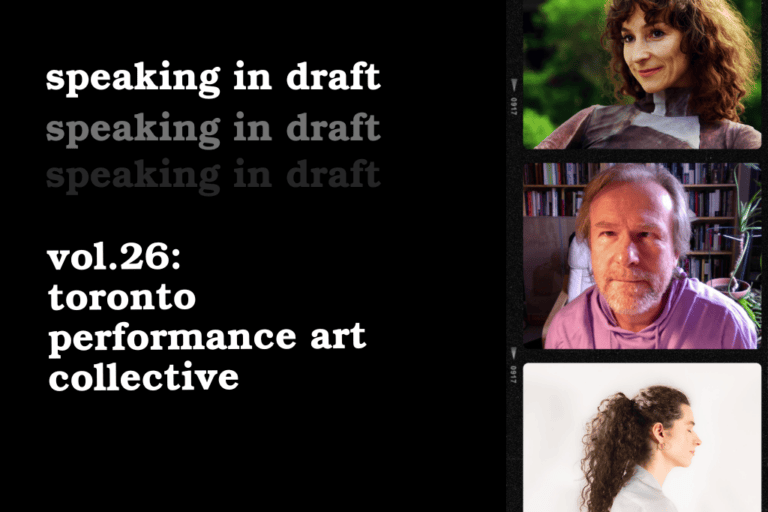 iPhoto caption: Photos of Shalon T. Webber-Heffernan, Paul Couillard, and James Knott courtesy of 7a*11d.
The organizers of the 7a*11d festival want you to know that performance art is still ‘punk as hell’
"There’s something about being live, with a sweaty, stinking, gross, dirty body, that’s just — you’re in it," says collective member Shalon T. Webber-Heffernan. "There’s some kind of alchemy going on that’s addictive to me. I think 7a*11d is sort of the dealer, if you will! It’s keeping us all hooked onto this weird obsession."
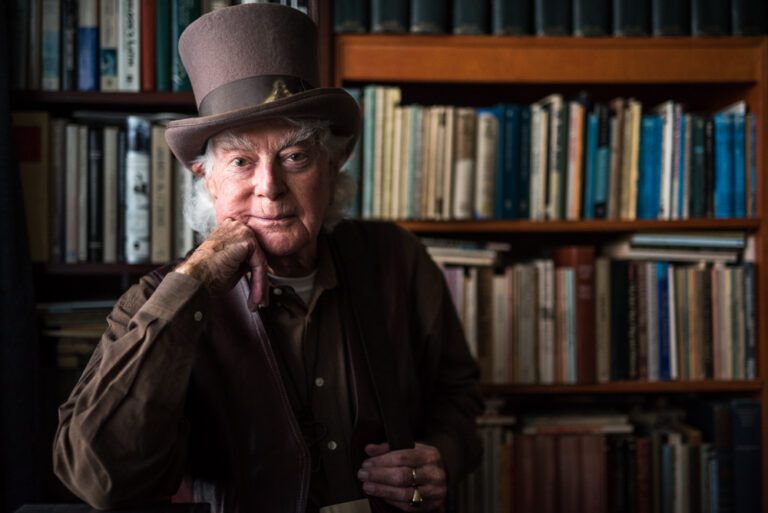 iPhoto caption: Peter Wylde for Intermission Magazine. Photo by Dahlia Katz.
In memory of Peter Wylde, the time-travelling acting teacher
What follows is an edited and condensed collage, loosely organized by theme, that only scratches the surface of Wylde’s life and impact.
 iPhoto caption: Dance Macabre cast. In photo: Keira Marie Forde (front). Back: [L to R] Uche Ama, King Cosmos, Theresa Gomes and Thomas Fournier. Photo by Tiku Romello Fisher (TRF Media).
At the 2026 Toronto Fringe, Caribbean artists stage collisions of identity, power, and desire
In separate video conversations, the lead artists behind Danse Macabre, Ex-Change of Words, and Momme Domme spoke about approaching themes of Blackness, diaspora, power, and desire.
Comments