
In GFT’s Heratio, Genevieve Adam gives overdue flowers to Hamlet’s best friend
 iPhoto caption: Janelle Hanna in Heratio. Photo by Raph Nogal.
Name the top three most iconic characters in Hamlet. Who comes to mind: The sweet prince himself? The betrayed Ophelia? Poor Yorick’s skull? Rozencrantz and Guildenstern, now that Tom Stoppard’s their publicist?
Chances are, you didn’t think about Horatio.
Enter playwright Genevieve Adam. Her latest work, Heratio, gives the prince’s best friend the spotlight, and is set in Elsinore castle shortly after the bloodbath that ends Hamlet. Produced by Guild Festival Theatre (GFT) and directed by the festival’s co-artistic leader Helen Juvonen, the production begins performances August 7, between the columns of Guild Park’s Greek amphitheatre.
“Horatio’s the only one who comes out of Hamlet alive,” said Adam in a Zoom interview. “In a lot of versions of [the play], Horatio is sort of beige and milquetoast. I’ve always thought that was a missed opportunity.”
That beigeness might stem from the fact that, in Hamlet, Horatio “is a man of science, [who doesn’t] do feelings,” said Adam. By contrast, “Horatio in our version is definitely all in the feels, [asking]: ‘What do I do now? Should I go home? Should I act as a witness? What do I know to be true?’”
Toronto audiences may be familiar with Adam’s deftly plotted trilogy of historical thrillers set in New France. (The series’ final installment, Heartless, was produced by Favour the Brave Collective in 2024.) Heratio, too, has all the elements of a thriller, though it’s also a knowing comedy with plenty of easter eggs for Hamlet fans. With Denmark’s royal family either poisoned, stabbed, or both, Horatio must navigate a new ruler, ongoing cycles of revenge, and the watchful eyes of observant kitchen scullions — all while keeping several secrets that could crack Elsinore wide open.
One of those secrets might be obvious from the play’s title: Adam’s Horatio is a woman in disguise.

“I think people will immediately cotton on,” said Adam. She noted that Heratio’s characters don’t conform to the rigid gender roles some audiences might expect in a medieval period piece. “The women and genderfluid roles really take the agency.”
Not that this Horatio is all action. She’s “paralyzed by grief, like Hamlet was at the start of Hamlet,” said Adam. “This lady needs to figure things out.”
Tyler J. Seguin, part of GFT’s leadership team and the original director of Heartless, invited Adam to develop Heratio through the theatre’s Classics Reimagined development program, starting in October 2023.
“I tossed around a couple [of] ideas,” said Adam. “And then my stepdad died quite unexpectedly. I was plunged into grieving, and that led to me to focus on Hamlet, because it’s a play about grief and having to adapt to a new reality.”
Adam initially had six months to develop Heratio. “I was [determined to] meet my deadlines — fool that I was!” she joked. “It meant that I had to show up and be like, ‘All right characters, what are we doing today? What are we arguing about today?’
“That’s mostly how I move things forward [in my plays],” she continued. “‘Who hasn’t been in a room together yet?’ If you put two people in a room who desperately want opposite things, the story will advance. They’ll be fighting, or they’ll try to seduce each other. I try not to let them leave until something has shifted in either one of them.”
Adam described how her process often starts with a clear first image. When she began Heratio, “I had this image, almost Monty Python-esque, of people trying to scrub all that blood from the last scene of Hamlet out of the stones.”
From there, she said, “it really does develop organically,” without an outline or a wall covered in post-its — “which to some people sounds like madness! And maybe it is. But it means that if there’s a surprise in the script, it tends to be very surprising, because I haven’t anticipated it.”
One surprise is how many wisecracks Heratio’s characters get away with as they scrub bloodstains, plot against each other, and grieve. Plays don’t need to be “traumatic to teach us a lesson about grief,” Adam reflected. “We can be taught through laughter — and certainly, lots of terribly funny things happen at funerals.”
Adam was also conscious of writing for a summer venue: “The audience is coming to this beautiful proscenium with their children and a picnic. They don’t necessarily want to be brought right down. Hopefully people will feel [grief] in the depth of the piece, but [still be able to] have some laughs, and leave the evening in a lighthearted way.
“That’s the gift of the play,” she continued. Though grief-stricken by Hamlet’s death, Horatio learns that “you can smile again, and it doesn’t dishonour that person’s memory. You can juggle a sandwich and still love that person, [or] go on to find new love and still love that person.”
Heratio runs August 7 to 24 at Guild Park and Gardens’ Greek Theatre. Tickets are available here.
Guild Festival Theatre is an Intermission partner. Learn more about Intermission’s partnership model here.

Nathaniel Hanula-James
Nathaniel Hanula-James is a multidisciplinary theatre artist who has worked across Canada as a dramaturg, playwright, performer, and administrator.
LEARN MORE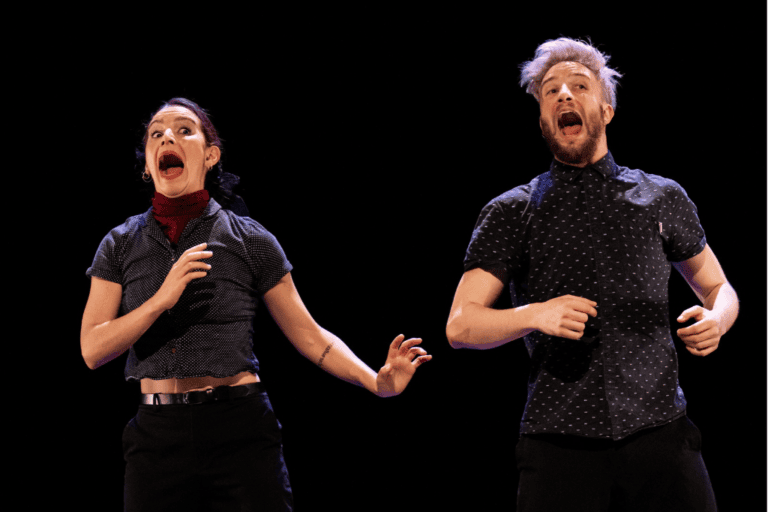 iPhoto caption: 'C'est la vida!' production photo by Julie Cherki.
C’est la vida! uses mime, dance, and electro beats to remix classic rom-com tropes
“Having endless talks with David about love, and our respective relationships, while creating and touring this show has definitely helped me grow,” says dancer Liesbeth Kiebooms. “It’s given me a more subtle understanding of love.”
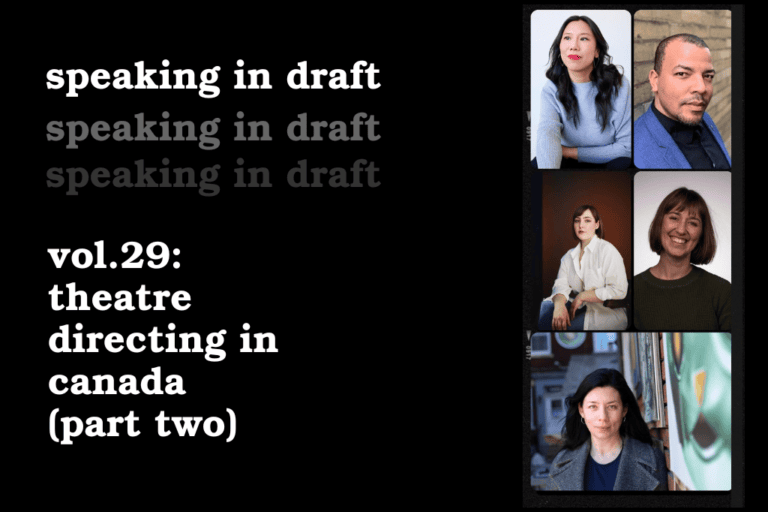 iPhoto caption: Headshots of Sophie Gee, Ray Hogg, Margot Greve, Leora Morris, and Jessica Carmichael.
Five theatre directors offer advice to the next generation — and the programs training it
The artists on this call were candid and vulnerable. They spoke openly about their professional frustrations and challenges — and they weren’t shy about pinpointing the ways that mainstream anglophone Canadian theatre practices fail directors and artists more broadly. That said, I didn’t leave our chat feeling hopeless or cynical.
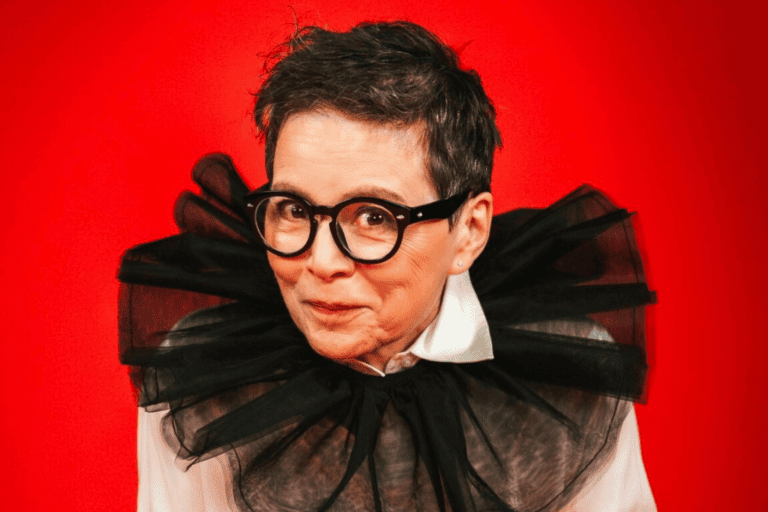 iPhoto caption: Ann-Marie MacDonald in 'Goodnight Desdemona (Good Morning Juliet).' Photo by Elana Emer.
“Sexism kept me out of hockey as a kid,” says Ann-Marie MacDonald. “But sexism also shut me out of Shakespeare."
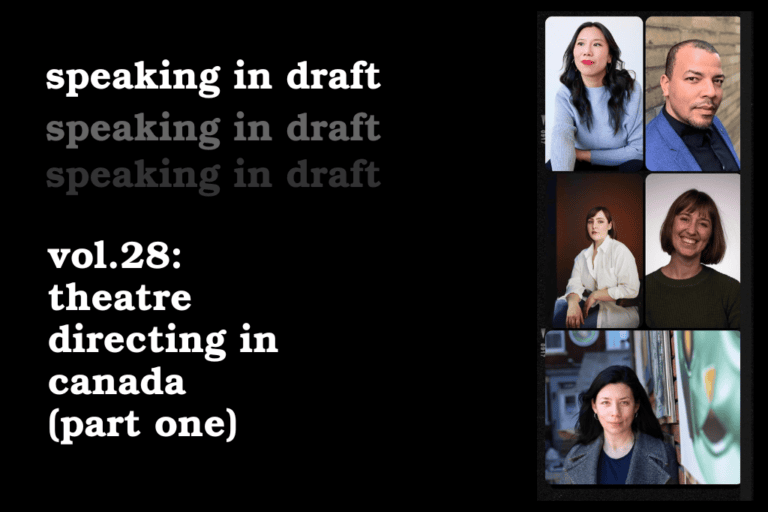 iPhoto caption: Headshots of Sophie Gee, Ray Hogg, Margot Greve, Leora Morris, and Jessica Carmichael.
How can theatre directors forge a sustainable career in Canada?
It’s increasingly unlikely that directors will hone their craft through formal training. Relatively few post-secondary programs devoted to directing exist, and it seems to me that directing-specific mentorship programs are less common than similar initiatives for actors or playwrights. To convene a roundtable about director training, I reached out to five very different artists on a continuum of early- to mid-career.
 iPhoto caption: Portrait of Eric Woolfe. Photo by Dahlia Katz.
Eric Woolfe’s inventive horror theatre is a monster mash of artistic influences
For the past 26 years, Eldritch Theatre’s director of the uncanny has given ghoulies, ghosties, and long-legged beasties of all kinds a spot in the limelight, in productions that serve up puppets, magic, and a crumbling castle’s-worth of uncanny influences, including schlock-horror B-movies, Shakespeare at his bloodiest, and the fiction of H.P. Lovecraft.
 iPhoto caption: Nate Yaffe in 'Rot Hat.' Photo by Kinga Michalska.
This year’s SummerWorks Performance Festival strives to make accessibility intrinsic
The curated festival’s 36th edition features a range of works by Disabled and neurodivergent artists where the medium is very much the message.
Comments