
As PlayME’s season concludes, its creators reflect on the changing world of Canadian audio drama
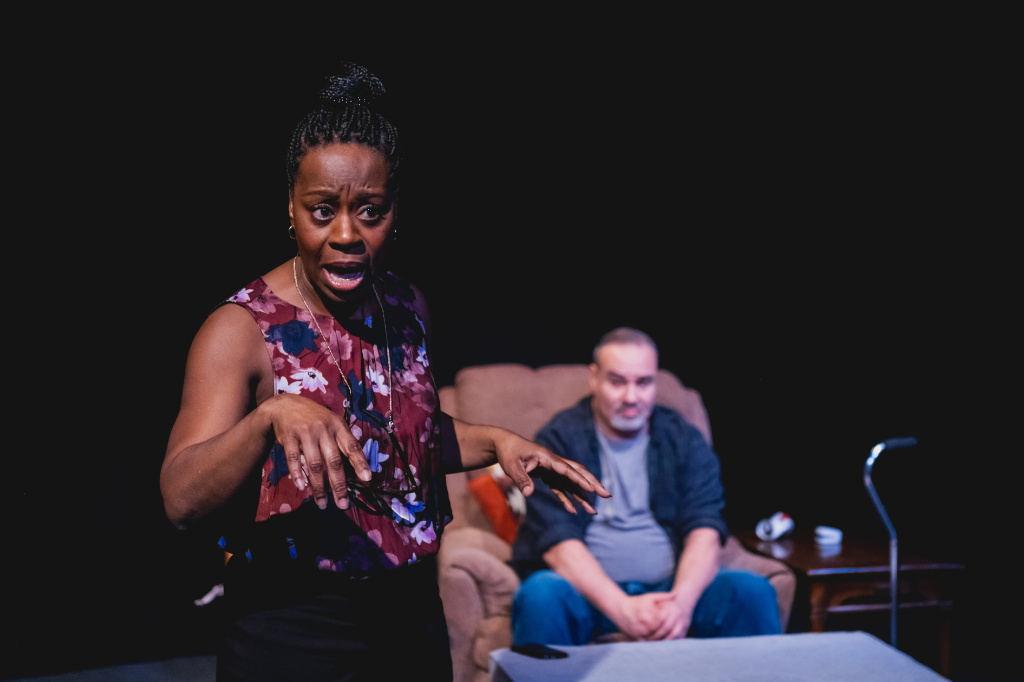 iPhoto caption: Ordena Stephens-Thompson and Tony Nappo in 'The Neighbours' at Tarragon Theatre. Photo by Jae Yang.
Homegrown Canadian audio drama is a century-old tradition — and CBC’s PlayME podcast is foley committed to keeping it alive.
The audio drama series, produced in partnership with CBC Podcasts since 2018, wrapped up its latest season this May with The Neighbours, a taut thriller by Nicholas Billon about the aftershocks of a heinous crime in a seemingly placid residential community. The Neighbours had its North American premiere in a Green Light Arts production at Tarragon Theatre this February, and the original cast — Ordena Stephens-Thompson, Tony Nappo, and Richard Tse — returns for its audio incarnation. Billon’s plays Iceland and Butcher appeared on PlayME in 2018 and 2019, respectively.
In a video call, PlayME’s co-artistic directors Laura Mullin and Chris Tolley reflected on their earliest days working in audio drama, and the changes to the medium that they’ve witnessed over their careers thus far.
Prior to founding PlayME, the duo cut their teeth on CBC radio dramas starting in 2005. “We answered an ad looking for ideas for one-off radio plays about urban myths,” said Mullin. “Chris had the idea of doing something about people who live in the subway.” Their proposal was accepted by Gregory J. Sinclair, then the executive director of CBC Radio, and a major force behind the creation of well-known Canadian audio series such as Afghanada. Mullin and Tolley’s urban myths pitch became the first iteration of Tunnel Runners, a standalone radio piece that the pair expanded into a seven-part podcast series in 2024.
Sinclair initiated Mullin and Tolley into the world of Studio 212, which was then CBC’s devoted home for all things radio play, located at the broadcaster’s Front Street headquarters in Toronto. “It was like fantasy camp for theatre kids getting a lesson in audio drama,” Mullin reflected.
Tolley remembers the studio itself with a sense of awe. “It felt like you were on the Starship Enterprise holodeck,” he said. “There was this big, long table with all these different computers and servers underneath. The studio had these different staircases made out of wood and metal, and strips of concrete and wood floor, so that you could run on them and record [different sound effects].”
For almost two decades, Sinclair mentored and collaborated with Mullin and Tolley on an array of projects, including multiple PlayME episodes. His final contribution was editing the show’s adaptation of Matthew MacKenzie and Mariya Khomutova’s First Métis Man of Odesa, released in 2024. A few weeks after completing the edit, Sinclair passed away unexpectedly. Later that year, in a special tribute episode of PlayME, Mullin and Tolley invited former colleagues of Sinclair’s to remember this titan of Canadian audio storytelling.
The luxurious Studio 212 is also no longer with us. The CBC shut down operations in 2012, after the federal government announced plans for a $115-million budget cut to the public broadcaster in March of that year. Though the studio itself was only 19 years old, it was part of a decades-long history of Canadian radio drama stretching back to 1925.
“We got the tail end of what has been a legacy in Canada,” said Mullin.
After creating that first version of Tunnel Runners, Tolley and Mullin continued to experiment with audio drama’s possibilities, in immersive and site-specific work they created through their own company, Expect Theatre. They soon found themselves intrigued by radio’s exciting new cousin: podcasting.
“I didn’t quite get it, but then I heard Serial and I got addicted,” said Mullin of the Peabody Award-winning true crime podcast that premiered in 2014. “That’s when we started to connect the dots. We realized, why are there all these amazing [Canadian] plays that have such a short life, when there’s so much time and effort put into writing them, dramaturging them, and workshopping them, and when there’s a whole global audience out there that might be interested in hearing Canadian stories?”
“I remember my dad buying a shortwave radio,” said Tolley, “and how exciting it was as a kid to be able to tune through and then suddenly hear the BBC in England, or South African, Australian, or German radio. Then along came podcasting, and all of a sudden, it was just as easy to hear a show that had been produced in Toronto, as it was to hear something that was being produced in Asia or someplace else. It levelled the entire playing field.”
Tolley compared entering the world of podcasting in the mid-2010s to what the early days of Canadian radio drama might have felt like. “I see a lot of parallels,” he said. “You hear stories about theatre people experimenting and trying to figure it out. When we joined CBC Podcasts, it had that same spirit.”
That shift — from the model represented by Studio 212 to podcasting — has its costs and benefits. On the one hand, Mullin and Tolley don’t have access to a holodeck-like space, complete with multiple staircases in different materials. On the other hand, they can still do live foley while working with a much lighter technical setup.
“Instead of having three technicians at these massive computers, it’s all done with a laptop and a dongle that interfaces the microphones to the computers,” Tolley explained. Although turnaround times for each PlayME episode are much shorter than they would have been for CBC radio dramas before 2012, updated technology means that the duo can conjure certain effects, like the sonic tone of a room, much more quickly. And whether Canadian audio dramas are recorded with multiple technicians, or via a single laptop, Mullin and Tolley agreed that one thing stays constant: the in-the-moment magic of a great performance.
“The recording of The Neighbours was electric,” said Mullin. “[The cast] was fresh off the stage, and the session finished faster than normal. Chris said to Tony and Ordena, ‘Why don’t we just take the first couple of scenes one more time?’ They ended up doing the whole show again in one take.”
You can listen to The Neighbours and the rest of PlayME’s current season wherever you get your podcasts.
PlayME is an Intermission partner. Learn more about Intermission’s partnership model here.
Nathaniel Hanula-James
Nathaniel Hanula-James is a multidisciplinary theatre artist who has worked across Canada as a dramaturg, playwright, performer, and administrator.
LEARN MOREComments
Leave a Comment
 iPhoto caption: 'C'est la vida!' production photo by Julie Cherki.
C’est la vida! uses mime, dance, and electro beats to remix classic rom-com tropes
“Having endless talks with David about love, and our respective relationships, while creating and touring this show has definitely helped me grow,” says dancer Liesbeth Kiebooms. “It’s given me a more subtle understanding of love.”
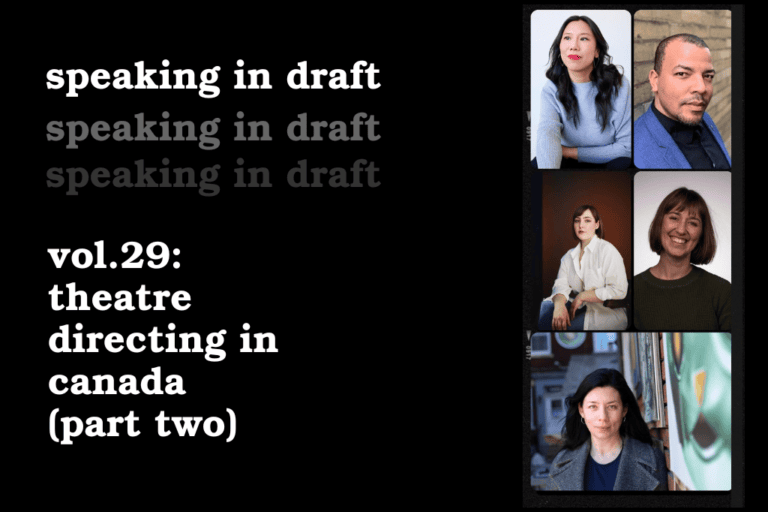 iPhoto caption: Headshots of Sophie Gee, Ray Hogg, Margot Greve, Leora Morris, and Jessica Carmichael.
Five theatre directors offer advice to the next generation — and the programs training it
The artists on this call were candid and vulnerable. They spoke openly about their professional frustrations and challenges — and they weren’t shy about pinpointing the ways that mainstream anglophone Canadian theatre practices fail directors and artists more broadly. That said, I didn’t leave our chat feeling hopeless or cynical.
 iPhoto caption: Ann-Marie MacDonald in 'Goodnight Desdemona (Good Morning Juliet).' Photo by Elana Emer.
“Sexism kept me out of hockey as a kid,” says Ann-Marie MacDonald. “But sexism also shut me out of Shakespeare."
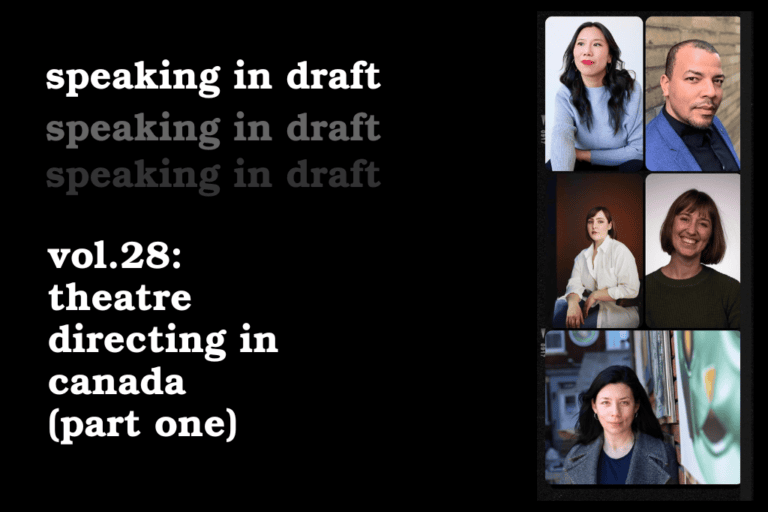 iPhoto caption: Headshots of Sophie Gee, Ray Hogg, Margot Greve, Leora Morris, and Jessica Carmichael.
How can theatre directors forge a sustainable career in Canada?
It’s increasingly unlikely that directors will hone their craft through formal training. Relatively few post-secondary programs devoted to directing exist, and it seems to me that directing-specific mentorship programs are less common than similar initiatives for actors or playwrights. To convene a roundtable about director training, I reached out to five very different artists on a continuum of early- to mid-career.
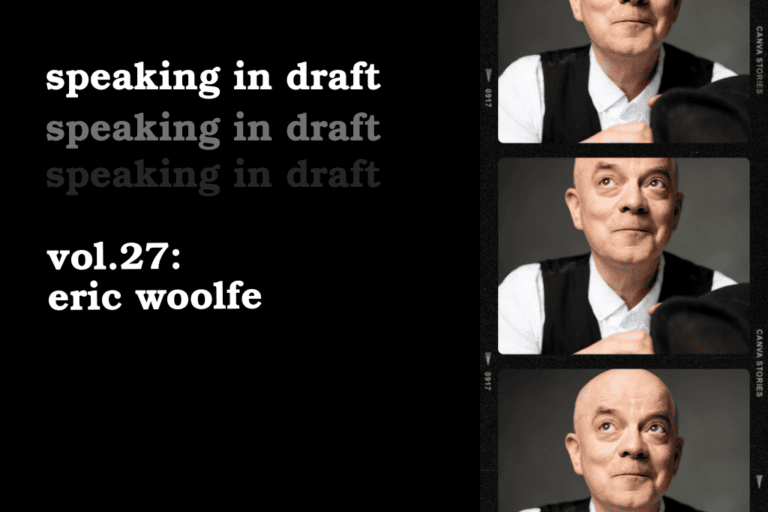 iPhoto caption: Portrait of Eric Woolfe. Photo by Dahlia Katz.
Eric Woolfe’s inventive horror theatre is a monster mash of artistic influences
For the past 26 years, Eldritch Theatre’s director of the uncanny has given ghoulies, ghosties, and long-legged beasties of all kinds a spot in the limelight, in productions that serve up puppets, magic, and a crumbling castle’s-worth of uncanny influences, including schlock-horror B-movies, Shakespeare at his bloodiest, and the fiction of H.P. Lovecraft.
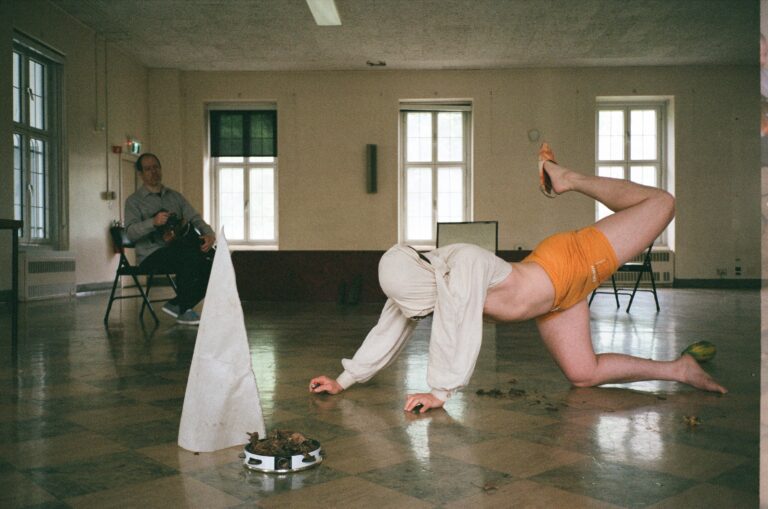 iPhoto caption: Nate Yaffe in 'Rot Hat.' Photo by Kinga Michalska.
This year’s SummerWorks Performance Festival strives to make accessibility intrinsic
The curated festival’s 36th edition features a range of works by Disabled and neurodivergent artists where the medium is very much the message.
I enjoyed reading the article on Canadian radio drama by Nathaniel Hanula James. Radio drama has a long history with CKUA, an Alberta radio station, which featured the early plays of Alberta playwrights Elsie Park Gowan, and Gwen Pharis Ringwood. From 2002 to 2020, I hosted a weekly program on CKUA called “Theatre of the Air”, which featured recordings of classic BBC radio plays, and new Canadian plays, originally produced in Edmonton theatres. The CKUA team was very imaginative in the creation of sound effects for new productions, and the actors were typically those who had first created the roles on stage. So it was with a sense of deja vu that I learned about the CBC Podcasts during Covid. In an article entitled “Prick Up Your Ears: Radio Drama in English”, published in “Theatre History in Canada” 11/1 (Spring 1990): 59-70, I considered the imaginative impact of the spoken word: “Sound can change a location, shift time, portray an internal or an external world, render random impressions, or articulate logical arguments.” It requires active listening: the play is created by the imagination of the listener.