
For Marissa Orjalo, this season at Stratford is such stuff as dreams are made on
 iPhoto caption: Marissa Orjalo as Ariel with members of the company in 'The Tempest.' Stratford Festival 2026. Photo by Ann Baggley.
Marissa Orjalo is practicing how to be multiple places (and people) at once.
This is the actor’s fourth year as part of the Stratford Festival company, which she first joined as part of the Birmingham Conservatory training intensive. In 2026, she’s taking on two iconic roles from the Western classical theatre canon. One is the mercurial spirit Ariel in Shakespeare’s The Tempest, directed by Stratford’s outgoing artistic director Antoni Cimolino. Dressed in a glittering, seemingly weightless costume created by costume and set designer Julie Fox, Orjalo’s Ariel seems to be everywhere at once in this production, currently running at the Festival Theatre.
“We use a [body] double three times in the show, played by Katarina Fiallos,” Orjalo said in a video call. “A lot of the time, it actually is me. It’s a little bit of a marathon backstage.” (Eric Woolfe is magic consultant on the production.)
Orjalo’s other principal role this season is Cecily Cardew: one of a quartet of lovers in Oscar Wilde’s The Importance of Being Earnest, directed by Krista Jackson. The comedy of manners is in previews at the Avon Theatre.
“I like to call Ariel and Cecily my two daughters,” Orjalo said. “Cecily is my lovely daughter that just wants to eat cupcakes and smell the flowers. Ariel gets called into the principal’s office and brings friends home without me knowing, but I don’t love them any less. They’re two completely different attributes of who I am.”
In The Tempest, Ariel does the bidding of the magician Prospero, who binds her into service with magic — what he calls his “art.” But, particularly in this adaptation, Orjalo’s Ariel doesn’t lack agency.
“Ariel’s a role that lives in contradiction,” Orjalo explained. “She’s light, she’s dangerous, she’s playful, she’s exhausted, she’s loyal, and then maybe she’s a little bit resentful as well. In the text, she asks for her freedom every month. She’s not shy about what she wants.”
Orjalo’s main scene partner in The Tempest is Geraint Wyn Davies, who plays Prospero. Prior to rehearsals, the duo had already built a solid rapport, acting opposite each other in London Assurance and The Winter’s Tale, directed by Cimolino in 2024 and 2025 respectively.

“From the years Prospero and Ariel have spent together, from the clues we’ve garnered from the text, and from who Geraint and myself are as people, we hope we’ve created a complex relationship that reflects [these characters’] authority-and-obedience dynamic, but also a co-dependant need within that relationship,” Orjalo said.
“In a manner of speaking, the way Ariel goes about doing Prospero’s bidding could be considered her own ‘art,’” she reflected. “Perhaps there’s a small taste of freedom in that alone.”
In a phone conversation, Cimolino described Orjalo as a gifted artist with a sophisticated grasp on her own art.
“She can sing, she’s a mover, she’s a wonderful actor, and in addition to all that, she’s super smart,” he said. “Especially as an artistic director, I want to know that there’s a future for [these artists]; that there’s someone who’s going to endure and can really contribute something to the future. I feel that with Marissa. She’s got a great career ahead of her.”
“You’re never going to work with a nicer colleague,” he added.
This production is Cimolino’s third time staging The Tempest. His first was in 1983, for Sudbury’s Thorneloe Players; Cimolino directed and performed as Prospero. The second was in 2018 at Stratford; the late Martha Henry played the sorcerer.
“I felt like the production I wanted needed to be darker,” he said of the current iteration. “Both in the world that’s created, and in the portrayal of Prospero at the beginning. His mind has become a graveyard in the way. He’s spent 12 years brooding on revenge, and The Tempest is a revenge tragedy [until] Shakespeare shocks us and turns it into a play about forgiveness.”
Cimolino named Mary Shelley’s Frankenstein as a main influence on this Tempest, which he’s set in the early 19th century around the time of the novel’s publication.
“It’s almost the end of the age of sailing ships,” he explained. “It’s also a period of time when skepticism about authority, which permeates the text of The Tempest, really started to bloom.”

“Antoni and I discovered early on that Ariel’s learning how to be human-like,” said Orjalo. “Everything became more startling to me as this entity, this spirit. It’s really freeing, to play a character where you can just discover.”
Ariel and Cecily share that drive toward discovery and tendency to question authority. While the former demands her freedom, the latter defies her uncle by pursuing his “wicked” brother Earnest. (The brother is fictional. Complications ensue.) Orjalo said that shifting back and forth between these two strong-willed characters is a production of its own.
“Especially at this point in the process, I’ve found that sometimes on Tempest days, I’ll be processing Earnest,” Orjalo described. “I’ll be Cecily in the wings, and I’ll think, ‘I can’t be Cecily right now, I have to be Ariel!’ And vice versa. I think the intermingling mainly lies in how much fun they both have.”
She expressed gratitude for the guidance of veteran Stratford actors like Davies, Lucy Peacock, and Sara Topham, who’ve shared advice on how to keep the characters separate and stay grounded throughout the season. Like Ariel, Orjalo expressed an ongoing sense of discovery.
“Every day feels like a new adventure,” she said. “I always look to the people who’ve come before me, and they’re always very generous. I’m on this journey of learning, and I hope to learn for the rest of my life.”
The Tempest runs at Stratford’s Festival Theatre until October 24. The Importance of Being Earnest runs at the Avon Theatre until October 23. More information is available here.
The Stratford Festival is an Intermission partner. Learn more about Intermission’s partnership model here.

Nathaniel Hanula-James
Nathaniel Hanula-James is a multidisciplinary theatre artist who has worked across Canada as a dramaturg, playwright, performer, and administrator.
LEARN MORE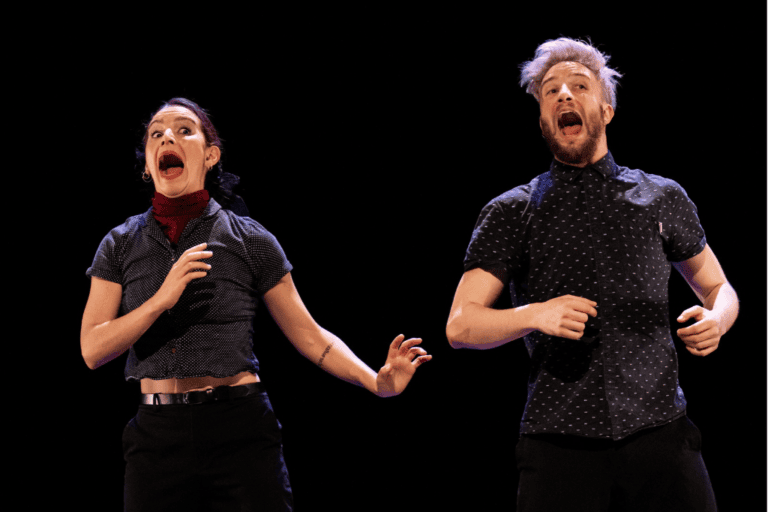 iPhoto caption: 'C'est la vida!' production photo by Julie Cherki.
C’est la vida! uses mime, dance, and electro beats to remix classic rom-com tropes
“Having endless talks with David about love, and our respective relationships, while creating and touring this show has definitely helped me grow,” says dancer Liesbeth Kiebooms. “It’s given me a more subtle understanding of love.”
 iPhoto caption: Headshots of Sophie Gee, Ray Hogg, Margot Greve, Leora Morris, and Jessica Carmichael.
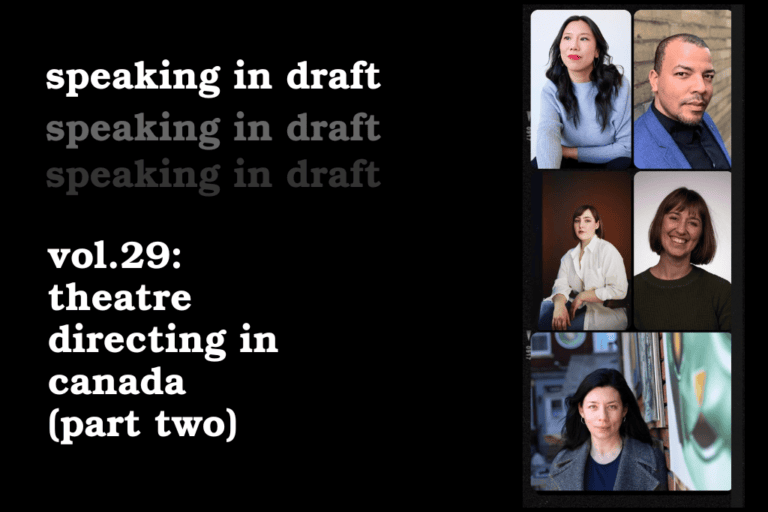
Five theatre directors offer advice to the next generation — and the programs training it
The artists on this call were candid and vulnerable. They spoke openly about their professional frustrations and challenges — and they weren’t shy about pinpointing the ways that mainstream anglophone Canadian theatre practices fail directors and artists more broadly. That said, I didn’t leave our chat feeling hopeless or cynical.
 iPhoto caption: Ann-Marie MacDonald in 'Goodnight Desdemona (Good Morning Juliet).' Photo by Elana Emer.
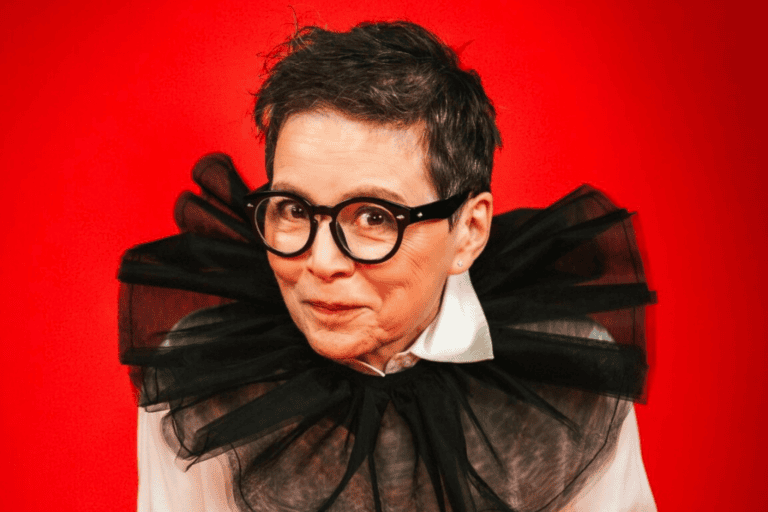
“Sexism kept me out of hockey as a kid,” says Ann-Marie MacDonald. “But sexism also shut me out of Shakespeare."
 iPhoto caption: Headshots of Sophie Gee, Ray Hogg, Margot Greve, Leora Morris, and Jessica Carmichael.
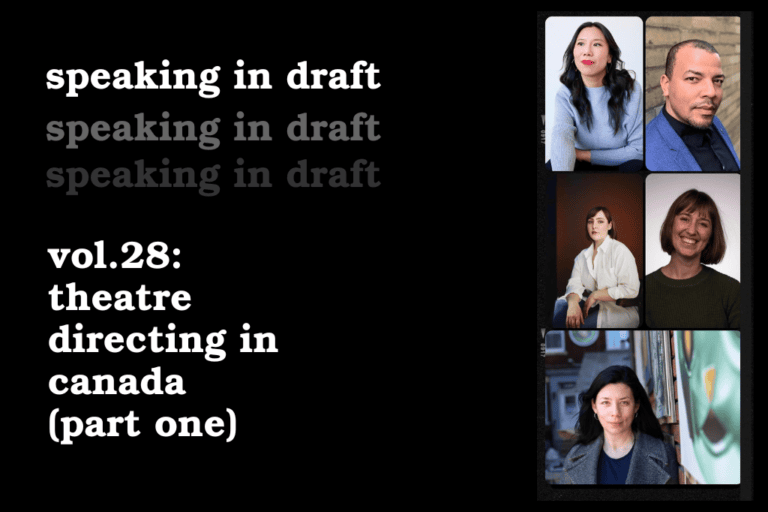
How can theatre directors forge a sustainable career in Canada?
It’s increasingly unlikely that directors will hone their craft through formal training. Relatively few post-secondary programs devoted to directing exist, and it seems to me that directing-specific mentorship programs are less common than similar initiatives for actors or playwrights. To convene a roundtable about director training, I reached out to five very different artists on a continuum of early- to mid-career.
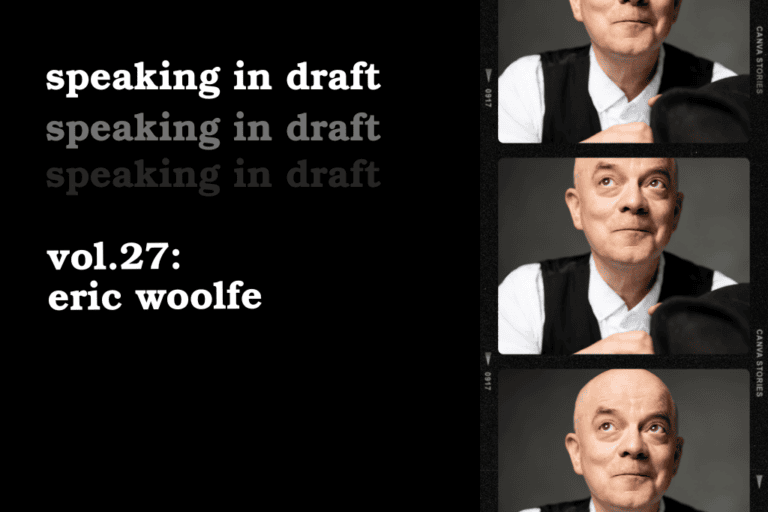 iPhoto caption: Portrait of Eric Woolfe. Photo by Dahlia Katz.
Eric Woolfe’s inventive horror theatre is a monster mash of artistic influences
For the past 26 years, Eldritch Theatre’s director of the uncanny has given ghoulies, ghosties, and long-legged beasties of all kinds a spot in the limelight, in productions that serve up puppets, magic, and a crumbling castle’s-worth of uncanny influences, including schlock-horror B-movies, Shakespeare at his bloodiest, and the fiction of H.P. Lovecraft.
 iPhoto caption: Nate Yaffe in 'Rot Hat.' Photo by Kinga Michalska.
This year’s SummerWorks Performance Festival strives to make accessibility intrinsic
The curated festival’s 36th edition features a range of works by Disabled and neurodivergent artists where the medium is very much the message.
Comments