
Lighthouse Festival unearths rarely performed Norm Foster one-acts
 iPhoto caption: "My Narrator" photo courtesy of the Lighthouse Festival.
Norm Foster’s plays have long been a pillar of the Lighthouse Festival’s programming, with multiple often appearing in the same season. Usually, that means full-length works — frequently, world premieres. But this summer, the Port Dover/Port Colborne-based company is diving into Foster’s back catalogue and producing a pair of rarely staged one acts from the mid-2000s.
In the spirit of rediscovery, Lighthouse is calling the double bill Hidden Treasures. A single cast performs both of the four-person comedies, and at intermission, Becky Mode’s set completely transforms.
Foster was initially surprised that artistic director Jane Spence wanted to produce the plays — previously paired together in the 2008 collection One-Actmanship — because in his experience Canadian theatres rarely consider shorter works worthy of a full production. “I don’t write many one-act plays,” he told me over Zoom. “They’re not much in demand… Theatres prefer to do the big [ones]. Doing two together is a good idea, because it stretches it to the same [run]time as a regular play.”
Beyond the trouble of getting them produced, Foster noted that one-acts pose unique challenges to him as a writer. “There’s not much time for character development, like there would be in a long play,” he reflected. “You have to… make it satisfying, and to have it come around to a plausible ending. It can’t just be a skit… So, it’s actually a little tougher to write.”
The first half of Hidden Treasures, called “My Narrator,” tells the story of an unlikely romance between Lacy, a down-to-earth painter, and Miles, a socially awkward drifter who meets Lacy while working at his uncle’s clothing store. The twist is that both characters’ inner voices appear onstage as narrators. “You know that voice in your head that tells you ‘don’t do that, don’t do this, you shouldn’t do that,’ and sometimes we listen to it, but sometimes we don’t? That’s what this play is about,” said Foster.
A subplot of “My Narrator” is that Lacy’s narrator, Barb, thinks the artist’s landscape paintings are too lighthearted. “The bright colours, the sunny skies… She thought it was time to try something different,” the narrator says. “Perhaps a darker approach would lend more weight to her work and put her into favour with the critics.”
Foster said this thread about criticism is “absolutely” intended as a wink at the reception to his own early work.
“I used to get a lot that my plays were ‘pedestrian,’” recalls Foster. “I got compared a lot to Neil Simon. I never used to like that. But I mean, Neil Simon is the most successful playwright ever, aside from Shakespeare. Why would I not like to be compared with [him]?… Critics have their own agenda, that doesn’t bother me anymore.”
In Hidden Treasures’ second half, “The Death of Me,” John, a run-of-the-mill young man, appears in heaven after dying from an unexpected aneurysm. His last remarks were uninspiring (“Ah! Ooh! Eee!”), and nobody is likely to find him until the next morning, when his mother makes her routine Saturday visit to his apartment. John discusses these circumstances with the Angel of Death, who does the paperwork for new entrants to heaven. He then tries furiously to “to bargain his way out [and] undo the death,” as Foster put it in our conversation.

Both one-acts depict ordinary people as somewhat beholden to the whims of powerful, unreal figures (though in both cases, the protagonists maintain a degree of agency to advocate for themselves). According to Foster, these sorts of fantastical figures appeal to him because they mean he doesn’t have to worry about logic as much. “You can go anywhere with [the play] when it’s not [only about] a real person,” he said. “It frees me from some of the boundaries you ordinarily have when you write… [Because] who knows what an Angel of Death is like? It makes it easier on me.
“I’m always looking for easy ways to do things,” he jokingly continued. “I’m not a hard worker… Any of my high school teachers will tell you that.”
Self-deprecation aside, Foster is constantly working (he’s long been called “Canada’s most produced playwright”) — and Spence’s idea of Hidden Treasures has inspired him to start thinking seriously about one-acts again.
“After she did that, I [wrote] two Christmas-themed plays… and I put these two together in a collection to try to sell them to theatres for Christmas time,” he said. “So I’m glad that Jane put these two plays together.
“It was a great idea.”
Hidden Treasures runs in Port Dover until July 26, and in Port Colborne from July 30 to August 10. Tickets are available here.
The Lighthouse Festival is an Intermission partner. Learn more about Intermission’s partnership model here.
Liam Donovan
Liam is Intermission’s senior editor. He lives in Toronto. His Substack newsletter is available at loamdonovan.substack.com.
LEARN MORE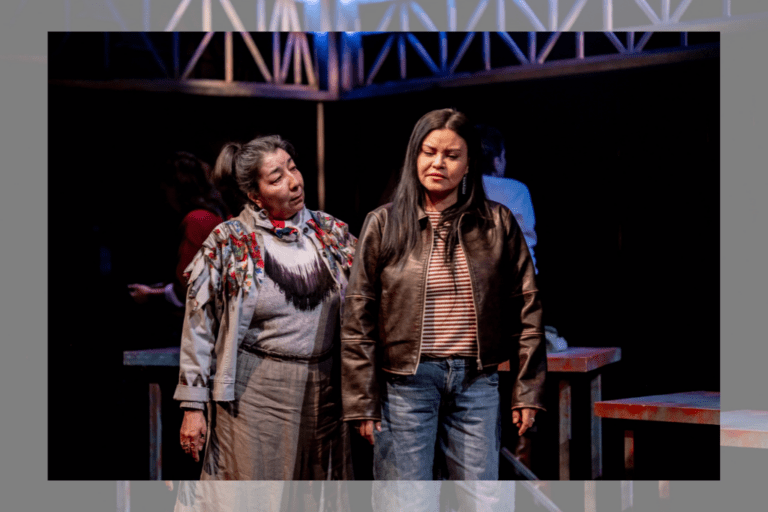 iPhoto caption: Tracey Nepinak and Teneil Whiskeyjack in 'Strife.' Photo by Jae Yang.
REVIEW: Punctuate! Theatre’s Strife opens up perspectives on grief, activism, and the oil industry
Playwright Matthew MacKenzie and director Yvette Nolan have crafted a drama in which every character is worth hearing. What follows is my attempt to listen — perspective by perspective.
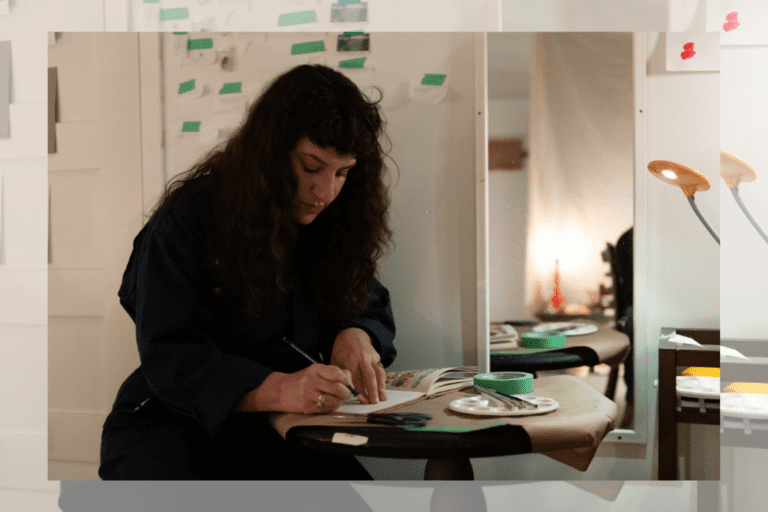 iPhoto caption: Shira Leuchter in 'The Haunting' at Tarragon's Greenhouse Festival in 2024. Photo by Matt Hertendy.
REVIEW: One-on-one play considers the hidden meanings behind ghost stories
Shira Leuchter’s The Haunting feels less like attending a seance and more like flipping through the encyclopedia of a self.
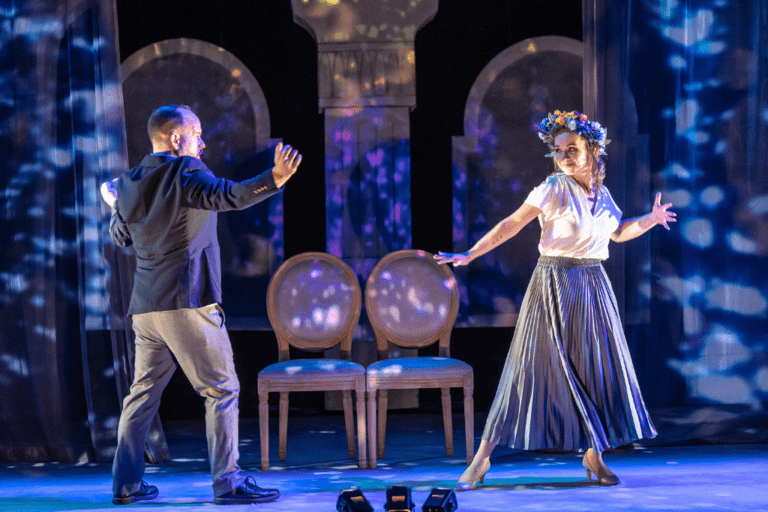 iPhoto caption: Matthew MacKenzie and Mariya Khomutova in 'First Métis Man of Odesa' at Soulpepper Theatre in 2024. Photo by Dahlia Katz.
Theatre Calgary unveils 2026-27 season
Theatre Calgary has announced its 2026-27 lineup, including new productions of the musical Little Shop of Horrors and Sam Shepard’s drama True West.
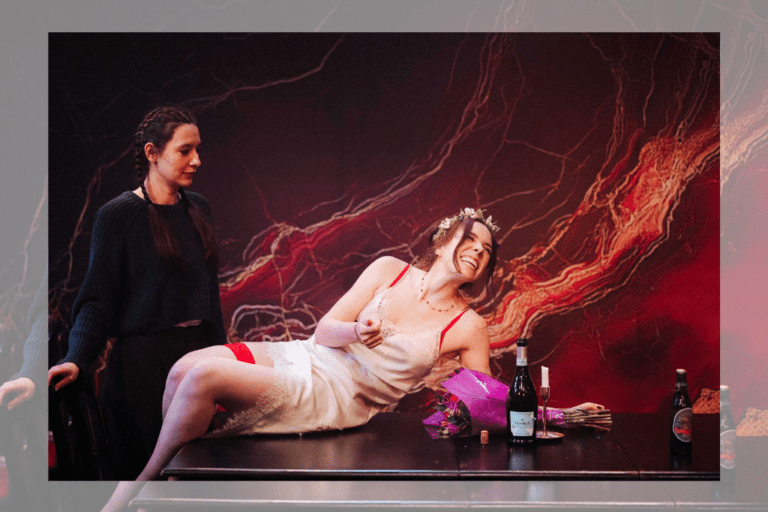 iPhoto caption: Tara Sky and Emily Anne Corcoran in 'Julie.' Photo by Sandro Pehar.
REVIEW: Eros overpowers logos in Icarus Theatre’s Julie
Director Jordan Laffrenier focuses on atmosphere, delivering a heightened production that takes more from 1990s erotic thrillers than it does from naturalistic tragedy.
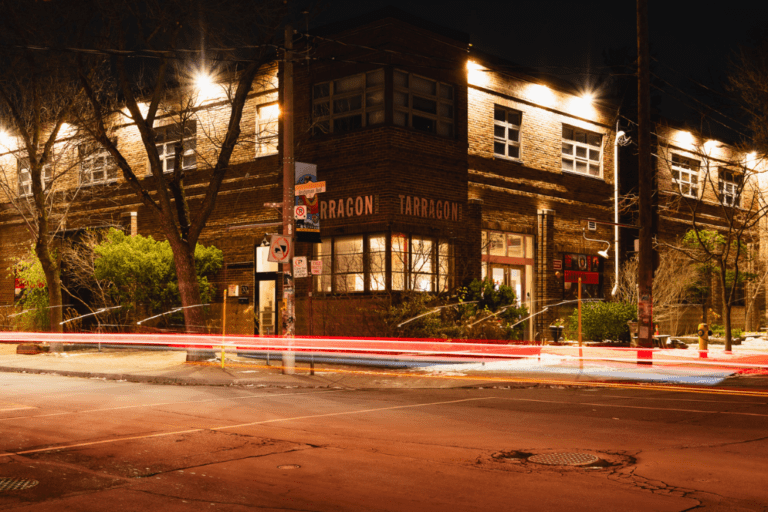 iPhoto caption: Photo Tarragon Theatre by Teagan McCanny.
Tarragon Theatre reveals premiere-packed 55th anniversary season, including return of Yaga and MONKS
Tarragon Theatre’s 2026-27 season features world premieres by Anahita Dehbonehie, Katherine Gauthier, Ho Ka Kei (Jeff Ho), and Luke Reece, plus four other Canadian works.
 iPhoto caption: 'Une Traversée' puppet design by Natacha Belova et Tita Iacobelli. Photo by Pierre-Yves Jortay.
REVIEW: Montreal in March? Bring on the puppets.
The 21st annual Festival International de Casteliers featured an energizing series of Quebecois and European productions that took the medium of puppetry in surprising directions.
Comments