
The Grand Theatre’s music-infused Piaf/Dietrich considers fame, friendship, and desire
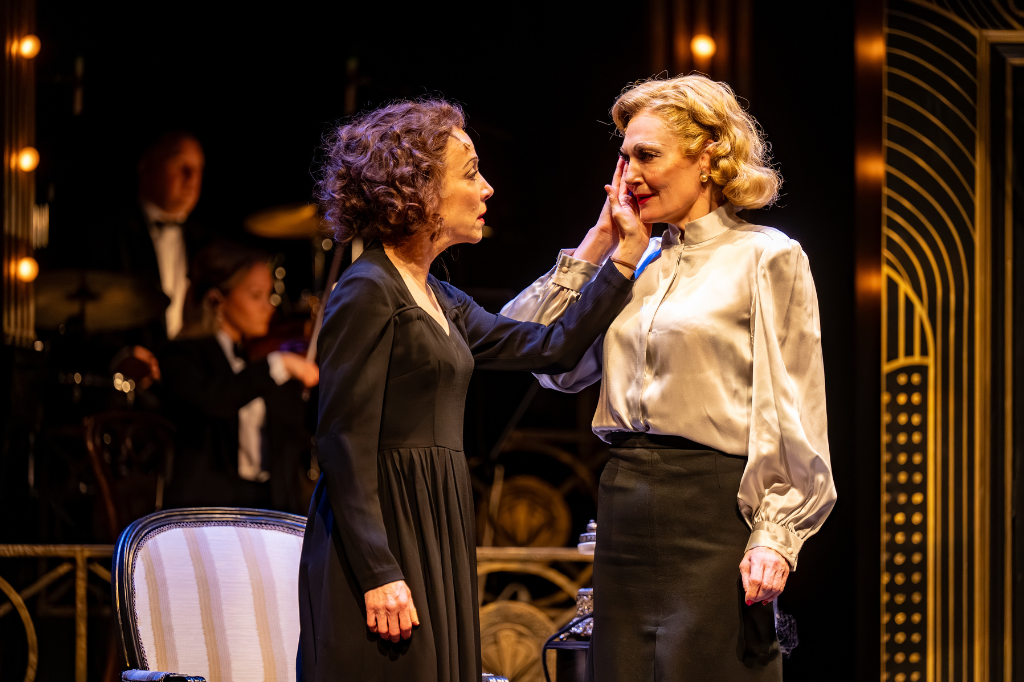 iPhoto caption: Deborah Hay and Terra C. MacLeod in 'Piaf/Dietrich.' Photo by Dahlia Katz.
French chanteuse Edith Piaf and German-American film icon Marlene Dietrich were near opposites. Where Piaf sang as though trying to pull her heart through her throat — hunched, pleading, nervy — Dietrich glided onstage: chin lifted, half-smiling, the room her calculated chessboard. Offstage those personas persisted. Dietrich was tall, tailored, cool; Piaf was petite, trembling, easily combustible. But for all their differences, they recognized in each other the sheer need to perform. In late-1930s Paris, they became close friends — which blurred into intimacy that still resists tidy definition.
That tension animates Piaf/Dietrich, a music-infused bioplay now running at London, Ontario’s Grand Theatre. The production weaves the pair’s decades-long entanglement into charged scenes of private conversation and spotlit concert numbers of their most famous songs, all shown on flexible sets by Lorenzo Savoini, which meld New York and Parisian architecture with glamorous dressing rooms and Art Deco music halls.

Originally a German play called Spatz and Engel (The Angel and the Sparrow), adapted by Canadian playwright Erin Shields and first staged by Mirvish in 2019, the show hops around in time, but kicks off with Piaf, already famous in France, recognizing Dietrich’s voice on the radio. Hungry for reinvention, Piaf gets a show in America, but the concert goes terribly. The audience wants gloss — they have no idea what to do with Piaf’s grit. Fluent in Hollywood’s codes, Dietrich meets Piaf and becomes her mentor.
What ensues is a tumultuous relationship told over the course of 15 years. Wartime politics flicker in the background, with Dietrich booed in her country for opposing Nazism; about 20 musical numbers such as “La Vie en Rose,” “Milord,” and “Lili Marlene” erupt as emotional punctuation. The play also follows Dietrich as she supports Piaf through the tragic death of her lover and her declining health, all while their friendship endures its own ups and downs.
During a video call with Rachel Peake, Piaf/Dietrich’s director and the Grand’s artistic director, she told me about her vision for the show. “I like putting on second and third runs of Canadian plays. Canadian theatre gets better and better when it gets new eyes, new talent,” said Peake. “I am a big Piaf fan myself and I was looking for work to fill gaps in our season. I turned to Erin Shields — I really admire her work — and found Piaf/Dietrich. I love how it handles fame in America, female friendship, and how much room the script leaves to imagine and play inside it.”
Deborah Hay plays Piaf, and Peake said her embodied performance style brings the necessary richness to the singer’s deliberate gestures. “Deborah beautifully inhabits the range of Piaf’s physicality between 1945 and 1960. Piaf has so much physical twisting because of her various illnesses, a car accident, and her internal suffering that Deb really connects to,” said Peake. “But with an incredible performer like Deb we want her to bring herself as well. Her voice is different from Piaf; she brings the right mix of dramatization rather than impersonation.”
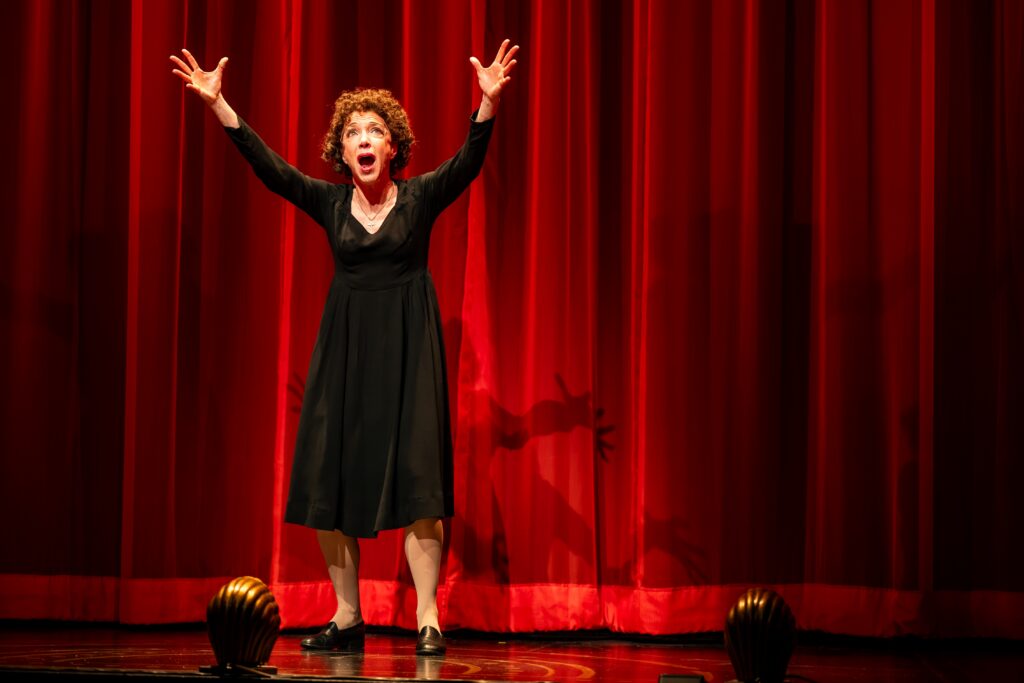
Opposite her, Terra C. MacLeod, best known for her portrayal as Velma Kelly in Chicago, offers a confident Broadway star sensibility to Dietrich. “Terra brings this real ability to have passion sitting underneath the surface of Dietrich’s constrained exterior. That’s really key to this story,” said Peake. “We see a few moments where Dietrich tries to tap into her emotional side, and the pain cracks through, but then it’s pushed away and replaced with that same controlled performer.” One of Piaf/Dietrich’s biggest points of interest is its particular actorly litmus test: performers playing characters who are themselves consummate performers.
Some tellings frame Piaf and Dietrich’s romance as torrid. But Peake’s production takes a more porous view. In early conceptual meetings, the creative team talked about how to play their intimacy. “We talked about attraction and physicality and how sometimes in relationships the line [of what’s romantic and what’s friendly love] is ill-defined. At one time, Piaf and Dietrich’s relationship involved kissing and sex, but that wasn’t an active decision to be friends or lovers,” said Peake. “The story as [we’re telling] it is that they were friends who rolled into something intimate, which recessed and left only a friendship.”
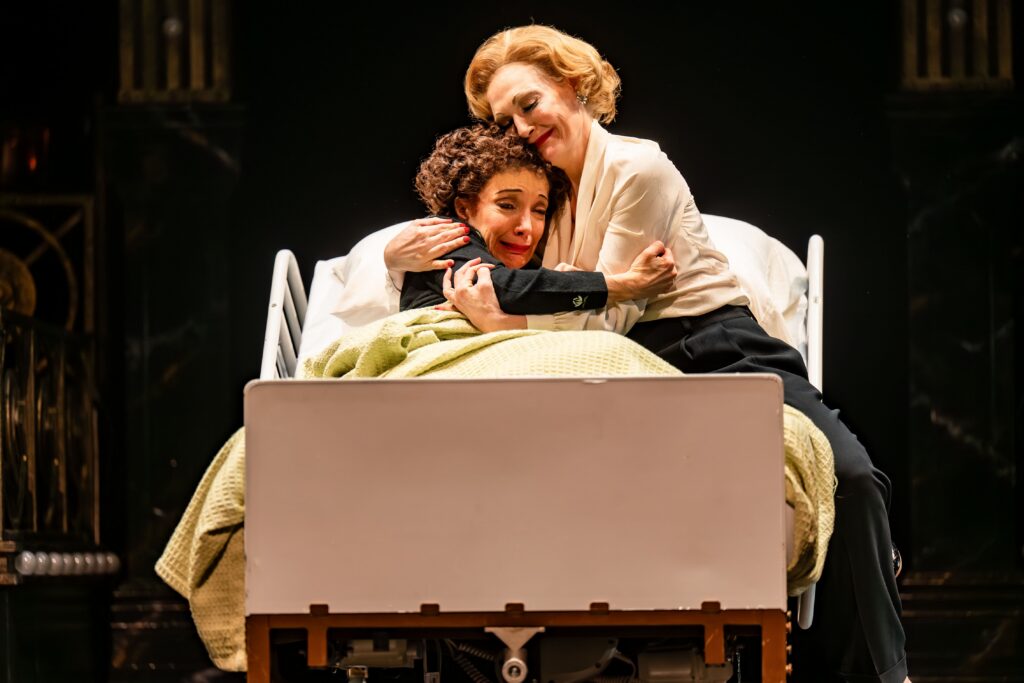
Peake’s approach to Piaf/Dietrich feels decidedly contemporary. By the final scenes, the question for Peake isn’t whether they were lovers, friends, or rivals, but about how they balance one another as friends and if one extreme can sustain a life. “I’m really interested in telling stories of female leaders and what specific challenges they encounter, and I think a story from the past can resonate with the current in surprising ways,” said Peake. In today’s era of curated feeds and algorithmic selves, precision, passion, and performance all build empires on the daily over social media — and they too have their costs.
“The extremes of both characters gives us a lot to consider and experience for how to live. Should we lead with passion or precision? It’s sort of a no-brainer that happiness lies somewhere in the middle,” said Peake. But Piaf and Dietrich can only glimpse the middle through each other.
Piaf/Dietrich runs at the Grand Theatre until March 7. Learn more here.
The Grand Theatre is an Intermission partner. Learn more about Intermission’s partnership model here.

Lindsey King
Lindsey King is a Toronto-based freelance writer and editor with bylines in Toronto Life, Maclean's, Canadian Business, Intermission, and The Creative Independent.
LEARN MORE iPhoto caption: From left: Vivien Endicott-Douglas as Han, Rylan Wilkie as George Abbot (top left), Sara Topham as Cath (top right), Angel Lo as Anna and Liz Der as Roni in 'The King James Bible Play.' Stratford Festival 2026. Photo by David Hou.
REVIEW: The King James Bible Play both finds and fumbles profundity in translation
Corbeil-Coleman’s best-known plays, such as Guarded Girls and Scratch, centre contemporary young women circling grief, inheritance, and intergenerational trauma. It might seem like a surprise, then, that The King James Bible Play opens with five men centuries ago — but it turns out that the intergenerational trauma in this case stretches back about 417 years.
 iPhoto caption: Members of the company of 'Play Dead.' Photo by Alexander Galliez.
Play Dead trades death-defying circus tricks for bigger emotional risks
“The idea of consequences in [Play Dead] can make someone think the show is a little dreary, but we think of it more as a surreal celebration of all the little things that make up life,” says performer and People Watching co-artistic director Jérémi Lévesque.
 iPhoto caption: Melissa James and Patrick Heusinger in 'Paranormal Activity.' Photo by Johan Persson.
REVIEW: Mirvish’s Paranormal Activity summons real screams — but crashes into a cheap shock ending
It’s a spooky, cleverly staged hoot, but audiences might be distracted by one glaring narrative spectre that could use an exorcism.
 iPhoto caption: Members of the company of 'Theatre of Dreams.' Photo by Tom Visser.
It’s tough to tie Shechter’s style to any one dance lineage, but modern floorwork; commonplace gestures rendered sharp and frenzied; and loose, hip-circling movements often reserved for low-lit clubs evoke the woozy surreality of half-revealed consciousness.
 iPhoto caption: Amy Keating, Zorana Sadiq, Katherine Cullen, and Jean Yoon in 'Dance Nation.' Photo by Elana Emer.
REVIEW: Coal Mine Theatre’s Dance Nation vaults into the feral, ecstatic mess of girlhood
Played by a cast whose ages range widely, the characters exist in two tenses at once: present-day adolescence and retrospective memory, living these tender years shadowed by the adults they’ll become.
 iPhoto caption: Members of the company of 'Shucked.' Photo by Matthew Murphy and Evan Zimmerman.
REVIEW: Mirvish’s Shucked plants row after row of corny jokes
Shucked sits somewhere between a cartoon for adults and a wholesome farm musical.
Comments