
Buddies in (Not-So-Bad) Times: In Conversation with Daniel Carter
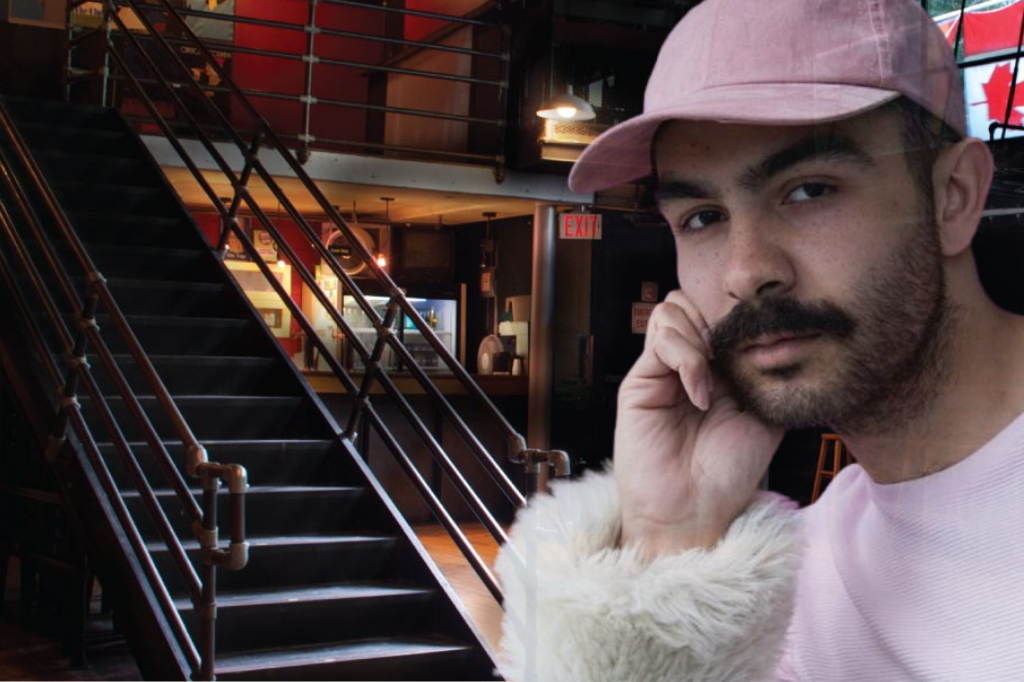
An inquisitive artist peers at me through my laptop screen, a body in a lamp-lit space with sloped ceilings. This, here, is Daniel Carter, Interim Programming Director at Buddies in Bad Times (and, like the rest of us, he’s wearing a ton of hats as a theatre person, jumping between producing and curating and outreach-ing like a total champ).
We jump right in, revelling in the existential: “Daniel Carter,” I joke. “Who are ya?”
Giggle, giggle. No need to make this Zoom meeting a stiff one: already I can tell these twenty-five-ish minutes will be a light spot in my day.
“I’m the Interim Programming Director. I oversee artistic programming, season programming, residency, community, education… but also, interimly, we’re on the search for an Artistic Director.”
I’m a little incredulous: “that’s a lot of things!,” I say. “What does the day-to-day of that look like?”
More laughs — the bravado of the Zoom interview melts away. It feels like I’m interviewing an old friend, despite this being my first time in a room (Zroom?) with Carter.
“The company’s been on a very long journey, and it’s continuing. We’re trying to improve working conditions, to be a more inviting space for all the folks,” he explains.
“And at the same time, there’s been a lot of turnover in staff. So the role itself has looked like filling in where necessary: producing, talking to artists, planning in advance. But because of the nature of the pandemic, a lot of it’s been touch-and-go — you plan something, you shift, you pivot, and then you plan it again.”
You plan something, you shift, you pivot, and then you plan it again.
“Bingo!,” I joke. That word, “pivot,” seems to have haunted arts coverage since the pandemic first struck over eighteen months ago.
He laughs. “It’s a lot of looking to the future while also digging up the past — reconciling the two to understand what to do tomorrow.”
I jump on one of Carter’s answers, where he spoke of “making Buddies a more inviting space.”
“What does that look like, practically?,” I ask.
“I mean… what does it actually look like to create work? To produce work? To move into a production? We’re constantly working with these finite resources — time, money, space — and so a lot of our internal reflection has been looking at how do we make this process of making and sharing art more human? More flexible, more adaptable to being a human?”
What does it actually look like to create work? To produce work? To move into a production?
“We’re looking beyond that mentality of, ‘oh, we have three weeks to get this show up, and nothing can go wrong, and there’s no space for error, and no space for dialogue or conversation. We’re thinking about how to create something more malleable.”
I’m curious now about the extent to which Buddies is really “coming back” — or returning to pre-pandemic levels of production.
“Well, I think when we do come back in a more robust, wholesome way, we’re not repeating the same sort of actions, patterns, processes that ran us all down — both staff and artists.”
I nod emphatically — those patterns were a veritable burnout machine across the industry before the pandemic, and it’s encouraging to hear those patterns being broken by a key company in the landscape.
“And what about the online of it all?,” I ask Carter. “What has this human element looked like when migrated to this digital space?”
“We’ve become best friends — or maybe frenemies — with Zoom. I mean, early on, we started doing these “Queer, Far, Wherever You Are” daily IG Live series to showcase artists. And I think one of the biggest questions — we’re a theatre company, but also a nightclub, and a venue — we’ve been looking beyond just theatre and into cabaret, burlesque, drag, puppetry. How are we including all of those in our plans?”
Carter’s tone turns somber, turning towards a parallel topic.
“The queer community has lost quite a few queer spaces. We’re looking at where the new gaps exist, and how we can leverage what we have as a venue/theatre company to make opportunities for everyone.”
My cat meows in distinct approval — Carter smiles, and I steer the conversation towards something about which we care deeply, him at Buddies and me at Intermission: audiences.
“What has Buddies’ relationship with audiences been? How’s it shifting?”
“Yeah,” starts Carter. “The past year and a half, the focus in the creative work has been on our residency — really creating the space and the time for residency artists to come in and deep dive into their work and their process. But a lot of that… it’s quite private, and not open to the public.”
“So, at the same time, we’ve been increasing our education programming, our dialogue series, our pen pal project, which had a national scope. Over the last year and a half, our audience has probably expanded in terms of geographical reach. We’ve had the opportunity to connect with folks in each province, and in each territory, and that’s not something we’ve done regularly — that was something we did through touring in the ‘before times’.”
National expansion is no joke — it’s a welcome byproduct of the pandemic, sure, but that must be hard to keep up. I say as much to Carter.
“Well, yeah. It’s really exciting, but there’s this question: how do we maintain those relationships moving forward, as we move into this post-vaccine world?”
It’s a big question, one we can’t answer in a short interview. It echoes across the Zoom.
As we wrap up our conversation, I hit Carter with another difficult question: “what’s the responsibility of companies like Buddies as we re-enter the world of live performance? What must companies be doing in this transitional moment?”
How do we maintain these new relationships? How do we strengthen new skills?
“Better working practices for artists. Being more human, and having a check that is congruent with living in Toronto. That’s not a new conversation, but the pandemic has pinpointed it as a major point of, ‘this needs to change.’ Artists are watching for that. Companies need to step up, and bring that conversation into the space themselves.”
Carter closes with a series of questions in quick succession, important, ideological ones: “how do we maintain these relationships? How do we strengthen new skills, and new explorations by artists, in the digital realm? Who are we beyond our physical venue?”
“We’re throwing spaghetti at the wall and seeing what sticks.”
You can find out more about Carter and Buddies in Bad Times here.
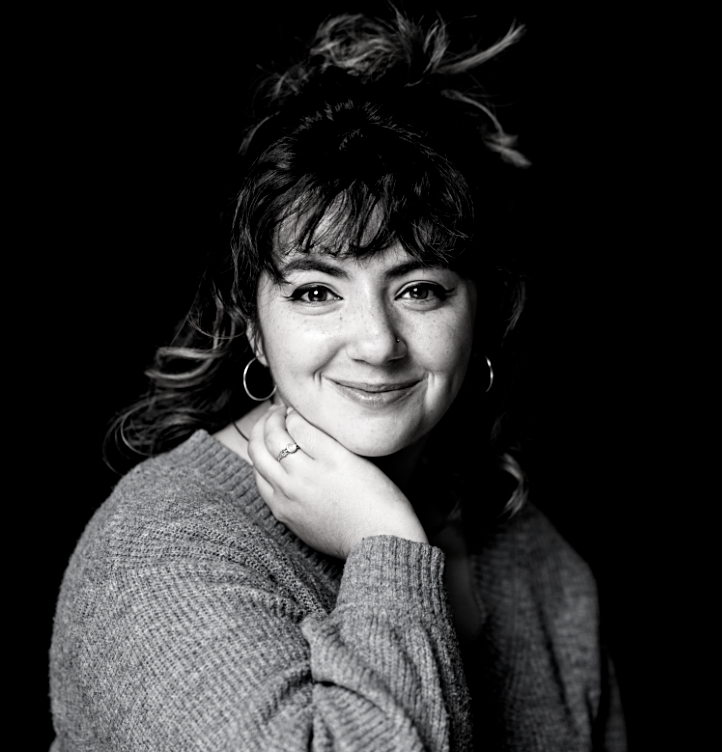
Aisling Murphy
Aisling is Intermission's former senior editor and the theatre reporter for the Globe and Mail. She likes British playwright Sarah Kane, most songs by Taylor Swift, and her cats, Fig and June. She was a 2024 fellow at the National Critics Institute in Waterford, CT.
LEARN MORE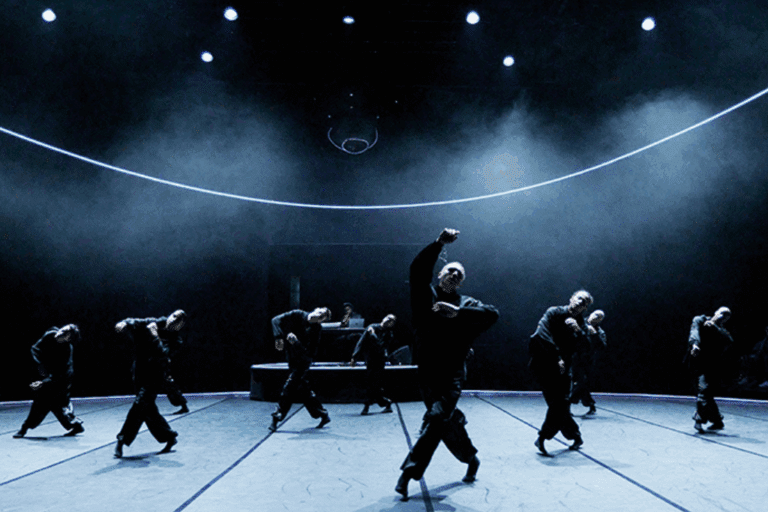 iPhoto caption: Photo by Fabian Hammerl.
In A a | a B : B E N D, choreographer Aszure Barton aims to rebuild dance from the inside out
“It’s so easy to over-intellectualize dance in general, but B E N D is about hearing and moving to cool-ass music together,” says Barton ahead of the show's run at the Bluma Appel Theatre.
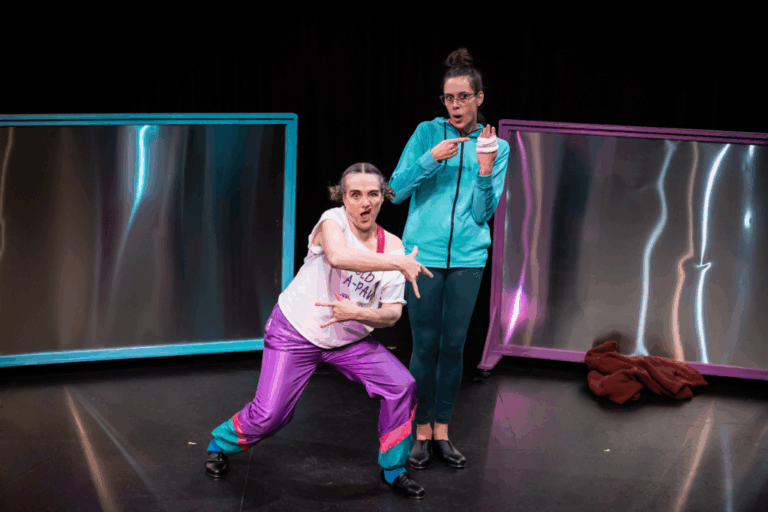 iPhoto caption: Elinor Holt and Ellen Close in 'How Patty and Joanne Won High Gold at the Grand Christmas Cup Winter Dance Competition.' Photo by Benjamin Laird.
“We’re living in a world right now where failure is not an option,” says actor Elinor Holt. “And a lot of times people would rather not try anything at all, rather than try something and risk failing at it.”
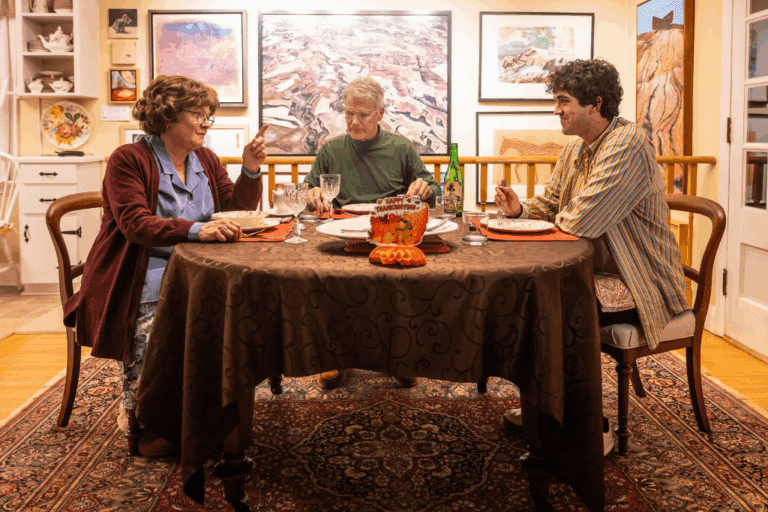 iPhoto caption: Jane Spidell as Bettye, Kevin Bundy as Jim, and Noah Beemer as Steve in 'Twelve Dinners.' Photo by Dahlia Katz.
With TIFT’s Twelve Dinners, actor Steve Ross makes the leap to playwright-director
"I love sitting with the actors before rehearsals and discussing, especially when they ask questions,” says Ross. “I love the blocking and staging. I love directing my own work, but find it challenging."
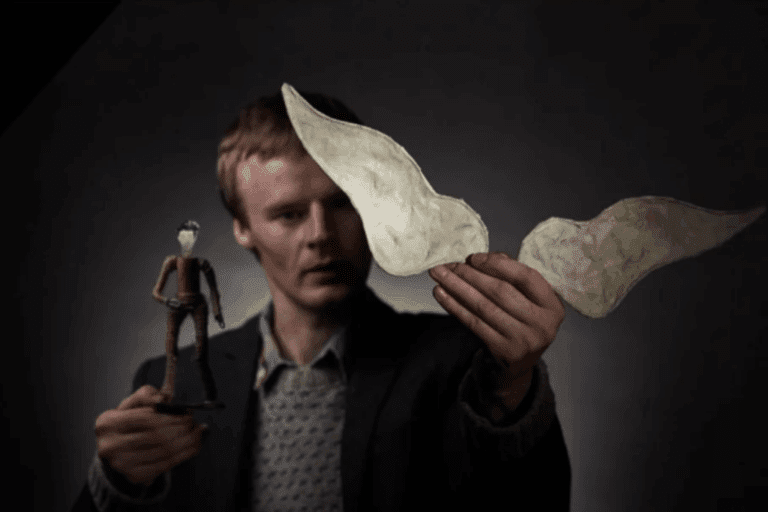 iPhoto caption: Manus Halligan in Dan Colley's adaptation of 'A Very Old Man with Enormous Wings'. Photo by Ste Murray.
A contemporary Gabriel García Márquez adaptation touches down in Toronto
A Very Old Man with Enormous Wings has toured internationally since 2022, with a shifting cast of performers. Halligan and Beaman, the original actors and co-adaptors, will reprise their roles for the Toronto premiere.
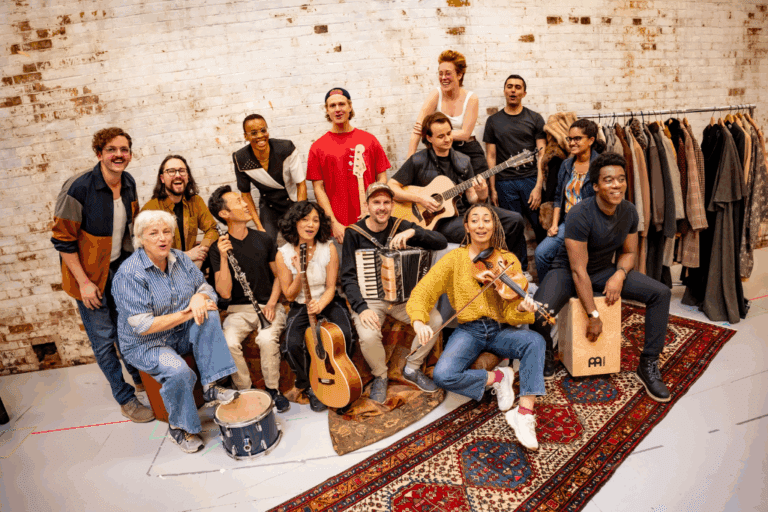 iPhoto caption: 'Narnia' in rehearsal. Photo by Dahlia Katz.
"What emerged for us was this idea of life cycles,” reflects Narnia adaptor-director Fiona Sauder. “‘What happens when you get stuck in one season [of life], and what happens when that season comes to an end? [What things] have to die and fall away in order for new things to grow?’”
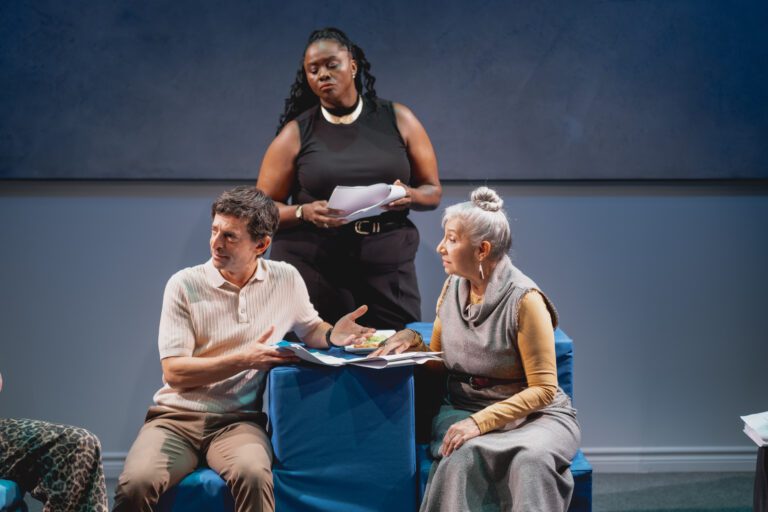 iPhoto caption: Jordan Pettle, Janelle Cooper, and Monique Mojica in CHILD-ish. Photo by Jae Yang.
Tarragon’s upcoming show gives audiences a verbatim taste of children’s wisdom, wit, and weirdness
The first inklings of CHILD-ish came to Drake in 2017. “I got to an age where I started having a lot more kids in my life,” he said. That “got me curious about what adults can learn from kids: playing with and flipping that power dynamic of who’s the learner and who’s the teacher.”
 iPhoto caption: Photo by Aisling Murphy.
In the darkest months of Yukon winter, it’s all about the Sun Room
I’m here for a week in January as a guest of Nakai Theatre, a hub for theatrical experimentation and outside-the-box programming in Canada’s westernmost territory.

Armchairs, tattoos, and an online theatre magazine
When I started at Intermission, my world was limited to the confines of an armchair. Arts journalism was a high it felt dangerously fruitless to chase. The life stretched ahead of me was amorphous and frightening, a chasm filled with hand sanitizer and immigration concerns. It was worth crying over a spilled kombucha and scrubbing at the stain.
 iPhoto caption: Liz Appel headshot courtesy of Liz Appel.
Five questions with Wights playwright Liz Appel
Intermission spoke with Appel over email for a brief Q&A about Wights, now playing at Crow’s Theatre until February 9.

Call for applications: Publishing and editorial assistant
Intermission Magazine is seeking a dynamic and collaborative individual to join our team.
 iPhoto caption: What Writing Can Do: The 2025 Musical Theatre Critics Lab
Announcing What Writing Can Do: The 2025 Musical Theatre Critics Lab
What Writing Can Do is timed to coincide with the Grand and Theatre Aquarius’ co-production of Waitress, which will serve as a jumping-off point for discussions throughout the Lab.
 iPhoto caption: A Christmas Story production still by Dahlia Katz.
REVIEW: A Christmas Story feels fresh at Theatre Aquarius
If you want to catch A Christmas Story before it closes, good luck — the show is close to sold out, and with the talent on that stage, it’s not hard to see why.
Comments